PRODUCTS SOLD ON PEPTIDESLABEU.COM ARE FOR RESEARCH PURPOSES ONLY AND ARE NOT FOR HUMAN OR VETERINARY USE.
€68.00
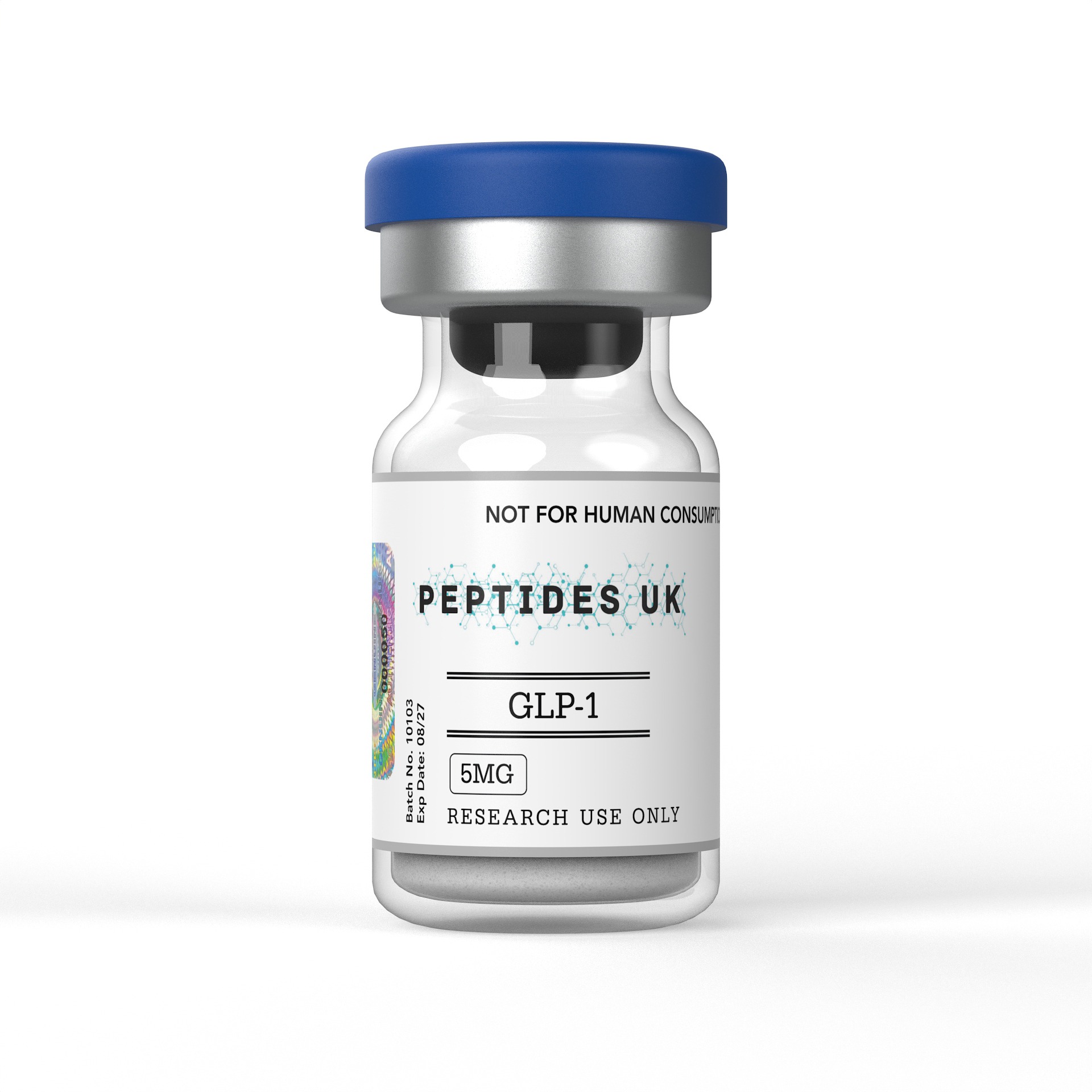
GLP-1 EU – Buy Online | In Stock & Ready to Ship
Buy GLP-1 in Europe with fast shipping and guaranteed ≥99% purity — verified with COA and HPLC documentation. A trusted choice for peptides EU research teams rely on, with no customs delays or lengthy international wait times. Whether you’re searching for GLP-1 Europe suppliers, looking to buy GLP-1 in the EU, or sourcing peptides Europe-wide, we have you covered. Research teams across the EU can count on consistent stock, rapid fulfilment and full batch documentation every time.
For research use only. Not intended for human or veterinary use.


GLP-1 — glucagon-like peptide-1, the primary endogenous incretin hormone — is the essential physiological reference GLP-1 receptor agonist and the foundational incretin research compound available to laboratories across Europe, providing the native-sequence benchmark for all GLP-1 receptor pharmacology, glucose-stimulated insulin secretion biology, and comparative incretin research against which every long-acting GLP-1 analogue including Semaglutide, Liraglutide, and dual incretin co-agonists including Tirzepatide are characterised. Research institutions and laboratories across the EU can source verified, research-grade GLP-1 peptide in Europe with fast dispatch and full batch documentation included.
✅ ≥99% Purity — HPLC & Mass Spectrometry Verified
✅ Batch-Specific Certificate of Analysis (CoA) Included
✅ Sterile Lyophilised Powder | GMP Manufactured
✅ Fast Dispatch Across EU & Europe | EU Peptides Stock
GLP-1 — glucagon-like peptide-1 — is a 30-amino acid incretin hormone produced and secreted by intestinal L-cells in response to nutrient ingestion, representing the primary endogenous activator of the GLP-1 receptor and the physiological reference ligand for the entire incretin receptor research field. The primary bioactive form — GLP-1(7-36)amide — is cleaved from proglucagon in intestinal L-cells and released into portal circulation following meals, where it acts on pancreatic beta cells, hypothalamic appetite circuits, brainstem satiety centres, gastric vagal afferents, and cardiac tissue to coordinate the integrated postprandial metabolic response.
GLP-1’s central pharmacological significance lies in its glucose-dependent mechanism of insulin secretory potentiation — GLP-1 receptor activation drives insulin exocytosis only in the presence of elevated glucose concentrations, producing the incretin effect that accounts for a substantial proportion of postprandial insulin secretion and establishing the glucose-dependent safety profile that has made GLP-1R agonism the foundation of modern incretin pharmacology. This glucose dependency — mediated through the Gs-cAMP-PKA-EPAC2 signalling cascade that potentiates glucose-triggered KATP channel closure and L-type calcium channel activation in beta cells — is the defining biological characteristic that distinguishes GLP-1R-driven insulin secretion from glucose-independent insulin secretagogues and that underpins the clinical safety profile of all GLP-1R agonist research compounds.
Native GLP-1 has a plasma half-life of approximately one to two minutes — rapidly inactivated by DPP-IV cleavage of the His7-Ala8 N-terminal dipeptide producing the inactive GLP-1(9-36)amide fragment. This extreme brevity of circulating half-life defines GLP-1’s research role as the acute physiological receptor pharmacology reference rather than a sustained biology research tool — and establishes the pharmacokinetic starting point from which every DPP-IV-resistant long-acting GLP-1 analogue in the European research library has been engineered. Understanding native GLP-1’s biology, receptor pharmacology, and pharmacokinetic limitations is the essential foundation for all incretin research conducted across EU laboratories.
In controlled laboratory and pre-clinical research settings across EU and European institutions, GLP-1 is studied as the endogenous physiological GLP-1R agonist reference across incretin receptor pharmacology, beta cell biology, central appetite neurocircuitry, gut-brain axis signalling, cardiovascular biology, and comparative incretin research:
GLP-1 Receptor Pharmacology and Native Ligand Reference Research — GLP-1 is the reference endogenous agonist for GLP-1R pharmacology research — used to characterise native ligand receptor binding kinetics, GLP-1R Gs-cAMP-PKA signal transduction in beta cell and non-pancreatic GLP-1R-expressing cell models, receptor internalisation and intracellular trafficking following native ligand engagement, GLP-1R recycling versus lysosomal degradation dynamics, and the biased agonism profile of the native peptide across Gs, Gq/11, and beta-arrestin signalling pathways. Research uses GLP-1 to establish the native ligand pharmacodynamic reference — characterising the concentration-response relationships for cAMP accumulation, insulin secretory potentiation, and GLP-1R internalisation that define the physiological baseline against which all synthetic GLP-1R agonists are compared. These native receptor pharmacology studies are essential for understanding how structural modifications in Semaglutide, Liraglutide, and Tirzepatide modify GLP-1R engagement kinetics and downstream signalling relative to the native peptide reference.
Glucose-Dependent Insulin Secretion and Beta Cell Incretin Biology Research — GLP-1’s glucose-dependent insulin secretory potentiation is its most studied biological mechanism — and the most important incretin biology research application across EU diabetes and metabolic research institutions. Research has characterised GLP-1’s beta cell incretin biology in primary human and rodent islets and beta cell line models — examining cAMP accumulation kinetics under native GLP-1R stimulation, the glucose concentration threshold for GLP-1-driven insulin secretory potentiation, first and second phase insulin secretory response amplitudes, KATP channel closure and L-type calcium channel activation dynamics, and the molecular basis of glucose dependency through PKA and EPAC2 pathway interactions. These glucose-dependent insulin secretion studies establish GLP-1 as the physiological reference for incretin-driven beta cell biology and provide the native ligand baseline for comparing synthetic GLP-1R agonist insulin secretory pharmacology.
DPP-IV Degradation Biology and Incretin Half-Life Research — Native GLP-1’s rapid DPP-IV inactivation — half-life of approximately one to two minutes through His7-Ala8 cleavage — is both a primary research subject and a critical experimental design parameter for all GLP-1 research across EU laboratories. Research has characterised GLP-1 DPP-IV degradation biology — examining cleavage kinetics in plasma and tissue preparations, the inactive GLP-1(9-36)amide fragment’s potential residual biological activity, the DPP-IV enzyme kinetics governing incretin degradation, and how DPP-IV inhibition modifies native GLP-1 circulating concentrations and biological responses. These DPP-IV biology studies establish the pharmacokinetic fragility that defines native GLP-1’s research limitations and provide the mechanistic foundation for understanding DPP-IV resistance engineering strategies employed in long-acting GLP-1 analogues. For all in vitro and in vivo GLP-1 research, DPP-IV inhibitor supplementation is an essential experimental design requirement.
Central Appetite Neurocircuitry and Gut-Brain Axis Research — GLP-1 receptors are expressed in hypothalamic arcuate and paraventricular nuclei, brainstem nucleus tractus solitarius, nodose ganglion vagal afferents, and reward circuit regions — and peripheral GLP-1 release following meals contributes to central satiety signalling through both direct CNS GLP-1R engagement and indirect vagal afferent pathway activation. Research has characterised GLP-1’s central appetite biology — examining hypothalamic GLP-1R-mediated POMC neurone activation and NPY/AgRP suppression, brainstem NTS GLP-1R satiety integration, the gut-brain vagal axis pathway transmitting peripheral L-cell GLP-1 release to central appetite circuits, and the neurochemical mechanisms through which peripheral GLP-1 communicates with central energy balance regulation. These gut-brain axis studies establish GLP-1 as the physiological reference for studying endogenous incretin contributions to central appetite regulation and provide the native ligand baseline for understanding how long-acting GLP-1 analogues produce their pronounced central appetite suppression.
Beta Cell Trophic Biology and Survival Signalling Research — GLP-1 drives beta cell survival and proliferation through GLP-1R-mediated PI3K-Akt anti-apoptotic signalling, PDX-1 transcription factor activation supporting beta cell differentiation and insulin gene expression, and cAMP-driven beta cell proliferation biology. Research has characterised GLP-1’s beta cell trophic effects — examining caspase inhibition and Bcl-2 family upregulation protecting against glucolipotoxicity-induced beta cell apoptosis, beta cell proliferation rate increases under GLP-1R stimulation, PDX-1 and Nkx6.1 transcription factor activation supporting beta cell functional identity, and the concentration-response relationships for GLP-1-driven trophic biology. These survival signalling studies establish native GLP-1 as the physiological reference for incretin-driven beta cell mass regulation and provide the endogenous ligand baseline for studying how long-acting GLP-1R agonists drive sustained beta cell trophic biology.
Glucagon Suppression and Alpha Cell Biology Research — GLP-1 suppresses glucagon secretion from pancreatic alpha cells through direct alpha cell GLP-1R engagement — contributing to postprandial glucose control by reducing hepatic glucose output through glucagon suppression in the absorptive state. Research has characterised GLP-1’s alpha cell biology — examining direct GLP-1R expression and signalling in alpha cells, the glucose dependency of GLP-1-driven glucagon suppression, the relative contributions of direct alpha cell GLP-1R engagement versus indirect paracrine insulin-mediated glucagon suppression to the net glucagon-lowering response, and how glucagon suppression coordinates with insulin secretory potentiation to produce the integrated postprandial glucose regulation biology of GLP-1. These alpha cell studies provide the native ligand reference for understanding glucagon suppression as a component of GLP-1R agonist pharmacology.
Gastric Emptying and Gastrointestinal Biology Research — GLP-1 inhibits gastric emptying through GLP-1R activation on vagal afferent neurones — slowing nutrient delivery to the small intestine and contributing to postprandial glucose excursion reduction through delayed absorption. Research has characterised GLP-1’s gastrointestinal biology — examining GLP-1R expression and signalling on gastric vagal afferents, gastric emptying rate inhibition mechanisms, intestinal motility modulation, and the contribution of gastric emptying inhibition to the overall postprandial glucose regulation biology of native GLP-1. These GI biology studies establish the native peptide reference for vagal GLP-1R biology and provide the physiological baseline for understanding how long-acting GLP-1 analogues modify gastric emptying biology through sustained GLP-1R vagal engagement.
Cardiovascular GLP-1R Biology Research — GLP-1R is expressed on cardiomyocytes, endothelial cells, and vascular smooth muscle — and native GLP-1 contributes to cardiovascular biology through direct cardiac GLP-1R signalling producing cardioprotective PI3K-Akt activation, anti-inflammatory endothelial biology, and coronary vasodilatory effects. Research has characterised GLP-1’s cardiovascular biology — examining direct GLP-1R-mediated cardiomyocyte protection in ischaemia-reperfusion models, endothelial GLP-1R anti-inflammatory and nitric oxide biology, vascular smooth muscle GLP-1R signalling, and the native peptide cardiovascular biology that provides the physiological foundation for understanding the clinically validated cardiovascular outcome benefits documented for long-acting GLP-1R agonists including Semaglutide and Liraglutide. These cardiovascular studies use GLP-1 as the endogenous reference establishing the cardiac GLP-1R biology baseline.
Research conducted across European and international institutions has produced the most extensive native incretin hormone biology dataset in the metabolic research literature:
Glucose-dependent insulin secretion research has comprehensively characterised GLP-1’s incretin mechanism — establishing the cAMP-PKA-EPAC2 molecular basis of glucose-dependent insulin secretory potentiation, the KATP channel and L-type calcium channel biology through which GLP-1R signalling amplifies glucose-triggered insulin exocytosis, and the glucose concentration dependence that defines incretin biology as distinct from glucose-independent insulin secretagogues. This mechanistic characterisation provides the molecular foundation for all incretin pharmacology research across EU diabetes institutions.
DPP-IV degradation research has characterised GLP-1’s rapid inactivation kinetics — establishing the His7-Ala8 cleavage site, the one to two minute plasma half-life, GLP-1(9-36)amide fragment generation, and the DPP-IV enzyme kinetics governing native incretin degradation. These pharmacokinetic studies established the DPP-IV sensitivity baseline defining the pharmacokinetic engineering challenge that all GLP-1 analogue development programmes have addressed.
Gut-brain axis research has documented GLP-1’s central appetite biology — characterising vagal afferent GLP-1R pathway activation following peripheral L-cell secretion, hypothalamic GLP-1R-mediated appetite circuit engagement, and the neurochemical basis of GLP-1-driven satiety signalling. These central biology studies provide the physiological foundation for understanding the pronounced appetite suppression produced by long-acting GLP-1 analogues.
Beta cell trophic biology research has documented GLP-1’s survival and proliferative effects on beta cells — characterising PI3K-Akt anti-apoptotic biology, PDX-1 transcription factor activation, and beta cell proliferation responses that establish the physiological basis for incretin-driven beta cell mass preservation.
Cardiovascular biology research has documented direct cardiac GLP-1R biology — characterising cardiomyocyte protection in ischaemia-reperfusion models, endothelial anti-inflammatory biology, and vascular GLP-1R signalling that provides the physiological foundation for understanding the cardiovascular outcome benefits of long-acting GLP-1R agonist clinical programmes.
| Feature | GLP-1 | Semaglutide | Tirzepatide | Retatrutide | GIP | Exenatide |
|---|---|---|---|---|---|---|
| Type | Endogenous 30-aa native incretin — GLP-1(7-36)amide | C18 fatty diacid GLP-1(7-37) analogue — Aib8, Arg34Lys | 39-aa GIP-based dual GIPR/GLP-1R co-agonist — C20 fatty diacid | 36-aa triple GLP-1R/GIPR/GCGR co-agonist — C18 fatty diacid | Endogenous 42-aa K-cell incretin | Synthetic exendin-4 — DPP-IV resistant GLP-1R agonist |
| Receptor | GLP-1R — native endogenous ligand | GLP-1R — selective long-acting | GLP-1R + GIPR — dual | GLP-1R + GIPR + GCGR — triple | GIPR — native endogenous ligand | GLP-1R — selective |
| Half-Life | ~1–2 minutes — DPP-IV labile | ~1 week — C18 albumin binding | ~5 days — C20 albumin binding | ~1 week — C18 albumin binding | ~5–7 minutes | ~2.4 hours SC |
| DPP-IV Resistance | No — His7-Ala8 labile | Yes — Aib8 substitution | Yes — structural modifications | Yes — structural modifications | No — labile | Yes — exendin-4 native resistance |
| Glucose-Dependent Insulin Secretion | Yes — reference physiological | Yes — sustained | Yes — dual incretin | Yes — triple receptor | Yes — GIPR reference | Yes |
| Glucagon Suppression | Yes | Yes — pronounced | Yes — GLP-1R driven | Partial — GCGR offset | Context-dependent | Yes |
| Central Appetite Effect | Yes — physiological reference | Pronounced — superior monoagonist | Superior — dual incretin | Highest — triple receptor | Limited | Moderate |
| Body Weight Effect | Transient — half-life limited | 15–17% — STEP | 20–22% — SURMOUNT | Up to 24% — Phase II | Minimal | Moderate |
| DPP-IV Inhibitor Required | Yes — essential in all biological matrices | No | No | No | Yes | No |
| Key Research Distinction | Reference endogenous GLP-1R agonist — physiological incretin benchmark — native receptor pharmacology — DPP-IV biology reference | Reference long-acting selective GLP-1R monoagonist | Defining dual GIPR/GLP-1R co-agonist | Only triple receptor agonist | Reference endogenous GIPR agonist | First approved GLP-1R agonist — exendin scaffold |
| Parameter | Specification |
|---|---|
| Full Name | GLP-1 / Glucagon-Like Peptide-1 |
| Also Known As | GLP-1(7-36)amide / Incretin GLP-1 / Native GLP-1 |
| Sequence | His-Aib-Glu-Gly-Thr-Phe-Thr-Ser-Asp-Val-Ser-Ser-Tyr-Leu-Glu-Gly-Gln-Ala-Ala-Lys-Glu-Phe-Ile-Ala-Trp-Leu-Val-Lys-Gly-Arg-NH₂ |
| Type | Synthetic Native-Sequence Endogenous Incretin Hormone — GLP-1R Reference Agonist — Research Grade |
| Molecular Weight | ~3297.7 Da |
| C-Terminal Amide | NH₂ — primary bioactive form — essential for full GLP-1R binding affinity |
| Mechanism | GLP-1R Gs-cAMP-PKA/EPAC2 → KATP closure + L-type Ca²⁺ + insulin exocytosis + glucagon suppression + gastric emptying inhibition + central appetite suppression + beta cell survival — glucose-dependent insulin secretory potentiation |
| Primary Receptor | GLP-1R — class B GPCR — Gs-cAMP primary — pancreatic beta cells / hypothalamus / brainstem NTS / vagal afferents / cardiac / endothelial |
| Half-Life | ~1–2 minutes — DPP-IV cleavage of His7-Ala8 → inactive GLP-1(9-36)amide |
| DPP-IV Sensitivity | Yes — His7-Ala8 N-terminal dipeptide — rapid inactivation — DPP-IV inhibitor essential in all biological matrix applications |
| Key Research Distinction | Reference endogenous GLP-1R agonist — physiological incretin benchmark — native receptor pharmacology reference — DPP-IV degradation biology reference — essential comparative control for all GLP-1R agonist research |
| Primary Research Areas | GLP-1R native ligand pharmacology / glucose-dependent insulin secretion / DPP-IV biology / gut-brain axis / central appetite neurocircuitry / beta cell trophic biology / glucagon suppression / gastric emptying / cardiovascular GLP-1R biology / comparative incretin pharmacology |
| Purity | ≥99% HPLC & MS Verified |
| Form | Sterile Lyophilised Powder |
| Solubility | Sterile PBS pH 7.4 with 0.1% BSA — BSA prevents surface adsorption — DPP-IV inhibitor required in biological matrices |
| Storage (Powder) | -20°C, protect from light and moisture |
| Storage (Reconstituted) | -80°C single-use aliquots — DPP-IV inhibitor supplementation for biological matrix applications — minimise freeze-thaw |
| Available Sizes | 1mg, 5mg, 10mg |
| Dispatch | Fast EU & Europe dispatch |
| Intended Use | Research use only |
Every order of GLP-1 dispatched across the EU and Europe includes:
✅ Batch-Specific Certificate of Analysis (CoA)
✅ HPLC Chromatogram
✅ Mass Spectrometry Confirmation — including C-terminal amide integrity verification
✅ Sterility & Endotoxin Testing Report
✅ Reconstitution Protocol — including DPP-IV inhibitor requirement, BSA carrier guidance, and comparative study design notes
✅ Technical Research Support
Yes — research-grade GLP-1 is available to researchers and institutions across the EU and Europe with fast dispatch and full batch documentation included. Supplied strictly for laboratory research purposes only.
GLP-1 is the primary endogenous incretin hormone — released from intestinal L-cells after eating and acting on the GLP-1 receptor to drive glucose-dependent insulin secretion, suppress glucagon, slow gastric emptying, and signal satiety to the brain. It is the physiological reference ligand for the GLP-1 receptor and the foundational research compound for the entire incretin pharmacology field — every GLP-1R agonist drug including Semaglutide, Liraglutide, and Tirzepatide has been developed and characterised relative to native GLP-1 biology.
Native GLP-1 is rapidly inactivated by the DPP-IV enzyme — which cleaves the His7-Ala8 N-terminal dipeptide within approximately one to two minutes of entry into circulation, producing the inactive GLP-1(9-36)amide fragment. This rapid degradation is physiologically appropriate for a postprandial signal that should be tightly coupled to nutrient intake — but creates a significant pharmacokinetic limitation for research and therapeutic applications requiring sustained GLP-1R engagement. All long-acting GLP-1 analogues available to EU researchers have addressed this limitation through DPP-IV resistance engineering.
Any biological matrix — cell culture medium, plasma, tissue homogenate, or in vivo biological fluid — contains DPP-IV activity that will rapidly degrade native GLP-1 within minutes of addition. Without a DPP-IV inhibitor such as diprotin A or sitagliptin supplementing the assay buffer or biological matrix, native GLP-1 concentration will fall rapidly and unpredictably — producing confounded concentration-response data and underestimated biological potency. DPP-IV inhibitor supplementation is an essential and non-negotiable experimental design requirement for all GLP-1 research applications involving biological matrices.
Native GLP-1 has a half-life of one to two minutes and requires DPP-IV inhibitor protection in all biological applications — making it the acute physiological receptor pharmacology reference rather than a sustained biology tool. Semaglutide has a one-week half-life through C18 fatty diacid albumin binding and Aib8 DPP-IV resistance — making it the reference for studying sustained long-acting GLP-1R biology. Native GLP-1 is the appropriate compound for studying authentic receptor pharmacology, native ligand binding kinetics, and the physiological incretin response — Semaglutide for studying sustained GLP-1R engagement and its consequences for beta cell, appetite, and cardiovascular biology.
DPP-IV inhibitor controls confirming that observed biology reflects GLP-1R activation rather than DPP-IV inhibition effects, GLP-1R antagonist exendin(9-36) confirming GLP-1R specificity, vehicle controls in matched PBS-BSA buffer with DPP-IV inhibitor at equivalent concentration, GLP-1(9-36)amide — the inactive DPP-IV cleavage product — as a degradation biology control, and glucose concentration controls confirming glucose dependency of insulin secretory responses. For comparative studies with long-acting analogues, include DPP-IV inhibitor in all conditions containing native GLP-1 to ensure concentration integrity.
≥99% purity by HPLC and mass spectrometry is essential — DPP-IV pre-cleaved GLP-1(9-36)amide contaminants, C-terminal de-amidation products, and sequence variants would produce confounded GLP-1R activation data and modified glucose-dependency pharmacology. C-terminal amide integrity verification is a critical specification — the amide form GLP-1(7-36)amide is the primary bioactive incretin, and de-amidated GLP-1(7-36) shows reduced GLP-1R binding affinity. All GLP-1 supplied for European research is verified to ≥99% purity with C-terminal amide status confirmed.
GLP-1 is supplied exclusively for legitimate scientific research purposes conducted within licensed laboratory environments across the EU and Europe. This product is not intended for human consumption, self-administration, or any therapeutic application. It must be handled by qualified researchers in compliance with applicable EU regulations and institutional ethics guidelines. By purchasing, you confirm that this compound will be used solely for approved in vitro or pre-clinical research purposes.

Receive News
