PRODUCTS SOLD ON PEPTIDESLABEU.COM ARE FOR RESEARCH PURPOSES ONLY AND ARE NOT FOR HUMAN OR VETERINARY USE.
€113.00
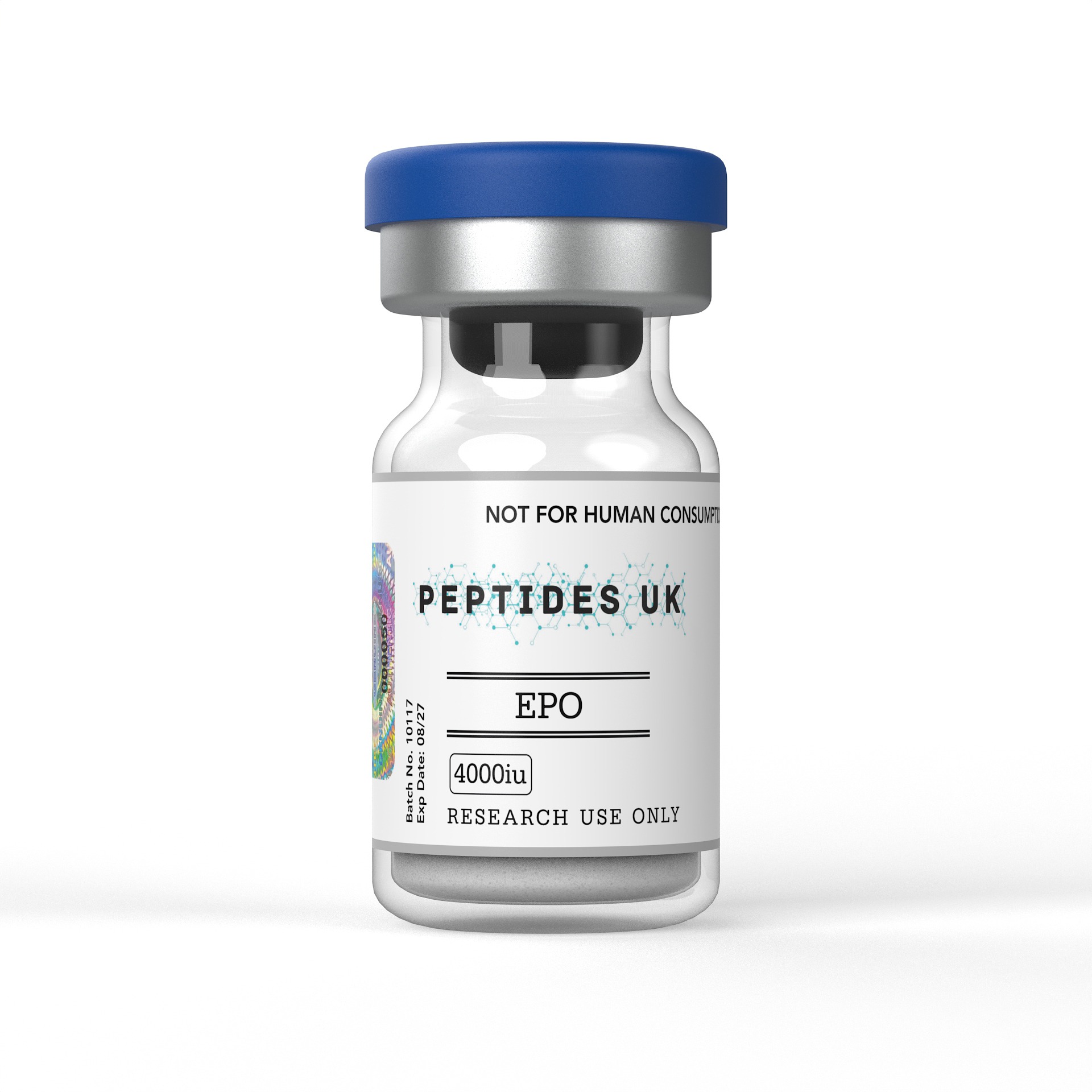
EPO 4000iu EU – Buy Online | In Stock & Ready to Ship
Buy EPO 4000iu in Europe with fast shipping and guaranteed ≥99% purity — verified with COA and HPLC documentation. A trusted choice for peptides EU research teams rely on, with no customs delays or lengthy international wait times. Whether you’re searching for EPO 4000iu Europe suppliers, looking to buy EPO 4000iu in the EU, or sourcing peptides Europe-wide, we have you covered. Research teams across the EU can count on consistent stock, rapid fulfilment and full batch documentation every time.
For research use only. Not intended for human or veterinary use.


Erythropoietin (EPO) is an endogenous glycoprotein hormone and the primary physiological regulator of red blood cell production, available to buy in Europe for laboratory research into erythropoiesis, haematopoietic signalling, hypoxia response biology, and EPO receptor pharmacology.
Laboratories and research institutions across the EU can order verified, research-grade Erythropoietin 4000IU with fast international dispatch to Europe, full batch documentation, and purity confirmed by HPLC and Mass Spectrometry.
✅ Verified Purity — HPLC & Mass Spectrometry Verified
✅ Batch-Specific Certificate of Analysis (CoA)
✅ Sterile Lyophilised Powder | GMP Manufactured
✅ Fast Dispatch to EU & Europe | Tracked Shipping
Erythropoietin (EPO) is a 165 amino acid glycoprotein hormone produced primarily in the peritubular interstitial cells of the kidney in response to tissue hypoxia — low oxygen availability — and is the principal endogenous regulator of erythropoiesis, the process by which red blood cells are produced in bone marrow. It acts through the EPO receptor (EPOR), a member of the cytokine receptor superfamily expressed predominantly on erythroid progenitor cells in the bone marrow, to drive their proliferation, differentiation, and survival into mature erythrocytes.
The EPO-EPOR signalling axis is one of the most comprehensively characterised cytokine receptor systems in haematopoietic biology — with decades of research establishing the molecular mechanisms linking tissue oxygen sensing, renal EPO production, bone marrow erythroid expansion, and circulating red blood cell mass homeostasis. This well-characterised biology makes recombinant EPO an important research tool for studying erythropoiesis regulation, haematopoietic stem cell biology, and the cellular and molecular responses to hypoxic signalling.
Beyond its classical role in erythropoiesis, EPO receptor expression has been identified in non-haematopoietic tissues including brain, heart, and endothelium — driving a growing body of research into EPO’s cytoprotective, neuroprotective, and cardioprotective signalling roles that extend well beyond red blood cell production. Research-grade EPO 4000IU provides European laboratories with a precisely dosed, fully documented tool for investigating both the classical haematopoietic and the emerging non-erythroid biological roles of EPO receptor signalling.
In laboratory settings, recombinant EPO is studied across a broad range of haematopoietic, cytoprotective, and receptor signalling applications. EU and European researchers working with EPO typically focus on:
All research applications are for in vitro and pre-clinical use only.
Erythropoietin has one of the most extensive and well-characterised research literatures of any cytokine — spanning haematopoietic biology, receptor pharmacology, hypoxia physiology, and an expanding field of non-erythroid cytoprotective research.
Erythropoiesis regulation: Decades of research have established EPO as the indispensable regulator of red blood cell production, with studies comprehensively characterising its dose-dependent effects on erythroid progenitor proliferation and survival, the molecular mechanisms of EPOR-mediated anti-apoptotic signalling in erythroid precursors, and the feedback relationship between circulating red cell mass, tissue oxygenation, and renal EPO production. This foundational biology makes recombinant EPO an essential tool in haematopoietic research.
JAK2/STAT5 signalling pathway: EPO receptor activation drives one of the most studied cytokine signalling cascades in haematopoietic biology — with research comprehensively characterising JAK2 kinase activation, STAT5 phosphorylation and nuclear translocation, and the transcriptional targets driving erythroid proliferation and survival. This pathway has become a reference model for cytokine receptor signalling biology more broadly, and recombinant EPO is the standard ligand for studying it in erythroid cell systems.
Neuroprotective signalling: A substantial and growing body of research has examined EPO’s neuroprotective properties — documenting EPOR expression in neurons and glial cells, and characterising EPO-mediated protection against ischaemic, excitotoxic, and oxidative neuronal injury in pre-clinical models. Studies have identified anti-apoptotic, anti-inflammatory, and neurotrophic mechanisms downstream of neural EPOR activation — positioning EPO as a research tool of significant interest in neuroprotection biology beyond its haematopoietic application.
Cardioprotection research: Pre-clinical studies have documented EPO-mediated cardioprotection in ischaemia-reperfusion models, with research characterising EPOR expression in cardiomyocytes and the downstream signalling — including PI3K/Akt and STAT5 activation — mediating reduced infarct size and cardiomyocyte apoptosis. This line of investigation has contributed to broader understanding of cytokine-mediated cardiac cytoprotection.
HIF pathway and oxygen sensing: Research into the upstream regulation of EPO production has been central to understanding HIF biology — with studies characterising how HIF-1α and HIF-2α stabilisation under hypoxic conditions drives renal EPO gene transcription. Recombinant EPO is used in downstream studies examining the functional consequences of HIF-driven EPO upregulation on erythroid progenitor biology.
EPO resistance mechanisms: A growing research area has examined the molecular basis of EPO hyporesponsiveness — relevant to inflammatory anaemia, chronic kidney disease models, and haematopoietic disorders. Studies using recombinant EPO as the stimulus have characterised how inflammatory cytokines, iron restriction, and EPOR signalling dysregulation contribute to reduced erythropoietic responses, providing mechanistic insights into ESA resistance biology.
| Compound | Type | Primary Mechanism | Key Research Application |
|---|---|---|---|
| EPO (Erythropoietin) | Endogenous glycoprotein hormone | EPOR agonist — JAK2/STAT5 | Reference erythropoiesis research, neuroprotection, cardioprotection |
| Darbepoetin Alfa | Hyperglycosylated EPO analogue | EPOR agonist — extended half-life | Comparative ESA pharmacology, extended erythropoietic activity studies |
| CERA (Methoxy PEG-EPO) | PEGylated EPO analogue | EPOR agonist — very long half-life | Long-acting ESA comparative research |
| EMP1 / EPO Mimetic Peptides | Non-glycoprotein EPOR agonists | EPOR agonist — peptide ligand | EPOR pharmacology, receptor binding studies |
| SCF (Stem Cell Factor) | Haematopoietic cytokine | c-Kit receptor agonist | Haematopoietic progenitor research, synergy with EPO |
| TPO (Thrombopoietin) | Haematopoietic cytokine | MPL receptor agonist | Megakaryocyte/platelet lineage research |
Every order of research-grade EPO 4000IU dispatched to EU and European research institutions includes:
Yes. We supply research-grade Erythropoietin 4000IU with fast tracked international dispatch to all EU member states and wider European destinations. Packaging is designed to maintain protein integrity throughout transit, and all orders include full batch documentation. EPO is supplied strictly for laboratory research use only.
The EPO receptor (EPOR) is a homodimeric type I cytokine receptor expressed predominantly on erythroid progenitor cells in the bone marrow. EPO binding induces receptor dimerisation and conformational change, activating the associated JAK2 tyrosine kinase which phosphorylates STAT5 — driving its nuclear translocation and transcription of genes mediating erythroid cell proliferation and survival. Secondary signalling through PI3K/Akt and MAPK/ERK pathways contributes to anti-apoptotic and proliferative responses. This well-characterised cascade makes EPOR one of the reference systems for cytokine receptor signalling research.
Recombinant EPO most closely mirrors the endogenous hormone — with a glycosylation profile and receptor binding kinetics that make it the reference compound for studying EPOR pharmacology and physiological erythropoiesis. Darbepoetin alfa is a hyperglycosylated analogue with additional N-linked carbohydrate chains that substantially extend its serum half-life compared to native EPO. The two are used as complementary tools in comparative ESA pharmacology and in studies where sustained versus acute EPOR stimulation is a relevant experimental variable.
EPOR expression in neurons, astrocytes, and microglia has established EPO as a research tool of significant interest in neuroprotection biology. Pre-clinical studies have documented EPO-mediated protection against ischaemic, excitotoxic, and inflammatory neuronal injury — with mechanisms including activation of anti-apoptotic Bcl-2 family proteins, reduction of pro-inflammatory cytokine signalling, and promotion of neuronal survival pathways downstream of neural EPOR activation. This non-erythroid research application represents a growing and distinct area of EPO biology.
EPO production is directly regulated by Hypoxia-Inducible Factor — primarily HIF-2α in renal peritubular cells — which is stabilised under low oxygen conditions and drives EPO gene transcription. Under normoxic conditions, HIF is rapidly hydroxylated by prolyl hydroxylase domain enzymes (PHDs) and targeted for proteasomal degradation, suppressing EPO production. This oxygen-sensing mechanism makes EPO a downstream readout of HIF pathway activity, and recombinant EPO is used in studies examining the functional erythropoietic consequences of HIF pathway modulation.
Allow the vial to reach room temperature before opening. Reconstitute with sterile water for injection or an appropriate laboratory buffer — typically phosphate buffered saline with a carrier protein such as BSA to minimise adsorption losses at low concentrations. Add reconstitution fluid slowly down the vial wall and swirl gently without shaking to preserve protein integrity. Prepare working aliquots at your protocol’s required concentration, store at -80°C, and avoid repeated freeze-thaw cycles. Standard protein handling protocols apply.
Orders are dispatched promptly via tracked international courier with cold-chain packaging appropriate for protein stability. Delivery to EU and European destinations typically takes 3–7 working days depending on location.
| Parameter | Detail |
|---|---|
| Type | Recombinant Human Erythropoietin (rhEPO) |
| Dose | 4000 IU per vial |
| Primary Receptor Target | EPO Receptor (EPOR) — JAK2/STAT5 pathway |
| Primary Research Interest | Erythropoiesis, haematopoietic signalling, neuroprotection, cardioprotection |
| Purity | Verified by HPLC & Mass Spectrometry |
| Form | Sterile Lyophilised Powder |
| Solubility | Sterile water or PBS with carrier protein |
| Storage | -20°C to -80°C, protected from light |
| Intended Use | Research use only |
Erythropoietin (EPO) 4000IU is supplied exclusively for legitimate scientific research conducted within licensed laboratory environments. This product is not approved for human consumption, self-administration, or any therapeutic, clinical, or veterinary application. It must be handled solely by qualified researchers in compliance with applicable EU regulations, national legislation, and institutional ethics guidelines. By purchasing, you confirm this compound will be used exclusively for approved in vitro or pre-clinical research purposes.

Receive News
