PRODUCTS SOLD ON PEPTIDESLABEU.COM ARE FOR RESEARCH PURPOSES ONLY AND ARE NOT FOR HUMAN OR VETERINARY USE.
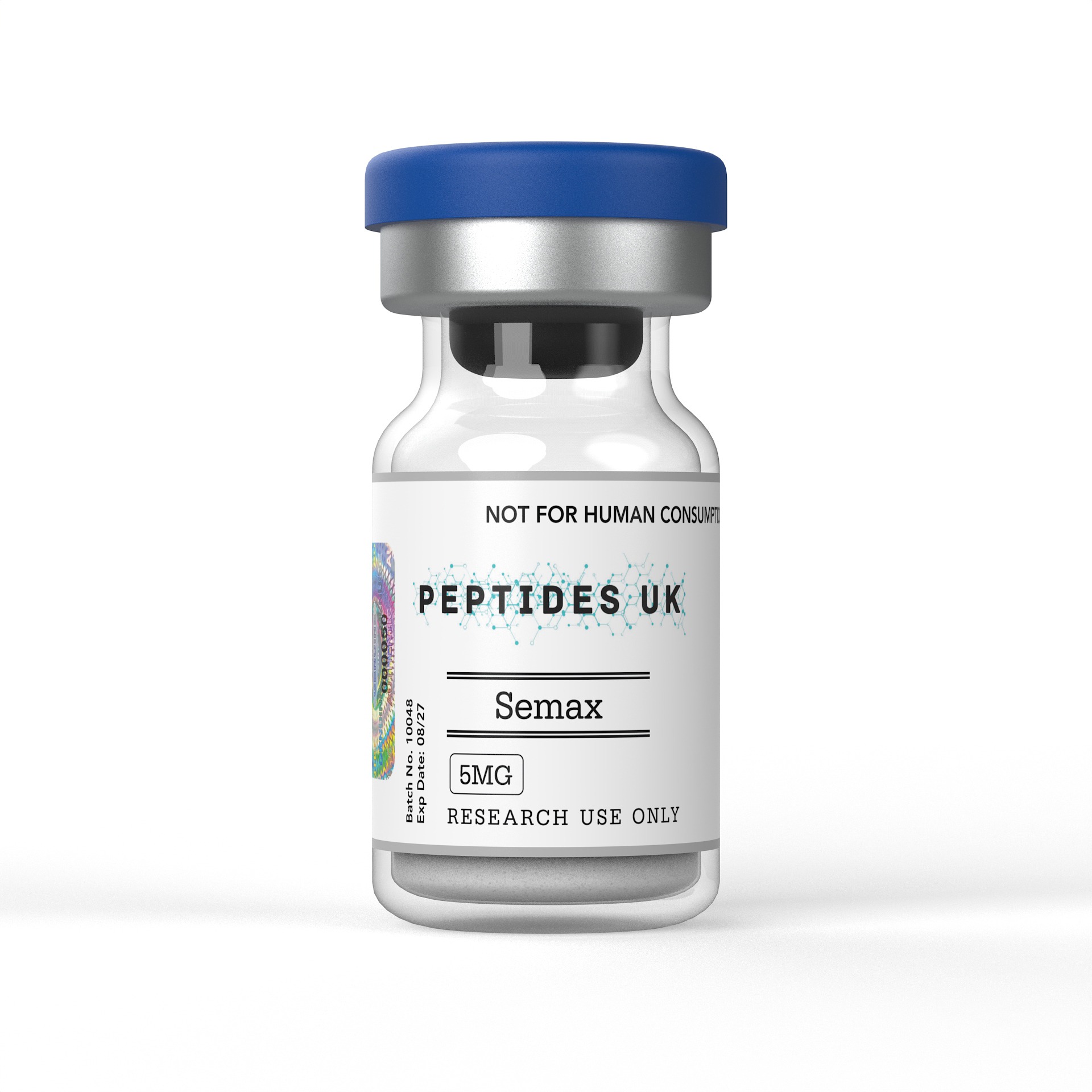
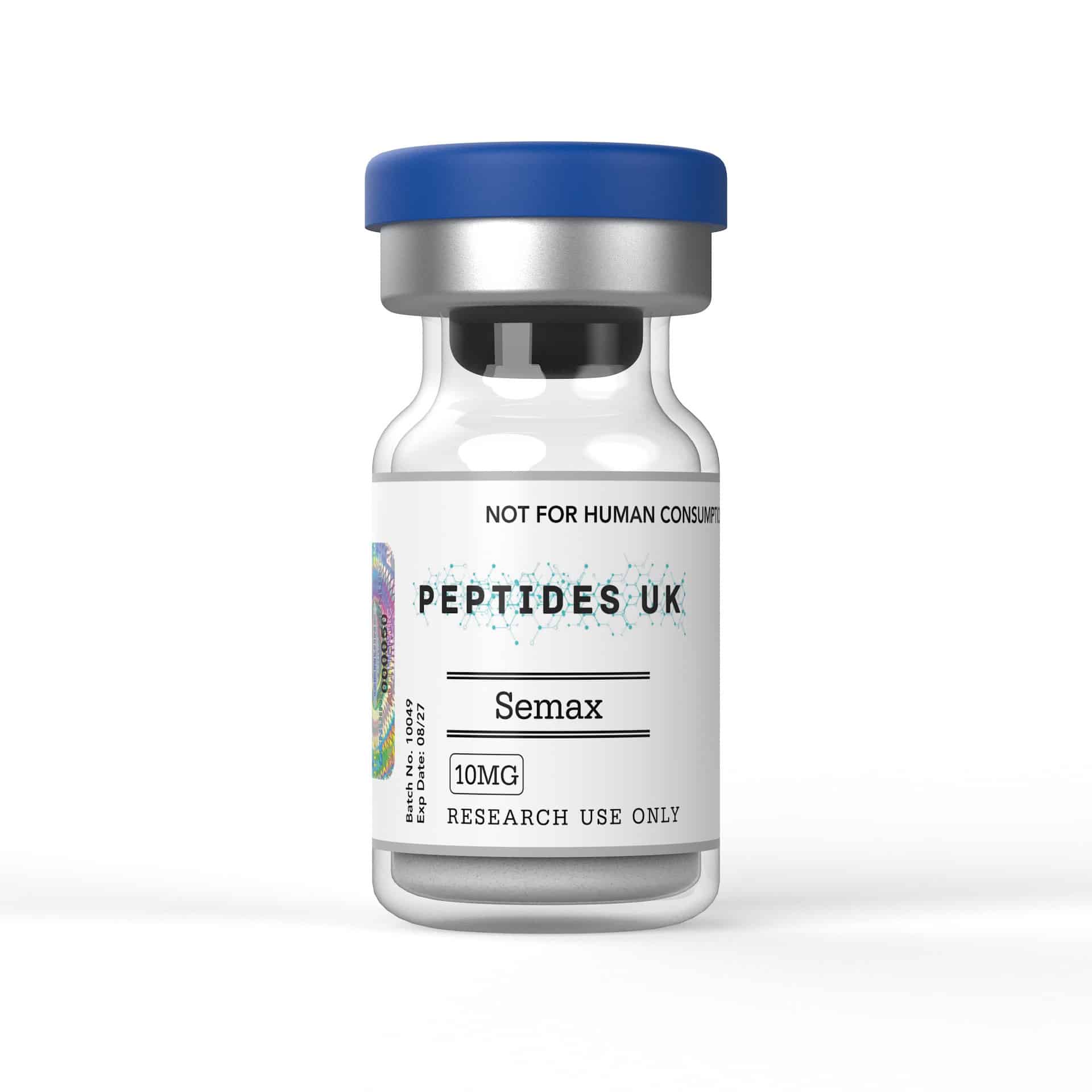
€20.00 – €35.00Price range: €20.00 through €35.00
Semax EU – Buy Online | In Stock & Ready to Ship
Buy Semax in Europe with fast shipping and guaranteed ≥99% purity — verified with COA and HPLC documentation. A trusted choice for peptides EU research teams rely on, with no customs delays or lengthy international wait times. Whether you’re searching for Semax Europe suppliers, looking to buy Semax in the EU, or sourcing peptides Europe-wide, we have you covered. Research teams across the EU can count on consistent stock, rapid fulfilment and full batch documentation every time.
For research use only. Not intended for human or veterinary use.


Semax is a synthetic heptapeptide analogue of ACTH(4-10), available to buy in Europe for laboratory research into neuroprotection, cognitive biology, BDNF expression, and central nervous system peptide pharmacology.
Laboratories and research institutions across the EU can order verified, research-grade Semax with fast international dispatch to Europe, full batch documentation, and ≥99% purity confirmed by HPLC and Mass Spectrometry.
✅ ≥99% Purity — HPLC & Mass Spectrometry Verified
✅ Batch-Specific Certificate of Analysis (CoA)
✅ Sterile Lyophilised Powder | GMP Manufactured
✅ Fast Dispatch to EU & Europe | Tracked Shipping
Semax is a synthetic heptapeptide — sequence Met-Glu-His-Phe-Pro-Gly-Pro — originally derived from the ACTH(4-10) fragment of adrenocorticotropic hormone. Unlike ACTH itself, Semax carries no hormonal activity at the adrenal gland; instead, its research interest lies entirely in its central nervous system effects, particularly its influence on neurotrophic factor expression, neuroprotective signalling, and cognitive biology.
Developed originally in Russia in the 1980s, Semax has been the subject of substantial pre-clinical and clinical investigation — making it one of the better-characterised synthetic neuropeptides in the research literature. It is studied primarily for its ability to upregulate Brain-Derived Neurotrophic Factor (BDNF) and related neurotrophins, its neuroprotective properties in models of ischaemia and oxidative stress, and its influence on attention, memory, and learning-related neural circuitry.
Semax is resistant to rapid enzymatic degradation compared to many peptides of similar size, and its CNS activity profile has made it a consistent subject of interest in European neuropeptide research.
In laboratory settings, Semax is studied primarily for its effects on neurotrophic signalling, neuroprotection, and cognitive biology. EU and European researchers working with Semax typically focus on:
All research applications are for in vitro and pre-clinical use only.
Semax has an unusually broad research base for a synthetic neuropeptide, spanning neurotrophic biology, neuroprotection, and cognitive pharmacology across decades of pre-clinical and early clinical investigation.
BDNF and neurotrophin upregulation: Studies have documented Semax-induced increases in BDNF, NGF, and VEGF expression in rodent brain tissue — particularly in the hippocampus and cortex. This neurotrophic activity is considered central to its neuroprotective and cognition-relevant research profile, and positions Semax as a useful tool for studying the upstream regulation of neurotrophin expression.
Neuroprotection in ischaemia models: A significant body of pre-clinical literature has examined Semax in models of cerebral ischaemia and stroke. Studies have reported reductions in infarct size, improvements in neurological deficit scores, and enhanced survival of vulnerable neuronal populations in rodent ischaemia models — findings that have driven continued research interest in Semax as a neuroprotective research tool.
Cognitive and attention biology: Pre-clinical studies have characterised Semax effects on dopaminergic and serotonergic transmission in prefrontal and hippocampal regions implicated in working memory and sustained attention. Research has documented improvements in maze learning, spatial memory, and attention task performance in rodent models.
Neuroinflammation: Studies examining Semax in CNS inflammatory models have characterised effects on pro-inflammatory cytokine expression — including IL-1β and TNF-α — in glial cell populations, contributing to the proposed neuroprotective mechanism.
Optic nerve research: A distinct line of investigation has studied Semax in optic nerve transection and retinal ischaemia models, with findings suggesting neurotrophic support for retinal ganglion cells — an application reflecting its broader neurotrophin-upregulating profile.
| Compound | Mechanism | Key Research Focus | Research Base |
|---|---|---|---|
| Semax | ACTH(4-10) analogue, BDNF/NGF upregulation | Neuroprotection, cognition, neurotrophin biology | Extensive |
| Selank | Tuftsin analogue, anxiolytic profile | Anxiety, immune modulation, memory | Well-documented |
| NA-Semax | N-acetylated Semax variant | Enhanced CNS penetration, neuroprotection | Growing |
| Cerebrolysin | Peptide mixture, neurotrophic | Neurodegeneration, stroke recovery | Extensive |
| BPC-157 | Pentadecapeptide, pleiotropic | Tissue repair, CNS, gut biology | Extensive |
| Dihexa | HGF/MET pathway agonist | Cognitive biology, neurogenesis | Growing |
Every order of Semax peptide dispatched to EU and European research institutions includes:
Yes. We supply research-grade Semax peptide with fast tracked international dispatch to all EU member states and wider European destinations. Packaging is designed to maintain peptide integrity throughout transit, and all orders include full batch documentation. Semax is supplied strictly for laboratory research use only.
Semax is derived from the ACTH(4-10) fragment — a short sequence within the larger ACTH hormone. While ACTH acts on adrenal glands to stimulate cortisol production, Semax carries none of this peripheral hormonal activity. Its research relevance is entirely CNS-focused, particularly around neurotrophic factor expression and neuroprotective signalling, which are properties not shared with parent ACTH.
Brain-Derived Neurotrophic Factor (BDNF) is a key neurotrophin supporting neuronal survival, synaptic plasticity, and the cellular mechanisms underlying learning and memory. Pre-clinical studies have documented that Semax upregulates BDNF expression in hippocampal and cortical brain regions — making it a widely used research tool for studying how neurotrophic factor modulation influences neural function, neuroprotection, and cognitive biology.
NA-Semax (N-Acetyl Semax) is an acetylated variant of Semax in which an acetyl group is added to the N-terminus of the peptide. The acetylation is believed to improve CNS penetration and extend biological activity compared to standard Semax, while preserving the core neurotrophic and neuroprotective research profile. The two compounds are studied as complementary tools in comparative neuropeptide research.
Semax and Selank are both synthetic neuropeptides with CNS research profiles, but they differ in origin and primary research focus. Semax is derived from ACTH(4-10) and is primarily studied for neuroprotection, BDNF upregulation, and cognitive biology. Selank is derived from the immunomodulatory peptide tuftsin and is primarily studied for anxiolytic effects, immune modulation, and memory biology. They represent complementary rather than overlapping research tools.
Allow the vial to reach room temperature before opening. Add sterile water or an appropriate laboratory buffer slowly down the vial wall and swirl gently — do not shake. Prepare at your protocol’s required concentration, aliquot, and store at -80°C to minimise freeze-thaw degradation. Standard peptide handling protocols apply.
Orders are dispatched promptly via tracked international courier. Delivery to EU and European destinations typically takes 3–7 working days depending on location, with packaging designed to protect peptide stability throughout transit.
| Parameter | Detail |
|---|---|
| Sequence | Met-Glu-His-Phe-Pro-Gly-Pro |
| Type | Synthetic ACTH(4-10) Heptapeptide Analogue |
| Primary Research Interest | BDNF upregulation, neuroprotection, cognitive biology |
| Purity | ≥99% |
| Verification | HPLC & Mass Spectrometry |
| Form | Sterile Lyophilised Powder |
| Solubility | Sterile water or laboratory buffer |
| Storage | -20°C, protected from light and moisture |
| Intended Use | Research use only |
Semax is supplied exclusively for legitimate scientific research conducted within licensed laboratory environments. This product is not approved for human consumption, self-administration, or any therapeutic, clinical, or veterinary application. It must be handled solely by qualified researchers in compliance with applicable EU regulations, national legislation, and institutional ethics guidelines. By purchasing, you confirm this compound will be used exclusively for approved in vitro or pre-clinical research purposes.



Receive News
