PRODUCTS SOLD ON PEPTIDESLABEU.COM ARE FOR RESEARCH PURPOSES ONLY AND ARE NOT FOR HUMAN OR VETERINARY USE.
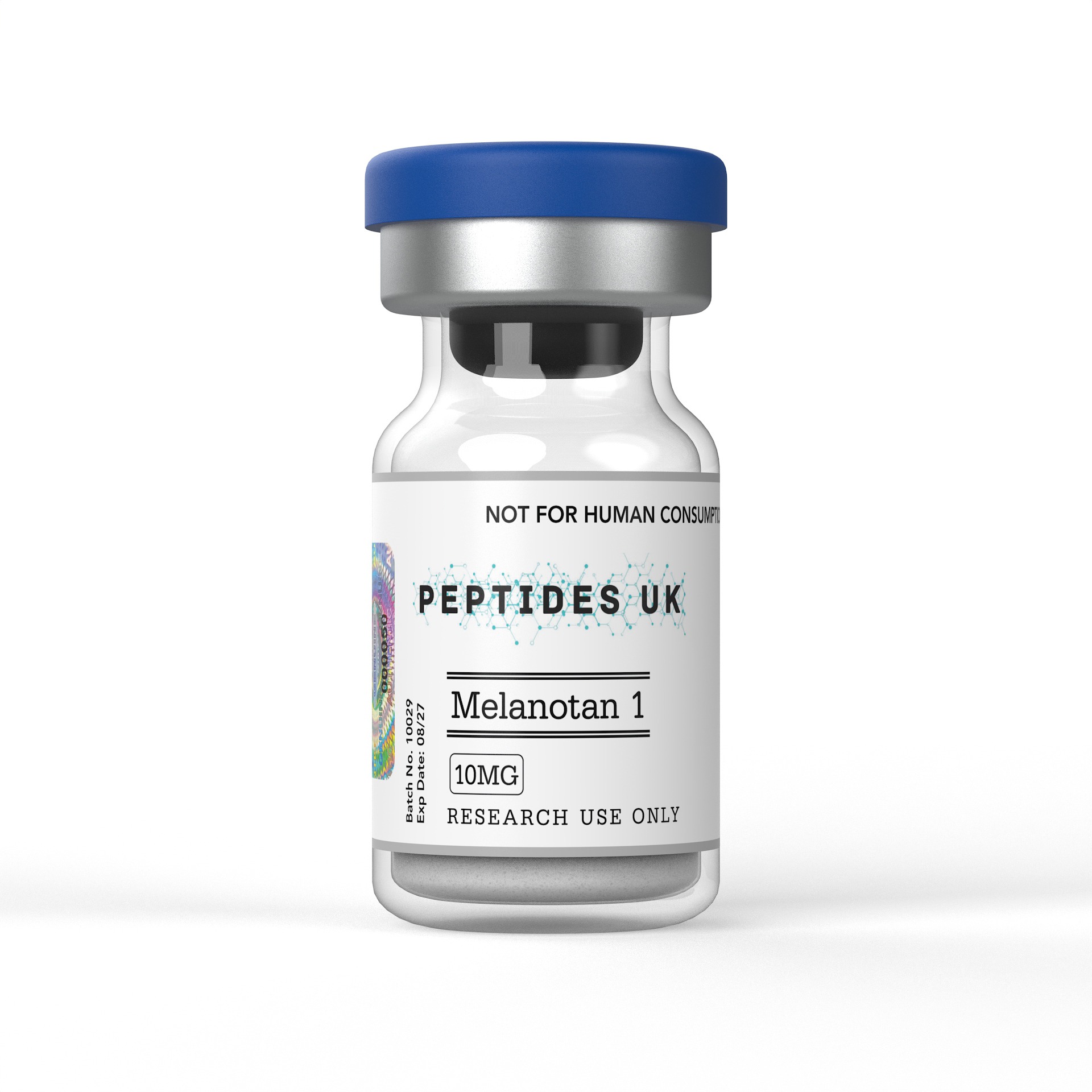
€58.00
Melanotan 1 (MT-1) EU – Buy Online | In Stock & Ready to Ship
Buy Melanotan 1 (MT-1) in Europe with fast shipping and guaranteed ≥99% purity — verified with COA and HPLC documentation. A trusted choice for peptides EU research teams rely on, with no customs delays or lengthy international wait times. Whether you’re searching for Melanotan 1 Europe suppliers, looking to buy Melanotan 1 in the EU, or sourcing peptides Europe-wide, we have you covered. Research teams across the EU can count on consistent stock, rapid fulfilment and full batch documentation every time.
For research use only. Not intended for human or veterinary use.


Melanotan 1 (MT-1) — designated afamelanotide in regulated clinical use, approved as Scenesse by the EMA (2014/2016) and FDA (2019), sequence Ac-Ser-Tyr-Ser-Nle-Glu-His-D-Phe-Arg-Trp-Gly-Lys-Pro-Val-NH₂ ([Nle⁴, D-Phe⁷]-α-MSH), a synthetic tridecapeptide analogue of endogenous alpha-melanocyte-stimulating hormone originally developed at the University of Arizona — is the most extensively characterised, clinically validated, and regulatory-approved MC1R agonist available to EU dermatology, photobiology, pigmentation biology, and photoprotection research laboratories. Its two structural modifications from α-MSH — replacement of Met⁴ with norleucine (Nle) eliminating oxidative lability, and racemisation of Phe⁷ to the D-isomer conferring resistance to endopeptidase cleavage — produce a superpotent, metabolically stabilised MC1R agonist that drives UV-independent eumelanin synthesis through the full MC1R → cAMP → PKA → CREB → MITF → tyrosinase transcriptional cascade, simultaneously activating XPC-dependent DNA repair, antioxidant biology, and anti-inflammatory signalling through MC1R-coupled pathways that extend its research utility well beyond melanogenesis alone. Research institutions and laboratories across the EU can source verified, research-grade Melanotan 1 in Europe with fast dispatch and full batch documentation included.
✅ ≥99% Purity — HPLC & Mass Spectrometry Verified
✅ Nle⁴ & D-Phe⁷ Modifications Confirmed — Batch-Specific CoA Included
✅ Sterile Lyophilised Powder | GMP Manufactured
✅ Fast Dispatch Across EU & Europe | EU Peptides Stock
Melanotan 1 is a synthetic tridecapeptide — 13 amino acids — whose sequence is Ac-Ser-Tyr-Ser-Nle-Glu-His-D-Phe-Arg-Trp-Gly-Lys-Pro-Val-NH₂, differing from the 13-amino acid endogenous hormone α-MSH (ACTH₁₋₁₃ amide) at precisely two positions. These two modifications are the structural and pharmacological foundation of MT-1’s research utility relative to the native hormone.
The first modification — replacement of methionine at position 4 with norleucine (Nle) — eliminates the sulphur-containing side chain that renders native α-MSH susceptible to oxidative inactivation in biological environments, substantially extending biological activity duration. The second modification — racemisation of phenylalanine at position 7 from the natural L-isomer to the D-isomer (D-Phe) — introduces steric constraint that dramatically reduces susceptibility to endopeptidase cleavage at the His-Phe bond, the primary proteolytic inactivation site in native α-MSH, while simultaneously increasing receptor binding affinity 10- to 100-fold over α-MSH in functional pigmentation bioassays. Together these modifications produce a compound with substantially greater potency and metabolic stability than the endogenous hormone — driving the same MC1R-mediated melanogenic transcriptional programme from lower concentrations and over longer durations, which is the pharmacological basis of MT-1’s ability to produce UV-independent eumelanin synthesis in clinical research paradigms.
The origin of MT-1 is directly traceable to a rational research hypothesis. Scientists at the University of Arizona in the 1980s — led by Mac Hadley and Victor Hruby — reasoned that melanin is the body’s primary intrinsic defence against UV radiation-induced DNA damage, and that a pharmacological tool capable of activating eumelanin synthesis independently of UV exposure could function as a systemic photoprotective agent — offering broad-spectrum UV absorption extending across UVA, UVB, and visible light that topical sunscreens, which are limited in coverage depth and duration, cannot replicate. Melanotan 1 was the first compound synthesised from this programme; α-MSH analogues with the [Nle⁴, D-Phe⁷] modifications were designated Melanotan 1 to distinguish the research compound from subsequent analogues including the cyclic Melanotan 2.
The melanocortin system context is essential. α-MSH (ACTH₁₋₁₃ amide) is produced by post-translational processing of pro-opiomelanocortin (POMC) — specifically by N-terminal acetylation of the 13-residue N-terminal fragment of ACTH — and is released from pituitary melanotrophs and keratinocytes in response to UV-induced skin damage. Endogenous α-MSH release following UV exposure is the physiological initiator of the tanning response — driving the MC1R → MITF cascade in melanocytes to synthesise the eumelanin that constitutes post-UV photoprotective pigmentation. MT-1 replicates this biology independently of UV exposure, enabling UV-independent pre-exposure photoprotection rather than UV-dependent post-damage pigmentation. This mechanistic distinction — the ability to increase epidermal melanin density before UV exposure — is the central pharmacological rationale for MT-1’s clinical photoprotection research programme.
MT-1 binds predominantly to MC1R — the melanocortin receptor subtype expressed at highest density on melanocytes, keratinocytes, and some immune cells, and whose loss-of-function variants are the primary genetic determinants of fair skin, red hair, and increased skin cancer risk in fair-skinned populations. Unlike Melanotan 2, which is a cyclic heptapeptide with substantial activity across MC1R, MC3R, MC4R, and MC5R, MT-1’s linear tridecapeptide structure and sequence composition confer a substantially more MC1R-selective receptor profile — making it the appropriate research tool for investigations focused on MC1R-specific biology rather than pan-melanocortin receptor pharmacology.
MC1R Signalling and Melanogenesis Transcriptional Cascade Research — MT-1’s primary and most extensively characterised research application is the activation of the complete MC1R melanogenesis signalling cascade — the best-characterised pathway in pigmentation biology and a central research subject for EU photobiology, dermatology, and melanocyte biology laboratories. Upon MC1R binding, MT-1 drives the following intracellular sequence: Gs activation → adenylyl cyclase stimulation → cAMP production from ATP → PKA activation → CREB phosphorylation at Ser¹³³ → phosphorylated CREB binding to the CRE element in the MITF (microphthalmia-associated transcription factor) gene promoter → MITF protein synthesis → MITF-driven transcriptional activation of melanogenic enzyme genes including TYR (tyrosinase — the rate-limiting enzyme of melanogenesis, catalysing DOPA synthesis from tyrosine), TYRP1 (tyrosinase-related protein 1, DCT (dopachrome tautomerase), and MLANA (melan-A/MART-1) → eumelanin biosynthesis within melanosomes → melanosome transfer to surrounding keratinocytes → supranuclear melanin cap formation providing UV photon absorption above keratinocyte nuclei. MITF additionally transactivates the MC1R gene itself — creating a positive feedback loop amplifying melanocyte sensitivity to melanocortin stimulation. Research uses MT-1 to characterise each node of this cascade, to study MITF as a master transcriptional regulator, and to investigate the eumelanin/pheomelanin switching biology governed by the MC1R/agouti signalling protein (ASIP) competitive balance.
Eumelanin/Pheomelanin Switching and Photoprotection Biology Research — The eumelanin:pheomelanin ratio — determined primarily by the MC1R/ASIP competitive balance — is the most important determinant of photoprotective efficacy of skin melanin. Eumelanin (black/brown; DHICA and DHI polymers) is a broadband UV absorber and free radical scavenger that provides genuine photoprotection. Pheomelanin (red/yellow; benzothiazine polymer) is a poor UV absorber and, critically, generates reactive oxygen species upon UV irradiation — meaning it contributes to rather than protects against UV-induced DNA damage. Fair-skinned individuals with MC1R loss-of-function variants (particularly Arg151Cys, Arg160Trp, Asp294His — the ‘R’ alleles most strongly associated with red hair and skin cancer risk) produce predominantly pheomelanin — explaining both their tanning failure and their disproportionate skin cancer risk. MT-1 overrides MC1R variant-associated melanogenic insufficiency by providing supraphysiological MC1R agonist stimulus — documented in a 77-participant Phase II clinical trial to increase eumelanin density specifically in individuals carrying MC1R variant alleles to a greater extent than in wild-type MC1R individuals, directly demonstrating that MT-1 overcomes loss-of-function MC1R variant signalling deficiency. EU research uses MT-1 to study the molecular basis of MC1R variant-dependent pheomelanin predominance, to characterise the agonist concentration-response relationships for eumelanin versus pheomelanin switching across MC1R genotypes, and to investigate the consequences of pharmacological eumelanin/pheomelanin ratio correction for UV-induced genotoxicity.
XPC-Dependent DNA Repair Research — Beyond the photoprotective indirect effect of increased melanin as a UV absorber, MT-1 activates direct DNA repair mechanisms in keratinocytes — independently of melanin synthesis — through an MC1R-XPC-dependent nucleotide excision repair (NER) mechanism. MC1R activation in keratinocytes by α-MSH and MT-1 enhances UV-induced DNA repair by upregulating XPA and XPC — xeroderma pigmentosum group A and C proteins that are rate-limiting components of the global genome NER pathway responsible for removing cyclobutane pyrimidine dimers (CPDs) and 6-4 photoproducts from UV-damaged DNA. This MC1R-driven NER enhancement operates independently of melanin production — providing a parallel, pigmentation-independent photoprotection mechanism that EU research uses to dissect the relative contributions of melanin-dependent UV absorption and MC1R-dependent DNA repair upregulation to the overall photoprotective biology of MC1R agonism, using MT-1 in UV-irradiated keratinocyte and melanocyte cultures with thymine dimer quantification (immunostaining, slot blot) and CPD repair kinetics as research endpoints.
Erythropoietic Protoporphyria (EPP) Biology Research — EPP is caused by autosomal dominant loss-of-function mutations in FECH (ferrochelatase) — the mitochondrial enzyme catalysing the final step of haem biosynthesis (iron insertion into protoporphyrin IX). FECH deficiency causes accumulation of protoporphyrin IX (PPIX) predominantly in erythrocytes and liver; PPIX is a potent photosensitiser absorbing visible light at 400–410 nm (the Soret band) and generating singlet oxygen and free radicals upon light excitation, producing immediate phototoxic reactions — severe burning pain within minutes of light exposure — that profoundly impair quality of life in EPP patients. MT-1’s mechanism for EPP photoprotection is distinct from NER-dependent photodamage repair: increased epidermal eumelanin density provides broad-spectrum light absorption — including at the visible wavelengths responsible for PPIX excitation — functioning as an optical screen that reduces the number of photons reaching PPIX-laden erythrocytes in dermal capillaries. EU research uses MT-1 in EPP cell and animal models to characterise the eumelanin screening mechanism, to study dose-photoprotection relationships in visible-light-induced PPIX photoactivation paradigms, and to investigate complementary photoprotective approaches combining melanin density augmentation with PPIX-lowering treatments.
MC1R Variant Allele Pharmacology Research — The MC1R gene is highly polymorphic in fair-skinned European populations — with over 100 variants identified, of which the R alleles (Arg151Cys, Arg160Trp, Asp294His) most strongly reduce receptor function and are associated with red hair, inability to tan, and substantially elevated melanoma and non-melanoma skin cancer risk. The molecular basis of R allele loss-of-function is impaired cell surface expression (reduced receptor trafficking from ER to plasma membrane) and reduced agonist-stimulated cAMP production for those variants that do reach the cell surface. MT-1’s superpotent MC1R agonism — 10- to 100-fold greater potency than native α-MSH — provides sufficient receptor stimulus to overcome the reduced signalling efficiency of R allele receptor variants, enabling eumelanogenesis in genotypes that fail to respond to normal endogenous α-MSH levels. EU research uses MT-1 in MC1R variant-transfected cell systems and in primary melanocyte cultures from donors with known MC1R genotypes to characterise the structure-activity relationship of individual variant alleles, to study the molecular mechanisms of R allele loss-of-function, and to investigate whether supraphysiological agonist dose can pharmacologically rescue variant MC1R function across the clinically relevant allele spectrum.
Anti-Inflammatory Biology Research — MC1R is expressed on macrophages, monocytes, neutrophils, dendritic cells, and keratinocytes — where its activation by α-MSH and MT-1 produces anti-inflammatory effects through multiple mechanisms: suppression of NF-κB nuclear translocation and NF-κB-driven pro-inflammatory cytokine gene expression (TNF-α, IL-1β, IL-6, IL-8), upregulation of IL-10 secretion, and modulation of macrophage polarisation toward anti-inflammatory phenotypes. The anti-inflammatory biology of MC1R agonism is MC1R-Gs-cAMP-PKA-mediated — with elevated intracellular cAMP suppressing NF-κB through PKA-dependent IκBα phosphorylation that prevents IκBα degradation and NF-κB nuclear entry. Research uses MT-1 to characterise the MC1R anti-inflammatory axis in primary immune cell cultures, to study the interplay between melanocortin-driven anti-inflammatory biology and UV-induced inflammation in the skin, and to investigate the potential of MC1R agonism in inflammatory dermatological conditions including atopic dermatitis paradigms — where reduced epidermal melanin barrier function and elevated inflammatory tone are co-present.
Vitiligo Repigmentation and Phototherapy Biology Research — Vitiligo — loss of functional epidermal melanocytes in segmental or non-segmental patterns — represents a particularly direct research application for MC1R agonist tools: surviving melanocytes in vitiligo lesion borders retain MC1R but are insufficiently activated, and the therapeutic challenge is to maximally stimulate residual melanocyte populations to proliferate and repigment affected skin. Narrowband UVB (NB-UVB) phototherapy is the standard repigmentation treatment — activating residual melanocytes through both UV-driven MC1R stimulation and direct melanocyte proliferative signals. A randomised multicentre trial (JAMA Dermatology, 2015; Lim et al.) demonstrated that combined afamelanotide plus NB-UVB treatment achieved faster and superior repigmentation than NB-UVB alone — with the additive effect attributed to MT-1’s ability to maximally prime MC1R signalling and MITF-driven melanogenesis in residual melanocytes before each NB-UVB treatment session, increasing responsiveness to the phototherapy stimulus. EU research uses MT-1 in melanocyte-keratinocyte co-culture models and in ex vivo human skin explants to characterise the mechanisms of this combination biology, to study melanocyte proliferation and migration in the vitiligo repigmentation context, and to investigate MITF-driven melanocyte survival and anti-apoptotic signalling.
Polymorphic Light Eruption and Solar Urticaria Research — Polymorphic light eruption (PLE) — the most common photodermatosis, affecting up to 15% of the population — is characterised by a delayed inflammatory response to UV, specifically to UV-induced skin antigens not adequately suppressed in susceptible individuals who lack the normal UV-induced immunosuppression response. MT-1-driven eumelanin increase reduces the UV dose reaching the epidermal immune cell compartment — attenuating the photoantigen formation that drives PLE reactions — while the MC1R anti-inflammatory biology may additionally modulate the downstream inflammatory cascade. Solar urticaria — immediate urticaria within minutes of light exposure, mediated by IgE-dependent mast cell degranulation triggered by photoallergens — has demonstrated afamelanotide-driven reductions in weal formation under experimental photoprovocation, attributed primarily to the optical UV-absorption screening mechanism of increased melanin density. EU research uses MT-1 in PLE and solar urticaria cellular and ex vivo models to characterise the mechanistic basis of photoprotection in these distinct photodermatoses.
Organ Transplant Recipient Skin Cancer Prevention Research — Immunosuppressed organ transplant recipients face dramatically elevated skin cancer risk — approximately 65-fold increased squamous cell carcinoma risk attributable to immunosuppression-driven oncoviral activity (HPV), impaired UV damage immune surveillance, and cumulative UV burden in a population with absent tumour immunosurveillance. Actinic keratoses (premalignant UV-damage lesions) and squamous cell carcinoma represent the primary skin cancer burden in this population. MT-1’s photoprotective biology — UV-independent eumelanin induction combined with NER-driven DNA repair upregulation — provides a mechanistically rational approach to reducing the UV-induced genotoxic burden driving field cancerisation in transplant recipients. EU research uses MT-1 in immunosuppressed cell systems and in UV-irradiation protocols modelling the transplant recipient UV-damage context to characterise the combined melanin-screen and DNA-repair-upregulation contributions to pre-malignant lesion prevention biology.
Phase II MC1R Variant Allele Study — A randomised, double-blind, placebo-controlled Phase II study of 77 fair-skinned Caucasian participants (Adelaide and Sydney) compared afamelanotide at 0.16 mg/kg/day subcutaneous injection (10-day cycles) against placebo, measuring melanin density by reflectance spectrophotometry. MT-1-treated participants showed a mean melanin density increase of +0.73 units versus a mean decrease of −0.30 units in the placebo group (p<0.001). Critically, the melanin density increase was greater in participants carrying R allele MC1R variants (Val60Leu, Asp84Glu, Val92Met, Arg142His, Arg151Cys, Arg160Trp) than in wild-type MC1R participants — directly demonstrating that MT-1’s superpotent MC1R agonism pharmacologically rescues melanogenic function in genotypes most in need of photoprotective melanin augmentation.
EPP Phase III Clinical Data and Regulatory Approval — Phase III randomised controlled trials in EPP patients established afamelanotide’s efficacy in increasing pain-free light exposure duration — with treated patients able to spend substantially longer outdoors without phototoxic reactions, and quality of life instruments documenting significant improvements across activity, psychological, and social functioning domains. These data supported EMA approval of Scenesse in 2014 (conditional) and 2016 (standard marketing authorisation) for prevention of phototoxicity in adults with EPP — making afamelanotide/MT-1 the first-in-class approved MC1R agonist and the first systemic photoprotection therapy. FDA approval followed in October 2019 for increasing pain-free light exposure in adults with EPP. A long-term observational study of 115 EPP patients over 6 years of afamelanotide treatment (Biolcati et al., BJD 2015) documented continued efficacy and no significant long-term safety signals — establishing the first sustained clinical safety dataset for a regulated MC1R agonist.
Vitiligo Combination Therapy Data — A randomised multicentre trial (Lim et al., JAMA Dermatology, 2015) in 55 patients with non-segmental vitiligo compared NB-UVB phototherapy alone versus afamelanotide plus NB-UVB over 6 months — demonstrating statistically significant improvements in the Vitiligo Area Scoring Index (VASI) and physician global assessment scores in the combination arm, with faster onset of repigmentation and superior pigmentation of sun-protected body areas where NB-UVB light dose is typically insufficient to drive repigmentation. This trial directly established MT-1 combination biology as a clinically meaningful advance over monotherapy NB-UVB and provided mechanistic evidence that maximal MC1R pre-stimulation augments the melanocyte response to phototherapy.
| Feature | Melanotan 1 (MT-1/Afamelanotide) | Melanotan 2 (MT-2) | α-MSH (endogenous) |
|---|---|---|---|
| Structure | Linear tridecapeptide — 13 aa | Cyclic heptapeptide — lactam bridge | Linear tridecapeptide — 13 aa (N-terminal acetyl, C-terminal amide) |
| Key Modifications vs. α-MSH | Nle⁴ (oxidative stability) + D-Phe⁷ (protease resistance, potency) | Cyclic, truncated, Ac-N-terminal — multiple modifications | Endogenous — Met⁴, L-Phe⁷ — rapidly degraded |
| MC1R Selectivity | High — primary receptor target | Moderate — MC1R, MC3R, MC4R, MC5R | High — primary endogenous MC1R/MC3R/MC4R ligand |
| MC4R Activity | Low/minimal | Significant — sexual arousal, appetite | Yes |
| Melanogenesis | Primary characterised application | Yes — strong eumelanogenesis | Yes — endogenous initiator |
| Tanning Biology | Potent — UV-independent eumelanin | Potent — similar mechanism | Yes — UV-dependent in vivo |
| Sexual Arousal Biology | Absent/negligible (MC4R-sparing) | Prominent — MC4R/MC3R-driven | Minimal |
| Anti-Inflammatory | Yes — MC1R-NF-κB/IL-10 | Less characterised | Yes |
| DNA Repair (XPC/NER) | Yes — MC1R-driven NER upregulation | Less characterised | Yes |
| Clinical Status | EMA + FDA approved (EPP) — Scenesse | Not approved — research only | Endogenous — not developed |
| Half-Life | ~30 min (plasma); depot formulation extends therapeutic effect | Short — rapid plasma degradation | ~1–3 min — very rapidly degraded |
| Research Utility | MC1R reference agonist; photoprotection; melanogenesis cascade; EPP; vitiligo | Pan-MCR coverage; comparative MC4R/sexual biology | Endogenous reference; low-potency/short-duration MC1R |
| Nevus/Pigmented Lesion Risk | Documented — pre-existing nevi require monitoring | Documented — pigmented lesion activation | UV-driven activation — indirect |
| Parameter | Specification |
|---|---|
| Full Name | Melanotan 1 / Afamelanotide / [Nle⁴, D-Phe⁷]-α-MSH |
| Also Known As | Afamelanotide / NDP-MSH / CUV1647 / Scenesse (clinical formulation) |
| Sequence | Ac-Ser-Tyr-Ser-Nle-Glu-His-D-Phe-Arg-Trp-Gly-Lys-Pro-Val-NH₂ |
| Modifications vs. α-MSH | Nle⁴ (norleucine replaces Met⁴); D-Phe⁷ (D-isomer replaces L-Phe⁷) |
| Type | Synthetic Linear Tridecapeptide — MC1R-Selective Melanocortin Agonist — Research Grade |
| Molecular Weight | ~1647 Da |
| CAS Number | 75921-69-6 |
| N-Terminal | N-acetyl (Ac) |
| C-Terminal | Valinamide (Val-NH₂) — C-terminal amide |
| Primary Receptor | MC1R — Gs-coupled GPCR |
| Receptor Selectivity | MC1R primary; minimal MC4R activity — distinct from MT-2 |
| Potency vs. α-MSH | 10–100-fold greater in pigmentation bioassays |
| Purity | ≥99% HPLC & MS Verified — Nle⁴ and D-Phe⁷ confirmed |
| Form | Sterile Lyophilised Powder |
| Solubility | Sterile water or bacteriostatic water — good aqueous solubility |
| Storage (Powder) | -20°C; protect from light and moisture |
| Storage (Reconstituted) | 4°C up to 7 days; -20°C single-use aliquots |
| Clinical Status | EMA approved (Scenesse, 2014/2016) + FDA approved (Scenesse, 2019) — EPP indication |
| Bundle Size | 10mg |
Melanotan 1 reconstitutes readily in sterile water or bacteriostatic water — add solvent slowly to the lyophilised powder and swirl gently until dissolved. Good aqueous solubility; no acidic reconstitution conditions or reducing agents required. The N-acetyl N-terminus and C-terminal valinamide are chemically stable under standard aqueous conditions — both confirmed by mass spectrometry on each batch. The Nle⁴ modification eliminates the oxidative instability of the Met⁴ sulphur side chain present in native α-MSH — reconstituted MT-1 solutions are consequently more oxidatively stable than α-MSH under equivalent storage conditions, though single-use aliquots at -20°C and protection from light remain best practice.
MT-1 contains no disulphide bonds — no reducing agent incompatibilities. The D-Phe⁷ residue is stereochemically stable under standard aqueous storage. For cell-based MC1R assay applications — working concentrations in the low nanomolar range are appropriate for cAMP induction and MITF/tyrosinase expression studies in B16 melanoma cells, primary human melanocytes, and HEK293 MC1R-transfected systems. Add 0.1% BSA to dilution buffers at sub-nanomolar working concentrations to prevent adsorptive losses. Protect from light at all storage and handling stages — melanogenic products generated in cell assays are light-sensitive, and light exposure during assay incubations may confound results in melanin quantification endpoints.
Every Melanotan 1 order dispatched across the EU and Europe includes:
✅ Batch-Specific Certificate of Analysis (CoA)
✅ HPLC Chromatogram
✅ Mass Spectrometry Confirmation — sequence, Nle⁴ and D-Phe⁷ modification verification
✅ Sterility & Endotoxin Testing Report
✅ Reconstitution Protocol
✅ Technical Research Support
Yes — research-grade Melanotan 1 (afamelanotide) is available to EU and European researchers with fast dispatch and full batch documentation. Supplied strictly for laboratory research purposes only.
MT-1 is a linear tridecapeptide that is highly MC1R-selective — producing potent eumelanogenesis with minimal MC4R activity and no characterised sexual arousal biology. MT-2 is a cyclic heptapeptide with substantial activity across MC1R, MC3R, MC4R, and MC5R — producing melanogenesis alongside MC4R-driven sexual arousal and appetite effects. MT-1 is the appropriate research tool for MC1R-specific pigmentation, photoprotection, and anti-inflammatory biology; MT-2 is used where broader melanocortin receptor coverage or CNS sexual function biology is the research objective.
Nle⁴ replaces Met⁴ — eliminating the oxidation-susceptible sulphur side chain and improving metabolic stability. D-Phe⁷ replaces L-Phe⁷ — conferring resistance to endopeptidase cleavage at the His-Phe bond and increasing MC1R binding affinity 10–100-fold over native α-MSH. Both must be confirmed by mass spectrometry on each research batch — their absence would yield a compound with native α-MSH potency and stability, fundamentally changing the dose-response characteristics.
MC1R binding → Gs activation → adenylyl cyclase → cAMP → PKA → CREB phosphorylation (Ser¹³³) → MITF gene transcription → MITF protein → transcriptional activation of TYR (tyrosinase), TYRP1, DCT → eumelanin biosynthesis in melanosomes → melanosome transfer to keratinocytes. MITF also autoamplifies MC1R expression. Parallel cAMP-dependent pathways drive XPC/XPA NER upregulation in keratinocytes and NF-κB suppression in immune cells.
R allele MC1R variants (Arg151Cys, Arg160Trp, Asp294His) have reduced cell surface expression and lower agonist-stimulated cAMP output than wild-type MC1R — producing melanogenic insufficiency that underlies fair skin, tanning failure, and elevated skin cancer risk. MT-1’s 10–100-fold supraphysiological potency overcomes the reduced signalling efficiency of variant receptors, activating eumelanogenesis in genotypes that fail to respond to normal α-MSH levels. This was directly demonstrated in the Phase II 77-participant clinical trial where melanin density increases were greatest in R allele carriers.
Vehicle control (matched sterile water or buffer) is essential. MC1R-selective antagonist controls — where available — confirm MC1R-mediated effects. For eumelanin/pheomelanin ratio studies, ASIP (agouti signalling protein) co-treatment establishes the competitive MC1R antagonism context. For DNA repair research, NER-deficient cell lines (XPC knockout, XPA mutant) distinguish MC1R-driven NER upregulation from basal NER activity. α-MSH at matched molar concentrations provides the endogenous agonist comparator for potency benchmarking.
≥99% HPLC with mass spectrometry confirmation of both the Nle⁴ and D-Phe⁷ modifications is essential. L-Phe⁷ reversion (epimerisation back to the L-isomer) would produce a compound indistinguishable from native α-MSH by HPLC retention time but with dramatically reduced protease resistance and potency. Met⁴ contamination would introduce oxidative instability. Both modifications must be individually confirmed by the batch MS data provided with every lot.
Melanotan 1 (Afamelanotide) is supplied exclusively for legitimate scientific research purposes conducted within licensed laboratory environments across the EU and Europe. This product is not intended for human consumption, self-administration, or any therapeutic application. It must be handled by qualified researchers in compliance with applicable EU regulations and institutional ethics guidelines. By purchasing, you confirm that this compound will be used solely for approved in vitro or pre-clinical research purposes.


Receive News
