PRODUCTS SOLD ON PEPTIDESLABEU.COM ARE FOR RESEARCH PURPOSES ONLY AND ARE NOT FOR HUMAN OR VETERINARY USE.
€184.00
Survodutide EU – Buy Online | In Stock & Ready to Ship
Buy Survodutide in Europe with fast shipping and guaranteed ≥99% purity — verified with COA and HPLC documentation. A trusted choice for peptides EU research teams rely on, with no customs delays or lengthy international wait times. Whether you’re searching for Survodutide Europe suppliers, looking to buy Survodutide in the EU, or sourcing peptides Europe-wide, we have you covered. Research teams across the EU can count on consistent stock, rapid fulfilment and full batch documentation every time.
For research use only. Not intended for human or veterinary use.


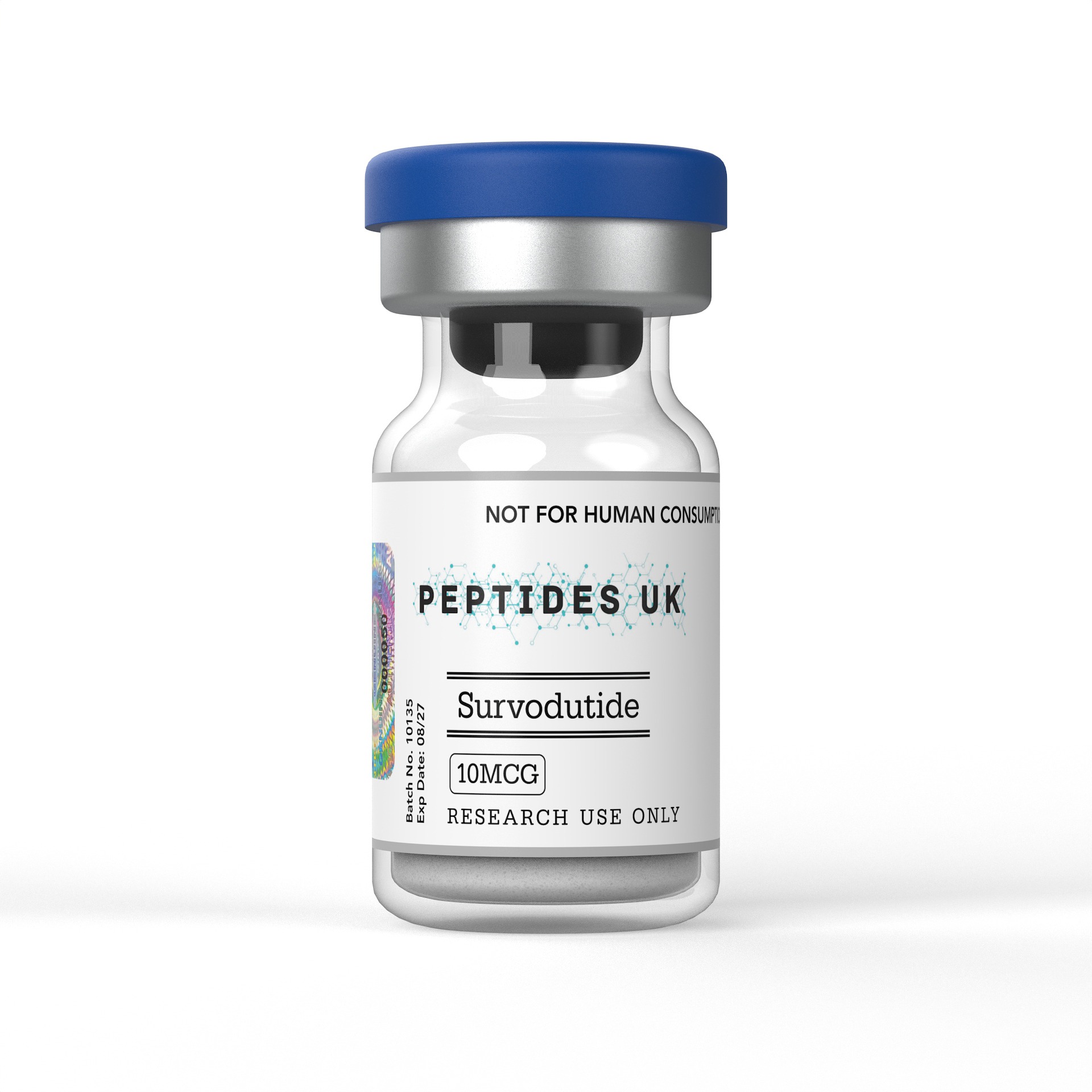
Survodutide — designated BI 456906 in development, a GLP-1R-biased GCGR/GLP-1R dual agonist discovered by Zealand Pharma and licensed to Boehringer Ingelheim for global development — is a rationally engineered 29-amino acid acylated peptide derived from a modified glucagon sequence incorporating an unnatural amino acid at position 2 (Ac4c), targeted amino acid substitutions from GLP-1 and exendin-4 at positions 16, 18, 20, and 23 to confer dual receptor activation, and a C18 fatty diacid chain conjugated at position 24 via a glycine-serine linker to extend plasma half-life to support once-weekly subcutaneous dosing. Survodutide simultaneously engages two complementary and mechanistically distinct metabolic regulatory axes — GLP-1R-mediated appetite suppression, glucose-dependent insulinotropic activity, gastric emptying delay, and CNS satiety signalling, and GCGR-mediated hepatic energy expenditure through FXR-dependent futile cycling, FGF21 secretion, bile acid modulation, brown adipose tissue thermogenesis, and lipolysis — producing weight loss in pre-clinical models exceeding maximally effective semaglutide doses through the additive contributions of reduced energy intake and increased energy expenditure that GLP-1 monoagonism cannot provide alone. Survodutide has received FDA Breakthrough Therapy Designation and EMA PRIME Scheme access for MASH with fibrosis, has completed three Phase 2 trials across obesity, type 2 diabetes, and MASH, and is currently in Phase 3 trials for obesity and MASH — representing one of the most clinically advanced GCGR/GLP-1R dual agonist research tools available to EU metabolic disease, hepatology, and incretin biology laboratories. Research institutions and laboratories across the EU can source verified, research-grade Survodutide in Europe with fast dispatch and full batch documentation included.
✅ ≥99% Purity — HPLC & Mass Spectrometry Verified
✅ C18 Fatty Diacid Acylation & Ac4c Unnatural Amino Acid Confirmed — Batch-Specific CoA
✅ Sterile Lyophilised Powder | GMP Manufactured
✅ Fast Dispatch Across EU & Europe | EU Peptides Stock
Survodutide is a synthetic acylated 29-amino acid peptide functioning as a dual agonist of the glucagon receptor (GCGR) and glucagon-like peptide-1 receptor (GLP-1R) — two closely related class B secretin-family GPCRs sharing structural homology, a common intracellular Gs-cAMP-PKA signalling axis, and a shared evolutionary origin as processing products of the proglucagon gene.
The proglucagon lineage provides the conceptual foundation for survodutide’s design. Proglucagon is a 160-amino acid precursor encoded by the GCG gene and processed tissue-specifically by prohormone convertases: in pancreatic α-cells, PC2 cleaves proglucagon to yield glucagon (residues 33–61); in intestinal L-cells and hindbrain neurons, PC1/3 cleaves proglucagon to yield GLP-1 (residues 78–108) and GLP-2. Oxyntomodulin — a naturally occurring 37-amino acid peptide comprising the 29-amino acid glucagon sequence extended by an 8-residue C-terminal octapeptide — is additionally produced by intestinal L-cell PC1/3 processing and is the primary endogenous GCGR/GLP-1R co-agonist. Oxyntomodulin’s documented weight-reducing effects in humans — reducing food intake and increasing energy expenditure — provided the physiological proof of concept that dual GCGR/GLP-1R engagement is a viable and effective strategy for obesity management, directly motivating the pharmaceutical engineering programme from which survodutide emerged.
Survodutide’s molecular structure reflects deliberate engineering for balanced dual receptor activity with a GLP-1R bias. Starting from the 29-amino acid glucagon sequence, key substitutions were introduced: position 2 was changed to the novel unnatural amino acid Ac4c (1-aminocyclobutane-1-carboxylic acid) — conferring resistance to DPP-IV-mediated N-terminal dipeptide cleavage, the principal inactivation mechanism for native glucagon and GLP-1; position 16 was substituted with a residue from exendin-4 to tune receptor selectivity; positions 18, 20, and 23 were substituted with GLP-1 sequence residues to shift receptor balance toward GLP-1R; and positions 24 and 27–29 were modified with additional amino acid changes. The C18 fatty diacid half-life extender — linked at the Lys²⁴ side chain epsilon-amine via a glycine-serine spacer — provides albumin binding-mediated plasma half-life extension to support once-weekly clinical dosing, employing the same fatty acid acylation strategy used in semaglutide’s design. Cryo-EM structural studies have confirmed survodutide’s binding poses at both GLP-1R and GCGR, with the differential amino acid substitutions demonstrating specific receptor interactions that explain the functional potency data at each receptor.
Survodutide’s functional potency in CHO-K1 cell cAMP assays: EC50 of 0.33 nM at human GLP-1R and 0.52 nM at human GCGR — approximately 4-fold less potent than native GLP-1 and 22-fold less potent than native glucagon at their respective receptors at the level of the isolated acylated compound, with the Lys²⁴ fatty diacid itself reducing potency (removal of linker and diacid increases GLP-1R EC50 to 2 pM and GCGR EC50 to 23 pM) and the albumin-bound circulating form operating at substantially lower free peptide concentrations in vivo. The design deliberately targets a GLP-1R bias — leveraging the insulin secretion-enhancing and glycaemic control contributions of GLP-1R while adding the energy expenditure-increasing contributions of GCGR — validated by in vivo GCGR engagement biomarker data showing survodutide-driven hepatic NNMT mRNA upregulation (15–17-fold) and plasma FGF21 increases (up to 7-fold) as direct GCGR engagement readouts independent of GLP-1R effects.
GLP-1R Agonism — Appetite Suppression, Insulinotropia, and Gastric Emptying Research — Survodutide’s GLP-1R component engages the well-characterised GLP-1 receptor signalling biology across pancreas, brain, and gastrointestinal tissue. In pancreatic β-cells, GLP-1R activation by survodutide drives glucose-dependent insulin secretion — Gs → cAMP → PKA → CREB → insulin gene transcription and exocytosis, with the glucose-dependency of the insulinotropic effect distinguishing GLP-1R agonism from direct insulin secretagogues and providing the glycaemic safety that allows co-activation of the otherwise diabetogenic GCGR axis. In the hypothalamus and hindbrain, GLP-1R activation suppresses food intake through arcuate nucleus POMC neuron activation, NPY/AgRP neuron inhibition, and nucleus tractus solitarius integration of vagal satiety signals. Gastric emptying is retarded through GLP-1R-mediated pyloric regulation — contributing to postprandial glucose excursion reduction and sustained satiety. Research uses survodutide’s GLP-1R component to study incretin biology, glucose-dependent insulin secretion dynamics, and CNS satiety circuit pharmacology, using GLP-1R knockout mouse models and GLP-1R antagonist controls (exendin(9–39)) to isolate the GLP-1R contribution from the total survodutide response.
GCGR Agonism — Hepatic Energy Expenditure and Thermogenic Biology Research — Survodutide’s GCGR component drives a hepatic energy expenditure programme that mechanistically distinguishes it from all GLP-1 monoagonist comparators. Hepatocytes express the highest density of GCGR in any tissue — with survodutide-driven GCGR activation initiating Gs → cAMP → PKA → phosphorylation of hepatic enzymes governing glycogenolysis, gluconeogenesis, lipid oxidation, mitochondrial function, and metabolic enzyme activity. The key thermogenic output is a cascade of hepatic-origin endocrine signals: GCGR activation drives transcriptional upregulation and secretion of the hepatokine FGF21 — a pleiotropic metabolic hormone acting on white adipose tissue beiging (UCP1-independent and UCP1-dependent thermogenesis), brown adipose tissue activation (via FGFR1c/β-klotho receptor complex), and central appetite modulation. FXR — the farnesoid X nuclear receptor activated by bile acids whose hepatic expression is modulated by GCGR signalling — further mediates hepatic futile cycling, fat oxidation, and adaptive thermogenesis; liver-specific GCGR knockout models and FXR knockout models have demonstrated that hepatic GCGR/FXR biology is required for glucagon-driven weight loss, directly implicating the liver as the primary organ mediating GCGR’s energy expenditure contribution. Research uses plasma FGF21 concentrations and hepatic NNMT mRNA expression — the validated in vivo GCGR engagement biomarkers established in survodutide’s preclinical development programme — to confirm and quantify GCGR target engagement independently of GLP-1R effects in both pre-clinical research models and translational research paradigms.
Dual Mechanism Synergy — Energy Balance Research — The central research question motivating GCGR/GLP-1R dual agonist investigation — and the primary reason survodutide outperforms GLP-1 monoagonists in pre-clinical head-to-head models — is whether simultaneous engagement of appetite suppression (GLP-1R) and energy expenditure augmentation (GCGR) produces additive or synergistic weight loss relative to either mechanism alone. In DIO mouse models, survodutide achieved approximately 25% body weight reduction from baseline versus maximally effective semaglutide doses — with the additional weight loss attributed to GCGR-driven energy expenditure contribution, as GLP-1R knockout experiments preserved the GCGR-specific energy expenditure component, while GCGR engagement in GLP-1R-competent animals additionally reduces metabolic adaptation (the compensatory reduction in resting metabolic rate that attenuates GLP-1 monoagonist-driven weight loss over time). EU research uses survodutide versus semaglutide head-to-head paradigms — with GCGR antagonist (LY2786890) and GLP-1R antagonist (exendin(9–39)) controls — to dissect additive versus synergistic contributions to weight loss and energy expenditure outcomes.
MASH and Hepatic Steatosis Research — Survodutide’s direct hepatic biology — GCGR-driven lipid oxidation, mitochondrial function improvement, and FGF21-mediated fat mobilisation — positions it as a particularly compelling research tool for MASH (metabolic dysfunction-associated steatohepatitis) biology beyond its obesity applications. GCGR activation in hepatocytes directly reduces liver fat content by inducing lipid oxidation, increasing mitochondrial metabolic enzyme activity, and driving FGF21-mediated fat export from hepatic lipid stores — effects observed in pre-clinical MASH models at the level of steatosis reduction independent of body weight changes, suggesting direct hepatic mechanisms beyond weight loss-mediated secondary steatosis reduction. EU hepatology research uses survodutide in primary hepatocyte cultures, liver organoid systems, and diet-induced MASH rodent models to characterise GCGR-driven hepatic lipid metabolism, the FXR/bile acid pathway contributions to steatosis resolution, and the relative contributions of GCGR-direct hepatic effects versus GLP-1R-driven weight loss to net MASH improvement — using hepatic fat fraction by MRI-PDFF and biopsy histology (MASH resolution, fibrosis staging) as research endpoints directly translatable to the clinical Phase 3 endpoints.
Type 2 Diabetes and Glycaemic Research — Survodutide’s balanced GCGR/GLP-1R pharmacology requires careful glycaemic characterisation — pharmacological GCGR agonism raises hepatic glucose output through gluconeogenesis and glycogenolysis (glucagon’s classical counter-regulatory function), while GLP-1R agonism enhances glucose-dependent insulin secretion and suppresses endogenous glucagon release. The GLP-1R-biased design of survodutide was specifically intended to ensure that GLP-1R-driven insulinotropic activity would offset GCGR-driven hepatic glucose production across the pharmacological dose range, maintaining glycaemic control or producing HbA1c reduction despite simultaneous GCGR activation. Phase 2 type 2 diabetes clinical data confirmed dose-dependent HbA1c reductions with survodutide — validating the glycaemic safety of the GLP-1R-biased GCGR/GLP-1R ratio — and EU research uses survodutide alongside matched GCGR mono-agonist and GLP-1R monoagonist controls in insulin-secretion and hepatic glucose output assays to characterise this glycaemic balance mechanism in detail.
Brown Adipose Tissue Thermogenesis Research — Beyond the FGF21-mediated indirect BAT activation mechanism, GCGR is directly expressed in brown adipose tissue — with survodutide’s GCGR component driving direct cAMP-PKA signalling in brown adipocytes to augment thermogenesis through UCP1-mediated and UCP1-independent futile cycling mechanisms. GLP-1R is also expressed in BAT, with CNS GLP-1R activation increasing sympathetic nervous system outflow to BAT and driving adrenergic UCP1 induction and PGC-1α-mediated mitochondrial biogenesis. Survodutide’s dual receptor coverage therefore activates BAT thermogenesis through three partially independent routes — direct GCGR-cAMP in brown adipocytes, indirect FGF21-mediated BAT activation via FGFR1c/β-klotho, and CNS GLP-1R-sympathetic nervous system-adrenergic signalling — making it a multi-pathway thermogenic research tool relevant to EU research programmes investigating brown and beige adipose tissue biology, adaptive thermogenesis, and the pharmacological harnessing of adipose energy expenditure.
Cardiovascular Biology Research — GCGR is expressed in cardiomyocytes and vascular smooth muscle — with glucagon’s classical inotropic and chronotropic effects on cardiac muscle (positive cardiac inotropy and chronotropy through cAMP-PKA) contributing to the cardiovascular pharmacology of GCGR agonists. The ongoing SYNCHRONIZE-CVOT Phase 3 cardiovascular outcomes trial (NCT06077864) — a 4,935-participant event-driven MACE trial in adults with obesity and established CVD or CKD — will characterise survodutide’s cardiovascular safety profile, providing the first GCGR/GLP-1R dual agonist CVOT dataset. EU cardiovascular research uses survodutide to study GCGR-mediated cardiac biology, to characterise the cardiovascular haemodynamic consequences of pharmacological dual GCGR/GLP-1R activation, and to investigate GLP-1R-mediated cardioprotective mechanisms in ischaemia-reperfusion and heart failure models where GLP-1R agonism has characterised independent cardioprotective biology.
Amino Acid Metabolism Research — Pharmacological GCGR activation reduces plasma amino acid concentrations — a documented pharmacodynamic consequence of survodutide treatment confirmed in Phase I clinical data, attributed to GCGR-driven amino acid catabolism and ureagenesis in hepatocytes. The liver is the primary site of amino acid nitrogen disposal through urea cycle activity, which is upregulated by GCGR/cAMP/PKA signalling. Reduced circulating amino acid levels — particularly branched-chain amino acids (BCAAs) — under GCGR agonist treatment may contribute to mTORC1 downregulation in muscle and adipose tissue, with potential effects on protein synthesis, autophagy, and adipogenesis. EU research uses survodutide-driven plasma amino acid reduction as a GCGR engagement biomarker alongside FGF21 and hepatic NNMT, and to study the metabolic consequences of pharmacological amino acid catabolism enhancement in the context of obesity-associated BCAA excess.
Incretin Biology and Multi-Agonist Landscape Research — Survodutide’s position in the expanding multi-receptor incretin pharmacology landscape — alongside GIP/GLP-1R dual agonist tirzepatide and GLP-1/GIP/GCGR triple agonist retatrutide — makes it an important research tool for dissecting the individual and combined contributions of GCGR versus GIPR agonism to weight loss, energy expenditure, and metabolic improvement. Head-to-head research comparing survodutide (GCGR/GLP-1R) with tirzepatide (GIPR/GLP-1R) allows quantitative attribution of energy expenditure augmentation (GCGR) versus insulin sensitisation and GIP receptor-specific biology (GIPR) to their respective weight loss mechanisms, characterising the pharmacologically distinct mechanisms by which different receptor combinations achieve similar or superior weight loss outcomes to GLP-1 monoagonism.
Phase 2 Obesity Trial — A randomised, double-blind, placebo-controlled Phase 2 dose-finding trial in 386 adults with BMI ≥27 kg/m² without type 2 diabetes documented dose-dependent body weight reductions at 46 weeks: −6.2% (0.6 mg), −12.5% (2.4 mg), −13.2% (3.6 mg), and −14.9% (4.8 mg) versus −2.8% for placebo. Over half of participants receiving survodutide 4.8 mg achieved ≥15% bodyweight reduction. All doses were tolerated, with gastrointestinal adverse events — nausea, diarrhoea, vomiting — the most frequent, consistent with the combined GLP-1R and GCGR gastrointestinal biology.
Phase 2 Type 2 Diabetes Trial — A 16-week Phase 2 study in 413 adults with type 2 diabetes on stable metformin background therapy demonstrated dose-dependent HbA1c reductions and body weight decreases — with survodutide producing greater weight reductions than open-label semaglutide 1.0 mg once weekly (−8.7% versus −5.4% at the highest dose), directly establishing that survodutide’s GCGR-additive mechanism produced clinically detectable additional weight loss over GLP-1 monoagonism in a type 2 diabetes population, while maintaining glycaemic safety consistent with the GLP-1R-biased design.
Phase 2 MASH Trial (NEJM, 2024) — A 48-week randomised Phase 2 trial in 293 adults with biopsy-confirmed MASH and fibrosis stage F1–F3 documented: MASH resolution with no worsening of fibrosis in 47% (2.4 mg), 62% (4.8 mg), and 43% (6.0 mg) versus 14% placebo (p<0.001 for dose-response); ≥30% liver fat content reduction in 63%, 67%, and 57% versus 14% placebo; and fibrosis improvement by ≥1 stage in 34%, 36%, and 34% versus 22% placebo. These data — published in the New England Journal of Medicine — established survodutide as one of the most effective pharmacological MASH treatments in Phase 2 evidence, underpinning FDA Breakthrough Therapy Designation and EMA PRIME Scheme access for MASH with fibrosis and directly initiating the LIVERAGE and LIVERAGE-Cirrhosis Phase 3 programmes.
| Feature | Survodutide (BI 456906) | Oxyntomodulin | Semaglutide (GLP-1R mono) | Tirzepatide (GIP/GLP-1R) |
|---|---|---|---|---|
| Receptor Profile | GCGR + GLP-1R — GLP-1R biased | GCGR + GLP-1R — endogenous | GLP-1R only | GIPR + GLP-1R |
| Structural Origin | Modified glucagon — Ac4c + C18 diacid acylation | Proglucagon L-cell processing product (37 aa) | GLP-1 analogue — C18 fatty acid | GIP/GLP-1 chimeric — C20 fatty diacid |
| Half-Life | ~7 days (once weekly) | Minutes — rapid plasma degradation | ~7 days (once weekly) | ~5 days (once weekly) |
| Energy Expenditure | Yes — GCGR-driven hepatic FGF21/FXR/BAT | Limited — rapidly degraded | No additional EE vs. baseline | Limited GCGR component |
| Hepatic Direct Biology | Strong — GCGR hepatocyte lipid oxidation, NNMT, FGF21 | Weak — short half-life | Indirect — via weight loss | Indirect |
| MASH Biology | Phase 3 — Breakthrough Therapy + EMA PRIME | Pre-clinical only | Limited clinical data | Phase 3 (SURMOUNT-NASH) |
| Phase Status | Phase 3 (obesity + MASH) | Endogenous reference — not in development | Approved (obesity, T2D) | Approved (obesity, T2D) |
| Glycaemic Control | Yes — HbA1c reduction | Yes — human data | Yes — primary indication | Yes — primary indication |
| Research Utility | Dual mechanism dissection; MASH biology; energy expenditure | Endogenous dual agonist reference | GLP-1R monoagonist comparator | GIPR vs. GCGR contribution dissection |
| Parameter | Specification |
|---|---|
| Full Name | Survodutide / BI 456906 |
| Developer | Zealand Pharma (discovery) / Boehringer Ingelheim (development) |
| Type | Synthetic Acylated 29-Amino Acid GCGR/GLP-1R Dual Agonist — Research Grade |
| Structural Basis | Modified glucagon sequence — Ac4c at position 2; GLP-1/exendin-4 substitutions at positions 16, 18, 20, 23; C18 fatty diacid at Lys²⁴ via Gly-Ser linker |
| CAS Number | 2805997-46-8 |
| Molecular Weight | ~3400 Da (acylated; approximate — confirmed by batch MS) |
| Receptor Targets | GCGR (EC50 ~0.52 nM CHO-K1); GLP-1R (EC50 ~0.33 nM CHO-K1) |
| Receptor Bias | GLP-1R-biased dual agonist |
| Signalling | Gs → adenylyl cyclase → cAMP → PKA — both receptors |
| In Vivo GCGR Biomarkers | Plasma FGF21 (↑ up to 7-fold); hepatic NNMT mRNA (↑ 15–17-fold) |
| In Vivo GLP-1R Biomarker | Improved oral glucose tolerance; reduced gastric emptying |
| Purity | ≥99% HPLC & MS Verified |
| Form | Sterile Lyophilised Powder |
| Solubility | Sterile water or PBS, pH 7.2–7.4; good aqueous solubility |
| Storage (Powder) | -20°C; protect from light and moisture |
| Storage (Reconstituted) | 4°C up to 7 days; -20°C single-use aliquots |
| Clinical Status | Phase 3 (obesity — SYNCHRONIZE programme; MASH — LIVERAGE programme); FDA Breakthrough Therapy + EMA PRIME (MASH) |
| Bundle Size | 5mg |
Survodutide reconstitutes in sterile water or PBS (pH 7.2–7.4) — add solvent slowly to the lyophilised powder and swirl gently until fully dissolved. Good aqueous solubility under neutral buffer conditions; no acidic reconstitution is required. The C18 fatty diacid acylation at Lys²⁴ is chemically stable under standard aqueous conditions and does not require special handling beyond that applied to other fatty acid-acylated research peptides.
Survodutide does not contain disulphide bonds — no reducing agent incompatibilities. The Ac4c unnatural amino acid at position 2 is incorporated specifically for DPP-IV stability and does not introduce any unusual handling requirements. For cell-based cAMP assay applications — survodutide working concentrations in the sub-nanomolar to low-nanomolar range are appropriate for GLP-1R and GCGR activation in CHO-K1, MIN6, and primary hepatocyte systems; empirical dose-response characterisation should be performed in each specific cell system, as the albumin-bound pharmacokinetically active form in vivo operates at substantially different free peptide concentrations than aqueous in vitro conditions. Addition of 0.1% BSA to dilution buffers is advisable at sub-nanomolar concentrations to prevent adsorptive losses and to more closely replicate the albumin-binding pharmacokinetic context of in vivo survodutide biology. Prepare single-use aliquots at -20°C following reconstitution and avoid repeated freeze-thaw.
Every Survodutide order dispatched across the EU and Europe includes:
✅ Batch-Specific Certificate of Analysis (CoA)
✅ HPLC Chromatogram
✅ Mass Spectrometry Confirmation — acylated molecular weight and sequence verification
✅ Sterility & Endotoxin Testing Report
✅ Reconstitution Protocol
✅ Technical Research Support
Yes — research-grade Survodutide (BI 456906) is available to EU and European researchers with fast dispatch and full batch documentation. Supplied strictly for laboratory research purposes only.
Semaglutide activates only GLP-1R — reducing food intake and improving glycaemia, but producing no additional energy expenditure beyond the secondary metabolic rate changes accompanying weight loss. Survodutide additionally activates GCGR — driving hepatic FGF21 secretion, FXR-mediated futile cycling, brown adipose tissue thermogenesis, and direct lipolysis — producing measurably greater weight loss in head-to-head pre-clinical and Phase 2 clinical comparisons through the additive contribution of increased energy expenditure to GLP-1R-driven reduced energy intake.
Native glucagon monotherapy at pharmacological doses elevates hepatic glucose production diabetogenically. The GLP-1R-biased design ensures that survodutide’s GLP-1R-driven glucose-dependent insulin secretion and glucagon suppression offset GCGR-driven hepatic glucose output across the therapeutic dose range — maintaining glycaemic safety while preserving the energy expenditure-enhancing GCGR component. Phase 2 type 2 diabetes data confirmed HbA1c reductions rather than increases, validating the intended glycaemic balance.
Hepatic NNMT mRNA expression (upregulated 15–17-fold versus vehicle in acute lean mouse dosing studies) and plasma FGF21 concentration (increased up to 7-fold) are the validated in vivo GCGR engagement biomarkers established in survodutide’s preclinical development and confirmed across Phase 1–2 clinical data. Both are GCGR-specific readouts independent of GLP-1R effects — enabling quantitative confirmation of hepatic GCGR target engagement in research models. Plasma amino acid reduction (particularly alanine) is an additional GCGR engagement indicator reflecting GCGR-driven hepatic amino acid catabolism and ureagenesis.
Survodutide is in Phase 3 for obesity (SYNCHRONIZE programme including a cardiovascular outcomes trial) and Phase 3 for MASH (LIVERAGE and LIVERAGE-Cirrhosis). It holds FDA Breakthrough Therapy Designation and EMA PRIME Scheme access for MASH with fibrosis — reflecting the clinical significance of the Phase 2 NEJM MASH data. It is not yet approved by any regulatory authority for any indication.
Vehicle control (matched buffer) is essential. GLP-1R antagonist exendin(9–39) and GCGR antagonist LY2786890 (or equivalent) — alone and in combination — are required to isolate individual receptor contributions from the combined survodutide response. GLP-1R knockout and GCGR knockout animal models, where available, provide the definitive receptor-specific contribution dissection. Semaglutide at matched GLP-1R-equiactive doses provides the GLP-1R monoagonist comparator reference condition defining the GCGR-additive contribution.
≥99% HPLC with mass spectrometry confirmation of the fully acylated molecular weight is essential — the C18 fatty diacid conjugation must be confirmed intact, as loss of the acyl chain would abolish albumin-binding and dramatically alter both pharmacokinetics and the effective free peptide concentration in biological systems. The Ac4c unnatural amino acid at position 2 should be confirmed present by mass spectrometry, as des-Ac4c variants would lose DPP-IV resistance and potentially have altered receptor potency.
Survodutide (BI 456906) is supplied exclusively for legitimate scientific research purposes conducted within licensed laboratory environments across the EU and Europe. This product is not intended for human consumption, self-administration, or any therapeutic application. It must be handled by qualified researchers in compliance with applicable EU regulations and institutional biosafety guidelines. By purchasing, you confirm that this compound will be used solely for approved in vitro or pre-clinical research purposes.



Receive News
