PRODUCTS SOLD ON PEPTIDESLABEU.COM ARE FOR RESEARCH PURPOSES ONLY AND ARE NOT FOR HUMAN OR VETERINARY USE.
€52.50
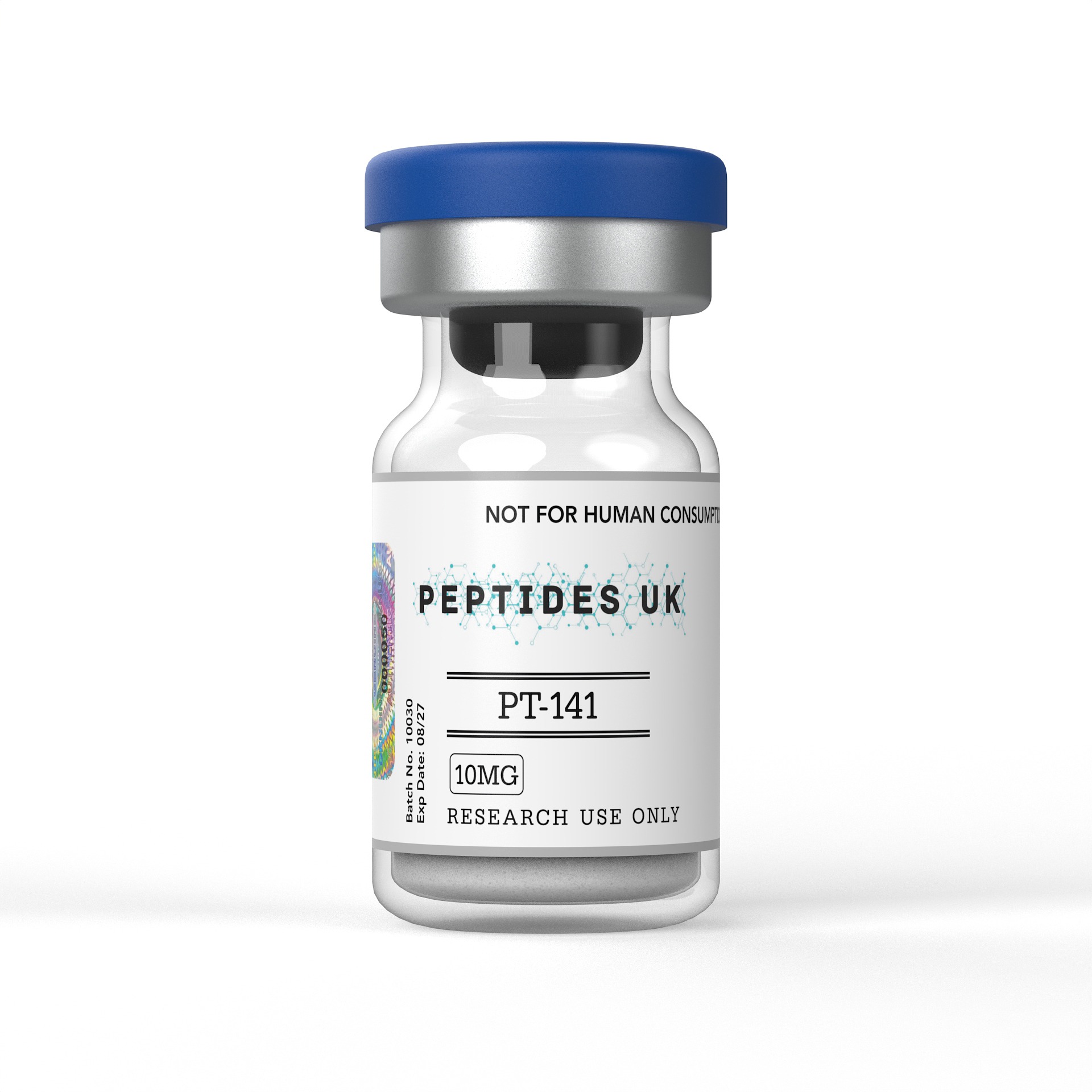
PT-141 EU – Buy Online | In Stock & Ready to Ship
Buy PT-141 in Europe with fast shipping and guaranteed ≥99% purity — verified with COA and HPLC documentation. A trusted choice for peptides EU research teams rely on, with no customs delays or lengthy international wait times. Whether you’re searching for PT-141 Europe suppliers, looking to buy PT-141 in the EU, or sourcing peptides Europe-wide, we have you covered. Research teams across the EU can count on consistent stock, rapid fulfilment and full batch documentation every time.
For research use only. Not intended for human or veterinary use.


PT-141 — Bremelanotide, a synthetic cyclic heptapeptide derived from the active core sequence of alpha-melanocyte-stimulating hormone (α-MSH) and structurally a deaminated carboxylate metabolite of Melanotan II — is the only melanocortin receptor agonist to have received FDA approval for a sexual dysfunction indication (Vyleesi; hypoactive sexual desire disorder in premenopausal women, 2019) and the only peptide research tool whose mechanism of action engages sexual desire and arousal biology exclusively through central nervous system MC3R and MC4R activation rather than peripheral vascular mechanisms, making it pharmacologically and mechanistically distinct from all phosphodiesterase type 5 inhibitor-based approaches to sexual dysfunction. PT-141’s research profile spans hypothalamic melanocortin circuit biology, dopaminergic and oxytocinergic reward pathway modulation, HSDD and erectile dysfunction pre-clinical and clinical models, MC4R-mediated energy balance and metabolic biology, and the broader POMC-derived melanocortin system pharmacology that positions it as a reference agonist for CNS MC3R/MC4R research across EU neuroendocrinology, reproductive neuroscience, and psychopharmacology laboratories. Research institutions and laboratories across the EU can source verified, research-grade PT-141 in Europe with fast dispatch and full batch documentation included.
✅ ≥99% Purity — HPLC & Mass Spectrometry Verified
✅ Cyclic Heptapeptide Structure Confirmed — Batch-Specific CoA Included
✅ Sterile Lyophilised Powder | GMP Manufactured
✅ Fast Dispatch Across EU & Europe | EU Peptides Stock
PT-141 — designated Bremelanotide in clinical development, approved as Vyleesi by the FDA in 2019 — is a synthetic cyclic heptapeptide melanocortin receptor agonist whose sequence is derived from the conserved His-Phe-Arg-Trp tetrapeptide core responsible for melanocortin agonist activity across the POMC-derived peptide family. Structurally, PT-141 is the carboxylate (deaminated) derivative of Melanotan II (MT-II) — itself a cyclised, truncated, and N-terminal acetylated analogue of α-MSH designed for metabolic stability and enhanced receptor affinity — with PT-141 emerging as the primary pharmacologically active metabolite of MT-II characterised in vivo and subsequently developed independently as a defined research and clinical compound.
The POMC system context is essential to understanding PT-141’s biology. Pro-opiomelanocortin (POMC) is the shared precursor polypeptide for multiple bioactive peptides — including ACTH, α-MSH (α-melanocyte-stimulating hormone), β-MSH, γ-MSH, β-endorphin, and others — produced by tissue-specific proteolytic processing by prohormone convertase 1 and 2. α-MSH (ACTH₁₋₁₃ amide), cleaved from the N-terminal region of POMC, is the primary endogenous ligand for peripheral melanocortin receptors (MC1R, pigmentation; MC2R, adrenocortical) and for central MC3R and MC4R governing energy balance, sexual behaviour, stress response, and autonomic function. PT-141 replicates α-MSH’s core receptor-engaging tetrapeptide (His-Phe-Arg-Trp) within a cyclised lactam bridge structure — the cyclisation conferring both metabolic stability against plasma peptidases and a constrained conformation with enhanced receptor binding affinity relative to linear peptide analogues.
PT-141 binds melanocortin receptors with the following rank order affinity: MC4R > MC3R > MC1R > MC5R, with negligible activity at MC2R (the ACTH-selective adrenocortical receptor). This receptor selectivity profile — favouring MC4R and MC3R over the pigmentation-relevant MC1R — represents a deliberate refinement relative to Melanotan II’s broader receptor coverage, reducing the skin-darkening (MC1R-mediated) side effect while preserving the CNS sexual function biology mediated through MC3R and MC4R. MC1R residual activity at higher concentrations means dose-dependent pigmentation effects remain a documented biological property requiring consideration in sustained exposure research paradigms.
PT-141 is the only melanocortin research tool with completed Phase II and Phase III clinical trial datasets and FDA approval — a clinical research dataset spanning normal volunteers, men with erectile dysfunction (including a sildenafil-resistant cohort), and premenopausal women with HSDD, providing human pharmacodynamic context for pre-clinical research biology that is absent from most EU research peptides.
Central Melanocortin Sexual Arousal Circuit Research — PT-141’s primary and most extensively characterised research application is activation of the central melanocortin circuitry governing sexual desire and arousal through MC4R and MC3R in the hypothalamus and limbic system. MC4R is predominantly expressed in the paraventricular nucleus (PVN) and medial preoptic area (mPOA) of the hypothalamus — nuclei directly implicated in the central regulation of sexual behaviour across mammalian species. PT-141 activation of MC4R in the mPOA drives presynaptic dopamine release — increasing dopaminergic tone in the mesolimbic reward circuitry governing sexual motivation and desire. In the PVN, MC4R activation drives oxytocinergic neuron depolarisation — releasing oxytocin into both portal and peripheral circulation with downstream effects on social bonding, arousal, and genital reflexes. C-Fos immunostaining in rodent models following intranasal PT-141 administration demonstrates increased neural activation specifically in the PVN — providing direct anatomical evidence for the hypothalamic MC4R mechanism. EU research uses PT-141 to characterise the hypothalamic melanocortin circuit’s role in sexual behaviour initiation, to study MC4R-dopamine-oxytocin signalling cascades in the sexual motivation pathway, and to investigate the neural circuitry linking melanocortin receptor activation to downstream reproductive behaviour outputs.
HSDD and Female Sexual Desire Research — Hypoactive sexual desire disorder — characterised by persistent absence or deficiency of sexual desire causing marked distress — is understood as resulting from a dysregulated balance between the excitatory and inhibitory pathways of the central sexual response system, with POMC-derived melanocortin signalling representing a primary excitatory pathway. PT-141 activates the excitatory melanocortin pathway centrally — increasing dopamine in the mPOA, reducing serotonergic and GABAergic inhibitory tone on the dopaminergic desire circuitry, and modulating norepinephrine pathways contributing to arousal — producing a net shift toward the excitatory side of the excitation/inhibition balance governing sexual desire. EU research uses PT-141 in female rodent sexual behaviour models — including lordosis, paced mating, and appetitive sexual behaviour paradigms — alongside in vitro melanocortin receptor pharmacology to characterise the neurobiology of female sexual desire and the mechanistic basis of PT-141’s clinical HSDD efficacy.
Erectile Dysfunction and Male Sexual Function Research — PT-141 produces dose-dependent increases in erectile activity in both rodent models and human clinical studies through a CNS mechanism completely distinct from PDE5 inhibitors. While PDE5 inhibitors (sildenafil, tadalafil) act peripherally to sustain cGMP-mediated smooth muscle relaxation and cavernosal blood flow in the presence of sexual arousal-driven nitric oxide release, PT-141 activates the central neural circuitry initiating the erectile response — driving hypothalamic MC4R-mediated activation of pro-erectile autonomic pathways descending to the spinal erection centres and subsequently to cavernosal tissue. This distinction makes PT-141 pharmacologically complementary to rather than competitive with PDE5 inhibitors — with clinical research documenting PT-141 efficacy in sildenafil-resistant ED patients where the peripheral vascular mechanism is insufficient, suggesting that the deficit is at the level of central arousal initiation rather than peripheral execution. EU research uses these findings to characterise the central versus peripheral component contributions to erectile function and to study the melanocortin-autonomic-erectile axis independently of peripheral vascular pharmacology.
Melanocortin Receptor Pharmacology and Signalling Research — PT-141 is a primary reference agonist for MC4R and MC3R pharmacology research — used to characterise receptor binding kinetics, intracellular signalling pathways, receptor desensitisation dynamics, and transcriptional responses in MC3R/MC4R-expressing cell systems. MC4R signals primarily through Gs — activating adenylyl cyclase, raising cAMP, and activating PKA-dependent transcriptional programmes — with non-canonical signalling through Gq/11, β-arrestin, and ERK1/2 characterised in specific cell contexts. MC3R shares the Gs coupling mechanism but with distinct tissue distribution and physiological roles — expressed at high levels in the hypothalamic ARC and VMH, with characterised roles in feeding behaviour, energy expenditure, and autonomic function distinct from MC4R’s more widely distributed CNS expression. EU research uses PT-141 to study MC3R and MC4R signalling pathways, receptor pharmacology, and functional selectivity (biased agonism) in CNS-relevant cell systems.
Energy Balance, Feeding Behaviour, and Metabolic Research — MC4R is one of the most extensively genetically validated targets in human obesity — with loss-of-function MC4R mutations representing the most common monogenic cause of severe early-onset obesity in humans, and with MC4R-expressing PVN and lateral hypothalamic neurons governing food intake, energy expenditure, and autonomic metabolic regulation. PT-141’s MC4R agonist activity overlaps with this metabolic biology — activating the same MC4R circuitry that constitutes the primary melanocortin-leptin-energy balance axis. EU metabolic research uses PT-141 to study MC4R-mediated anorexigenic signalling, to characterise the intersection of sexual motivation and feeding behaviour circuitry through shared MC4R populations, and to investigate the broader POMC pathway contributions to energy homeostasis. PT-141’s bias toward MC4R-Gs signalling with documented cardiovascular pressor effects (blood pressure elevation through MC4R sympathetic activation) provides additional tools for studying MC4R’s autonomic cardiovascular regulatory biology.
POMC System and Stress Response Research — PT-141’s activity at MC3R — expressed in brain regions including the ARC, VMH, and limbic structures — contributes to the regulation of stress responses, HPA axis tone, and immune-neuroendocrine interactions. MC3R has been characterised as a negative feedback autoreceptor on POMC neurons in the ARC — with MC3R activation reducing POMC neuron firing and potentially modulating the POMC system’s own output. The intersection of melanocortin signalling with stress, anxiety, and HPA axis regulation represents an active EU research area using PT-141 to characterise MC3R’s autoreceptor role and to investigate whether melanocortin agonism modulates stress resilience and anxiety biology through hypothalamic circuitry shared with the sexual arousal and energy balance systems.
Pigmentation and MC1R Research Context — PT-141’s residual MC1R activity — lower than Melanotan II but not absent — is relevant to dermatological research investigating melanogenesis biology. MC1R activation on melanocytes drives cAMP-PKA-MITF-TYR signalling cascade-mediated eumelanin synthesis — the primary molecular mechanism of UV-independent skin darkening. EU dermatology and pigmentation research uses PT-141’s MC1R activity as a comparator against Melanotan I and Melanotan II in characterising the receptor subtype contributions to melanogenic responses, and to study MC1R-mediated DNA repair responses (MC1R independently activates nucleotide excision repair through the MITF-XPC pathway) relevant to photoprotection biology.
Oxytocin and Social Behaviour Research — PVN MC4R activation by PT-141 drives oxytocinergic neuron activity — with oxytocin release contributing to the prosocial, bonding, and affiliation dimensions of PT-141’s sexual arousal biology beyond the purely genital or desire-focused effects. Research has characterised the oxytocin-melanocortin axis in the context of social bonding, pair bond formation, and affiliative behaviour in rodent models — with PT-141’s ability to co-activate dopaminergic reward and oxytocinergic bonding pathways through a single MC4R mechanism making it a tool for studying the intersection of sexual desire and social attachment neurobiology in EU social neuroscience research programmes.
Phase II Clinical Studies — Erectile Dysfunction — A placebo-controlled Phase II study in men with erectile dysfunction demonstrated dose-dependent increases in erectile activity following intranasal PT-141 administration — with 67% of PT-141 recipients reporting improved erections versus 33% in the placebo group. A subsequent crossover study in sildenafil-resistant ED patients documented 62% improvement in the PT-141 group versus 21% in placebo — establishing PT-141 efficacy specifically in the population where peripheral vascular PDE5 inhibitor mechanisms are insufficient, directly implicating central arousal pathway deficiency as a component of the sildenafil-resistant ED phenotype. Early intranasal studies additionally documented a dose-limiting transient blood pressure elevation — attributed to MC4R-mediated sympathetic activation — that redirected clinical development toward subcutaneous delivery and informed the Vyleesi formulation approach.
Phase II Clinical Studies — Female Sexual Arousal Disorder — A double-blind, placebo-controlled study in 18 premenopausal women with primary female sexual arousal disorder evaluated intranasal bremelanotide against placebo — documenting statistically significant improvements in subjective sexual arousal scores and positive trends in vaginal pulse amplitude, establishing PT-141’s efficacy in the female arousal disorder population and the sex-non-specificity of its central melanocortin mechanism. These findings provided the mechanistic bridge between the male erectile function and female desire/arousal data, consistent with a shared CNS mechanism operating in both sexes through the same MC3R/MC4R hypothalamic circuitry.
FDA Approval and Phase III HSDD Data — The Phase III RECONNECT trials in premenopausal women with acquired generalised HSDD established the clinical efficacy dataset supporting FDA approval of Vyleesi in June 2019 — making bremelanotide the second FDA-approved pharmacological treatment for female sexual dysfunction after flibanserin, and the first melanocortin-based therapy approved for any CNS-mediated sexual disorder. The approval further validated the central melanocortin hypothesis of female sexual desire and established a clinical pharmacodynamic benchmark directly informing EU pre-clinical mechanistic research.
Rodent Pre-Clinical Mechanistic Data — Intranasal PT-141 administration in Sprague-Dawley rats at 50 µg/kg produced significant increases in spontaneous erections relative to saline controls — with 100% of PT-141-treated animals exhibiting at least one erection during the 30-minute observation period. FOS immunostaining two hours post-administration demonstrated increased neural activation specifically in the paraventricular nucleus — providing anatomical confirmation of the hypothalamic MC3R/MC4R mechanism and directly linking PVN activation to the observed pro-erectile output. These data established the pre-clinical assay systems — spontaneous erection counting, FOS immunostaining, PVN slice electrophysiology — used across EU melanocortin research programmes as reference endpoints for MC4R agonist activity characterisation.
| Feature | PT-141 (Bremelanotide) | Melanotan II (MT-II) | α-MSH |
|---|---|---|---|
| Structure | Cyclic heptapeptide — lactam bridge | Cyclic heptapeptide — disulphide bridge (Ac-cyclo[Cys⁴-Cys¹⁰]-α-MSH₄₋₁₀-NH₂) | Linear 13 aa — pGlu-His-Phe-Arg-Trp-Lys-Pro-Val-Gly-Lys-Lys-Arg-Pro-Val-NH₂ |
| Relationship | Deaminated metabolite / derivative of MT-II | Parent compound — PT-141 derived from MT-II | Endogenous POMC-derived ligand |
| MC1R Activity | Low — reduced vs. MT-II | High — significant tanning | High — primary pigmentation ligand |
| MC3R Activity | High | High | High |
| MC4R Activity | High (primary) | High | High |
| Tanning Effect | Reduced vs. MT-II | Prominent — MC1R-driven | Yes |
| Sexual Arousal Biology | Primary characterised application | Characterised — MC4R + MC3R | Yes — endogenous |
| Stability | Enhanced cyclic structure — peptidase resistant | Good cyclic stability | Short half-life — linear |
| FDA Status | Approved — Vyleesi (HSDD) | Not approved — research only | Not approved — research only |
| Research Utility | MC4R/MC3R CNS reference agonist; sexual function; metabolic | Broader MCR coverage; comparative MC1R studies | Endogenous reference; pigmentation; metabolic |
| Parameter | Specification |
|---|---|
| Full Name | PT-141 / Bremelanotide |
| Also Known As | Bremelanotide / PT-141 / Vyleesi (clinical formulation) |
| Structure | Synthetic cyclic heptapeptide — lactam bridge cyclisation |
| Sequence Core | His-Phe-Arg-Trp melanocortin core — cyclic lactam-constrained |
| Molecular Weight | ~1025 Da |
| CAS Number | 189691-06-3 |
| Type | Synthetic Cyclic Heptapeptide Melanocortin Receptor Agonist — Research Grade |
| Receptor Affinity | MC4R > MC3R > MC1R > MC5R; negligible MC2R |
| Intracellular Signalling | Gs → adenylyl cyclase → cAMP → PKA; ERK1/2; β-arrestin (cell-type dependent) |
| Purity | ≥99% HPLC & MS Verified |
| Form | Sterile Lyophilised Powder |
| Solubility | Sterile water or bacteriostatic water — good aqueous solubility |
| Storage (Powder) | -20°C; protect from light and moisture |
| Storage (Reconstituted) | 4°C up to 7 days; -20°C single-use aliquots |
| Bundle Size | 5mg |
PT-141 reconstitutes readily in sterile water or bacteriostatic water — add solvent slowly to the lyophilised powder and swirl gently until fully dissolved. Good aqueous solubility; no acidic reconstitution conditions required. PT-141’s cyclic lactam bridge structure does not involve disulphide bonds — no reducing agent incompatibilities; reducing conditions are not relevant to handling. The cyclic structure itself provides significantly enhanced peptidase resistance relative to linear α-MSH — reconstituted solutions are stable longer than short linear peptides under equivalent conditions, though single-use aliquots at -20°C remain the recommended storage practice.
For cell-based MC3R/MC4R assay applications — working concentrations in the nanomolar range are typical for cAMP induction, ERK1/2 phosphorylation, and receptor binding displacement studies; empirical dose-response characterisation should be performed in each specific cell system. Addition of 0.1% BSA to dilution buffers is advisable at sub-nanomolar concentrations to prevent adsorptive losses. Protect reconstituted solutions from light. Avoid repeated freeze-thaw cycles.
Every PT-141 order dispatched across the EU and Europe includes:
✅ Batch-Specific Certificate of Analysis (CoA)
✅ HPLC Chromatogram
✅ Mass Spectrometry Confirmation — cyclic heptapeptide structure and molecular weight verification
✅ Sterility & Endotoxin Testing Report
✅ Reconstitution Protocol
✅ Technical Research Support
Yes — research-grade PT-141 (Bremelanotide) is available to EU and European researchers with fast dispatch and full batch documentation. Supplied strictly for laboratory research purposes only.
PDE5 inhibitors (sildenafil, tadalafil) act peripherally — sustaining cavernosal cGMP to maintain smooth muscle relaxation in the presence of arousal-driven nitric oxide. PT-141 acts centrally — activating hypothalamic MC4R to initiate the neural desire and arousal signal that triggers the erectile or arousal cascade. PT-141 addresses central desire/arousal circuitry deficiency; PDE5 inhibitors address peripheral vascular execution. The two mechanisms are complementary, which is why PT-141 demonstrates efficacy in the sildenafil-resistant ED population where peripheral vascular mechanisms are insufficient.
PT-141 is the deaminated carboxylate metabolite and derivative of Melanotan II — sharing the cyclic heptapeptide core but lacking the C-terminal amide of MT-II. PT-141 has lower MC1R activity than MT-II, producing reduced tanning while preserving the CNS MC3R/MC4R sexual function biology. MT-II was the parent compound through which the melanocortin erection mechanism was first identified; PT-141 was developed as a more selective CNS-focused derivative and is the compound with clinical trial data and FDA approval.
PT-141 binds MC4R (primary, expressed in PVN and mPOA — sexual behaviour, energy balance, autonomic function), MC3R (expressed in ARC and VMH — autoreceptor on POMC neurons, energy sensing, stress), and MC1R (low affinity — melanocytes, pigmentation, DNA repair). The MC4R-driven dopamine release in the mPOA and oxytocin release from the PVN are the primary mechanisms underlying PT-141’s sexual desire and arousal biology.
POMC is a shared precursor for multiple bioactive peptides including α-MSH, ACTH, and β-endorphin — with α-MSH being the primary endogenous ligand at MC1R, MC3R, and MC4R. PT-141 mimics α-MSH’s core receptor-engaging His-Phe-Arg-Trp sequence in a metabolically stabilised cyclic format. Understanding the endogenous POMC system — including the opposing AgRP (agouti-related peptide) melanocortin antagonist released by ARC neurons — is essential for interpreting PT-141’s biology in the context of the melanocortin system’s excitatory/inhibitory balance governing energy and sexual behaviour.
Vehicle control (matched sterile water or buffer) is essential. MC4R antagonist controls (SHU9119, HS024) confirm that PT-141 effects are MC4R-receptor-mediated. For distinguishing MC4R from MC3R contributions — MC3R-selective antagonists (SHU9119 has mixed MC3R/MC4R activity; receptor knockout models provide cleaner subtype dissection). For dopamine pathway research — dopamine receptor antagonist controls (D1/D2 blockers) distinguish dopaminergic from dopamine-independent components of PT-141’s arousal biology.
≥99% HPLC with mass spectrometry confirming the intact cyclic heptapeptide molecular weight is essential. The cyclic lactam structure must be confirmed — linearised or incompletely cyclised contaminants would have substantially different MC3R/MC4R binding affinities and produce confounded dose-response characterisation. Batch CoA mass spectrometry data confirming the correct molecular ion is included with every lot.
PT-141 (Bremelanotide) is supplied exclusively for legitimate scientific research purposes conducted within licensed laboratory environments across the EU and Europe. This product is not intended for human consumption, self-administration, or any therapeutic application. It must be handled by qualified researchers in compliance with applicable EU regulations and institutional ethics guidelines. By purchasing, you confirm that this compound will be used solely for approved in vitro or pre-clinical research purposes.
Receive News
