PRODUCTS SOLD ON PEPTIDESLABEU.COM ARE FOR RESEARCH PURPOSES ONLY AND ARE NOT FOR HUMAN OR VETERINARY USE.
€23.50
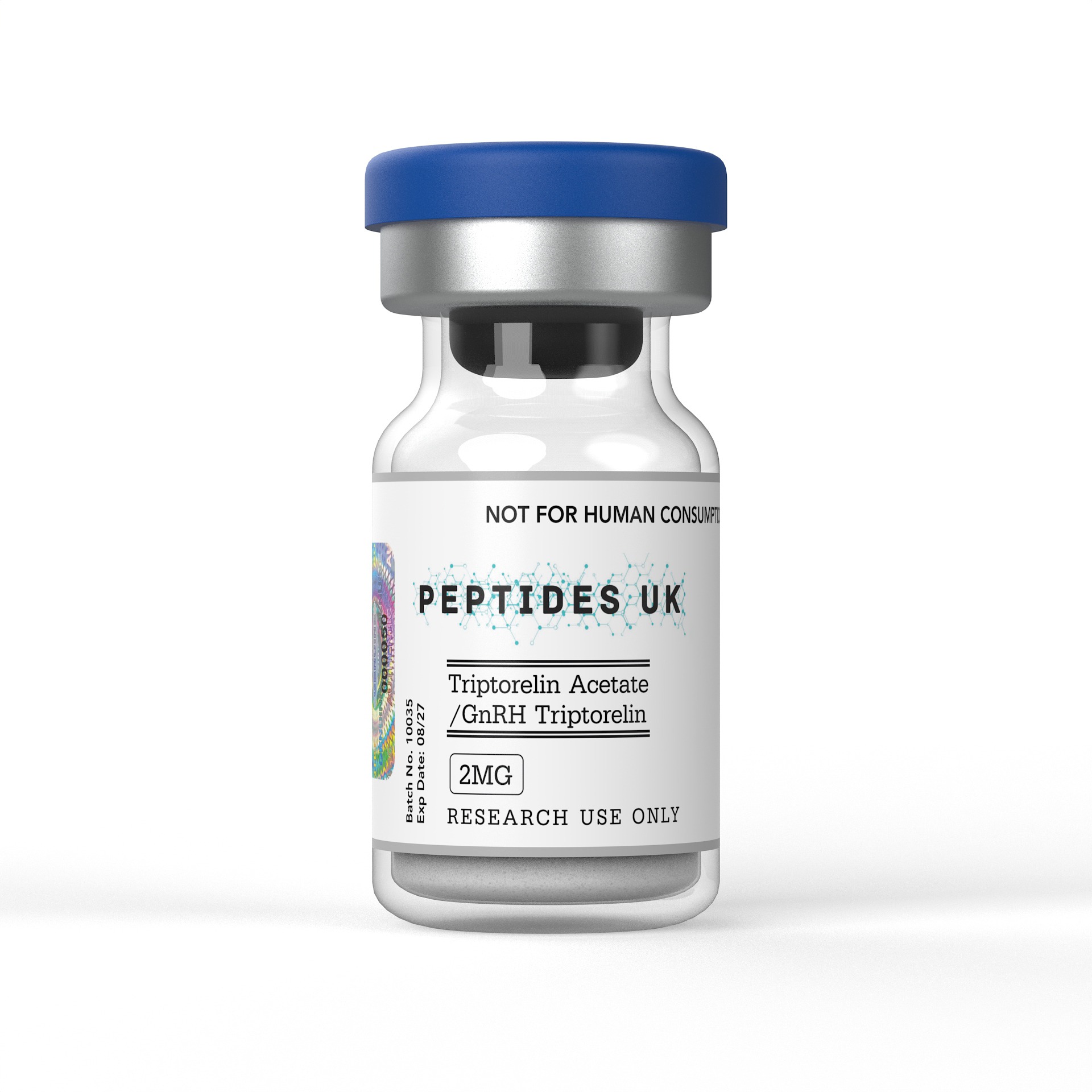
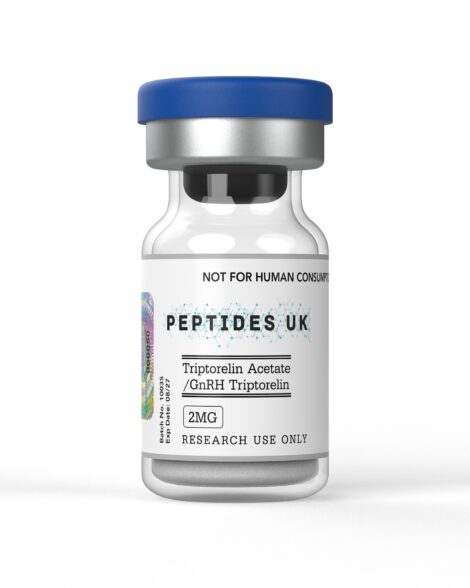
Triptorelin Acetate (GnRH) EU – Buy Online | In Stock & Ready to Ship
Buy Triptorelin Acetate (GnRH) in Europe with fast shipping and guaranteed ≥99% purity — verified with COA and HPLC documentation. A trusted choice for peptides EU research teams rely on, with no customs delays or lengthy international wait times. Whether you’re searching for Triptorelin Acetate Europe suppliers, looking to buy GnRH peptide in the EU, or sourcing peptides Europe-wide, we have you covered. Research teams across the EU can count on consistent stock, rapid fulfilment and full batch documentation every time.
For research use only. Not intended for human or veterinary use.

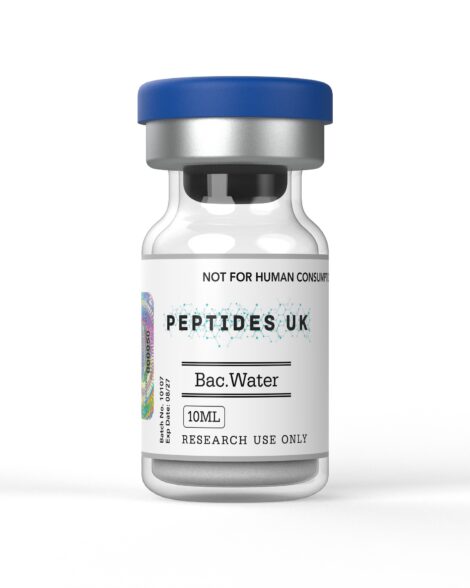

Triptorelin acetate is a synthetic decapeptide analogue of gonadotropin-releasing hormone (GnRH/LHRH) with a D-Trp⁶ substitution conferring markedly enhanced receptor binding affinity and metabolic stability relative to native GnRH, acting as a potent GnRH receptor (GnRHR) full agonist that induces initial gonadotropin (LH and FSH) stimulation followed by sustained GnRHR downregulation and desensitisation — producing profound suppression of the hypothalamic-pituitary-gonadal (HPG) axis — available to buy in Europe for laboratory research into GnRH receptor pharmacology, HPG axis regulation, gonadotropin biology, sex steroid suppression models, hormone-sensitive cancer biology, neuroendocrine signalling, and the comparative study of GnRH agonist and antagonist mechanisms.
Laboratories and research institutions across the EU can order verified, research-grade triptorelin acetate with fast international dispatch to Europe, full batch documentation, and ≥99% purity confirmed by HPLC and Mass Spectrometry.
✅ ≥99% Purity — HPLC & Mass Spectrometry Verified
✅ Batch-Specific Certificate of Analysis (CoA)
✅ Sterile Lyophilised Powder | GMP Manufactured
✅ Fast Dispatch to EU & Europe | Tracked Shipping
Triptorelin acetate is a synthetic GnRH decapeptide analogue (pGlu-His-Trp-Ser-Tyr-D-Trp-Leu-Arg-Pro-Gly-NH₂) in which the naturally occurring Gly⁶ residue of native GnRH is substituted with D-tryptophan (D-Trp⁶), a single stereochemical modification that confers substantially greater resistance to enzymatic degradation by endopeptidases and significantly higher GnRH receptor binding affinity compared to the native decapeptide — with triptorelin exhibiting a receptor binding affinity approximately 100-fold greater than native GnRH. This enhanced receptor binding and metabolic stability enables prolonged GnRHR occupancy that drives sustained receptor downregulation, the mechanistic basis of its paradoxical gonadal suppressive action following an initial brief stimulatory phase.
The central pharmacological principle of triptorelin — and of GnRH agonist pharmacology more broadly — is the phenomenon of pituitary GnRH receptor downregulation through continuous rather than pulsatile receptor stimulation. Under physiological conditions, endogenous GnRH is secreted from the arcuate nucleus of the hypothalamus in discrete pulses (typically every 60–120 minutes) that maintain GnRHR expression and sensitisation on pituitary gonadotroph cells, driving episodic LH and FSH secretion and sustaining downstream gonadal sex steroid production. Continuous or sustained GnRHR occupancy — produced by exogenous GnRH agonists including triptorelin — fundamentally disrupts this pulsatile signalling architecture: the initial agonist binding produces a brief “flare” phase of elevated LH and FSH secretion and transiently elevated sex steroid levels, followed by progressive GnRHR uncoupling from Gαq/11, receptor internalisation, and marked downregulation of surface GnRHR density on pituitary gonadotrophs — producing a state of pharmacological desensitisation in which LH and FSH secretion is profoundly suppressed and circulating testosterone (in males) and oestradiol (in females) fall to castrate levels. This sustained HPG axis suppression is the pharmacological state that makes triptorelin and related GnRH agonists centrally important research tools for investigating sex steroid-dependent biology and hormone-sensitive disease models.
The acetate salt form of triptorelin used in research provides improved aqueous solubility and formulation stability relative to the free base form, with the acetate counterion having no pharmacological activity at the GnRHR and not contributing to the observed biological activity of the peptide.
In laboratory settings, triptorelin acetate is studied across GnRH receptor pharmacology, hypothalamic-pituitary-gonadal axis regulation, gonadotropin signalling biology, sex steroid suppression models, hormone-sensitive cancer biology, neuroendocrine signalling, and reproductive biology. EU and European researchers working with triptorelin typically focus on:
GnRH receptor pharmacology and signalling research — Triptorelin’s high GnRH receptor binding affinity (Ki approximately 0.2–1 nM at human GnRHR) and full agonist efficacy make it a preferred ligand for GnRHR pharmacology studies — characterising receptor binding kinetics, Gαq/11-mediated inositol phosphate (IP₃) and diacylglycerol (DAG) second messenger generation, intracellular calcium mobilisation ([Ca²⁺]i transients), and downstream ERK1/2, JNK, and p38 MAPK activation in pituitary gonadotroph cell lines (LβT2, αT3-1) and heterologous GnRHR expression systems. Studies use triptorelin alongside native GnRH, GnRH antagonists (cetrorelix, ganirelix, degarelix), and other GnRH agonist analogues (leuprolide, buserelin, goserelin) to establish comparative receptor activation profiles and characterise the structural determinants of GnRHR binding affinity within the GnRH analogue series.
GnRH receptor downregulation, internalisation, and desensitisation research — A central application of triptorelin in basic neuroendocrine research is the mechanistic study of GnRHR desensitisation — the process by which sustained agonist-driven receptor activation leads to GnRHR uncoupling from G-proteins, β-arrestin recruitment, receptor internalisation through clathrin-mediated endocytosis, and subsequent receptor degradation or recycling. Studies in GnRHR-expressing cell models use triptorelin to drive homologous receptor desensitisation — characterising the kinetics of surface GnRHR loss (flow cytometry, radioligand binding), β-arrestin-2 recruitment (BRET/FRET biosensors, co-immunoprecipitation), receptor trafficking through early endosomes to lysosomes versus recycling endosomes, and the differential desensitisation profiles between GnRHR variants (human GnRHR — which lacks a C-terminal tail and desensitises slowly — versus non-human mammalian GnRHRs with C-terminal tails that undergo rapid β-arrestin-mediated desensitisation).
Hypothalamic-pituitary-gonadal axis regulation research — Triptorelin is used in ex vivo and in vitro hypothalamic-pituitary-gonadal axis models to study the regulation of gonadotropin secretion, pituitary gonadotroph function, and the integration of GnRH receptor signalling with gonadal feedback. Studies in primary pituitary cell cultures and gonadotroph cell lines examine triptorelin-driven LH and FSH secretion dynamics, the effects of prolonged triptorelin exposure on gonadotropin subunit gene expression (LHβ, FSHβ, αGSU), and the pituitary-level mechanisms through which sustained GnRHR activation suppresses gonadotropin output — providing cellular resolution of the HPG axis suppression that occurs in vivo during GnRH agonist-based gonadal suppression protocols.
Hormone-sensitive cancer biology — prostate cancer research — The pharmacological castration state produced by sustained GnRH agonist exposure makes triptorelin a mechanistically important tool in hormone-sensitive prostate cancer (PCa) research. In prostate cancer cell biology, studies use triptorelin in androgen deprivation models — examining the effects of testosterone withdrawal on androgen receptor (AR) expression, AR nuclear localisation, androgen-responsive gene transcription (PSA/KLK3, TMPRSS2, NKX3-1), prostate cancer cell proliferation and survival, and the emergence of castration-resistant prostate cancer (CRPC) phenotypes. Beyond serving as a model for androgen deprivation conditions, triptorelin also has direct GnRHR-mediated effects on GnRHR-expressing prostate cancer cell lines — studied through direct triptorelin treatment of PCa cells in vitro to characterise antiproliferative, pro-apoptotic, and antimetastatic responses mediated through extrapituitary GnRHR signalling independent of HPG axis effects.
Hormone-sensitive cancer biology — breast cancer research — Triptorelin is used in hormone-sensitive breast cancer research to model oestrogen deprivation conditions relevant to premenopausal ER-positive breast cancer biology and to investigate direct GnRHR-mediated effects on breast cancer cell lines expressing functional GnRHR. Studies in ER-positive breast cancer cell models (MCF-7, T-47D) examine triptorelin’s direct antiproliferative effects — characterising GnRHR-mediated intracellular signalling, cell cycle arrest mechanisms (G₁/S checkpoint, p21^Cip1/p27^Kip1 upregulation), and the interaction between GnRHR-activated signalling pathways and ER-driven transcription — establishing triptorelin as both a model for oestrogen-depleted conditions and a direct antiproliferative agent in GnRHR-expressing breast cancer cells.
Extrapituitary GnRH receptor biology research — GnRHR expression is documented in multiple tissues outside the pituitary gland — including gonadal cells (Leydig cells, granulosa cells), endometrial tissue, breast epithelium, prostate epithelium, immune cells, and various cancer cell lines — with extrapituitary GnRHR signalling mediating local autocrine/paracrine effects distinct from the central gonadotroph-mediated HPG axis regulation. Studies use triptorelin to characterise extrapituitary GnRHR signalling — examining receptor coupling, downstream effector activation, and functional responses (proliferation, apoptosis, migration, hormone biosynthesis) in non-pituitary GnRHR-expressing cell models — establishing the tissue-specific biology of GnRHR activation outside its canonical pituitary neuroendocrine context.
Neuroendocrine signalling and pulsatile GnRH biology research — Because triptorelin’s desensitising action is fundamentally a consequence of continuous rather than pulsatile GnRHR stimulation, pulse-frequency studies using triptorelin in pituitary gonadotroph cell models provide mechanistic insight into how GnRH pulse frequency encodes differential LH versus FSH secretory responses — with high-frequency pulsatile agonist stimulation favouring LH synthesis and secretion and low-frequency stimulation favouring FSH. Studies using triptorelin in pulsatile delivery paradigms (using microfluidic pulse generators or programmed addition protocols) examine the frequency-decoding mechanisms in gonadotroph cells, characterising how differential pulse frequency regulates LHβ and FSHβ subunit transcription, gonadotropin secretion ratios, and GnRHR expression dynamics.
Sex steroid-dependent cell biology and in vitro castration models — The ability of triptorelin to establish profound gonadal sex steroid suppression in in vivo models, and its direct application in ex vivo or co-culture systems, makes it relevant to research investigating sex steroid-dependent cellular phenotypes — including androgen-driven prostate cell biology, oestrogen-regulated breast epithelial biology, and the reversal of sex steroid-dependent transcriptional programmes following GnRH agonist-induced gonadal suppression. Studies use triptorelin to establish castration models for examining sex steroid withdrawal biology — characterising gene expression changes, epigenetic remodelling, and phenotypic responses to sex steroid deprivation in hormone-sensitive cell systems.
GnRH agonist versus GnRH antagonist comparative pharmacology research — A major area of GnRH receptor pharmacology research uses triptorelin alongside GnRH antagonists (cetrorelix, ganirelix, degarelix/abarelix) to compare the kinetics, signalling profiles, and receptor fate of agonist versus antagonist GnRHR occupancy. Key distinctions under investigation include: the absence of the initial LH/FSH flare with GnRH antagonists (immediate suppression versus delayed suppression with GnRH agonists); differences in receptor internalisation and trafficking (agonist-driven internalisation versus antagonist stabilisation of surface GnRHR); differential β-arrestin recruitment; and the implications of these pharmacological differences for cancer biology, where the initial testosterone flare produced by GnRH agonists like triptorelin has different biological consequences from the immediate castration produced by GnRH antagonists.
Reproductive biology and fertility research — In reproductive biology, triptorelin is used to study GnRH receptor-dependent regulation of gonadal function — examining LH-driven steroidogenesis in Leydig and granulosa cell models, the effects of sustained versus pulsatile GnRHR stimulation on folliculogenesis-related gene expression, and the reversibility of GnRH agonist-induced gonadal suppression in in vitro and ex vivo gonadal tissue models. These reproductive biology applications establish triptorelin as a pharmacological tool for examining the GnRH-gonadotropin-gonadal steroidogenesis axis at cellular resolution — complementing in vivo models with mechanistically controlled in vitro systems.
Immune cell and bone biology research — Functional GnRHR expression has been documented in immune cells (T cells, B cells, macrophages) and osteoblasts/osteoclasts, with GnRH agonist signalling implicated in immune modulation and bone remodelling biology relevant to sex steroid-dependent osteoporosis research. Studies use triptorelin to examine direct GnRHR-mediated effects on immune cell activation, cytokine production, and bone cell differentiation — characterising extrapituitary GnRHR biology in immune and skeletal biology contexts.
All research applications are for in vitro and pre-clinical use only.
Triptorelin has an extensive research literature spanning foundational GnRH receptor pharmacology characterisation, neuroendocrine regulation, and hormone-sensitive cancer biology — anchored in the pioneering work on GnRH analogue design and extending through decades of mechanistic characterisation of GnRHR desensitisation and extrapituitary GnRHR signalling.
Foundational GnRH analogue pharmacology and receptor binding characterisation: The structural biology underlying triptorelin’s enhanced GnRHR affinity relative to native GnRH was established through systematic GnRH analogue SAR studies — demonstrating that D-amino acid substitutions at position 6 of the GnRH decapeptide confer resistance to endopeptidase cleavage between residues 6 and 7, the primary site of native GnRH metabolic inactivation, and simultaneously enhance hydrophobic and electrostatic contacts with the GnRHR binding pocket. Radioligand binding studies characterising triptorelin’s competitive displacement of native GnRH from pituitary GnRHR established the quantitative basis of its binding advantage — with Ki values in the sub-nanomolar range — and functional assays confirmed full agonist efficacy at GnRHR-coupled Gαq/11 signalling with maximal IP₃ production equivalent to or exceeding native GnRH stimulation.
GnRH receptor desensitisation and downregulation mechanism studies: Mechanistic studies examining pituitary gonadotroph cell responses to continuous triptorelin versus pulsatile GnRH stimulation established the cellular and molecular basis of GnRHR desensitisation — documenting the sequential events of GnRHR uncoupling from Gαq/11, PKC-mediated GnRHR phosphorylation, β-arrestin recruitment, clathrin-mediated internalisation, and lysosomal GnRHR degradation that collectively produce the sustained gonadotropin suppression underlying pharmacological castration. These studies established the unique behaviour of the human GnRHR — which lacks the C-terminal cytoplasmic tail present in non-mammalian and non-human mammalian GnRHR orthologues — as a receptor that undergoes slow, homologous desensitisation through a mechanism more reliant on GnRHR phosphorylation-independent internalisation pathways than the rapid β-arrestin-mediated desensitisation characteristic of GnRHR orthologues bearing the C-terminal tail. The differential desensitisation kinetics between human and non-human GnRHR orthologues has made triptorelin-driven desensitisation experiments a standard tool for probing the structural determinants of receptor internalisation and resensitisation.
Extrapituitary GnRHR expression and direct antiproliferative effects: Studies examining GnRHR expression in cancer cell lines documented functional GnRHR in prostate cancer (LNCaP, DU145, PC-3), breast cancer (MCF-7, T-47D, MDA-MB-231), endometrial cancer, and ovarian cancer cell lines — with triptorelin and related GnRH agonists producing direct antiproliferative and pro-apoptotic effects in these cell models through mechanisms distinct from pituitary-mediated HPG axis suppression. These extrapituitary GnRHR studies characterised the intracellular signalling cascades mediating direct triptorelin antiproliferative activity — including activation of PTP (protein tyrosine phosphatase) pathways that counteract growth factor receptor tyrosine kinase signalling, inhibition of EGF receptor and IGF-1 receptor-driven MAPK activation, and modulation of cell cycle regulatory protein expression — establishing a direct cancer cell biology of triptorelin independent of its central HPG axis effects.
Prostate cancer androgen deprivation research: Studies using triptorelin in androgen-sensitive prostate cancer cell and animal models established the biology of GnRH agonist-induced testosterone suppression and characterised molecular responses to androgen withdrawal — including AR downregulation, inhibition of androgen-responsive gene transcription (PSA, TMPRSS2), G₁ cell cycle arrest, and the activation of pro-survival signalling pathways that contribute to the emergence of castration resistance. These prostate cancer studies provided the pre-clinical mechanistic foundation for understanding acquired resistance to GnRH agonist-based androgen deprivation therapy and established the molecular phenotypes of castration-resistant prostate cancer that constitute current therapeutic research targets.
Breast cancer oestrogen deprivation and direct GnRHR effect studies: Studies in ER-positive breast cancer cell models — using triptorelin both as an oestrogen deprivation tool and as a direct GnRHR ligand — documented antiproliferative effects mediated through G₁ cell cycle arrest, upregulation of cyclin-dependent kinase inhibitors (p21^Cip1, p27^Kip1), and interference with oestrogen receptor-driven transcription and growth factor signalling. These breast cancer studies characterised the complementarity between GnRH agonist-mediated oestrogen suppression and direct GnRHR antiproliferative signalling in hormone-sensitive breast cancer cells — providing mechanistic context for the combined anti-oestrogenic and direct receptor-mediated effects of GnRH agonist treatment in ER-positive breast cancer biology.
Pulsatile GnRH frequency coding and differential LH/FSH regulation: Fundamental neuroendocrine studies using pulsatile GnRH agonist delivery paradigms — with triptorelin as the GnRH surrogate — established the quantitative relationship between GnRH pulse frequency and the ratio of LH to FSH secretory output from pituitary gonadotrophs. These pulse frequency studies demonstrated that high-frequency GnRH stimulation selectively upregulates LHβ subunit expression and LH secretion while suppressing FSHβ expression, and that low-frequency stimulation produces the reciprocal pattern — establishing pulse frequency as the physiological encoding mechanism for differential gonadotropin secretion. Triptorelin’s high receptor affinity and resistance to degradation made it a technically preferred agonist for these precise pulsatile stimulation experiments where predictable receptor occupancy per pulse was required.
| Compound | Class | Mechanism | GnRHR Effect | Flare Effect | Onset of Suppression | Key Research Distinction |
|---|---|---|---|---|---|---|
| Triptorelin Acetate | GnRH agonist (D-Trp⁶ analogue) | Continuous GnRHR agonism → receptor downregulation → LH/FSH suppression → castrate sex steroids | Full agonist → downregulation/desensitisation | Yes — initial LH/FSH/sex steroid flare | Delayed (~2–4 weeks) | Reference GnRH agonist; D-Trp⁶ substitution; high GnRHR affinity; flare biology; desensitisation probe |
| Leuprolide Acetate | GnRH agonist (D-Leu⁶, des-Gly¹⁰-Pro⁹ ethylamide analogue) | Continuous GnRHR agonism → desensitisation → gonadal suppression | Full agonist → downregulation | Yes | Delayed (~2–4 weeks) | GnRH agonist comparator; different structural analogue; widely used comparative tool in HPG axis research |
| Buserelin Acetate | GnRH agonist (D-Ser(tBu)⁶, des-Gly¹⁰-Pro⁹ ethylamide) | Continuous GnRHR agonism → desensitisation | Full agonist → downregulation | Yes | Delayed | GnRH agonist comparator; distinct C-terminal modification; SAR comparator in GnRH analogue series |
| Goserelin | GnRH agonist (D-Ser(tBu)⁶, Azagly¹⁰) | Continuous GnRHR agonism → desensitisation | Full agonist → downregulation | Yes | Delayed | GnRH agonist comparator; depot formulation biology; clinical analogue for comparative research |
| Cetrorelix Acetate | GnRH antagonist (multiple D-amino acid substitutions) | Competitive GnRHR antagonism — no receptor activation | Competitive antagonist — no downregulation | No — immediate suppression | Immediate | GnRH antagonist comparator; immediate LH/FSH suppression; no flare; receptor fate comparator vs agonists |
| Ganirelix Acetate | GnRH antagonist | Competitive GnRHR antagonism | Competitive antagonist | No | Immediate | GnRH antagonist comparator; immediate suppression; mechanistic contrast to triptorelin flare/desensitisation biology |
| Degarelix (Abarelix) | GnRH antagonist | High-affinity competitive GnRHR antagonism | Competitive antagonist | No | Immediate | GnRH antagonist — immediate deep testosterone suppression; no flare; mechanistic comparator in PCa biology |
| Native GnRH (GnRH 1-10) | Endogenous GnRH decapeptide | Pulsatile GnRHR activation — maintains gonadotroph sensitivity | Full agonist — receptor maintained with pulsatile delivery | Yes (if continuous) | Only with continuous delivery | Endogenous reference ligand; rapidly degraded; pulsatile biology control; metabolic stability comparator to triptorelin |
Every order of triptorelin acetate dispatched to EU and European research institutions includes:
Can I Buy Triptorelin Acetate in the EU and Europe?
Yes. We supply research-grade triptorelin acetate with fast tracked dispatch to all EU member states and wider European destinations. All orders include full batch documentation. Triptorelin acetate is supplied strictly for laboratory research use only.
What is the Structural Basis of Triptorelin’s Enhanced GnRHR Affinity Relative to Native GnRH?
Native GnRH is a decapeptide (pGlu-His-Trp-Ser-Tyr-Gly-Leu-Arg-Pro-Gly-NH₂) with a Gly⁶ residue at the central position of the peptide backbone that serves as the primary endopeptidase cleavage site and contributes relatively minimal receptor contact energy. The D-Trp⁶ substitution in triptorelin introduces two structural changes: first, the D-stereochemistry at position 6 confers resistance to endopeptidase cleavage between Trp⁶ and Leu⁷ — the primary metabolic inactivation site of native GnRH — dramatically extending triptorelin’s biological half-life from approximately 2–4 minutes (native GnRH) to several hours; second, the bulky indole side chain of D-Trp⁶ makes additional hydrophobic contacts within the GnRHR binding pocket that increase receptor binding affinity relative to Gly⁶. Together, these effects produce a GnRH receptor binding affinity approximately 100-fold greater than native GnRH, enabling prolonged receptor occupancy at physiologically low peptide concentrations — the structural basis of triptorelin’s sustained GnRHR desensitisation capacity.
What is the “Flare Effect” and Why is it Relevant to Research?
The flare effect (also termed the “testosterone surge” or “LH flare”) is the initial phase of GnRH agonist pharmacology in which triptorelin’s agonist binding to pituitary GnRHR produces a transient stimulation of LH and FSH secretion — and consequently elevated testosterone or oestradiol — before the desensitisation and downregulation that produces sustained gonadal suppression. The flare occurs because pituitary gonadotrophs initially respond to GnRHR agonist occupancy with normal signalling — releasing pre-formed LH and FSH and upregulating gonadotropin gene expression — before the sustained non-pulsatile receptor stimulation drives GnRHR uncoupling and surface receptor loss. In research contexts, the flare effect is mechanistically important for several reasons: it establishes a model system for studying GnRHR signalling in the acute agonist-stimulated versus chronic desensitised state; it provides a functional bioassay for GnRHR agonist potency (by quantifying the magnitude of LH release per receptor occupancy event); and it represents a biological variable with consequences in cancer biology models — where initial testosterone elevation from triptorelin’s flare can transiently stimulate androgen-dependent prostate cancer cell growth before the onset of sustained castrate testosterone levels, relevant to understanding differences between GnRH agonist and antagonist treatment initiation in PCa biology research.
How Does Triptorelin Differ From GnRH Antagonists as Research Tools?
Triptorelin and GnRH antagonists (cetrorelix, ganirelix, degarelix) both ultimately suppress gonadotropin secretion and reduce sex steroid levels, but through mechanistically opposite actions at GnRHR. Triptorelin is a full agonist — it activates GnRHR, drives receptor internalisation through agonist-induced β-arrestin recruitment and clathrin-mediated endocytosis, and achieves suppression through receptor downregulation and desensitisation. GnRH antagonists are competitive antagonists — they occupy GnRHR without activating it, block endogenous GnRH binding, and suppress gonadotropin secretion immediately without first stimulating it — while leaving GnRHR expression intact at the pituitary surface. For research, this distinction makes triptorelin and GnRH antagonists complementary probes: triptorelin is the tool for studying GnRHR desensitisation, β-arrestin recruitment, receptor trafficking, and the biology of the agonist-induced refractory state; GnRH antagonists are tools for studying GnRHR in the occupied-but-unactivated state, receptor binding kinetics, and the immediate suppression biology absent the flare — with the comparison between agonist-driven and antagonist-driven gonadotropin suppression providing mechanistic insight into GnRHR signalling architecture.
What is the Significance of the Human GnRHR Lacking a C-Terminal Cytoplasmic Tail?
The human GnRHR is structurally unique among class A GPCRs in that it naturally lacks the cytoplasmic C-terminal tail present in most GPCR family members and in GnRHR orthologues from other species (including rodent GnRHR). In most GPCRs, the C-terminal tail contains phosphorylation sites for GRK (G protein-coupled receptor kinase) enzymes that, once phosphorylated, recruit β-arrestins to mediate rapid receptor desensitisation and internalisation. The absence of a C-terminal tail in human GnRHR produces characteristically slow homologous desensitisation — GnRHR internalises slowly after sustained triptorelin stimulation compared to chimeric human GnRHR constructs bearing an added C-terminal tail — making triptorelin-driven human GnRHR desensitisation a pharmacologically distinct system for studying GRK/β-arrestin-independent receptor downregulation mechanisms. Research using triptorelin to compare desensitisation kinetics between human GnRHR (tail-less) and non-human GnRHR orthologues (tail-bearing) has provided fundamental insight into the structural requirements for GPCR desensitisation and the specific contributions of the C-terminal tail to β-arrestin recruitment and receptor trafficking.
What Controls are Required for Mechanistic Triptorelin Research?
Rigorous mechanistic interpretation of triptorelin experiments requires several key controls. Native GnRH (1–10) controls establish the reference agonist response against which triptorelin’s enhanced potency and prolonged receptor occupancy can be quantified. GnRH antagonist (cetrorelix or ganirelix) pre-treatment — occupying GnRHR prior to triptorelin addition — confirms that observed responses are GnRHR-mediated. GnRH antagonist wash-out and triptorelin re-stimulation distinguishes receptor downregulation (reduced surface receptor density) from reversible antagonism. For signalling pathway studies, GnRHR-negative isogenic cell controls (cells without GnRHR expression) confirm the receptor-dependence of triptorelin-driven second messenger responses. For cancer cell direct-effect studies, the distinction between pituitary-mediated (HPG axis suppression) and direct (extrapituitary GnRHR) effects requires GnRHR knockdown or GnRHR antagonist co-incubation in vitro. Pulse-frequency paradigms require precisely programmed delivery with verified GnRH analogue concentrations per pulse.
How Do I Reconstitute Triptorelin Acetate for Laboratory Use?
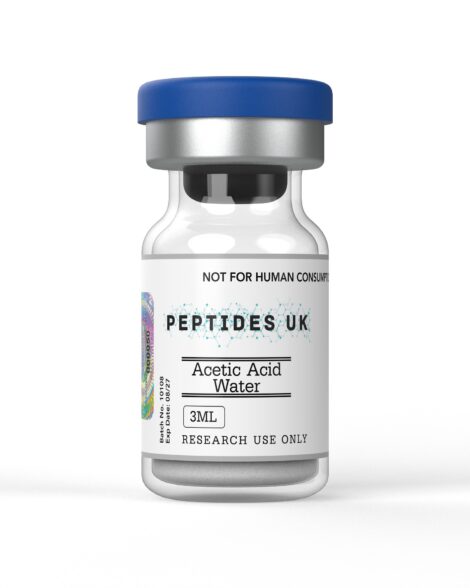
Reconstitute with sterile water or 0.1% acetic acid by adding solvent slowly down the vial wall and swirling gently — do not vortex. Triptorelin is a decapeptide of moderate hydrophilicity and is typically soluble at concentrations of 1–10 mg/mL in sterile water or dilute acetic acid. Prepare working stock solutions at 0.1–1 mM in sterile PBS or appropriate buffer and dilute to experimental concentrations (typically 1–1000 nM for GnRHR signalling studies; 10 nM–10 μM for cancer cell direct-effect studies) immediately before use. Avoid repeated freeze-thaw cycles — aliquot into single-use volumes and store at -20°C or -80°C. Peptide concentration can be verified spectrophotometrically using triptorelin’s tryptophan absorbance at 280 nm (both native Trp³ and D-Trp⁶ contribute to absorbance). For cell culture applications, verify that reconstitution solvent (acetic acid) is diluted sufficiently below cytotoxic concentrations in the final working medium.
How Quickly is Triptorelin Acetate Delivered to Europe?
Delivery to EU and European destinations typically takes 3–7 working days via tracked international courier with packaging maintaining peptide stability throughout transit.
| Parameter | Detail |
|---|---|
| Peptide | Triptorelin Acetate |
| Sequence | pGlu-His-Trp-Ser-Tyr-D-Trp-Leu-Arg-Pro-Gly-NH₂ (acetate salt) |
| Length | 10 amino acids |
| Modification | D-Trp⁶ substitution (vs Gly⁶ in native GnRH) |
| Molecular Weight | ~1311.5 Da (free base); acetate salt as supplied |
| Class | Synthetic GnRH decapeptide analogue — GnRH agonist |
| Primary Target | GnRH receptor (GnRHR / LHRH receptor) — Gαq/11-coupled class A GPCR |
| Mechanism | GnRHR full agonism → initial LH/FSH flare → sustained receptor downregulation/desensitisation → gonadotropin suppression → castrate sex steroid levels |
| GnRHR Binding Affinity | ~100-fold greater than native GnRH (Ki sub-nanomolar range) |
| Receptor Effect | Full agonist → homologous downregulation with sustained exposure |
| Flare Effect | Yes — initial LH/FSH/sex steroid stimulation before suppression |
| Onset of Suppression | Delayed (~2–4 weeks with continuous/depot exposure) |
| p53 Dependency | N/A |
| Key Signalling | Gαq/11 → IP₃/DAG → [Ca²⁺]i; PKC; ERK1/2; β-arrestin recruitment; GnRHR internalisation |
| Primary Research Interest | GnRH receptor pharmacology, GnRHR desensitisation/internalisation, HPG axis regulation, gonadotropin biology, prostate cancer androgen deprivation models, breast cancer oestrogen deprivation models, extrapituitary GnRHR biology, pulsatile neuroendocrine signalling, GnRH agonist vs antagonist comparative pharmacology |
| Related Compounds | Leuprolide, buserelin, goserelin (GnRH agonists); cetrorelix, ganirelix, degarelix (GnRH antagonists); native GnRH |
| Purity | ≥99% |
| Verification | HPLC & Mass Spectrometry |
| Form | Sterile Lyophilised Powder |
| Solubility | Sterile water, 0.1% acetic acid, PBS (1–10 mg/mL) |
| Storage | -20°C, protected from light and moisture |
| Intended Use | Research use only |
Triptorelin acetate is supplied exclusively for legitimate scientific research conducted within licensed laboratory environments. This product is not approved for human consumption, self-administration, or any therapeutic, clinical, or veterinary application. It must be handled solely by qualified researchers in compliance with applicable EU regulations, national legislation, and institutional ethics guidelines. By purchasing, you confirm this compound will be used exclusively for approved in vitro or pre-clinical research purposes.


Receive News
