PRODUCTS SOLD ON PEPTIDESLABEU.COM ARE FOR RESEARCH PURPOSES ONLY AND ARE NOT FOR HUMAN OR VETERINARY USE.
€80.00
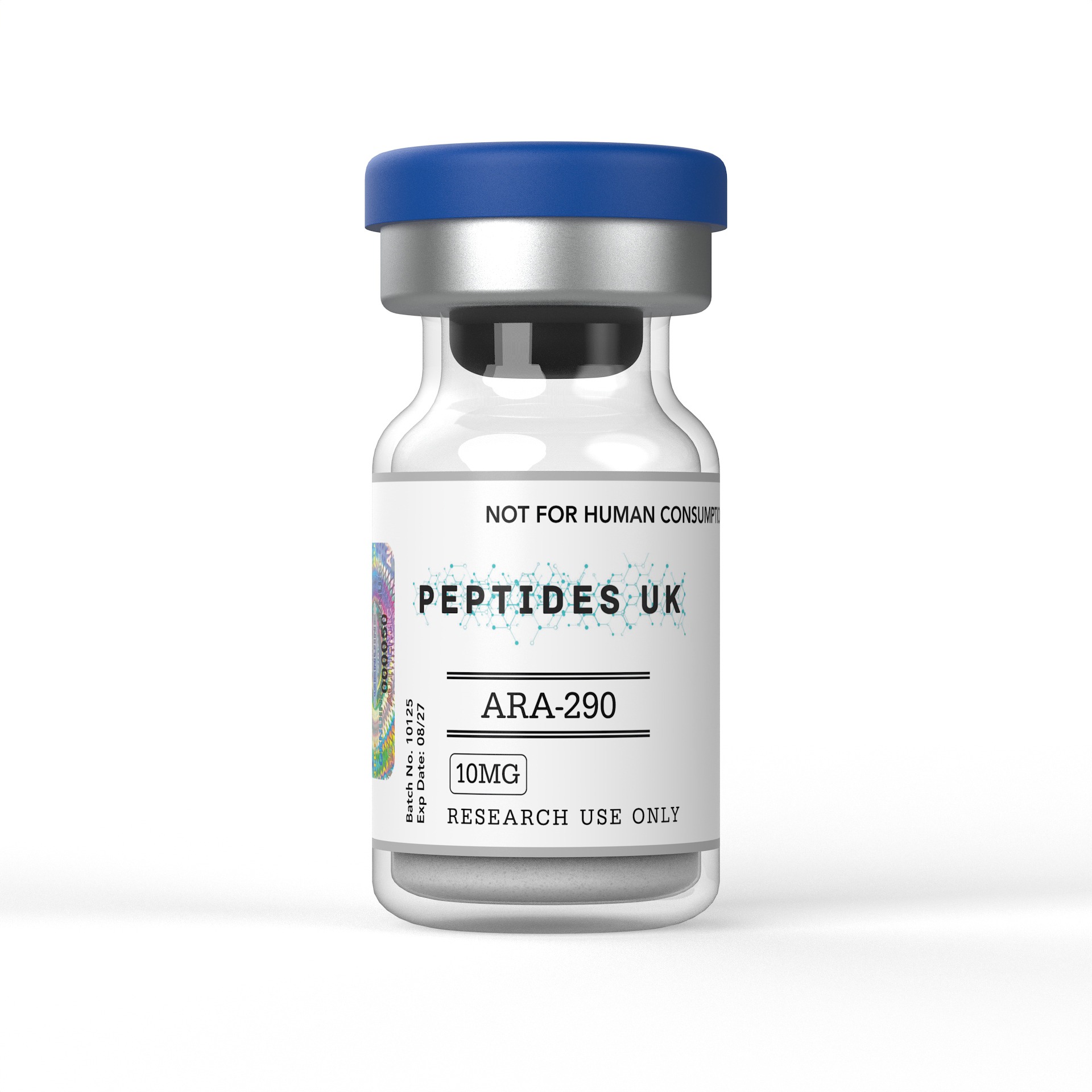
ARA-290 EU – Buy Online | In Stock & Ready to Ship
Buy ARA-290 in Europe with fast shipping and guaranteed ≥99% purity — verified with COA and HPLC documentation. A trusted choice for peptides EU research teams rely on, with no customs delays or lengthy international wait times. Whether you’re searching for ARA-290 Europe suppliers, looking to buy ARA-290 in the EU, or sourcing peptides Europe-wide, we have you covered. Research teams across the EU can count on consistent stock, rapid fulfilment and full batch documentation every time.
For research use only. Not intended for human or veterinary use.

ARA-290 (Cibinetide) is a synthetic 11-amino acid cyclic peptide analogue of the erythropoietin helix B surface peptide, designed as a selective agonist of the innate repair receptor (IRR) — the tissue-protective heterodimeric receptor complex comprising the erythropoietin receptor (EPOR) and the β-common receptor (βcR / CD131) — available to buy in Europe for laboratory research into tissue protection signalling, neuroprotection, anti-inflammatory biology, small fibre neuropathy, pain modulation, pancreatic β-cell protection, and the comparative pharmacology of erythropoietin-derived tissue-protective peptides.
Laboratories and research institutions across the EU can order verified, research-grade ARA-290 with fast international dispatch to Europe, full batch documentation, and ≥99% purity confirmed by HPLC and Mass Spectrometry.
✅ ≥99% Purity — HPLC & Mass Spectrometry Verified
✅ Batch-Specific Certificate of Analysis (CoA)
✅ Sterile Lyophilised Powder | GMP Manufactured
✅ Fast Dispatch to EU & Europe | Tracked Shipping
ARA-290 (Cibinetide) is a synthetic cyclic 11-amino acid peptide derived from the helix B surface of erythropoietin (EPO) — specifically the amphipathic helix B region spanning residues 58–82 of the EPO sequence that forms part of the tissue-protective receptor binding interface. ARA-290 was developed by Brines, Cerami, and colleagues at Araim Pharmaceuticals, building on their foundational discovery that erythropoietin exerts tissue-protective and anti-inflammatory effects through a receptor distinct from the classical homodimeric EPOR responsible for erythropoiesis — a heterodimeric complex composed of one EPOR subunit and one β-common receptor (βcR, also termed CD131) subunit, which they designated the innate repair receptor (IRR).
The central mechanistic concept underlying ARA-290’s design is the structural and functional separation of EPO’s erythropoietic activity from its tissue-protective activity. Classical EPO binds the homodimeric EPOR complex (EPOR)₂ expressed on erythroid progenitor cells in the bone marrow, driving JAK2/STAT5 signalling that promotes red blood cell production — an effect that carries the haematological risks of polycythaemia and thrombosis with pharmacological EPO doses. The same EPO molecule also binds the heterodimeric IRR (EPOR/βcR) complex expressed in non-haematopoietic tissues — brain, peripheral nerve, heart, kidney, pancreas, and immune cells — activating a distinct set of tissue-protective signalling pathways that suppress inflammation, reduce apoptosis, and promote cellular survival and repair following injury or metabolic stress. ARA-290’s design explicitly dissociates these two activities: by mimicking specifically the helix B surface of EPO — the structural element that engages the IRR but not the homodimeric EPOR erythropoietic complex — ARA-290 provides selective IRR agonism without erythropoietic activity, eliminating the polycythaemia and thrombosis risks that complicate the research and therapeutic use of full-length EPO in tissue-protective contexts.
The cyclic peptide architecture of ARA-290 — a lactam bridge constraining the 11-residue sequence into a conformationally defined ring structure — is critical for both receptor engagement and metabolic stability. The cyclic backbone constrains the peptide in the bioactive conformation that mimics the amphipathic helix B surface topology of EPO, presents the IRR-binding residues in the correct spatial orientation for receptor engagement, and confers resistance to exopeptidase degradation — extending plasma half-life relative to linear equivalents of the same sequence. This combination of receptor-selective design and metabolic stability through cyclisation makes ARA-290 the most extensively characterised tissue-protective EPO mimetic peptide and the primary pharmacological tool for IRR biology research.
IRR activation by ARA-290 drives multiple downstream signalling pathways in tissue-protective contexts: PI3K/Akt-mediated anti-apoptotic signalling; NF-κB pathway modulation reducing pro-inflammatory cytokine production; JAK2/STAT3 (not STAT5) activation driving cytoprotective gene expression; and Nrf2-mediated antioxidant response element activation increasing cellular resistance to oxidative stress. These tissue-protective signalling outputs collectively suppress inflammation, reduce cell death from ischaemia, metabolic stress, and toxic insult, and promote the tissue repair response — establishing ARA-290 as a pleiotropic tissue-protective pharmacological tool with applications across a broad range of injury and disease research contexts.
In laboratory settings, ARA-290 is studied across IRR pharmacology, tissue protection signalling, neuroprotection, small fibre neuropathy, pancreatic β-cell biology, anti-inflammatory biology, and comparative EPO-derived peptide pharmacology. EU and European researchers working with ARA-290 typically focus on:
Innate repair receptor (IRR) pharmacology and tissue-protective signalling — ARA-290 is the reference selective IRR agonist — providing a pharmacological tool for activating the EPOR/βcR heterodimer in non-haematopoietic tissues without engaging the homodimeric EPOR erythropoietic pathway. Studies use ARA-290 to characterise IRR expression in diverse tissue and cell types, examine IRR-mediated signal transduction — including PI3K/Akt, JAK2/STAT3, NF-κB, and Nrf2 pathway activation — and establish the downstream transcriptional programmes driven by selective IRR engagement. ARA-290’s absence of erythropoietic activity eliminates the confounding haematological consequences that complicate interpretation of tissue-protective EPO pharmacology using full-length EPO.
Neuroprotection and central nervous system injury research — The IRR is expressed on neurons, astrocytes, oligodendrocytes, and microglia — where its activation by ARA-290 suppresses neuroinflammation, reduces excitotoxic and ischaemic neuronal apoptosis, and promotes axonal regeneration and remyelination. Studies use ARA-290 in neuronal culture systems and pre-clinical CNS injury models — including traumatic brain injury, spinal cord injury, stroke, and neurotoxicity paradigms — to examine IRR-mediated neuroprotective signalling, characterise the anti-apoptotic and anti-inflammatory consequences of selective IRR activation in neural tissue, and establish the cellular and molecular determinants of ARA-290’s neuroprotective activity.
Small fibre neuropathy and peripheral nerve research — Small fibre neuropathy (SFN) — characterised by degeneration of thinly myelinated Aδ and unmyelinated C fibres producing neuropathic pain, autonomic dysfunction, and intraepidermal nerve fibre loss — is a target indication in which ARA-290 has been most extensively clinically characterised. Studies use ARA-290 to examine IRR-dependent small fibre regeneration — characterising intraepidermal nerve fibre density changes, dorsal root ganglion neuron survival, and the axon regeneration-promoting consequences of IRR activation in DRG neuron culture and pre-clinical neuropathy models — establishing the mechanistic basis of ARA-290’s nerve fibre regenerative activity.
Neuropathic pain and pain modulation research — IRR activation by ARA-290 modulates nociceptive processing through multiple mechanisms — reducing neuroinflammation in dorsal root ganglia and spinal cord dorsal horn, suppressing microglial activation and pro-inflammatory cytokine production, and directly modulating nociceptor excitability through PI3K/Akt-mediated ion channel regulation. Studies use ARA-290 in neuropathic pain models — including diabetic peripheral neuropathy, chemotherapy-induced peripheral neuropathy, and nerve injury models — to examine IRR-dependent pain modulation, characterise the central and peripheral sites of ARA-290’s anti-nociceptive action, and establish the relationship between nerve fibre regeneration and neuropathic pain resolution.
Pancreatic β-cell protection and diabetes research — IRR is expressed on pancreatic β-cells, where its activation by ARA-290 suppresses cytokine-induced apoptosis, reduces endoplasmic reticulum stress, and protects β-cell mass from inflammatory and metabolic insult. Studies use ARA-290 in isolated islet preparations, β-cell lines (MIN6, INS-1), and pre-clinical diabetes models — including streptozotocin-induced and autoimmune β-cell destruction models — to examine IRR-mediated β-cell protection, characterise the PI3K/Akt and NF-κB signalling pathways activated by ARA-290 in β-cells, and establish the consequences of selective IRR activation on β-cell survival, insulin secretion, and islet integrity under inflammatory and metabolic stress conditions.
Anti-inflammatory signalling and cytokine biology — ARA-290-driven IRR activation suppresses pro-inflammatory cytokine production — including TNF-α, IL-1β, IL-6, and IL-12 — in activated macrophages, microglia, and peripheral immune cells through NF-κB pathway modulation and downstream anti-inflammatory transcriptional programming. Studies use ARA-290 to examine the molecular mechanisms of IRR-mediated inflammation resolution — characterising NF-κB subunit phosphorylation and nuclear translocation dynamics, STAT3-driven anti-inflammatory gene expression, and the consequences of ARA-290 pre-treatment and post-treatment on cytokine production in LPS-stimulated and other inflammatory challenge models.
Cardiac and myocardial protection research — IRR expression in cardiomyocytes and cardiac endothelial cells positions ARA-290 as a research tool for examining tissue-protective EPO signalling in the heart. Studies in cardiomyocyte culture, ex vivo Langendorff heart preparations, and pre-clinical cardiac ischaemia-reperfusion models use ARA-290 to characterise IRR-mediated cardiomyocyte protection — examining anti-apoptotic PI3K/Akt signalling, infarct size reduction, preservation of cardiac function following ischaemic injury, and the relative contributions of direct cardiomyocyte IRR activation versus anti-inflammatory IRR signalling in non-cardiomyocyte cardiac cell populations.
Renal protection and acute kidney injury research — The kidney is a primary site of EPO production and IRR expression — with tubular epithelial cells, podocytes, and renal endothelial cells expressing IRR. Studies use ARA-290 in cisplatin-induced, ischaemia-reperfusion, and contrast nephropathy models of acute kidney injury to examine IRR-mediated renoprotective signalling — characterising tubular cell apoptosis suppression, inflammatory cell infiltration reduction, and the preservation of renal function endpoints following ARA-290 treatment in nephrotoxic and ischaemic injury paradigms.
Oxidative stress and Nrf2 pathway research — IRR activation by ARA-290 drives Nrf2 nuclear translocation and antioxidant response element (ARE)-dependent gene expression — inducing cytoprotective enzymes including heme oxygenase-1 (HO-1), NAD(P)H quinone oxidoreductase 1 (NQO1), and glutamate-cysteine ligase (GCL) — increasing cellular antioxidant capacity and resistance to reactive oxygen species-induced injury. Studies use ARA-290 to examine IRR-dependent Nrf2/ARE pathway activation — characterising the kinetics of Nrf2 nuclear accumulation, the HO-1 induction profile, and the functional consequences of ARA-290-driven antioxidant gene expression for cellular survival under oxidative challenge.
Sarcoidosis and granulomatous disease research — Clinical research characterising ARA-290 in sarcoidosis — a chronic granulomatous inflammatory disease associated with small fibre neuropathy and autonomic dysfunction — has provided one of the most extensively studied clinical research contexts for ARA-290 beyond the pre-clinical literature. Mechanistic studies examining ARA-290’s effects in sarcoidosis-relevant immune cell systems use ARA-290 to characterise IRR-mediated modulation of granuloma-forming macrophage and T cell biology — examining the anti-inflammatory consequences of selective IRR activation in the inflammatory cell types driving sarcoid pathology.
EPO helix B surface peptide — comparative EPO mimetic pharmacology — ARA-290 is one of several EPO-derived peptides and peptidomimetics designed to isolate the tissue-protective activity of EPO from its erythropoietic activity — including the linear helix B surface peptide (HBSP), carbamoylated EPO (CEPO), and other non-erythropoietic EPO analogues. Studies comparing ARA-290 to these related compounds characterise the structural requirements for selective IRR versus homodimeric EPOR engagement, the consequences of cyclic versus linear peptide architecture for receptor binding and metabolic stability, and the relative tissue-protective potency of different EPO helix B-derived pharmacophores in matched in vitro and in vivo models.
Metabolic disease and adipose tissue research — IRR expression in adipocytes and adipose tissue macrophages positions ARA-290 as a research tool for examining tissue-protective EPO signalling in metabolic disease contexts. Studies examining ARA-290 in obesity and type 2 diabetes models characterise IRR-mediated adipose tissue inflammation modulation — examining macrophage polarisation from pro-inflammatory M1 toward anti-inflammatory M2 phenotypes, adipokine profile changes following ARA-290 treatment, and the metabolic consequences of IRR-dependent adipose tissue inflammation resolution in pre-clinical metabolic disease models.
All research applications are for in vitro and pre-clinical use only.
ARA-290 has an extensive research literature spanning foundational mechanistic characterisation of the IRR, pre-clinical tissue-protective studies across multiple organ systems, and clinical research in small fibre neuropathy and sarcoidosis — establishing it as the most comprehensively studied selective IRR agonist.
IRR discovery and tissue-protective EPO signalling characterisation: The foundational studies by Brines, Cerami, and colleagues established that EPO’s tissue-protective effects are mediated through a receptor distinct from the classical homodimeric EPOR — a heterodimeric EPOR/βcR complex that they designated the innate repair receptor. These studies demonstrated that non-erythropoietic EPO analogues that could not bind the homodimeric EPOR retained full tissue-protective activity through IRR engagement — establishing the IRR as the molecular target of EPO’s cytoprotective biology and providing the mechanistic rationale for developing IRR-selective agonists that decouple tissue protection from erythropoiesis.
ARA-290 pharmacological characterisation: Studies characterising ARA-290’s receptor selectivity profile documented its selective engagement of the EPOR/βcR heterodimer without meaningful interaction with the homodimeric EPOR — confirming the predicted absence of erythropoietic activity in haematological parameters across multiple pre-clinical species. These selectivity studies established ARA-290 as a pharmacologically clean IRR tool compound whose tissue-protective effects can be unambiguously attributed to IRR activation rather than to homodimeric EPOR-mediated erythropoietic or erythropoiesis-associated signalling.
Neuroprotection pre-clinical studies: Pre-clinical studies across CNS injury models — including retinal ischaemia, traumatic brain injury, and stroke models — documented ARA-290-mediated neuroprotection: reduced neuronal apoptosis, preserved tissue architecture, reduced inflammatory cell infiltration, and improved functional outcomes. These neuroprotection studies characterised the PI3K/Akt and JAK2/STAT3 signalling pathways activated by IRR engagement in neural tissue and established ARA-290 as a potent neuroprotective agent in the absence of haematological consequences.
Small fibre neuropathy and nerve regeneration studies: Studies in diabetic and toxic small fibre neuropathy models documented ARA-290-driven restoration of intraepidermal nerve fibre density — a direct morphological measure of small fibre regeneration — alongside improvements in autonomic function and neuropathic pain parameters. These nerve regeneration studies established the mechanistic connection between IRR activation, DRG neuron survival signalling, and peripheral axon regeneration — providing the pre-clinical foundation for clinical investigation of ARA-290 in SFN.
Clinical research in sarcoidosis and small fibre neuropathy: Clinical studies examining ARA-290 in sarcoidosis patients with small fibre neuropathy documented improvements in intraepidermal nerve fibre density, corneal nerve fibre parameters, neuropathic pain scores, and measures of autonomic function — providing clinical validation of the nerve fibre regenerative mechanism identified in pre-clinical models. These clinical findings established ARA-290 as one of the few compounds with clinical evidence of small fibre regeneration and positioned it as an important research tool for understanding the clinical translatability of IRR-targeted tissue protection.
Pancreatic β-cell protection studies: Studies examining ARA-290 in cytokine-treated and streptozotocin-treated β-cell preparations documented suppression of β-cell apoptosis, preservation of insulin secretory capacity, and attenuation of inflammatory signalling — with findings establishing IRR-mediated PI3K/Akt and NF-κB pathway modulation as the β-cell protective mechanism. These β-cell studies contributed to understanding of the role of the EPO/IRR system in pancreatic islet biology and the potential of IRR-targeted approaches in inflammatory and autoimmune β-cell destruction models.
Anti-inflammatory mechanism studies: Studies characterising ARA-290’s anti-inflammatory effects in macrophage and microglial systems documented suppression of LPS-stimulated TNF-α, IL-1β, and IL-6 production — with findings establishing IRR-dependent NF-κB pathway modulation as the primary anti-inflammatory mechanism. These inflammatory biology studies characterised the downstream transcriptional consequences of IRR activation in immune cells and established ARA-290 as a pharmacological tool for examining the intersection of EPO/IRR signalling and innate immune regulation.
| Compound | Class | EPOR Binding | IRR (EPOR/βcR) Binding | Erythropoietic Activity | Key Research Distinction |
|---|---|---|---|---|---|
| ARA-290 (Cibinetide) | Cyclic 11-aa EPO helix B mimetic | None | Selective IRR agonist | Absent | Reference selective IRR agonist; cyclic stability; most extensively characterised tissue-protective EPO peptide |
| Helix B Surface Peptide (HBSP) | Linear 11-aa EPO helix B fragment | Minimal | IRR agonist | Absent | Linear equivalent of ARA-290 pharmacophore; metabolic stability comparator |
| Carbamoylated EPO (CEPO) | Chemically modified full-length EPO | Greatly reduced | Retained | Minimal | Full-length EPO backbone — non-erythropoietic modification; IRR tissue protection reference |
| Recombinant EPO (rEPO) | Recombinant full-length glycoprotein | High — (EPOR)₂ agonist | IRR agonist | Full erythropoietic activity | Reference EPO — both pathways active; erythropoietic confound for tissue protection studies |
| EMP1 (EPO mimetic peptide 1) | Short synthetic EPO mimetic | (EPOR)₂ agonist | Weak | Erythropoietic | Erythropoietic EPO mimetic reference — not tissue-protective selective |
| ARA-290 + βcR knockout cells | Genetic model control | N/A | Loss-of-function | N/A | βcR/CD131 knockout — confirms IRR-dependence of ARA-290 activity |
| IL-3 / GM-CSF | βcR-sharing cytokines | None | βcR shared subunit | None | βcR biology reference — shared receptor subunit without EPOR component |
Every order of ARA-290 dispatched to EU and European research institutions includes:
Can I Buy ARA-290 in the EU and Europe?
Yes. We supply research-grade ARA-290 with fast tracked dispatch to all EU member states and wider European destinations. All orders include full batch documentation. ARA-290 is supplied strictly for laboratory research use only.
What is the Innate Repair Receptor and How Does it Differ From the Classical EPO Receptor?
The classical erythropoietic EPO receptor is a homodimeric complex — (EPOR)₂ — expressed predominantly on erythroid progenitor cells in the bone marrow. EPO binding drives JAK2/STAT5 signalling that promotes red blood cell production. The innate repair receptor (IRR) is a structurally distinct heterodimeric complex composed of one EPOR subunit and one β-common receptor (βcR/CD131) subunit — expressed in non-haematopoietic tissues including brain, peripheral nerve, heart, kidney, pancreas, and immune cells. Despite sharing the EPOR subunit, the IRR signals through a distinct set of downstream pathways — primarily PI3K/Akt, JAK2/STAT3, and NF-κB — producing tissue-protective, anti-apoptotic, and anti-inflammatory outcomes rather than erythropoietic responses. This structural distinction enables the design of EPO-derived peptides like ARA-290 that selectively engage the IRR without activating the homodimeric erythropoietic EPOR — providing tissue protection without haematological consequences.
Why Does ARA-290 Lack Erythropoietic Activity Despite Being Derived From EPO?
ARA-290’s sequence is derived specifically from the helix B surface of EPO — the region of the EPO molecule that contributes to IRR binding but does not constitute the primary binding interface for the homodimeric erythropoietic EPOR. The homodimeric (EPOR)₂ complex requires engagement of EPO’s site I and site II binding surfaces — distinct from the helix B surface — for productive receptor dimerisation and JAK2/STAT5 erythropoietic signalling. By mimicking only the helix B surface, ARA-290 lacks the structural determinants required for homodimeric EPOR engagement and erythropoietic pathway activation. This structural specificity means ARA-290 does not stimulate erythroid progenitor proliferation, does not elevate haematocrit or reticulocyte counts, and does not produce the polycythaemia and thrombosis risks associated with pharmacological doses of full-length EPO — enabling its use as a research tool for studying tissue-protective IRR biology in isolation from erythropoietic confounds.
What is Small Fibre Neuropathy and Why is ARA-290 Studied in this Context?
Small fibre neuropathy (SFN) is a peripheral neuropathy characterised by selective degeneration of the smallest peripheral nerve fibres — thinly myelinated Aδ fibres and unmyelinated C fibres — producing neuropathic pain (burning, stabbing, allodynia), autonomic dysfunction (orthostatic intolerance, anhidrosis, gastrointestinal dysmotility), and measurable loss of intraepidermal nerve fibre density on skin punch biopsy. SFN is associated with diabetes, sarcoidosis, autoimmune conditions, and idiopathic causes — and currently lacks approved disease-modifying treatments targeting nerve fibre regeneration. ARA-290 is studied in SFN because IRR activation in dorsal root ganglion neurons promotes neuronal survival signalling and peripheral axon regeneration — with pre-clinical studies documenting restoration of intraepidermal nerve fibre density and clinical studies showing improvements in nerve fibre density parameters and neuropathic pain scores. This makes ARA-290 one of the most advanced research tools for studying the biology of small fibre regeneration and a clinical research candidate for SFN disease modification.
How Does ARA-290’s Anti-Inflammatory Activity Relate to its Tissue-Protective Effects?
ARA-290’s tissue-protective effects are inseparable from its anti-inflammatory activity — the two are mechanistically linked through IRR-mediated signalling. In injured or stressed tissue, inflammatory cytokines (TNF-α, IL-1β, IL-6) drive pro-apoptotic signalling, disrupt cellular metabolism, and amplify tissue damage through secondary inflammatory cascades. ARA-290-driven IRR activation suppresses this inflammatory amplification through NF-κB pathway modulation — reducing cytokine production in infiltrating and resident immune cells — while simultaneously activating PI3K/Akt anti-apoptotic survival signalling directly in the threatened parenchymal cells. The combination of reduced inflammatory insult (from immune cell IRR activation) and enhanced intrinsic cell survival signalling (from parenchymal cell IRR activation) produces the pleiotropic tissue-protective profile that characterises ARA-290 across multiple organ systems.
What is the Cyclic Peptide Architecture of ARA-290 and Why Does it Matter?
ARA-290 is a cyclic peptide — its 11-amino acid sequence is constrained into a ring structure by a lactam bridge between the N-terminal amine and a side-chain carboxyl group. This cyclisation serves two critical functions. First, it constrains the peptide backbone in the bioactive conformation that mimics the amphipathic helix B surface topology of EPO — presenting the IRR-binding residues in the correct spatial geometry for productive receptor engagement that a flexible linear peptide of the same sequence would not reliably maintain. Second, cyclisation eliminates the free N-terminus and dramatically reduces susceptibility to aminopeptidase-mediated exopeptidase cleavage — extending plasma half-life and in vivo stability relative to a linear equivalent. The cyclic architecture is therefore essential for both the pharmacological activity and the metabolic stability that make ARA-290 a viable research tool for both in vitro and in vivo experimental applications.
How Do I Reconstitute ARA-290 for Laboratory Use?
Reconstitute with sterile water or PBS by adding solvent slowly down the vial wall and swirling gently — do not vortex. ARA-290 is a cyclic peptide with good aqueous solubility that dissolves readily in physiological buffers at neutral pH. Prepare working stock solutions at the required concentration, aliquot into single-use volumes, and store at -80°C to maintain stability and avoid repeated freeze-thaw degradation. For cell culture experiments, dilute to working concentration in the appropriate cell culture medium immediately before use. For in vivo rodent studies, prepare fresh solution in sterile saline or PBS on the day of administration. ARA-290’s cyclic architecture provides greater stability than linear peptides under physiological conditions, but standard peptide handling precautions — cold chain maintenance, light protection, and avoidance of prolonged room temperature exposure — apply.
How Quickly is ARA-290 Delivered to Europe?
Delivery to EU and European destinations typically takes 3–7 working days via tracked international courier with packaging maintaining peptide stability throughout transit.
| Parameter | Detail |
|---|---|
| Peptide | ARA-290 (Cibinetide) |
| Structure | Cyclic 11-amino acid peptide — lactam bridge cyclisation |
| Derived From | EPO helix B surface (residues 58–82 region) |
| Primary Receptor | Innate Repair Receptor (IRR) — EPOR/βcR (CD131) heterodimer — selective agonist |
| Homodimeric EPOR Activity | Absent — no erythropoietic activity |
| Primary Signalling | PI3K/Akt (anti-apoptotic); JAK2/STAT3 (cytoprotective); NF-κB modulation (anti-inflammatory); Nrf2/ARE (antioxidant) |
| Erythropoietic Activity | None — selective IRR agonism |
| Architecture | Cyclic peptide — conformational constraint + exopeptidase resistance |
| Primary Research Interest | IRR pharmacology, neuroprotection, small fibre neuropathy, β-cell protection, anti-inflammatory biology, cardiac/renal protection, tissue repair |
| Related Compounds | Helix B surface peptide (HBSP — linear), CEPO, recombinant EPO |
| Purity | ≥99% |
| Verification | HPLC & Mass Spectrometry |
| Form | Sterile Lyophilised Powder |
| Solubility | Sterile water or PBS |
| Storage | -20°C, protected from light and moisture |
| Intended Use | Research use only |
ARA-290 (Cibinetide) is supplied exclusively for legitimate scientific research conducted within licensed laboratory environments. This product is not approved for human consumption, self-administration, or any therapeutic, clinical, or veterinary application. It must be handled solely by qualified researchers in compliance with applicable EU regulations, national legislation, and institutional ethics guidelines. By purchasing, you confirm this compound will be used exclusively for approved in vitro or pre-clinical research purposes.

Receive News
