PRODUCTS SOLD ON PEPTIDESLABEU.COM ARE FOR RESEARCH PURPOSES ONLY AND ARE NOT FOR HUMAN OR VETERINARY USE.
€31.50
SNAP-8 EU – Buy Online | In Stock & Ready to Ship
Buy SNAP-8 in Europe with fast shipping and guaranteed ≥99% purity — verified with COA and HPLC documentation. A trusted choice for peptides EU research teams rely on, with no customs delays or lengthy international wait times. Whether you’re searching for SNAP-8 Europe suppliers, looking to buy SNAP-8 in the EU, or sourcing peptides Europe-wide, we have you covered. Research teams across the EU can count on consistent stock, rapid fulfilment and full batch documentation every time.
For research use only. Not intended for human or veterinary use.


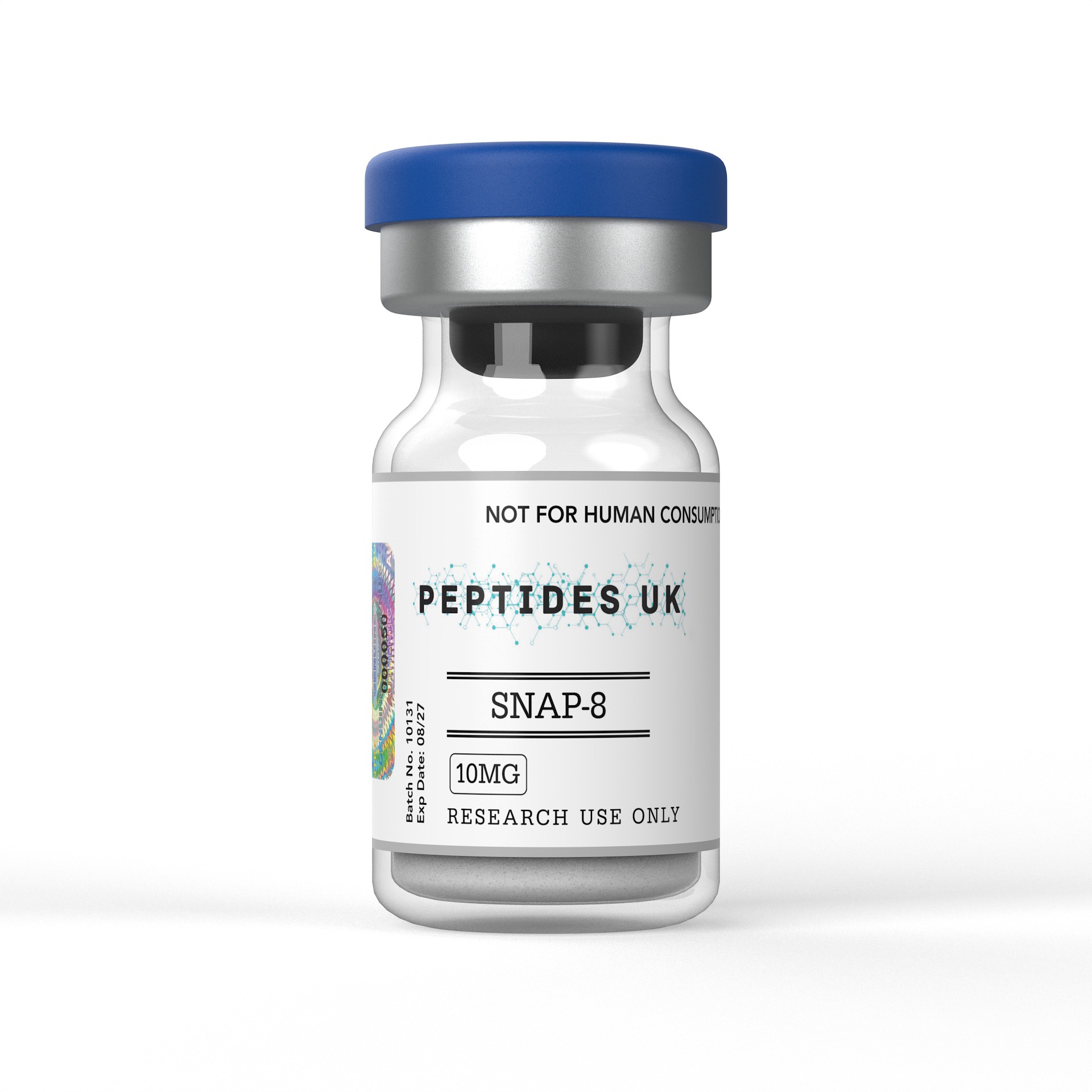
SNAP-8 (Acetyl Octapeptide-3) is a synthetic acetylated octapeptide analogue of the N-terminal domain of SNAP-25, designed to competitively inhibit SNARE complex assembly at the neuromuscular junction, available to buy in Europe for laboratory research into SNARE protein biology, synaptic vesicle exocytosis mechanisms, neuromuscular transmission pharmacology, catecholamine secretion, and the comparative study of peptide-based SNARE complex modulators.
Laboratories and research institutions across the EU can order verified, research-grade SNAP-8 with fast international dispatch to Europe, full batch documentation, and ≥99% purity confirmed by HPLC and Mass Spectrometry.
✅ ≥99% Purity — HPLC & Mass Spectrometry Verified
✅ Batch-Specific Certificate of Analysis (CoA)
✅ Sterile Lyophilised Powder | GMP Manufactured
✅ Fast Dispatch to EU & Europe | Tracked Shipping
SNAP-8 (Acetyl Octapeptide-3; also designated Leuphasyl in some nomenclatures) is a synthetic acetylated octapeptide — sequence Acetyl-Glu-Glu-Met-Gln-Arg-Arg-Ala-Asp-NH₂ — corresponding to a modified fragment of the N-terminal SNARE motif domain of Synaptosomal-Associated Protein 25 (SNAP-25), a core component of the neuronal SNARE complex responsible for calcium-triggered synaptic vesicle exocytosis and neurotransmitter release.
SNAP-25 is one of three essential SNARE (Soluble NSF Attachment Protein Receptor) proteins that form the core fusogenic complex driving regulated exocytosis at the neuronal synapse and neuromuscular junction. Together with syntaxin-1 (a vesicle-anchored SNARE, v-SNARE) and VAMP/synaptobrevin (a target membrane SNARE, t-SNARE), SNAP-25 contributes two of the four α-helical SNARE motifs that zipper together in a parallel coiled-coil configuration to form the trans-SNARE complex — generating the mechanical force that drives lipid bilayer fusion between the synaptic vesicle and the presynaptic plasma membrane, and culminating in neurotransmitter and neuropeptide release into the synaptic cleft.
The mechanism of SNAP-8 is competitive interference with SNARE complex assembly. SNAP-8’s sequence is derived from the SNAP-25 N-terminal SNARE domain — the region that contributes one of the two SNAP-25 α-helices to the four-helix SNARE bundle. By providing an exogenous peptide fragment with affinity for the SNARE complex assembly interface, SNAP-8 competes with endogenous SNAP-25 for incorporation into the nascent SNARE complex — reducing the efficiency and rate of complete four-helix bundle formation and thereby attenuating the exocytotic drive at stimulated synaptic terminals. The consequence is partial, graded inhibition of calcium-triggered neurotransmitter release — not the complete, irreversible SNAP-25 cleavage produced by botulinum neurotoxin serotype A (BoNT/A), which cleaves SNAP-25 at a defined scissile bond and permanently eliminates its SNARE complex-forming capacity.
This mechanistic distinction — competitive partial inhibition versus irreversible proteolytic cleavage — defines SNAP-8’s research utility as a graded, reversible SNARE complex assembly modulator that enables dose-dependent examination of the relationship between SNARE complex formation efficiency and exocytotic output, in contrast to the all-or-nothing SNAP-25 elimination achieved by BoNT/A. SNAP-8 is structurally and mechanistically related to the hexapeptide Argireline (Acetyl Hexapeptide-3 / Acetyl Hexapeptide-8), which is based on the same SNAP-25 N-terminal domain region but uses a shorter six-residue sequence — with SNAP-8’s two additional residues proposed to confer enhanced SNARE complex binding affinity and greater inhibitory potency relative to the parent hexapeptide.
In laboratory settings, SNAP-8 is studied across SNARE protein biology, synaptic vesicle exocytosis mechanisms, neuromuscular junction pharmacology, catecholamine and neuropeptide secretion, and comparative SNARE complex modulator research. EU and European researchers working with SNAP-8 typically focus on:
SNARE complex assembly and exocytosis mechanism research — The four-helix SNARE bundle — assembled from syntaxin-1, VAMP/synaptobrevin, and the two SNARE motifs of SNAP-25 — is the minimal fusion machinery of regulated exocytosis. Studies use SNAP-8 to probe SNARE complex assembly kinetics and stoichiometry — examining how competitive interference with SNAP-25 SNARE domain incorporation into the nascent bundle affects the rate and efficiency of trans-SNARE complex formation, the energy landscape of membrane fusion, and the calcium sensitivity threshold of exocytotic triggering. SNAP-8’s partial, graded inhibition of complex assembly enables titration of SNARE complex formation efficiency as an experimental variable in exocytosis research.
Neuromuscular junction transmission pharmacology — The neuromuscular junction (NMJ) is among the most studied synaptic structures in neuroscience — where motor neuron action potential-driven calcium influx triggers ACh-loaded synaptic vesicle exocytosis through the SNAP-25/syntaxin-1/VAMP SNARE complex. Studies use SNAP-8 to examine SNARE-dependent acetylcholine release at the NMJ — characterising the dose-dependent relationship between SNAP-8 concentration, SNARE complex assembly inhibition, quantal ACh release, and the downstream consequences for neuromuscular transmission parameters including end-plate potential amplitude, miniature end-plate potential frequency, and muscle contraction.
Catecholamine secretion and adrenal chromaffin cell biology — Adrenal chromaffin cells are a primary model system for regulated exocytosis research — secreting catecholamines (adrenaline, noradrenaline) through a SNARE-dependent exocytotic mechanism that shares core molecular machinery with synaptic neurotransmitter release. Studies use SNAP-8 in chromaffin cell preparations to examine SNARE-dependent catecholamine secretion — characterising the inhibitory effects of SNARE complex assembly interference on stimulus-secretion coupling, the kinetics of exocytotic burst and sustained release components, and the pharmacological interaction between SNAP-8 and the endogenous SNARE regulatory proteins (complexins, synaptotagmin, Munc18, Munc13) that modulate SNARE complex assembly and calcium sensitivity.
SNAP-25 interaction domain and SNARE motif binding research — The specific SNAP-25 N-terminal SNARE domain sequence that SNAP-8 is derived from contributes one of the two SNAP-25 α-helices that form part of the core SNARE bundle. Studies use SNAP-8 as an affinity probe and competitive inhibitor to map the SNAP-25 SNARE motif interaction surfaces — examining SNAP-8 binding to syntaxin-1 and VAMP in pull-down and co-immunoprecipitation assays, characterising the structural determinants of SNAP-25 SNARE domain incorporation into the four-helix bundle, and identifying the residues critical for SNARE complex nucleation and zippering in the N-terminal half of the SNARE motif.
Botulinum neurotoxin mechanism research — SNAP-8 as comparator — Botulinum neurotoxin type A (BoNT/A) cleaves SNAP-25 at the Gln197-Arg198 bond, eliminating the C-terminal nine residues of SNAP-25 and producing a truncated SNAP-25 fragment that can still participate in partial SNARE complex assembly but cannot support membrane fusion. SNAP-8 provides a mechanistically distinct, reversible SNARE complex inhibition comparator for BoNT/A studies — enabling researchers to dissociate the consequences of SNAP-25 structural truncation (BoNT/A) from competitive SNARE complex assembly interference (SNAP-8), and to examine dose-response relationships in SNARE inhibition that are inaccessible with an irreversible enzymatic inhibitor.
Neuropeptide and dense-core vesicle exocytosis research — Beyond synaptic vesicle neurotransmitter release, regulated exocytosis of dense-core vesicles (DCVs) — containing neuropeptides, hormones, and monoamines — also depends on SNARE complex assembly, though the specific SNARE isoform composition and regulatory protein context differ from small synaptic vesicle release. Studies use SNAP-8 to examine SNARE-dependent dense-core vesicle exocytosis in neuroendocrine cell systems — characterising whether the SNAP-8 inhibitory mechanism operates equivalently in DCV versus small clear vesicle release pathways, and examining the SNARE isoform specificity of SNAP-8’s competitive inhibition.
Mast cell and immune cell secretion research — Mast cell degranulation — the calcium-triggered exocytotic release of histamine, proteases, and cytokines from secretory granules that drives allergic and anaphylactic responses — proceeds through a SNARE-dependent mechanism involving SNAP-23 (the non-neuronal SNAP-25 homologue), syntaxin-4, and VAMP7/8. Studies examining the SNARE dependence of mast cell degranulation and immune cell secretion use SNAP-8 to probe whether its SNAP-25-derived sequence retains inhibitory activity against SNAP-23-containing SNARE complexes — contributing to understanding of the isoform selectivity of SNARE complex assembly inhibitors and the shared versus distinct SNARE machinery of neuronal and immune cell exocytosis.
Insulin and pancreatic β-cell secretion research — Glucose-stimulated insulin secretion from pancreatic β-cells is a SNARE-dependent regulated exocytosis process — mediated by a complex involving SNAP-25, syntaxin-1A/1B, and VAMP2. Disruption of SNARE complex assembly in β-cells impairs insulin granule fusion with the plasma membrane and reduces insulin secretion. Studies use SNAP-8 to examine SNARE-dependent insulin exocytosis kinetics — characterising the first-phase and second-phase insulin release components, the role of SNAP-25 SNARE domain integrity in calcium-triggered granule fusion, and the pharmacological modulation of β-cell exocytosis through competitive SNARE complex interference.
SNARE regulatory protein interaction research — SNARE complex assembly is regulated by a suite of accessory proteins — including Munc18-1 (which templates SNARE complex nucleation through syntaxin-1 interaction), Munc13 (which primes vesicles for release-ready states), complexins (which clamp partially assembled SNARE complexes and regulate calcium sensitivity), and synaptotagmin-1 (the calcium sensor that triggers SNARE zippering completion). Studies use SNAP-8 to examine how interference with SNAP-25 SNARE domain incorporation affects the function of these regulatory proteins — probing the mechanistic interdependencies between SNAP-25 SNARE motif engagement and the activity of the broader exocytotic machinery.
Comparative SNARE peptide inhibitor pharmacology — SNAP-8 versus Argireline — SNAP-8 and Argireline (Acetyl Hexapeptide-3) are structurally related SNAP-25-derived SNARE complex assembly competitors differing in peptide length — SNAP-8 (8 residues) versus Argireline (6 residues) — with the two additional C-terminal residues of SNAP-8 proposed to extend the SNARE domain binding surface and enhance inhibitory potency. Studies systematically comparing SNAP-8 and Argireline characterise their relative SNARE complex assembly inhibition potency, binding affinity for syntaxin-1 and VAMP, and functional inhibition of catecholamine secretion and neuromuscular transmission — establishing the structure-activity relationship within the SNAP-25-derived SNARE inhibitor peptide series and the contribution of peptide length to inhibitory efficacy.
Vesicle priming, docking, and release-ready pool research — The sequence of events preceding calcium-triggered exocytosis — vesicle docking at active zones, Munc13-dependent priming into the readily-releasable pool (RRP), partial SNARE complex assembly, and calcium-triggered completion of zippering — is studied using a combination of genetic, pharmacological, and optical approaches. Studies use SNAP-8 to examine the step in the vesicle cycle at which SNAP-25 SNARE domain engagement first becomes rate-limiting — whether SNAP-8 affects vesicle priming into the RRP, the stability of primed vesicles, or the calcium sensitivity of exocytotic triggering from primed vesicles — contributing to mechanistic dissection of the multi-step vesicle priming-to-fusion pathway.
Calcium-secretion coupling and exocytotic kinetics — The calcium dependence of neurotransmitter release — characterised by a steep power-law relationship between calcium concentration and exocytotic rate — reflects both the cooperative calcium binding of synaptotagmin-1 and the energy barrier of SNARE-mediated membrane fusion. Studies use SNAP-8 alongside calcium clamp techniques and flash photolysis of caged calcium to examine how partial SNARE complex assembly inhibition shifts the calcium sensitivity of exocytotic triggering — characterising whether SNAP-8 acts primarily by reducing the number of fusion-competent SNARE complexes or by slowing SNARE zippering kinetics in the presence of activating calcium signals.
All research applications are for in vitro and pre-clinical use only.
SNAP-8 sits within a research literature that spans the foundational SNARE complex biology established in the 1990s and 2000s, the characterisation of SNAP-25-derived peptide inhibitors beginning with Argireline, and an evolving body of mechanistic and comparative studies examining the pharmacology of SNARE complex assembly modulators.
SNARE complex structure and mechanism — foundational characterisation: The foundational structural studies by Sutton, Bhatt, Söllner, Rothman, and colleagues established the four-helix SNARE bundle structure, the parallel coiled-coil topology, and the mechanical zippering model of membrane fusion — providing the structural basis within which SNAP-8’s competitive inhibition mechanism is interpreted. These foundational studies established that SNAP-25 contributes two SNARE motifs to the four-helix bundle, that N-terminal SNARE domain engagement precedes C-terminal zippering completion, and that the N-terminal half of the SNARE bundle is the primary nucleation site — directly relevant to understanding why N-terminal SNAP-25 domain-derived peptides like SNAP-8 can competitively interfere with complex assembly.
Argireline characterisation and the SNAP-25-derived inhibitor series: The original characterisation of Argireline (Acetyl Hexapeptide-3) by Blanes-Mira and colleagues established that a short acetylated peptide derived from the SNAP-25 N-terminal SNARE motif could competitively inhibit SNARE complex formation, reduce catecholamine secretion from stimulated chromaffin cells, and attenuate muscle contraction amplitude in neuromuscular junction preparations — validating the SNAP-25-derived competitive SNARE inhibitor concept. SNAP-8’s development as an extended eight-residue version of the Argireline sequence was motivated by the hypothesis that a longer SNARE domain fragment would present a larger binding interface and greater competitive inhibitory potency — with subsequent comparative studies examining whether the two additional residues of SNAP-8 produce the predicted enhancement in SNARE complex inhibition.
Catecholamine secretion inhibition studies: Studies examining SNAP-8’s effects on stimulus-evoked catecholamine secretion from adrenal chromaffin cells and PC12 cells documented concentration-dependent inhibition of exocytotic catecholamine release — with findings consistent with competitive interference with SNARE complex assembly reducing the kinetics and magnitude of calcium-triggered exocytosis. These secretion studies provided functional validation of the SNARE complex assembly inhibition mechanism in intact cell secretory systems and established the concentration range over which SNAP-8 produces graded, partial inhibition of exocytosis.
Comparative SNAP-8 versus Argireline potency studies: Comparative studies examining SNAP-8 and Argireline in the same SNARE complex assembly assays and secretion models characterised the relationship between peptide length and inhibitory activity within the SNAP-25-derived inhibitor series. Findings have supported the hypothesis that SNAP-8’s two additional C-terminal residues extend the SNARE domain binding surface — with SNAP-8 producing greater inhibition of SNARE complex assembly and catecholamine secretion than equimolar Argireline in several model systems — though the magnitude of the potency enhancement and its mechanistic basis have been subjects of ongoing comparative pharmacology research.
SNARE domain peptide binding characterisation: Biophysical studies examining the interaction of SNAP-25-derived peptides with recombinant SNARE domain fragments — using circular dichroism, isothermal titration calorimetry, and surface plasmon resonance — have characterised the binding thermodynamics of SNAP-8 and related peptides to syntaxin-1 and VAMP SNARE domain constructs. These binding studies provide the structural and thermodynamic context for interpreting SNAP-8’s competitive inhibition mechanism — establishing binding affinity, enthalpy/entropy contributions, and the stoichiometry of SNAP-8 interaction with SNARE complex assembly intermediates.
BoNT/A mechanistic comparison studies: Studies comparing the exocytosis inhibition profiles of SNAP-8 and BoNT/A in the same neuromuscular and secretory cell model systems have characterised the mechanistic distinctions between competitive SNARE assembly interference and irreversible SNAP-25 proteolytic cleavage — documenting differences in inhibition reversibility, dose-response characteristics, kinetics of inhibition onset and recovery, and functional consequences for different components of the exocytotic response. These mechanistic comparison studies have contributed to understanding of the SNAP-25 structural requirements for SNARE complex function and the pharmacological tractability of SNARE complex assembly as a drug target.
| Compound | Class | Mechanism | SNARE Target | Reversibility | Key Research Distinction |
|---|---|---|---|---|---|
| SNAP-8 (Acetyl Octapeptide-3) | Synthetic SNAP-25-derived octapeptide | Competitive SNARE complex assembly inhibition | SNAP-25 N-terminal SNARE domain | Reversible — competitive | Extended SNAP-25 fragment; enhanced potency vs Argireline; graded exocytosis inhibition |
| Argireline (Acetyl Hexapeptide-3) | Synthetic SNAP-25-derived hexapeptide | Competitive SNARE complex assembly inhibition | SNAP-25 N-terminal SNARE domain | Reversible — competitive | Parent SNAP-25 inhibitor series; shorter sequence; reference for SAR comparison |
| BoNT/A (Botulinum Neurotoxin A) | Bacterial zinc endopeptidase | Proteolytic cleavage of SNAP-25 at Gln197-Arg198 | SNAP-25 C-terminal domain | Irreversible | Complete SNAP-25 inactivation; reference maximal SNARE inhibition; irreversible comparator |
| BoNT/C | Bacterial zinc endopeptidase | Proteolytic cleavage of syntaxin-1 and SNAP-25 | Syntaxin-1 + SNAP-25 | Irreversible | Dual SNARE target — syntaxin-1 + SNAP-25; broader SNARE complex disruption |
| BoNT/B / TeNT | Bacterial zinc endopeptidase | Proteolytic cleavage of VAMP/synaptobrevin | VAMP2/3 | Irreversible | v-SNARE cleavage comparator — VAMP-targeted SNARE disruption |
| NSF / α-SNAP | Endogenous SNARE disassembly ATPase | ATP-dependent SNARE complex disassembly | Assembled cis-SNARE complexes | Enzymatic | Post-fusion SNARE recycling; SNARE complex disassembly biology |
| Complexin | Endogenous SNARE clamp protein | Binds assembled SNARE complex — clamps fusion | Four-helix bundle C-terminal | Regulated | Endogenous SNARE clamp; calcium-triggered release via synaptotagmin |
Every order of SNAP-8 dispatched to EU and European research institutions includes:
Can I Buy SNAP-8 in the EU and Europe?
Yes. We supply research-grade SNAP-8 with fast tracked dispatch to all EU member states and wider European destinations. All orders include full batch documentation. SNAP-8 is supplied strictly for laboratory research use only.
What is SNAP-25 and Why is the SNARE Complex Central to Exocytosis Research?
SNAP-25 (Synaptosomal-Associated Protein 25) is a palmitoylated peripheral membrane protein anchored to the inner leaflet of the presynaptic plasma membrane, contributing two SNARE motifs to the neuronal SNARE complex. The SNARE complex — assembled from SNAP-25, syntaxin-1, and VAMP/synaptobrevin — is the minimal membrane fusion machinery responsible for calcium-triggered neurotransmitter release at the synapse and neuromuscular junction. The four α-helices of the SNARE complex zipper together progressively from their N-terminal ends toward the membrane-proximal C-terminal ends — generating the mechanical force that drives bilayer apposition, stalk formation, and pore opening in the millisecond timeframe required for synaptic transmission. SNAP-25’s two SNARE motifs are structurally essential for this zippering process — making it the molecular target of BoNT/A’s proteolytic inactivation and the competitive binding target of SNAP-25-derived peptide inhibitors including SNAP-8.
How Does SNAP-8 Differ Mechanistically From Botulinum Neurotoxin Type A?
Both SNAP-8 and BoNT/A inhibit SNARE-dependent exocytosis through actions targeting SNAP-25, but through fundamentally different mechanisms. BoNT/A is an endopeptidase that cleaves SNAP-25 at a specific scissile bond (Gln197-Arg198) — permanently eliminating the C-terminal nine residues of SNAP-25 required for complete SNARE complex zippering and producing an essentially irreversible block of exocytosis that persists until new SNAP-25 protein is synthesised. SNAP-8 is a competitive inhibitor that transiently occupies the SNARE complex assembly interface — reducing the efficiency of endogenous SNAP-25 engagement in nascent SNARE complexes through competitive displacement without destroying SNAP-25 or permanently eliminating SNARE complex forming capacity. The resulting inhibition is partial, graded, dose-dependent, and reversible — enabling titration of SNARE complex formation efficiency as a continuous experimental variable in a way that BoNT/A’s binary irreversible mechanism cannot provide.
What is the Structural Difference Between SNAP-8 and Argireline?
Argireline (Acetyl Hexapeptide-3) is the six-residue parent compound of the SNAP-25-derived SNARE inhibitor peptide series — sequence Acetyl-Glu-Glu-Met-Gln-Arg-Arg-NH₂ — corresponding to the first six residues of the SNAP-25 N-terminal SNARE motif region. SNAP-8 extends this sequence by two additional C-terminal residues (Ala-Asp) to produce the eight-residue sequence Acetyl-Glu-Glu-Met-Gln-Arg-Arg-Ala-Asp-NH₂. The rationale for this extension is that a longer SNARE domain fragment presents a larger binding surface for interaction with SNARE complex assembly partners — syntaxin-1 and VAMP — and therefore achieves greater competitive inhibitory potency than the shorter hexapeptide. Comparative studies have examined whether these two additional residues produce the predicted enhancement in SNARE complex assembly inhibition and exocytosis inhibitory potency relative to equimolar Argireline.
What Cell and Tissue Systems Are Used to Study SNAP-8 Pharmacology?
SNAP-8 is studied across several validated exocytosis model systems. Adrenal chromaffin cells are the most widely used primary secretory cell model — where SNAP-8 effects on KCl- or nicotine-stimulated catecholamine secretion are measured by HPLC or electrochemical detection. PC12 cells (rat adrenal pheochromocytoma) provide an immortalised neuroendocrine secretory cell line for SNAP-8 pharmacology. Neuromuscular junction preparations — including the mouse phrenic nerve-hemidiaphragm — enable direct examination of SNAP-8 effects on acetylcholine quantal release and muscle contraction. Pancreatic β-cell preparations and MIN6/INS-1 cell lines allow examination of SNAP-8 effects on insulin secretion. Cell-free SNARE complex assembly assays using recombinant SNARE domain constructs provide a direct biochemical readout of competitive assembly inhibition independent of cellular uptake and distribution variables.
Does SNAP-8 Have Selectivity for Neuronal SNAP-25 Over Non-Neuronal SNAP-23?
SNAP-23 is the non-neuronal homologue of SNAP-25 — expressed in mast cells, platelets, adipocytes, and other non-neuronal secretory cell types — where it participates in SNARE complexes driving non-neuronal regulated exocytosis. SNAP-23 shares significant sequence homology with SNAP-25 in the SNARE motif regions but differs in the N-terminal domain from which SNAP-8 is derived. Studies examining SNAP-8 activity in SNAP-23-dependent secretory systems — including mast cell degranulation — contribute to understanding of whether SNAP-8’s inhibitory sequence has selectivity for neuronal SNAP-25-containing SNARE complexes or cross-reacts with SNAP-23-containing complexes in non-neuronal exocytosis, which has implications for interpreting SNAP-8 pharmacology in mixed cell systems.
How Do I Reconstitute SNAP-8 for Laboratory Use?
Reconstitute with sterile water, PBS, or appropriate assay buffer by adding solvent slowly down the vial wall and swirling gently — do not vortex. SNAP-8 is a short acetylated octapeptide with good aqueous solubility that dissolves readily in physiological buffers without organic co-solvents. For cell treatment studies, dilute reconstituted stock to working concentration in cell culture medium immediately before use. Prepare aliquots from stock solution to avoid repeated freeze-thaw cycles and store at -80°C. For cell-free SNARE complex assembly assays, prepare peptide solutions in the same buffer as the recombinant SNARE domain constructs to ensure assay compatibility.
How Quickly is SNAP-8 Delivered to Europe?
Delivery to EU and European destinations typically takes 3–7 working days via tracked international courier with packaging maintaining peptide stability throughout transit.
| Parameter | Detail |
|---|---|
| Peptide | SNAP-8 (Acetyl Octapeptide-3) |
| Sequence | Acetyl-Glu-Glu-Met-Gln-Arg-Arg-Ala-Asp-NH₂ |
| Length | 8 amino acids — N-terminally acetylated, C-terminal amide |
| Derived From | SNAP-25 N-terminal SNARE motif domain |
| Mechanism | Competitive inhibition of SNARE complex assembly — SNAP-25 N-terminal SNARE domain competitive displacement |
| Target | SNARE complex assembly interface (SNAP-25 / syntaxin-1 / VAMP interaction) |
| Inhibition Type | Partial, graded, reversible — competitive; not proteolytic |
| Related Compound | Argireline (Acetyl Hexapeptide-3) — shorter parent sequence |
| Comparator | BoNT/A — irreversible SNAP-25 cleavage reference |
| Primary Research Interest | SNARE complex biology, exocytosis mechanism, neuromuscular pharmacology, catecholamine secretion, neuropeptide release, BoNT/A comparative pharmacology |
| Purity | ≥99% |
| Verification | HPLC & Mass Spectrometry |
| Form | Sterile Lyophilised Powder |
| Solubility | Sterile water, PBS, or aqueous assay buffer |
| Storage | -20°C, protected from light and moisture |
| Intended Use | Research use only |
SNAP-8 is supplied exclusively for legitimate scientific research conducted within licensed laboratory environments. This product is not approved for human consumption, self-administration, or any therapeutic, clinical, or veterinary application. It must be handled solely by qualified researchers in compliance with applicable EU regulations, national legislation, and institutional ethics guidelines. By purchasing, you confirm this compound will be used exclusively for approved in vitro or pre-clinical research purposes.
Receive News
