PRODUCTS SOLD ON PEPTIDESLABEU.COM ARE FOR RESEARCH PURPOSES ONLY AND ARE NOT FOR HUMAN OR VETERINARY USE.
€263.50
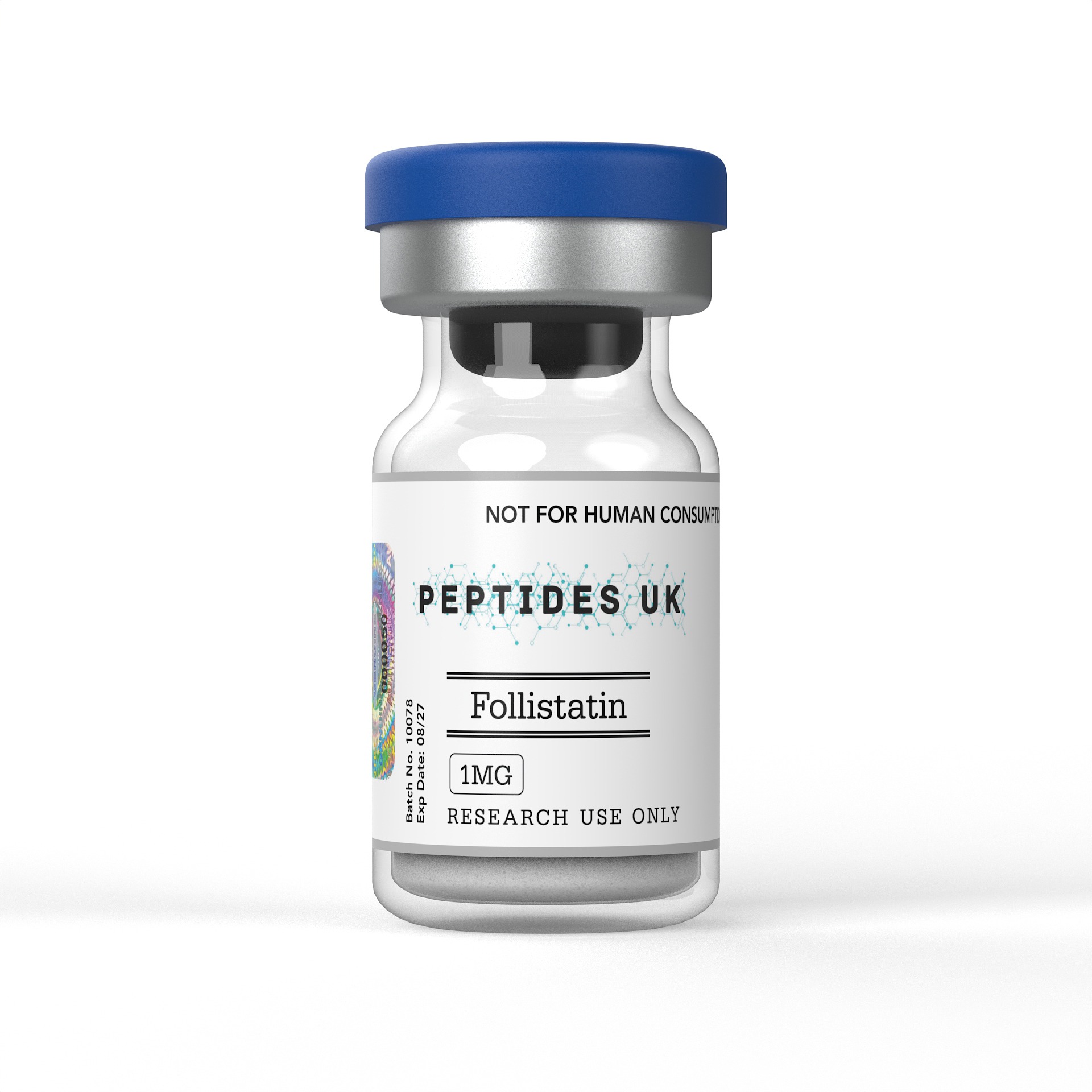
Follistatin EU – Buy Online | In Stock & Ready to Ship
Buy Follistatin in Europe with fast shipping and guaranteed ≥99% purity — verified with COA and HPLC documentation. A trusted choice for peptides EU research teams rely on, with no customs delays or lengthy international wait times. Whether you’re searching for Follistatin Europe suppliers, looking to buy Follistatin in the EU, or sourcing peptides Europe-wide, we have you covered. Research teams across the EU can count on consistent stock, rapid fulfilment and full batch documentation every time.
For research use only. Not intended for human or veterinary use.




Follistatin is a naturally occurring activin-binding glycoprotein and potent myostatin antagonist, available to buy in Europe for laboratory research into myostatin/activin signalling biology, skeletal muscle hypertrophy mechanisms, TGF-β superfamily regulation, reproductive endocrinology, and the comparative pharmacology of endogenous muscle growth regulators.
Laboratories and research institutions across the EU can order verified, research-grade Follistatin with fast international dispatch to Europe, full batch documentation, and ≥99% purity confirmed by HPLC and Mass Spectrometry.
✅ ≥99% Purity — HPLC & Mass Spectrometry Verified
✅ Batch-Specific Certificate of Analysis (CoA)
✅ Sterile Lyophilised Powder | GMP Manufactured
✅ Fast Dispatch to EU & Europe | Tracked Shipping
Follistatin (FST) is a single-chain monomeric glycoprotein encoded by the FST gene, belonging to the follistatin/SPARC family of secreted cysteine-rich proteins. First isolated from ovarian follicular fluid in 1987 as a factor capable of suppressing pituitary FSH secretion, Follistatin was subsequently characterised as a high-affinity binding protein for activin — and later identified as a broad-spectrum antagonist of multiple TGF-β superfamily ligands, most significantly activin A, activin B, myostatin (GDF-8), and GDF-11.
The predominant research isoform, Follistatin-344 (FST-344), is a 344-amino acid precursor form that undergoes heparan sulphate proteoglycan-mediated localisation at the cell surface and in the extracellular matrix — producing tissue-localised TGF-β superfamily antagonism. A second major isoform, Follistatin-288 (FST-288), arises from alternative splicing and exhibits distinct tissue distribution and binding characteristics. FST-344 is the circulating, systemically acting isoform most widely studied in the context of myostatin antagonism and muscle biology research.
Follistatin’s mechanism of action is competitive ligand sequestration — it binds activin and myostatin with extremely high affinity (Kd in the low picomolar range for activin A) through its follistatin domain modules (FSD1, FSD2, FSD3), wrapping around and sterically occluding the receptor-binding surfaces of TGF-β superfamily ligands to prevent their engagement with cognate type I and type II receptors (ALK4/5, ActRIIA/B). This non-enzymatic, stoichiometric neutralisation mechanism produces potent, dose-dependent suppression of Smad2/3 signalling downstream of activin and myostatin receptor complexes.
Myostatin — a skeletal muscle-specific TGF-β superfamily member and the primary endogenous negative regulator of muscle mass — is among Follistatin’s highest-affinity binding partners. Follistatin’s capacity to neutralise myostatin and activin simultaneously, suppressing two distinct negative regulators of skeletal muscle growth through a single endogenous mechanism, has established it as one of the most potent endogenous pro-myogenic signals characterised to date — and as a uniquely important research tool for studying the regulation of skeletal muscle mass.
In laboratory settings, Follistatin is studied across TGF-β superfamily signalling biology, skeletal muscle hypertrophy and atrophy research, reproductive endocrinology, developmental biology, and comparative myostatin antagonism pharmacology. EU and European researchers working with Follistatin typically focus on:
Myostatin antagonism and skeletal muscle hypertrophy research — Follistatin is the most potent endogenous myostatin antagonist characterised — neutralising myostatin (GDF-8) with high affinity to suppress its Smad2/3-mediated inhibition of skeletal muscle protein synthesis and satellite cell activation. Studies use Follistatin to examine myostatin pathway suppression, downstream Smad2/3 dephosphorylation, and the hypertrophic consequences of endogenous myostatin antagonism — establishing the mechanistic basis for the profound muscle mass increases observed in Follistatin-overexpressing animal models.
Activin signalling biology and Smad2/3 pathway research — Follistatin binds activin A and activin B with exceptionally high affinity — among the highest of any known endogenous activin antagonist — suppressing activin-driven Smad2/3 phosphorylation across all activin-responsive cell types. Studies use Follistatin to examine activin receptor (ActRIIA/B, ALK4) pharmacology, canonical Smad2/3 signalling dynamics, and the downstream transcriptional consequences of activin pathway suppression in muscle, bone, reproductive, and epithelial cell systems.
Muscle atrophy and cachexia model research — Activin and myostatin are implicated as primary drivers of skeletal muscle atrophy in cancer cachexia, chronic disease, immobilisation, and ageing-associated sarcopenia. Studies use Follistatin to antagonise activin/myostatin-driven atrophy programmes in pre-clinical cachexia and atrophy models — examining Smad2/3-mediated atrophy gene expression, ubiquitin-proteasome pathway activation, and the protective effects of dual activin/myostatin blockade on muscle mass preservation.
TGF-β superfamily ligand biology and specificity research — Beyond activin and myostatin, Follistatin neutralises GDF-11, BMP-2, BMP-4, BMP-7, and other TGF-β superfamily members with varying affinity. Studies use Follistatin in comparative binding and functional assays to characterise the breadth and selectivity of its TGF-β superfamily antagonism — mapping the ligand specificity profile of the follistatin domain modules and establishing which TGF-β superfamily members are biologically suppressed at physiologically relevant Follistatin concentrations.
Satellite cell activation and muscle regeneration research — Activin and myostatin suppress satellite cell activation and myoblast proliferation — limiting the myogenic response to muscle injury. Follistatin neutralisation of these inhibitory signals promotes satellite cell activation, proliferation, and differentiation into new myofibres. Studies use Follistatin to examine the role of activin/myostatin pathway suppression in satellite cell biology, myoblast fusion, and the regenerative response to skeletal muscle injury in vitro and in pre-clinical models.
GDF-11 biology and tissue ageing research — GDF-11, a close structural homologue of myostatin, is a Follistatin-neutralised TGF-β superfamily member implicated in tissue ageing, cardiac hypertrophy, and skeletal muscle ageing. Studies use Follistatin to neutralise GDF-11 activity in model systems — contributing to the controversial but research-active field examining GDF-11’s roles as either a pro-ageing or rejuvenating circulating factor, and the consequences of its suppression for cardiac and skeletal muscle biology.
Reproductive endocrinology and FSH regulation research — Follistatin was originally characterised as an FSH-suppressing factor through its neutralisation of activin’s stimulatory effects on pituitary FSH secretion. Studies in reproductive endocrinology use Follistatin to examine activin-dependent FSH regulation, gonadotroph biology, and the hypothalamic-pituitary-gonadal axis — establishing Follistatin’s role as a paracrine and endocrine regulator of the reproductive axis alongside inhibin and activin.
BMP signalling and bone biology research — Follistatin neutralises BMP-2, BMP-4, and BMP-7 — TGF-β superfamily members with established roles in osteoblast differentiation, bone formation, and skeletal development. Studies use Follistatin to examine BMP-dependent osteoblast biology, bone morphogenetic protein signalling in skeletal development models, and the interplay between activin/myostatin suppression and BMP pathway regulation in musculoskeletal biology research.
Cardiac muscle and heart failure research — Activin A and GDF-11 are implicated in cardiac muscle biology, heart failure pathophysiology, and cardiac atrophy. Studies use Follistatin to examine activin/GDF-11-driven Smad2/3 signalling in cardiomyocytes, the consequences of TGF-β superfamily blockade in pre-clinical heart failure models, and the relationship between circulating activin/myostatin levels and cardiac dysfunction — establishing Follistatin as a research tool in cardiac muscle biology beyond its established role in skeletal muscle research.
Developmental biology and embryogenesis research — Follistatin is a critical regulator of embryonic development — particularly neural induction, dorsal-ventral axis patterning, and organogenesis — acting through BMP antagonism in developmental contexts distinct from its post-natal muscle biology roles. Studies in developmental biology use Follistatin to examine BMP gradient establishment, neural induction mechanisms, and the developmental consequences of TGF-β superfamily suppression in embryonic model systems.
Comparative myostatin antagonist pharmacology — Follistatin is systematically studied alongside other myostatin/activin pathway antagonists — including myostatin propeptide, PCSK6-processed myostatin inhibitors, anti-myostatin antibodies, ActRIIB-Fc fusion proteins (e.g., ACVR2B-Fc), and small molecule ActRIIB antagonists — to characterise the potency, ligand selectivity breadth, and functional consequences of different antagonism strategies. These comparative studies define Follistatin’s unique position as a simultaneous multi-ligand TGF-β superfamily antagonist versus the more selective approaches of antibody-based or receptor decoy strategies.
Smad2/3 versus Smad1/5/8 pathway crosstalk research — Follistatin’s neutralisation of activin/myostatin (Smad2/3 pathway) versus its BMP neutralisation (Smad1/5/8 pathway) in a concentration-dependent and ligand-selective manner provides a research tool for examining TGF-β superfamily pathway crosstalk — including the opposing roles of Smad2/3 and Smad1/5/8 signalling in muscle cell differentiation, satellite cell biology, and the balance between myogenic and osteogenic cell fate decisions.
All research applications are for in vitro and pre-clinical use only.
Follistatin has one of the most extensive and scientifically significant research literatures among endogenous muscle regulatory proteins — with landmark studies in animal models, mechanistic cell biology, and disease-relevant pre-clinical systems establishing it as a major determinant of skeletal muscle mass and a multifunctional TGF-β superfamily regulator.
Myostatin antagonism and muscle mass regulation: The landmark studies in Follistatin-overexpressing transgenic mice produced some of the most dramatic muscle mass phenotypes reported in mammalian biology — animals exhibiting two to four times normal muscle mass through combined myostatin and activin neutralisation. These studies established that simultaneous blockade of multiple negative regulators of muscle growth through a single endogenous mechanism produces muscle hypertrophy substantially exceeding that achievable through myostatin neutralisation alone — demonstrating the additive contribution of activin pathway suppression to Follistatin’s pro-hypertrophic biology.
Activin A binding characterisation: Biochemical studies characterising Follistatin’s interaction with activin A established the structural basis of its high-affinity ligand sequestration — with crystallographic studies revealing how Follistatin’s three follistatin domain modules wrap around the activin dimer to occlude both type I and type II receptor binding surfaces simultaneously. These structural studies established the stoichiometry (one Follistatin molecule per activin dimer), the picomolar binding affinity, and the essentially irreversible nature of the Follistatin-activin complex — explaining the potency and durability of Follistatin-mediated activin antagonism.
Muscle atrophy and cachexia pre-clinical studies: Studies examining Follistatin in cancer cachexia and muscle atrophy models documented significant preservation of muscle mass, body weight, and physical function in Follistatin-treated animals — with findings attributing the protective effect to suppression of tumour-derived activin A and myostatin-driven Smad2/3 atrophy signalling. These cachexia studies established activin/myostatin dual blockade as a pharmacologically validated strategy for muscle mass preservation and positioned Follistatin biology as directly relevant to cachexia therapeutic research.
Isoform biology — FST-344 versus FST-288: Studies characterising the two major Follistatin splice isoforms established that FST-344 and FST-288 exhibit distinct cell surface binding, heparan sulphate proteoglycan affinity, and tissue distribution — with FST-288 tethered to cell surfaces and extracellular matrix through its acidic C-terminal extension and FST-344 the predominantly circulating, systemically distributed isoform. These isoform studies established the structural basis of Follistatin’s compartmentalised biology and the distinct research applications of each isoform in systemic versus local TGF-β superfamily antagonism research.
GDF-11 and tissue ageing research: Studies examining Follistatin’s neutralisation of GDF-11 contributed to the contested but intensively studied literature on GDF-11 as a circulating ageing factor — with Follistatin used as a research tool to dissect GDF-11’s biological activity from that of myostatin in model systems where the two highly homologous ligands co-exist. These studies highlighted the complexity of interpreting Follistatin biology in contexts where multiple TGF-β superfamily ligands with opposing or overlapping functions are simultaneously present.
Reproductive biology — FSH regulation: Studies characterising Follistatin’s role in FSH regulation documented that activin-stimulated FSH secretion from gonadotrophs is suppressed by Follistatin in a concentration-dependent manner — establishing the Follistatin/activin/inhibin system as the primary paracrine regulator of pituitary FSH biology. These reproductive endocrinology studies characterised Follistatin’s expression in ovarian granulosa cells and its role in the intraovarian paracrine regulation of folliculogenesis — establishing the reproductive biology research context that preceded the discovery of Follistatin’s muscle regulatory roles.
Satellite cell and regeneration biology: Studies examining Follistatin in muscle regeneration models documented enhanced satellite cell activation, accelerated myofibre regeneration, and increased regenerated muscle mass — with findings establishing that endogenous activin/myostatin suppression by locally produced Follistatin is a component of the satellite cell niche regulatory environment. These regeneration findings established Follistatin as a research tool relevant to muscle stem cell biology and the therapeutic potential of myostatin/activin blockade in muscle disease models.
| Compound | Mechanism | Ligand Targets | Smad Pathway Suppressed | Key Research Distinction |
|---|---|---|---|---|
| Follistatin (FST-344) | Endogenous ligand-sequestering glycoprotein | Activin A/B, Myostatin, GDF-11, BMP-2/4/7 | Smad2/3 (+ Smad1/5/8 at higher concentrations) | Broadest endogenous TGF-β superfamily antagonist; simultaneous multi-ligand neutralisation |
| Myostatin Propeptide | Endogenous prodomain — latency-associated | Myostatin (GDF-8) selective | Smad2/3 | Myostatin-selective endogenous inhibitor; propeptide biology research |
| ACVR2B-Fc (ActRIIB Decoy) | Soluble receptor decoy | Activin A/B, Myostatin, GDF-11, GDF-8 | Smad2/3 | Receptor-level blockade; broadest ligand trapping — clinical-stage tool |
| Anti-Myostatin Antibody | Monoclonal antibody neutralisation | Myostatin (GDF-8) selective | Smad2/3 | Myostatin-selective; reference for targeted versus broad antagonism |
| SB-431542 | Small molecule ALK4/5/7 inhibitor | Receptor-level (non-selective) | Smad2/3 | Receptor kinase inhibition; pan-Smad2/3 blockade research tool |
| Inhibin A/B | Endogenous activin antagonist (FSH regulation) | Activin selective | Smad2/3 | Reproductive axis activin regulation; distinct mechanism from Follistatin |
Every order of Follistatin dispatched to EU and European research institutions includes:
Can I Buy Follistatin in the EU and Europe?
Yes. We supply research-grade Follistatin (FST-344) with fast tracked dispatch to all EU member states and wider European destinations. All orders include full batch documentation. Follistatin is supplied strictly for laboratory research use only.
What is the Difference Between Follistatin-344 and Follistatin-288?
FST-344 and FST-288 are the two major alternatively spliced isoforms of the FST gene, differing in their C-terminal sequences. FST-288 contains an acidic C-terminal extension that mediates strong binding to heparan sulphate proteoglycans on cell surfaces and in the extracellular matrix — resulting in a cell-tethered, locally acting isoform. FST-344 lacks this high-affinity heparan sulphate binding domain and is the predominant circulating, systemically distributed isoform. FST-344 is the standard isoform used in systemic myostatin/activin antagonism research; FST-288 is used in studies examining locally compartmentalised TGF-β superfamily regulation.
How Does Follistatin Neutralise Myostatin and Activin Simultaneously?
Follistatin neutralises both myostatin and activin through the same mechanism — stoichiometric high-affinity ligand sequestration via its follistatin domain modules (FSD1, FSD2, FSD3). These modules wrap around the TGF-β superfamily ligand dimer, sterically occluding both the type I (ALK4/5) and type II (ActRIIA/B) receptor binding surfaces and preventing receptor engagement. Because myostatin and activin both signal through overlapping ActRIIA/B receptor complexes and drive Smad2/3 phosphorylation, Follistatin’s simultaneous neutralisation of both ligands produces additive suppression of Smad2/3 signalling exceeding that achievable through selective inhibition of either ligand alone.
Why Does Follistatin Produce Greater Muscle Mass Increases Than Myostatin Antibodies Alone?
Anti-myostatin antibodies selectively neutralise myostatin (GDF-8) but leave activin A, activin B, and GDF-11 available to engage ActRIIA/B receptors and sustain Smad2/3-mediated suppression of muscle growth. Follistatin neutralises myostatin and activins simultaneously — removing multiple Smad2/3-activating negative regulators of muscle growth in parallel. Studies in transgenic animal models have established that this multi-ligand blockade produces muscle mass increases substantially exceeding those from myostatin-selective inhibition — establishing activin co-suppression as the critical additional component of Follistatin’s pro-hypertrophic biology.
What is the Relationship Between Follistatin and the GH/IGF-1 Axis?
Follistatin and the GH/IGF-1 axis regulate skeletal muscle mass through distinct and complementary mechanisms. GH/IGF-1 drives anabolic signalling through IGF-1R/PI3K/Akt/mTOR — promoting protein synthesis and satellite cell activation via positive growth signals. Follistatin derepresses muscle growth by neutralising the negative regulatory signals (myostatin, activin) that oppose IGF-1-driven hypertrophy. Studies combining IGF-1 axis stimulation with Follistatin-mediated myostatin/activin blockade have documented additive pro-hypertrophic effects — establishing the mechanistic complementarity of the two regulatory systems.
Does Follistatin Have Activity Beyond Skeletal Muscle?
Yes. Follistatin’s broad TGF-β superfamily ligand sequestration activity extends to BMP-2, BMP-4, BMP-7, and GDF-11 — with biological consequences in bone (BMP-driven osteoblast differentiation), reproductive tissue (activin-mediated FSH regulation), cardiac muscle (activin A/GDF-11 signalling), and developmental biology (BMP gradient establishment in embryogenesis). Studies in non-muscle systems use Follistatin to examine these broader TGF-β superfamily regulatory roles — making it a versatile research tool across multiple tissue and organ system contexts beyond its primary application in muscle biology.
How Do I Reconstitute Follistatin for Laboratory Use?
Reconstitute with sterile water or PBS containing carrier protein (0.1–0.5% BSA recommended) to minimise adsorption losses, by adding solvent slowly down the vial wall and swirling gently — do not vortex. Prepare working stocks at the required concentration, aliquot into single-use volumes, and store at -80°C to minimise freeze-thaw degradation. As a glycoprotein, Follistatin is sensitive to repeated freeze-thaw cycles and surface adsorption at low concentrations — BSA carrier supplementation and single-use aliquoting are strongly recommended.
How Quickly is Follistatin Delivered to Europe?
Delivery to EU and European destinations typically takes 3–7 working days via tracked international courier with packaging maintaining peptide stability throughout transit.
| Parameter | Detail |
|---|---|
| Protein | Follistatin-344 (FST-344) |
| Gene | FST — alternatively spliced isoform |
| Type | Endogenous monomeric glycoprotein — TGF-β superfamily antagonist |
| Molecular Weight | ~37 kDa (protein backbone); ~35–55 kDa apparent (glycosylated) |
| Primary Mechanism | Stoichiometric high-affinity TGF-β superfamily ligand sequestration |
| Primary Ligand Targets | Activin A, Activin B, Myostatin (GDF-8), GDF-11 |
| Secondary Ligand Targets | BMP-2, BMP-4, BMP-7 (lower affinity) |
| Receptor Pathway Suppressed | Smad2/3 (via ActRIIA/B blockade); Smad1/5/8 (via BMP neutralisation) |
| Primary Research Interest | Myostatin/activin antagonism, skeletal muscle hypertrophy, TGF-β superfamily biology, reproductive endocrinology, cachexia models |
| Purity | ≥99% |
| Verification | HPLC & Mass Spectrometry |
| Form | Sterile Lyophilised Powder |
| Solubility | Sterile water or PBS + 0.1% BSA (carrier protein recommended) |
| Storage | -20°C, protected from light and moisture; avoid repeated freeze-thaw |
| Intended Use | Research use only |
Follistatin is supplied exclusively for legitimate scientific research conducted within licensed laboratory environments. This product is not approved for human consumption, self-administration, or any therapeutic, clinical, or veterinary application. It must be handled solely by qualified researchers in compliance with applicable EU regulations, national legislation, and institutional ethics guidelines. By purchasing, you confirm this compound will be used exclusively for approved in vitro or pre-clinical research purposes.
Receive News
