PRODUCTS SOLD ON PEPTIDESLABEU.COM ARE FOR RESEARCH PURPOSES ONLY AND ARE NOT FOR HUMAN OR VETERINARY USE.
€321.00 Original price was: €321.00.€172.00Current price is: €172.00.
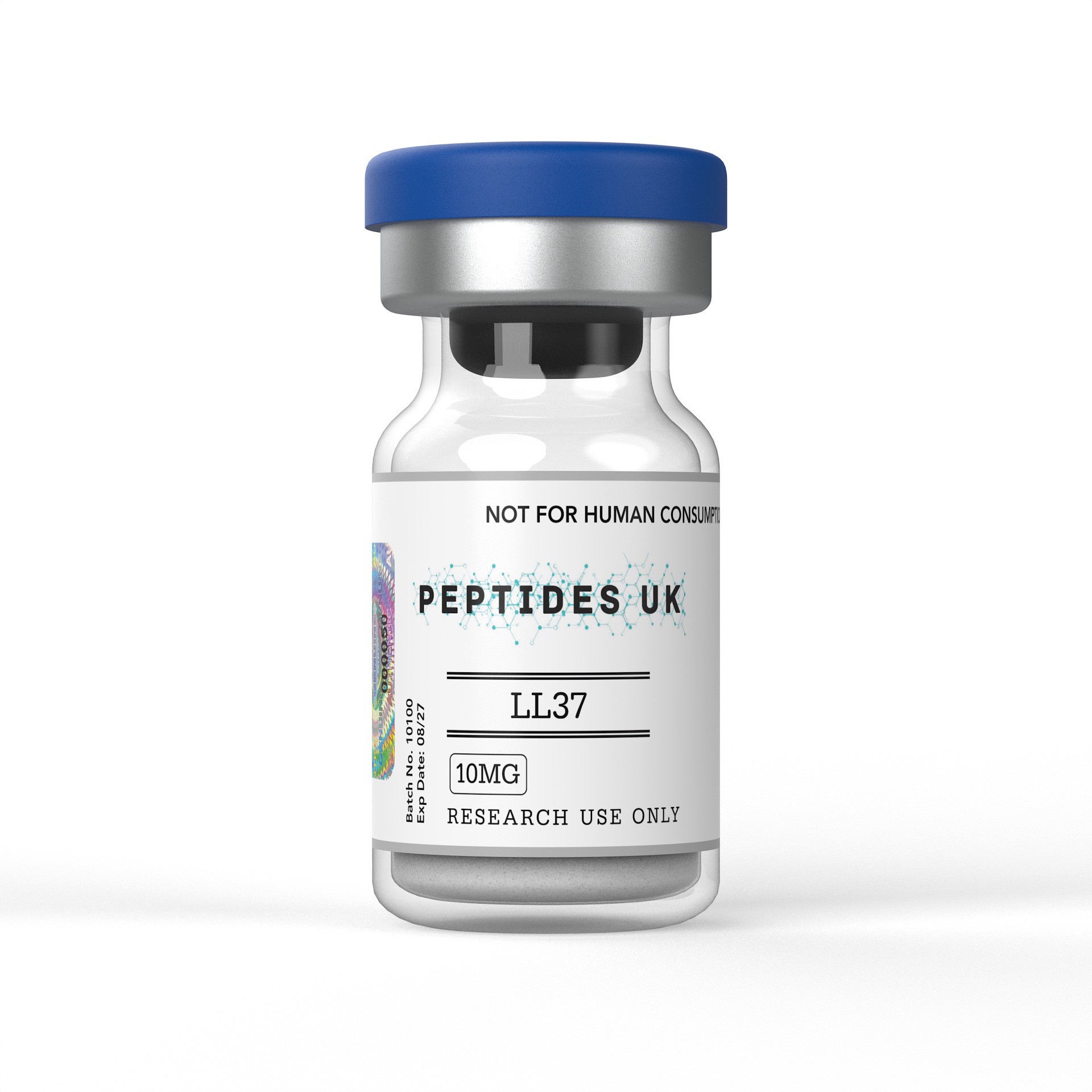
LL-37 EU – Buy Online | In Stock & Ready to Ship
Buy LL-37 in Europe with fast shipping and guaranteed ≥99% purity — verified with COA and HPLC documentation. A trusted choice for peptides EU research teams rely on, with no customs delays or lengthy international wait times. Whether you’re searching for LL-37 Europe suppliers, looking to buy LL-37 in the EU, or sourcing peptides Europe-wide, we have you covered. Research teams across the EU can count on consistent stock, rapid fulfilment and full batch documentation every time.
For research use only. Not intended for human or veterinary use.



LL-37 is the only human cathelicidin antimicrobial peptide, available to buy in Europe for laboratory research into innate immunity, antimicrobial biology, immunomodulation, wound healing, TLR signalling regulation, and the emerging field of host defence peptide pharmacology.
Laboratories and research institutions across the EU can order verified, research-grade LL-37 with fast international dispatch to Europe, full batch documentation, and ≥99% purity confirmed by HPLC and Mass Spectrometry.
✅ ≥99% Purity — HPLC & Mass Spectrometry Verified
✅ Batch-Specific Certificate of Analysis (CoA)
✅ Sterile Lyophilised Powder | GMP Manufactured
✅ Fast Dispatch to EU & Europe | Tracked Shipping
LL-37 is a 37 amino acid cationic amphipathic peptide — the sole human cathelicidin — generated through proteolytic cleavage of the C-terminal domain of the precursor protein hCAP18 (human cationic antimicrobial protein 18) by serine proteases including kallikrein, plasmin, and gastricsin. Its name reflects both its length (37 amino acids) and its N-terminal double leucine residues. As the only member of the cathelicidin family expressed in humans, LL-37 occupies a unique position in human innate immunity — functioning simultaneously as a direct antimicrobial agent, an immunomodulatory signal, a wound healing promoter, and a regulator of inflammatory responses across epithelial and immune cell populations throughout the body.
LL-37 is expressed in neutrophils — stored in specific granules alongside other antimicrobial proteins and released at sites of infection and inflammation — and in epithelial cells of the skin, respiratory tract, gastrointestinal tract, and genitourinary system, where it forms a first-line chemical defence barrier against colonising and invading pathogens. Its amphipathic helical structure — with positively charged residues concentrated on one face of the helix and hydrophobic residues on the other — enables insertion into negatively charged bacterial membranes and disruption of membrane integrity through mechanisms that include membrane thinning, toroidal pore formation, and carpet-model membrane dissolution. This membrane-disrupting mechanism produces broad-spectrum antimicrobial activity against gram-positive and gram-negative bacteria, fungi, and enveloped viruses — while the positive charge selectivity for microbial over mammalian membranes provides a degree of selectivity that has made LL-37 a foundational compound in antimicrobial peptide research.
Beyond its direct antimicrobial properties, LL-37 functions as a multifunctional immunomodulatory signal — binding formyl peptide receptor 2 (FPR2/ALX), P2X7 receptor, epidermal growth factor receptor (EGFR), and toll-like receptors to modulate innate immune cell activity, promote wound healing, regulate inflammatory responses, and bridge innate and adaptive immunity. This remarkably broad receptor engagement profile, combined with its expression across multiple epithelial barrier tissues, has established LL-37 as one of the most biologically multifunctional peptides in human innate immunity — and one of the most extensively studied host defence peptides in European immunological and microbiological research.
In laboratory settings, LL-37 is studied across a broad range of innate immunity, antimicrobial biology, and immunomodulation research applications. EU and European researchers working with LL-37 typically focus on:
All research applications are for in vitro and pre-clinical use only.
LL-37 has one of the most extensive research literatures of any antimicrobial peptide — with studies spanning microbiology, immunology, dermatology, pulmonology, and cancer biology establishing its multifunctional biological profile across decades of investigation.
Antimicrobial mechanism characterisation: Foundational studies characterising LL-37’s antimicrobial mechanism documented its amphipathic helical structure, membrane-inserting properties, and broad-spectrum killing activity against gram-positive and gram-negative bacteria, fungi, and enveloped viruses. Biophysical studies using lipid bilayer models characterised the toroidal pore and carpet mechanisms through which LL-37 disrupts microbial membranes — establishing it as the reference human antimicrobial peptide for mechanistic membrane biology research.
TLR modulation findings: Studies characterising LL-37’s complex TLR regulatory activity documented its ability to both activate endosomal TLR7, TLR8, and TLR9 by facilitating self-nucleic acid delivery — relevant to autoimmune pathogenesis research — and simultaneously suppress TLR4-mediated LPS signalling by neutralising lipopolysaccharide — relevant to sepsis biology research. These opposing TLR regulatory activities have established LL-37 as a key modulator of pattern recognition receptor biology with context-dependent pro- and anti-inflammatory effects.
Psoriasis and autoimmune research: Studies establishing LL-37’s role in psoriasis pathogenesis documented that LL-37 forms complexes with self-DNA released from dying skin cells — converting immunologically inert self-DNA into TLR9 stimulants that activate plasmacytoid dendritic cells and drive type I interferon production. This mechanism has been characterised as a central driver of the innate immune activation underlying psoriasis — making LL-37 a key research tool in autoimmune skin disease biology.
Wound healing research: Studies have characterised LL-37’s wound healing properties — documenting EGFR transactivation-driven keratinocyte migration, angiogenic factor upregulation including VEGF and FGF, and modulation of wound inflammatory responses in pre-clinical wound models. These findings have established LL-37 as a multifunctional wound healing agent beyond its classical antimicrobial function.
Vitamin D regulation: Studies characterising the vitamin D-LL-37 regulatory axis have documented 1,25-dihydroxyvitamin D3-driven CAMP gene transcription in multiple cell types — including macrophages, keratinocytes, and colonic epithelial cells — with findings connecting vitamin D status to epithelial antimicrobial defence capacity through LL-37 induction. These findings have been particularly influential in connecting vitamin D biology to innate immunity and infection susceptibility research.
Biofilm research: Studies have characterised LL-37’s activity against established biofilms — documenting disruption of Pseudomonas aeruginosa, Staphylococcus aureus, and other clinically relevant biofilm-forming pathogens at concentrations below those required for planktonic killing. These biofilm findings have established LL-37 as a reference compound for studying peptide-based biofilm disruption strategies.
Antiviral findings: Studies have documented LL-37 antiviral activity against multiple enveloped virus types — with mechanisms including direct viral membrane disruption, inhibition of viral attachment, and enhancement of antiviral innate immune signalling characterised across influenza, HSV, RSV, and HIV research models. These antiviral findings have extended LL-37’s research profile beyond bacterial pathogen biology.
| Compound | Type | Primary Mechanism | Key Research Application |
|---|---|---|---|
| LL-37 | Human cathelicidin — 37aa cationic peptide | Membrane disruption, FPR2/TLR modulation, EGFR transactivation | Antimicrobial, innate immunity, wound healing, autoimmune, HDP research |
| Thymosin Alpha-1 | 28aa thymic peptide | TLR9 agonism, T cell maturation | Adaptive immunity, T cell biology — contrasting profile |
| Defensins (hBD-1/2/3) | Cationic beta-sheet peptides | Membrane disruption, chemotaxis | Complementary human host defence peptides |
| Magainin-2 | Frog skin antimicrobial peptide | Membrane disruption — toroidal pore | Reference non-human AMP — comparative HDP SAR research |
| Polymyxin B | Cyclic lipopeptide antibiotic | LPS neutralisation, membrane disruption | Gram-negative reference antimicrobial — comparative mechanism |
| VIP | 28aa neuropeptide | VPAC1/VPAC2 anti-inflammatory | Immune tolerance, gut immunity — contrasting immunosuppressive profile |
Every order of LL-37 peptide dispatched to EU and European research institutions includes:
Yes. We supply research-grade LL-37 with fast tracked dispatch to all EU member states and wider European destinations. All orders include full batch documentation. LL-37 is supplied strictly for laboratory research use only.
Cathelicidins are a family of antimicrobial peptides characterised by a conserved N-terminal cathelin domain and variable C-terminal antimicrobial domain. Most mammals express multiple cathelicidins — mice express CRAMP, cattle express multiple BMAP peptides — but humans express only one: hCAP18/LL-37. This singular status makes LL-37 uniquely important as the sole human representative of this innate defence peptide class.
Both LL-37 and defensins are human host defence peptides but differ structurally and mechanistically. Defensins are cysteine-rich beta-sheet peptides with disulphide-stabilised structures — forming three subfamilies (alpha, beta, theta). LL-37 is an alpha-helical cationic peptide without disulphide bonds. Both disrupt microbial membranes but through different structural mechanisms, and LL-37 has a broader immunomodulatory receptor engagement profile including FPR2 and EGFR.
LL-37’s dual inflammatory activity depends on context. It activates innate immune responses by facilitating nucleic acid delivery to endosomal TLRs and activating FPR2 on immune cells — producing pro-inflammatory cytokine release. Simultaneously it neutralises LPS through direct binding — suppressing TLR4-driven inflammation. Whether pro- or anti-inflammatory effects dominate depends on the specific cellular context, pathogen stimulus, and LL-37 concentration — making it a research tool for studying context-dependent innate immune regulation.
Vitamin D3’s active form (1,25-dihydroxyvitamin D3) directly drives CAMP gene transcription — the gene encoding the LL-37 precursor hCAP18 — through vitamin D response elements in the promoter. This regulatory axis connects vitamin D status to epithelial antimicrobial defence capacity and has been characterised in macrophages, keratinocytes, and gut epithelial cells. LL-37 induction is used as the primary functional readout of vitamin D’s antimicrobial immune enhancement in research.
LL-37 forms complexes with self-DNA released from damaged skin cells — converting normally immunologically inert self-DNA into TLR9 stimulants that activate plasmacytoid dendritic cells to produce type I interferons and trigger autoimmune skin inflammation. This LL-37-self-DNA complex mechanism is considered a central driver of psoriasis pathogenesis — making LL-37 an essential research tool for studying the innate immune basis of autoimmune skin disease.
LL-37 transactivates the epidermal growth factor receptor (EGFR) through a mechanism involving metalloprotease-mediated release of membrane-bound EGFR ligands — driving keratinocyte migration and proliferation required for re-epithelialisation. Additionally it upregulates angiogenic factors including VEGF and modulates the inflammatory phase of wound repair — producing a coordinated wound healing-promoting profile that extends well beyond its antimicrobial function.
Reconstitute in sterile water or low-salt aqueous buffer — LL-37 can aggregate at high salt concentrations or neutral pH due to its amphipathic nature. Add solvent slowly down the vial wall and swirl gently. Prepare at required concentration, aliquot, and store at -80°C. Avoid high salt buffers and albumin-containing solutions that may interfere with amphipathic peptide activity. Standard peptide handling protocols apply.
Delivery to EU and European destinations typically takes 3–7 working days via tracked international courier with packaging maintaining peptide stability throughout transit.
| Parameter | Detail |
|---|---|
| Full Name | LL-37 — Human Cathelicidin Antimicrobial Peptide |
| Precursor | hCAP18 — C-terminal domain |
| Length | 37 amino acids |
| Structure | Cationic amphipathic alpha-helix |
| N-terminal Feature | Double leucine — LL designation |
| Primary Receptors | FPR2/ALX, EGFR, P2X7, TLR modulation |
| Primary Research Interest | Antimicrobial biology, innate immunity, wound healing, autoimmune, HDP pharmacology |
| Purity | ≥99% |
| Verification | HPLC & Mass Spectrometry |
| Form | Sterile Lyophilised Powder |
| Solubility | Sterile water or low-salt aqueous buffer |
| Storage | -20°C, protected from light and moisture |
| Intended Use | Research use only |
LL-37 is supplied exclusively for legitimate scientific research conducted within licensed laboratory environments. This product is not approved for human consumption, self-administration, or any therapeutic, clinical, or veterinary application. It must be handled solely by qualified researchers in compliance with applicable EU regulations, national legislation, and institutional ethics guidelines. By purchasing, you confirm this compound will be used exclusively for approved in vitro or pre-clinical research purposes.
Receive News
