PRODUCTS SOLD ON PEPTIDESLABEU.COM ARE FOR RESEARCH PURPOSES ONLY AND ARE NOT FOR HUMAN OR VETERINARY USE.
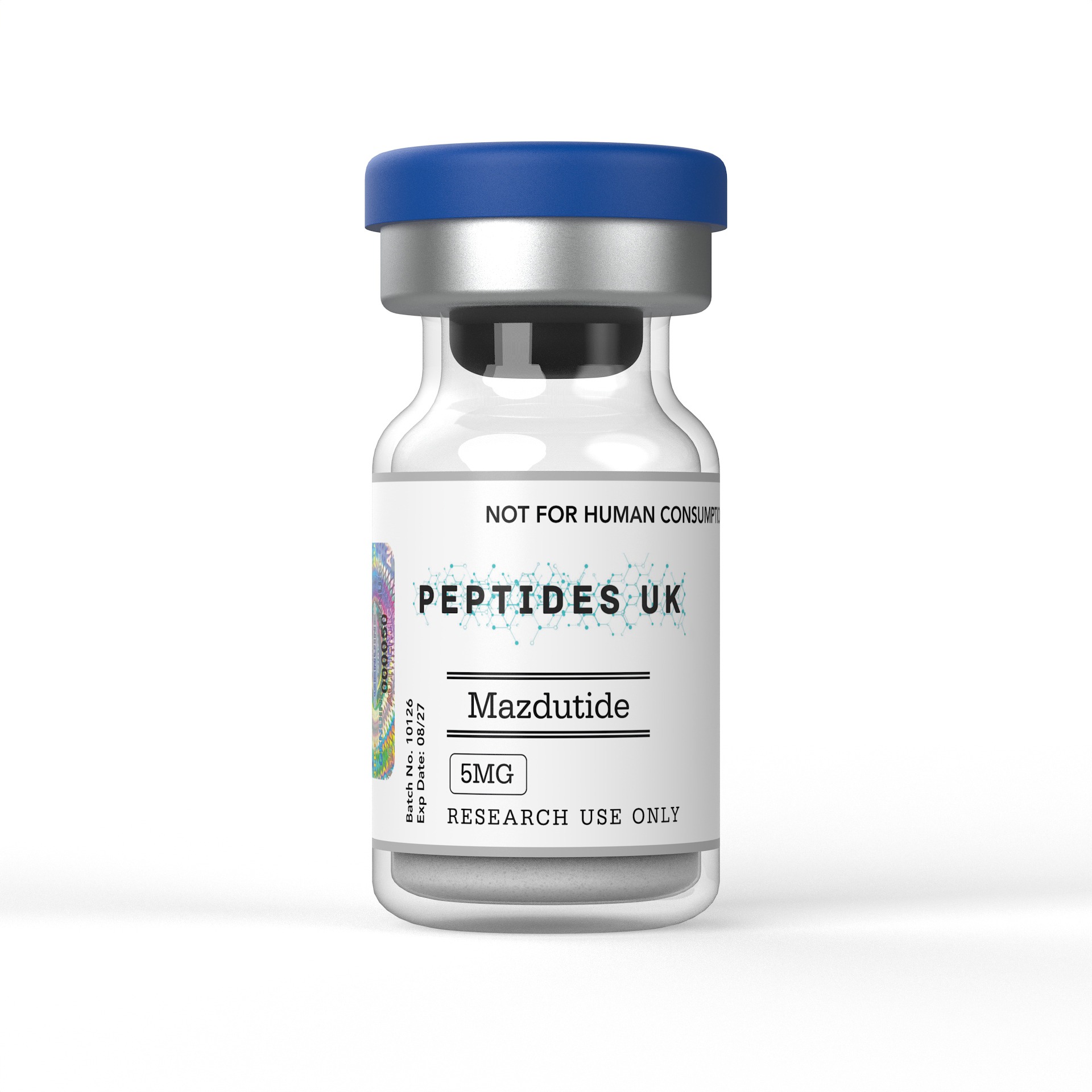
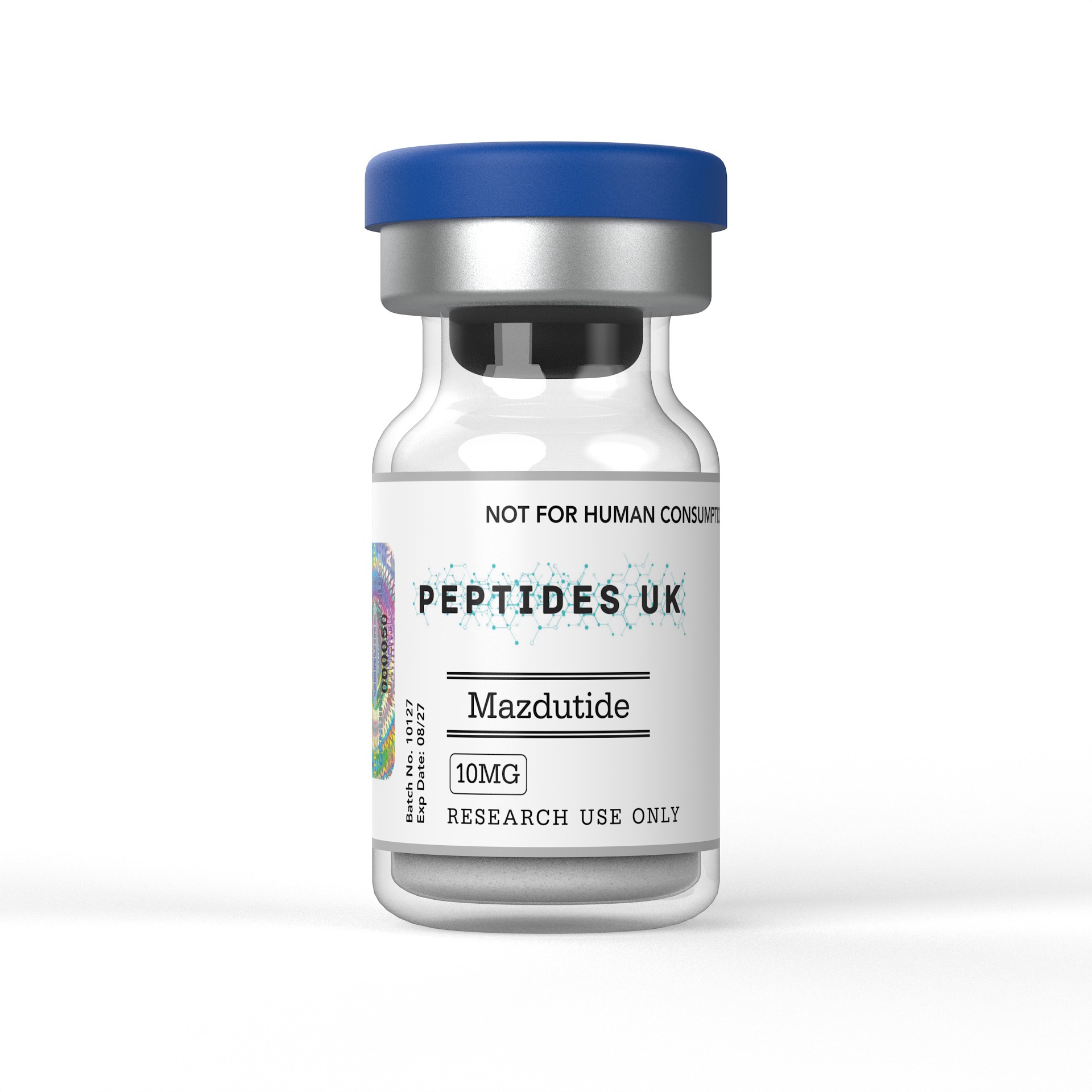
€161.50 – €288.00Price range: €161.50 through €288.00
Mazdutide EU – Buy Online | In Stock & Ready to Ship
Buy Mazdutide in Europe with fast shipping and guaranteed ≥99% purity — verified with COA and HPLC documentation. A trusted choice for peptides EU research teams rely on, with no customs delays or lengthy international wait times. Whether you’re searching for Mazdutide Europe suppliers, looking to buy Mazdutide in the EU, or sourcing peptides Europe-wide, we have you covered. Research teams across the EU can count on consistent stock, rapid fulfilment and full batch documentation every time.
For research use only. Not intended for human or veterinary use.

Mazdutide is a synthetic dual GLP-1 receptor and glucagon receptor agonist peptide, available to buy in Europe for laboratory research into incretin pharmacology, energy homeostasis, hepatic lipid metabolism, glucose regulation biology, and the emerging field of dual incretin-glucagon receptor co-agonism as a metabolic research strategy.
Laboratories and research institutions across the EU can order verified, research-grade Mazdutide with fast international dispatch to Europe, full batch documentation, and ≥99% purity confirmed by HPLC and Mass Spectrometry.
✅ ≥99% Purity — HPLC & Mass Spectrometry Verified
✅ Batch-Specific Certificate of Analysis (CoA)
✅ Sterile Lyophilised Powder | GMP Manufactured
✅ Fast Dispatch to EU & Europe | Tracked Shipping
Mazdutide (IBI362) is a synthetic fatty acid-conjugated peptide dual agonist of the GLP-1 receptor (GLP-1R) and glucagon receptor (GcgR) — two G-protein coupled receptors with complementary but distinct roles in metabolic regulation — developed by Innovent Biologics as a once-weekly research and clinical candidate compound for studying the pharmacological consequences of simultaneous incretin and glucagon pathway co-activation in metabolic biology.
The GLP-1 receptor and glucagon receptor are structurally related class B GPCRs that share the glucagon peptide superfamily as their endogenous ligands — GLP-1 acting through GLP-1R to drive insulin secretion, suppress glucagon, slow gastric emptying, and activate CNS satiety circuits, and glucagon acting through GcgR to drive hepatic glucose production, stimulate lipolysis, increase energy expenditure, and promote fatty acid oxidation. While these two receptors have historically been considered to have opposing metabolic effects — GLP-1R activation lowering blood glucose and GcgR activation raising it — research has established that their co-activation produces a metabolically favourable combination of effects that neither receptor pathway achieves alone.
The key insight driving dual GLP-1R/GcgR agonism research is that glucagon’s metabolic actions extend well beyond its classical glycogenolytic role — with GcgR activation in adipose tissue and liver driving lipolysis, fatty acid oxidation, and energy expenditure through mechanisms that complement rather than oppose GLP-1R-mediated glucose regulation when both pathways are engaged simultaneously. Mazdutide’s balanced GLP-1R/GcgR co-agonism exploits this complementarity — with GLP-1R activation maintaining glycaemic control that prevents the hyperglycaemic consequences of GcgR activation, while GcgR activation drives the lipolytic, hepatic, and thermogenic effects that amplify weight reduction and metabolic reprogramming beyond what GLP-1R activation alone produces.
Mazdutide’s fatty acid conjugation — similar in principle to the albumin-binding strategies used in Semaglutide and Cagrilintide — extends its half-life to enable once-weekly dosing in pre-clinical research protocols, making it a practically useful research tool for studying sustained dual GLP-1R/GcgR co-activation and its metabolic consequences in European laboratory settings.
In laboratory settings, Mazdutide is studied as a dual GLP-1R/GcgR agonist with broad metabolic regulatory activity, with research applications centred on energy homeostasis, hepatic biology, adipose tissue metabolism, and incretin-glucagon combination pharmacology. EU and European researchers working with Mazdutide typically focus on:
All research applications are for in vitro and pre-clinical use only.
Mazdutide has generated a rapidly growing and high-profile research literature — with pre-clinical studies establishing the pharmacological rationale for GLP-1R/GcgR dual agonism and clinical research programmes documenting significant metabolic effects in human subjects at a scale that has attracted substantial European and global research attention.
Dual receptor pharmacology characterisation: Foundational pharmacology studies characterised Mazdutide’s balanced GLP-1R and GcgR agonism — documenting its receptor binding affinities, cAMP activation potency at each receptor, and in vitro selectivity profile relative to other class B GPCRs. These studies established Mazdutide’s dual agonist pharmacological identity and provided the receptor-level characterisation underpinning interpretation of its in vivo metabolic effects.
Pre-clinical metabolic findings: Pre-clinical studies in dietary obesity and metabolic disease models documented Mazdutide producing greater reductions in body weight, adipose mass, and hepatic lipid content than GLP-1R-selective agonists alone — consistent with the additive metabolic contributions of GcgR-driven energy expenditure, lipolysis, and fatty acid oxidation on top of GLP-1R-mediated appetite suppression and gastric emptying delay. These pre-clinical findings provided the mechanistic and pharmacodynamic rationale for clinical investigation.
NASH and hepatic research: Studies examining Mazdutide in hepatic steatosis and NASH models have documented meaningful reductions in liver fat content, hepatic triglyceride accumulation, and inflammatory and fibrotic liver parameters — findings attributed to GcgR-driven hepatic fatty acid oxidation and FGF21 upregulation alongside GLP-1R-mediated improvements in insulin sensitivity. These hepatic findings have positioned Mazdutide as a research tool of particular interest for NASH biology research.
FGF21 induction: Studies have characterised Mazdutide’s robust induction of FGF21 through GcgR activation in liver tissue — documenting dose-dependent increases in circulating FGF21 levels and the downstream metabolic consequences of GcgR-driven FGF21 elevation including adipose tissue browning markers and fatty acid oxidation gene expression. These FGF21 findings have contributed to understanding of the hepatic mechanisms through which GcgR activation produces metabolic benefits beyond glycogenolysis.
Clinical research findings: Mazdutide has been examined in Phase II clinical trials — with published findings documenting substantial reductions in body weight, improvements in glycaemic parameters, and reductions in hepatic fat content in participants with obesity and type 2 diabetes. These clinical findings — among the most striking reported for a metabolic peptide in recent years — have driven significant European research interest in the GLP-1R/GcgR dual agonism approach and established Mazdutide as one of the most actively investigated compounds in metabolic pharmacology research.
Energy expenditure characterisation: Studies have characterised Mazdutide-associated increases in energy expenditure parameters — including resting metabolic rate and thermogenic gene expression in adipose tissue — that are not observed with GLP-1R-selective agonists alone. These energy expenditure findings have provided mechanistic context for the greater weight reduction produced by dual GLP-1R/GcgR agonism compared to GLP-1R monotherapy and have established the GcgR-driven metabolic rate component as a key distinguishing feature of the dual agonist research profile.
Comparative agonist research: Studies comparing Mazdutide to GLP-1R-selective agonists and other dual agonists have characterised the specific contributions of GcgR co-activation to the overall metabolic profile — documenting the incremental effects on body weight, liver fat, energy expenditure, and FGF21 attributable to GcgR engagement on top of GLP-1R activation. These comparative findings have contributed to mechanistic understanding of how different receptor combination strategies influence metabolic outcomes in the broader multi-agonist pharmacology research landscape.
| Compound | Targets | Mechanism | Key Research Distinction |
|---|---|---|---|
| Mazdutide | GLP-1R + GcgR | Dual incretin-glucagon co-agonism | Hepatic lipid reduction, FGF21 induction, energy expenditure via GcgR |
| Semaglutide | GLP-1R | GLP-1 receptor agonism | Reference GLP-1R agonist — single pathway |
| Tirzepatide | GLP-1R + GIPR | Dual incretin co-agonism | GLP-1/GIP dual agonism — no glucagon component |
| Retatrutide | GLP-1R + GIPR + GcgR | Triple agonism | All three receptors — most comprehensive metabolic agonism |
| CagriSema | GLP-1R + Amylin receptor | Incretin + amylin co-activation | Amylin pathway — distinct from glucagon mechanism |
| Cotadutide | GLP-1R + GcgR | Dual incretin-glucagon co-agonism | Comparable mechanism — comparative dual GLP-1R/GcgR research |
Every order of Mazdutide dispatched to EU and European research institutions includes:
Yes. We supply research-grade Mazdutide with fast tracked international dispatch to all EU member states and wider European destinations including Germany, France, Netherlands, Spain, Italy, Poland, and beyond. Packaging is designed to maintain peptide integrity throughout transit and all orders include full batch documentation. Mazdutide is supplied strictly for laboratory research use only.
The glucagon receptor (GcgR) is a class B GPCR expressed primarily in the liver — where it mediates glucagon’s classical glycogenolytic and gluconeogenic effects — and also in adipose tissue, heart, kidney, and brain. Beyond its hepatic glucose-raising role, GcgR activation drives fatty acid oxidation, reduces hepatic lipid accumulation through PPARα activation, induces FGF21 secretion with downstream metabolic effects, promotes thermogenic programming in adipose tissue, and increases energy expenditure through sympathetic nervous system activation. When combined with GLP-1R co-activation — which prevents the hyperglycaemic consequences of GcgR engagement — these metabolic effects of glucagon receptor activation become accessible as research tools for studying lipolysis, energy expenditure, and hepatic fat metabolism without glycaemic confounding.
Mazdutide and Tirzepatide are both dual metabolic receptor agonists but target different receptor combinations. Tirzepatide combines GLP-1R and GIPR (glucose-dependent insulinotropic polypeptide receptor) activation — with both receptors being incretin pathways influencing insulin secretion and appetite regulation. Mazdutide combines GLP-1R and GcgR activation — pairing an incretin receptor with the glucagon receptor to add energy expenditure promotion, hepatic lipid reduction, and FGF21 induction to the GLP-1R biology. The two compounds represent mechanistically distinct dual agonism strategies — Tirzepatide for studying dual incretin co-activation, Mazdutide for studying incretin-glucagon co-activation — with different receptor biology profiles and metabolic effect distributions relevant to different research questions.
Retatrutide is a triple GLP-1R/GIPR/GcgR agonist — combining all three metabolic receptor pathways simultaneously. Mazdutide is a dual GLP-1R/GcgR agonist — providing GLP-1R and GcgR co-activation without the GIPR component. Mazdutide is more useful as a research tool for specifically studying the GLP-1R/GcgR combination pharmacology without GIPR confounding, while Retatrutide is the reference compound for studying the pharmacological consequences of all three receptor pathways engaged simultaneously. The two compounds are complementary research tools for dissecting the relative contributions of different receptor combinations in the multi-agonist metabolic pharmacology landscape.
FGF21 (Fibroblast Growth Factor 21) is a hepatokine — a liver-derived endocrine factor — with broad metabolic regulatory effects including promotion of fatty acid oxidation, induction of adipose tissue browning and thermogenesis, improvement of insulin sensitivity, and reduction of hepatic lipid accumulation. GcgR activation in the liver is one of the most potent pharmacological inducers of FGF21 secretion — making GcgR-mediated FGF21 elevation a key mechanism through which dual GLP-1R/GcgR agonists like Mazdutide produce metabolic effects beyond those achievable through GLP-1R activation alone. Research using Mazdutide to study FGF21 induction contributes to understanding of GcgR-FGF21 axis biology and the downstream metabolic consequences of pharmacologically elevated FGF21 in obesity and metabolic disease models.
Classical glucagon action raises blood glucose through hepatic glycogenolysis and gluconeogenesis — the GcgR-mediated mechanism responsible for glucagon’s role in hypoglycaemia rescue. In Mazdutide’s dual agonist profile, GLP-1R co-activation drives glucose-dependent insulin secretion and suppresses endogenous glucagon — maintaining glycaemic control that prevents the hyperglycaemic consequences of GcgR activation. Studies have documented that the GLP-1R component of dual agonist compounds effectively offsets the glycaemic effects of GcgR activation — allowing the lipolytic, thermogenic, hepatic, and energy expenditure-promoting effects of GcgR activation to be harnessed without net hyperglycaemia. This pharmacodynamic interaction between the two receptor pathways is central to the dual agonism research concept and is characterised in studies using Mazdutide alongside GLP-1R-selective and GcgR-selective comparator compounds.
Allow the vial to reach room temperature before opening. Add sterile water or an appropriate laboratory buffer slowly down the vial wall and swirl gently — do not shake. Mazdutide is a fatty acid-conjugated peptide — prepare stock solutions at your protocol’s required concentration, aliquot, and store at -80°C to minimise freeze-thaw degradation. Standard peptide handling protocols apply. As with other fatty acid-conjugated peptides, consider adding a small amount of BSA to working buffers at very low concentrations to minimise adsorption to vessel surfaces.
Orders are dispatched promptly via tracked international courier. Delivery to EU and European destinations typically takes 3–7 working days depending on location, with packaging designed to protect peptide stability throughout transit.
| Parameter | Detail |
|---|---|
| Type | Synthetic Dual GLP-1R / GcgR Peptide Agonist |
| Also Known As | IBI362 |
| Modification | Fatty acid conjugation — extended half-life, albumin binding |
| Primary Targets | GLP-1 Receptor (GLP-1R) + Glucagon Receptor (GcgR) |
| Dosing Profile | Once-weekly in pre-clinical research protocols |
| Primary Research Interest | Dual incretin-glucagon pharmacology, obesity, NASH, energy expenditure, FGF21 biology |
| Purity | ≥99% |
| Verification | HPLC & Mass Spectrometry |
| Form | Sterile Lyophilised Powder |
| Solubility | Sterile water or laboratory buffer |
| Storage | -20°C, protected from light and moisture |
| Intended Use | Research use only |
Mazdutide is supplied exclusively for legitimate scientific research conducted within licensed laboratory environments. This product is not approved for human consumption, self-administration, or any therapeutic, clinical, or veterinary application. It must be handled solely by qualified researchers in compliance with applicable EU regulations, national legislation, and institutional ethics guidelines. By purchasing, you confirm this compound will be used exclusively for approved in vitro or pre-clinical research purposes.


Receive News
