PRODUCTS SOLD ON PEPTIDESLABEU.COM ARE FOR RESEARCH PURPOSES ONLY AND ARE NOT FOR HUMAN OR VETERINARY USE.

€80.00
P21 Peptide EU – Buy Online | In Stock & Ready to Ship
Buy P21 Peptide in Europe with fast shipping and guaranteed ≥99% purity — verified with COA and HPLC documentation. A trusted choice for peptides EU research teams rely on, with no customs delays or lengthy international wait times. Whether you’re searching for P21 Peptide Europe suppliers, looking to buy P21 Peptide in the EU, or sourcing peptides Europe-wide, we have you covered. Research teams across the EU can count on consistent stock, rapid fulfilment and full batch documentation every time.
For research use only. Not intended for human or veterinary use.



P21 is a synthetic peptide derived from the C-terminal region of Humanin — a mitochondria-derived neuroprotective peptide — available to buy in Europe for laboratory research into neurogenesis, cognitive biology, hippocampal function, STAT3 signalling, and the emerging field of mitochondria-derived peptide neurobiology.
Laboratories and research institutions across the EU can order verified, research-grade P21 with fast international dispatch to Europe, full batch documentation, and ≥99% purity confirmed by HPLC and Mass Spectrometry.
✅ ≥99% Purity — HPLC & Mass Spectrometry Verified
✅ Batch-Specific Certificate of Analysis (CoA)
✅ Sterile Lyophilised Powder | GMP Manufactured
✅ Fast Dispatch to EU & Europe | Tracked Shipping
P21 is a synthetic peptide derived from the C-terminal region of Humanin — the first identified mitochondria-derived peptide (MDP), encoded within the 16S ribosomal RNA gene of mitochondrial DNA — specifically engineered to provide enhanced biological activity compared to the parent Humanin sequence through targeted amino acid modifications that improve receptor engagement and downstream signalling potency.
Humanin itself was discovered in 2001 by Hashimoto and colleagues through expression cloning from surviving neurons in Alzheimer’s disease post-mortem brain tissue — a discovery that simultaneously identified a novel neuroprotective peptide and revealed for the first time that the mitochondrial genome encodes bioactive signalling peptides beyond its 13 known protein-coding sequences. This landmark finding opened the mitochondria-derived peptide field and positioned Humanin as a neuroprotective signal of fundamental interest in neurodegeneration, ageing, and cellular stress biology.
P21 retains and enhances the core biological activity of Humanin — acting through a receptor complex involving CNTFR (Ciliary Neurotrophic Factor Receptor), WSX-1, and gp130 to activate downstream JAK/STAT3 signalling — while incorporating modifications that provide greater potency and improved research utility compared to the native Humanin sequence. The result is a research tool for studying Humanin receptor biology, STAT3-mediated neuroprotective signalling, and the downstream consequences of mitochondria-derived peptide receptor activation with improved signal-to-noise characteristics in experimental settings.
P21’s most significant and growing research application is in neurogenesis biology — with studies documenting its ability to promote hippocampal neurogenesis, enhance cognitive function parameters, and support the survival and integration of newly generated neurons in adult brain models. This neurogenesis-promoting profile, combined with its neuroprotective Humanin-derived biology and STAT3 signalling activity, has established P21 as a compound of substantial research interest in European cognitive neuroscience, neurodegeneration, and brain repair research settings.
In laboratory settings, P21 is studied primarily as an enhanced Humanin analogue with neurogenesis-promoting and neuroprotective properties, with research applications centred on hippocampal biology, STAT3 signalling, and cognitive neuroscience. EU and European researchers working with P21 typically focus on:
All research applications are for in vitro and pre-clinical use only.
P21 has a focused but growing research literature — building on the well-established Humanin biology foundation and extending it with findings specific to P21’s enhanced potency profile and neurogenesis-promoting activity.
Humanin foundational biology: The Humanin research literature — upon which P21’s biology is founded — has established neuroprotection against amyloid beta toxicity, Bax-mediated apoptosis, and oxidative neuronal injury as the primary characterised activities of the Humanin peptide class. Studies have identified the CNTFR/WSX-1/gp130 receptor complex as the primary Humanin receptor and characterised JAK/STAT3 as the major downstream signalling pathway — providing the mechanistic foundation for interpreting P21’s biological activities as an enhanced Humanin analogue.
Neurogenesis findings: Studies examining P21’s effects on adult hippocampal neurogenesis have documented increased BrdU incorporation in the dentate gyrus subgranular zone — indicating enhanced neural progenitor cell proliferation — alongside increased survival of newly generated neurons as indicated by doublecortin and NeuN co-labelling. These neurogenesis findings have established P21 as one of the more potent neurogenesis-promoting peptides characterised in the pre-clinical literature and have driven growing European research interest in its hippocampal biology.
Cognitive function research: Pre-clinical studies have documented P21 effects on hippocampal-dependent cognitive parameters — including improvements in spatial memory tasks, novel object recognition performance, and pattern separation measures in treated animals compared to controls. These cognitive findings have been interpreted in the context of P21’s neurogenesis-promoting activity — contributing to the broader literature examining the functional significance of adult hippocampal neurogenesis for cognitive performance.
STAT3 signalling characterisation: Studies have characterised P21’s activation of JAK/STAT3 signalling in neural cell models — documenting phosphorylated STAT3 elevation, nuclear STAT3 translocation, and downstream upregulation of STAT3 target genes involved in cell survival, proliferation, and differentiation. These mechanistic findings have connected P21’s neurogenic and neuroprotective activities to the well-characterised STAT3 signalling biology literature.
Neuroprotection profile: Studies have documented P21’s protective effects against amyloid beta-induced neuronal toxicity, oxidative stress-mediated neuronal apoptosis, and ischaemic neuronal injury in cell culture and pre-clinical models — establishing a neuroprotective profile consistent with and enhanced relative to native Humanin. These neuroprotection findings have connected P21 to Alzheimer’s disease biology and positioned it as a research tool for studying peptide-based neuroprotective strategies.
Ageing and neurogenesis research: Studies examining P21 in aged animal models have characterised its ability to partially restore adult hippocampal neurogenesis rates toward those typical of younger animals — contributing to understanding of how mitochondria-derived peptide signalling decline contributes to age-associated neurogenic reduction and whether pharmacological restoration of this signalling modifies age-related cognitive parameters.
Enhanced potency relative to Humanin: Comparative studies have documented P21’s greater potency relative to native Humanin in both neuroprotection and neurogenesis assays — establishing the mechanistic basis for preferring P21 over native Humanin as a research tool when maximal CNTFR/STAT3 pathway activation is the experimental objective. These comparative findings have positioned P21 as the enhanced-potency reference compound for studying the Humanin receptor biology in pre-clinical research.
| Compound | Type | Primary Mechanism | Key Research Application |
|---|---|---|---|
| P21 | Enhanced Humanin C-terminal analogue | CNTFR/WSX-1/gp130 — JAK/STAT3 activation | Neurogenesis, hippocampal biology, neuroprotection, cognitive research |
| Humanin | Mitochondria-derived peptide (MDP) | CNTFR/WSX-1/gp130 — JAK/STAT3 activation | Neuroprotection, cytoprotection, ageing — parent compound |
| MOTS-c | Mitochondria-derived peptide | AMPK activation, nuclear gene regulation | Metabolic regulation, insulin sensitivity, exercise biology |
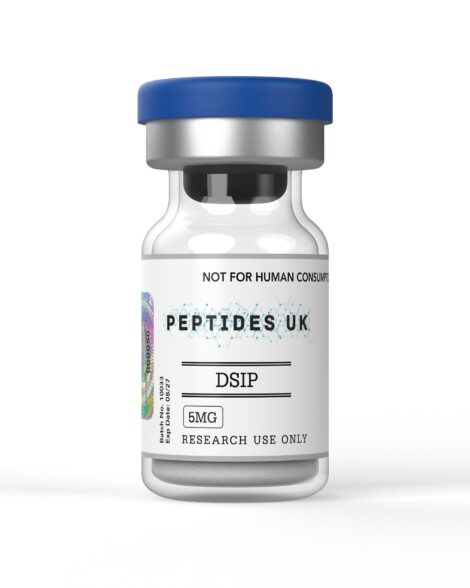
| Dihexa | HGF/MET pathway agonist | HGF receptor (MET) activation | Cognitive biology, synaptogenesis, neurogenesis |
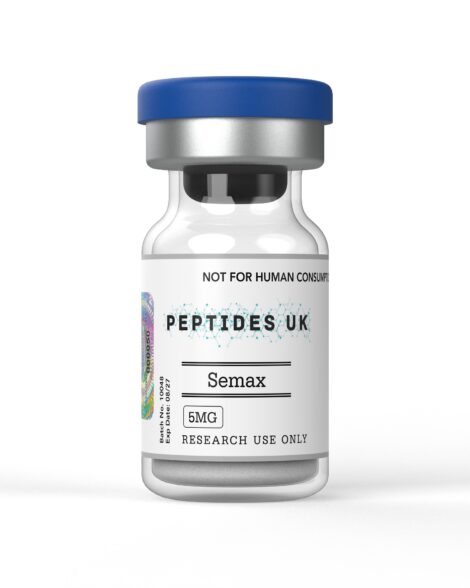
| Semax | ACTH(4-10) heptapeptide analogue | BDNF/NGF upregulation, CNS signalling | Neuroprotection, cognitive biology, neurotrophin research |
| BDNF | Endogenous neurotrophin | TrkB receptor activation | Neuronal survival, synaptic plasticity, neurogenesis |
Every order of P21 peptide dispatched to EU and European research institutions includes:
Yes. We supply research-grade P21 with fast tracked international dispatch to all EU member states and wider European destinations including Germany, France, Netherlands, Spain, Italy, Poland, and beyond. Packaging is designed to maintain peptide integrity throughout transit and all orders include full batch documentation. P21 is supplied strictly for laboratory research use only.
Humanin is a 21 amino acid peptide encoded within the 16S ribosomal RNA gene of mitochondrial DNA — the first mitochondria-derived peptide (MDP) identified, discovered in 2001 through expression cloning from surviving neurons in Alzheimer’s disease post-mortem brain tissue. It acts through a receptor complex of CNTFR, WSX-1, and gp130 to activate JAK/STAT3 signalling and produce neuroprotective, cytoprotective, and metabolic regulatory effects. P21 is derived from the C-terminal region of Humanin with targeted amino acid modifications that enhance receptor engagement potency and downstream STAT3 signalling activity — providing greater biological activity per unit dose compared to native Humanin while retaining the same receptor mechanism. P21 is used when enhanced-potency Humanin receptor activation is required, while native Humanin is the reference compound for physiological MDP biology.
Adult hippocampal neurogenesis is the continuous generation of new neurons from neural stem and progenitor cells in the subgranular zone of the dentate gyrus throughout adult life — one of only two well-characterised sites of ongoing adult neurogenesis in the mammalian brain. Newly generated neurons integrate into hippocampal circuits over a period of weeks and contribute to specific cognitive functions — including pattern separation, contextual discrimination, and cognitive flexibility — that are particularly dependent on the computational properties of the dentate gyrus. Neurogenesis rates are regulated by experience, exercise, stress, and age — declining significantly with ageing and under chronic stress conditions. Research examining P21’s neurogenesis-promoting properties uses this adult neurogenic process as both an outcome measure and a potential mechanism linking peptide signalling to cognitive biology.
STAT3 (Signal Transducer and Activator of Transcription 3) is a transcription factor activated by JAK kinases downstream of cytokine receptors — including the CNTFR/WSX-1/gp130 complex through which P21 signals. In neural biology, STAT3 activation has been characterised as promoting neural progenitor cell proliferation and survival, protecting neurons against apoptotic stimuli, regulating astrocyte differentiation, and driving expression of anti-apoptotic and growth-promoting gene targets including Bcl-2, Mcl-1, and cyclin D1. P21’s activation of JAK/STAT3 provides a mechanistic basis for its neurogenesis-promoting and neuroprotective effects — connecting its receptor pharmacology to a well-characterised transcriptional programme supporting neural cell survival and proliferation.
Both P21 and Semax are studied in cognitive biology and neuroprotection research but through entirely distinct mechanisms and with different primary research profiles. P21 acts through the Humanin receptor complex to activate JAK/STAT3 signalling — with its cognitive research profile centred on adult hippocampal neurogenesis promotion and the downstream consequences for hippocampal-dependent cognitive parameters. Semax is an ACTH(4-10) analogue that acts through upregulation of BDNF, NGF, and related neurotrophins — with its cognitive profile centred on neurotrophin-mediated synaptic plasticity and neuroprotection against ischaemic injury. The two compounds represent complementary tools for studying neuropeptide contributions to cognitive biology through distinct receptor mechanisms and downstream pathways.
Both P21 and Dihexa are studied for cognitive enhancement and neurogenesis-related research applications but act through different receptor systems. Dihexa is a hepatocyte growth factor (HGF) receptor (MET) agonist — driving synaptogenesis and dendritic spine formation through MET receptor activation. P21 acts through the CNTFR/WSX-1/gp130 Humanin receptor complex to activate STAT3 and promote neural progenitor cell proliferation and neurogenesis. The mechanistic distinction makes them complementary research tools — P21 for studying neurogenesis and progenitor cell biology, Dihexa for studying synaptogenesis and dendritic architecture — with potential combined application in research examining multiple dimensions of hippocampal structural plasticity.
Allow the vial to reach room temperature before opening. Add sterile water or an appropriate laboratory buffer slowly down the vial wall and swirl gently — do not shake. P21 is a small peptide that reconstitutes in aqueous buffers — prepare at your protocol’s required concentration, aliquot, and store at -80°C to minimise freeze-thaw degradation. Standard peptide handling protocols apply. Consider adding BSA carrier protein at low working concentrations to minimise adsorption losses to vessel surfaces during experimental procedures.
Orders are dispatched promptly via tracked international courier. Delivery to EU and European destinations typically takes 3–7 working days depending on location, with packaging designed to protect peptide stability throughout transit.
| Parameter | Detail |
|---|---|
| Type | Synthetic Enhanced Humanin C-Terminal Analogue |
| Origin | Derived from Humanin — mitochondrial 16S rRNA-encoded MDP |
| Primary Receptor | CNTFR / WSX-1 / gp130 receptor complex |
| Signalling Pathway | JAK / STAT3 activation |
| Primary Research Interest | Neurogenesis, hippocampal biology, neuroprotection, cognitive research |
| Purity | ≥99% |
| Verification | HPLC & Mass Spectrometry |
| Form | Sterile Lyophilised Powder |
| Solubility | Sterile water or laboratory buffer |
| Storage | -20°C, protected from light and moisture |
| Intended Use | Research use only |
P21 is supplied exclusively for legitimate scientific research conducted within licensed laboratory environments. This product is not approved for human consumption, self-administration, or any therapeutic, clinical, or veterinary application. It must be handled solely by qualified researchers in compliance with applicable EU regulations, national legislation, and institutional ethics guidelines. By purchasing, you confirm this compound will be used exclusively for approved in vitro or pre-clinical research purposes.
Receive News
