PRODUCTS SOLD ON PEPTIDESLABEU.COM ARE FOR RESEARCH PURPOSES ONLY AND ARE NOT FOR HUMAN OR VETERINARY USE.
€102.50
Wolverine Stack EU – Buy Online | In Stock & Ready to Ship
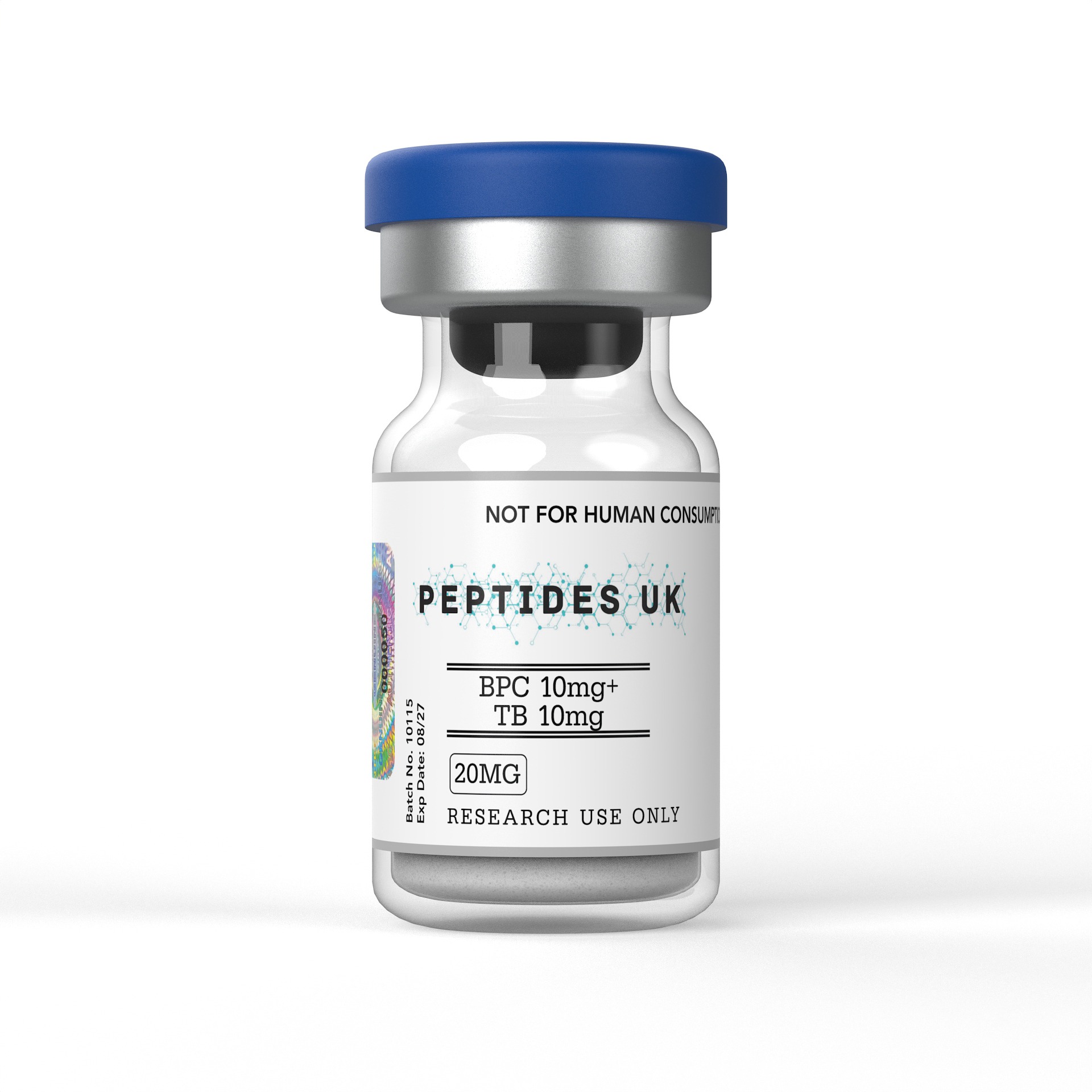
Buy Wolverine Stack (BPC + TB-500) in Europe with fast shipping and guaranteed ≥99% purity — verified with COA and HPLC documentation. A trusted choice for peptides EU research teams rely on, with no customs delays or lengthy international wait times. Whether you’re searching for Wolverine Stack Europe suppliers, looking to buy Wolverine Stack in the EU, or sourcing peptides Europe-wide, we have you covered. Research teams across the EU can count on consistent stock, rapid fulfilment and full batch documentation every time.
For research use only. Not intended for human or veterinary use.



The Wolverine Stack combines two of the most extensively researched tissue repair peptides — BPC-157 and TB-500 (Thymosin Beta-4 fragment) — available to buy in Europe as a complete research-grade peptide combination for laboratory investigation into tissue repair mechanisms, angiogenesis, wound healing biology, musculoskeletal repair, and regenerative peptide pharmacology.
Laboratories and research institutions across the EU can order the verified, research-grade Wolverine Stack with fast international dispatch to Europe, full batch documentation, and ≥99% purity on both compounds confirmed by HPLC and Mass Spectrometry.
✅ ≥99% Purity — HPLC & Mass Spectrometry Verified
✅ Batch-Specific Certificate of Analysis (CoA) — Both Compounds
✅ Sterile Lyophilised Powder | GMP Manufactured
✅ Fast Dispatch to EU & Europe | Tracked Shipping
The Wolverine Stack is a focused two-compound research peptide combination bringing together BPC-157 (Body Protection Compound-157) and TB-500 (Thymosin Beta-4 fragment) — two of the most extensively studied and complementary peptides in tissue repair and regenerative biology research. The combination reflects the mechanistic complementarity of these two compounds — BPC-157’s pleiotropic growth factor upregulation, nitric oxide system modulation, and systemic organ protection properties working alongside TB-500’s actin-sequestering, pro-migratory, and angiogenic biology to address tissue repair from two distinct but synergistic molecular angles.
The Wolverine Stack name reflects the well-recognised pre-clinical research profile of this combination in the context of accelerated tissue repair biology — with each compound contributing distinct and non-overlapping mechanisms to the overall regenerative research picture. BPC-157 provides the growth factor and vascular biology component — upregulating VEGF, modulating the nitric oxide system, and driving repair-associated gene expression across multiple tissue types. TB-500 provides the cytoskeletal and cell migration component — sequestering G-actin to promote the directed cell movement required for wound closure, re-epithelialisation, and vascular repair.
Together the Wolverine Stack compounds cover the two primary cellular requirements for effective tissue repair — providing the molecular signals that drive cell migration to the injury site and the growth factor environment that sustains repair tissue formation — making this combination one of the most rationally constructed and widely researched dual-peptide combinations available to European tissue repair biology laboratories.
What is BPC-157?
BPC-157 is a synthetic pentadecapeptide — a 15 amino acid sequence — derived from a protective protein found in human gastric juice. It is one of the most extensively studied synthetic peptides in pre-clinical repair biology, with a research literature spanning gastrointestinal healing, musculoskeletal repair, angiogenesis, neurological protection, and systemic anti-inflammatory biology developed across decades of investigation primarily from the University of Zagreb research programme led by Professor Predrag Sikiric.
The sequence — Gly-Glu-Pro-Pro-Pro-Gly-Lys-Pro-Ala-Asp-Asp-Ala-Gly-Leu-Val — does not correspond to any endogenous human peptide but is derived from the sequence of human gastric juice protein BPC. Its stability in gastric conditions — a direct consequence of its origin — and its documented activity following both systemic and oral administration in pre-clinical models have made it a practically versatile and widely used research tool for examining peptide-mediated tissue repair across diverse biological contexts throughout European research institutions.
BPC-157’s biological profile is characterised by its pleiotropic repair-promoting activity — producing documented effects across gastrointestinal, musculoskeletal, neurological, vascular, and systemic tissue types through mechanisms that include growth factor upregulation, nitric oxide system modulation, angiogenesis promotion, and direct effects on cellular repair processes. This breadth of activity across tissue types has made it one of the most studied peptides in the regenerative biology literature and a reference compound for studying systemic peptide-driven tissue repair.
What Does BPC-157 Do in Research?
What is TB-500?
TB-500 is a synthetic peptide corresponding to the active actin-binding region of Thymosin Beta-4 (Tβ4) — specifically the sequence LKKTETQ — within the broader 43 amino acid endogenous peptide originally isolated from thymus tissue and now known to be one of the most abundant and ubiquitous intracellular peptides in mammalian cells. TB-500 corresponds to the Tβ4 sequence region responsible for G-actin sequestration — the central molecular mechanism underlying Thymosin Beta-4’s effects on cell migration, tissue repair, and angiogenesis — providing a focused synthetic research tool targeting the primary active domain of the full-length peptide.
Thymosin Beta-4 is the principal G-actin sequestering peptide in most mammalian cells — binding monomeric actin to regulate its availability for filament polymerisation and the directed cell motility required for wound repair. First identified as a thymic peptide and subsequently found to be ubiquitously expressed, Tβ4’s discovery as a major actin-regulatory protein with downstream consequences for wound healing, angiogenesis, cardiac repair, and stem cell activation transformed understanding of how cytoskeletal regulatory peptides contribute to tissue repair biology — making TB-500 and Tβ4 among the most clinically relevant repair peptides in the pre-clinical literature.
TB-500’s research profile has been established across wound healing, cardiac repair, musculoskeletal injury, neural repair, and hair follicle biology — reflecting the broad tissue distribution of Tβ4 expression and the fundamental role of actin dynamics in cell migration-dependent repair processes across multiple tissue types.
What Does TB-500 Do in Research?
BPC-157 research literature: BPC-157 has one of the largest pre-clinical repair biology literatures of any synthetic peptide — with studies consistently documenting accelerated healing across gastrointestinal, musculoskeletal, neurological, and vascular tissue types in rodent models. The University of Zagreb research programme has produced several hundred peer-reviewed studies characterising BPC-157 across multiple organ systems and injury models since the 1990s — establishing it as one of the most comprehensively studied synthetic peptides in pre-clinical research. Particularly well-documented findings include gastric ulcer healing acceleration, tendon repair promotion in Achilles tendon transection models, and nitric oxide system modulation as a central repair mechanism.
TB-500 / Thymosin Beta-4 research literature: The Tβ4 and TB-500 research literature has consistently documented pro-angiogenic, pro-migratory, and repair-promoting effects across wound, cardiac, musculoskeletal, and neural tissue models — with studies from multiple independent research groups establishing its biological profile across tissue types. High-profile cardiac repair findings — including studies by Eduardo Marbán and colleagues documenting Tβ4’s reactivation of cardiac progenitor cells — have attracted significant research attention and established the cardiac repair application as one of the most scientifically significant areas of Tβ4 biology.
Mechanistic complementarity: The research rationale for the Wolverine Stack combination is supported by the non-overlapping mechanisms of the two compounds — BPC-157’s growth factor upregulation and NO system modulation providing the molecular repair environment, and TB-500’s actin sequestration and cell migration promotion providing the cellular mechanics of tissue repair. Studies examining tissue repair biology have established that both growth factor signalling and directed cell migration are required for effective repair — suggesting that compounds addressing each mechanism provide complementary rather than redundant contributions to the overall repair response in pre-clinical combination research designs.
| Combination / Compound | Components | Primary Research Focus | Research Base |
|---|---|---|---|
| Wolverine Stack | BPC-157 + TB-500 | Tissue repair, wound healing, musculoskeletal, angiogenesis | Extensive (both compounds) |
| Glow Stack | BPC-157 + TB-500 + GHK-Cu | Repair + ECM remodelling + gene regulation | Extensive (all compounds) |
| BPC-157 alone | Pentadecapeptide | Gut repair, tendon, neuroprotection, systemic repair | Extensive |
| TB-500 alone | Tβ4 active fragment | Wound healing, cardiac repair, angiogenesis | Extensive |
| PEG MGF + BPC-157 | IGF-1 splice variant + pentadecapeptide | Muscle repair + systemic repair | Well-documented |
| GHK-Cu alone | Copper tripeptide | Collagen synthesis, ECM biology, skin, gene regulation | Extensive |
Every Wolverine Stack order dispatched to EU and European research institutions includes:
Yes. We supply the complete research-grade Wolverine Stack — BPC-157 and TB-500 — with fast tracked international dispatch to all EU member states and wider European destinations including Germany, France, Netherlands, Spain, Italy, Poland, and beyond. Both compounds are supplied with individual batch documentation and packaging designed to maintain peptide integrity throughout transit. The Wolverine Stack is supplied strictly for laboratory research use only.
BPC-157 and TB-500 address tissue repair biology through mechanistically distinct and complementary pathways — making their combination more comprehensive than either compound alone as a research tool for studying regenerative peptide biology. BPC-157 acts through growth factor upregulation, VEGF-driven angiogenesis, nitric oxide system modulation, and pleiotropic repair signalling — providing the molecular environment supporting repair tissue formation. TB-500 acts through actin sequestration-driven cell migration and pro-angiogenic endothelial cell biology — providing the cellular mechanics through which repair cells reach injury sites and new vessels form. Together they address the two primary requirements for effective tissue repair — the signalling environment and the cellular migratory response — making the Wolverine Stack a rationally constructed and mechanistically well-justified research combination for studying multi-pathway peptide repair biology.
The Wolverine Stack comprises BPC-157 and TB-500 — the two primary repair peptide compounds focused on growth factor biology, cellular migration, and angiogenesis. The Glow Stack adds GHK-Cu to this combination — incorporating a third mechanistic component centred on extracellular matrix remodelling, collagen synthesis stimulation, and a broad gene expression regulatory programme. The Wolverine Stack is appropriate for research focused specifically on the BPC-157 and TB-500 repair mechanisms and their interaction, while the Glow Stack is more appropriate for research requiring the additional ECM remodelling and gene regulation dimensions that GHK-Cu contributes.
Full-length Thymosin Beta-4 (Tβ4) is the complete 43 amino acid endogenous peptide — with biological activities that include but extend beyond the actin-binding region. TB-500 is a synthetic peptide corresponding specifically to the LKKTETQ actin-binding active region of Tβ4 — targeting the G-actin sequestration mechanism responsible for the majority of Tβ4’s cell migration and wound healing activities. TB-500 provides a more focused research tool for studying the actin regulatory mechanism, while full-length Tβ4 is used when the complete biological profile including nuclear signalling and potential non-actin-mediated activities is the research focus.
Both compounds are studied in musculoskeletal repair but through distinct cellular mechanisms. BPC-157’s musculoskeletal repair activity involves growth factor upregulation, VEGF-driven vascularisation of repair tissue, NO system-mediated vasodilation improving tissue perfusion, and direct fibroblast and tenocyte stimulation — addressing the molecular signalling environment of repair tissue. TB-500’s musculoskeletal repair activity centres on actin-mediated directed migration of repair cells to injury sites, satellite cell activation for muscle repair, and pro-angiogenic endothelial cell biology — addressing the cellular mechanics of repair. The Wolverine Stack combination addresses both dimensions simultaneously — making it a more comprehensive research tool for studying musculoskeletal repair biology than either compound alone.
Reconstitute each compound separately. Allow each vial to reach room temperature before opening. Add sterile water or appropriate laboratory buffer slowly down the vial wall and swirl gently — do not shake. Both compounds are water-soluble peptides that reconstitute readily in aqueous buffers without requirement for organic co-solvents or acetic acid. Prepare each compound at your protocol’s required concentration, aliquot, and store at -80°C to minimise freeze-thaw degradation. For combination research protocols examining both compounds together, reconstitute each separately and combine at the required ratio in the experimental preparation. Standard peptide handling protocols apply to both compounds.
Orders are dispatched promptly via tracked international courier. Delivery to EU and European destinations typically takes 3–7 working days depending on location, with packaging designed to protect peptide stability of both compounds throughout transit.
| Parameter | BPC-157 | TB-500 |
|---|---|---|
| Type | Synthetic pentadecapeptide | Thymosin Beta-4 active fragment |
| Sequence | Gly-Glu-Pro-Pro-Pro-Gly-Lys-Pro-Ala-Asp-Asp-Ala-Gly-Leu-Val | LKKTETQ actin-binding region |
| Primary Mechanism | Pleiotropic repair, VEGF, NO system, growth factors | Actin sequestration, cell migration, angiogenesis |
| Primary Research Focus | Gut repair, tendon biology, neuroprotection, systemic repair | Wound healing, cardiac repair, musculoskeletal biology |
| Purity | ≥99% | ≥99% |
| Verification | HPLC & Mass Spectrometry | HPLC & Mass Spectrometry |
| Form | Sterile Lyophilised Powder | Sterile Lyophilised Powder |
| Solubility | Sterile water or laboratory buffer | Sterile water or laboratory buffer |
| Storage | -20°C, protected from light | -20°C, protected from light |
| Intended Use | Research use only | Research use only |
The Wolverine Stack — comprising BPC-157 and TB-500 — is supplied exclusively for legitimate scientific research conducted within licensed laboratory environments. These products are not approved for human consumption, self-administration, or any therapeutic, clinical, or veterinary application. They must be handled solely by qualified researchers in compliance with applicable EU regulations, national legislation, and institutional ethics guidelines. By purchasing, you confirm these compounds will be used exclusively for approved in vitro or pre-clinical research purposes.
Receive News
