
PRODUCTS SOLD ON PEPTIDESLABEU.COM ARE FOR RESEARCH PURPOSES ONLY AND ARE NOT FOR HUMAN OR VETERINARY USE.
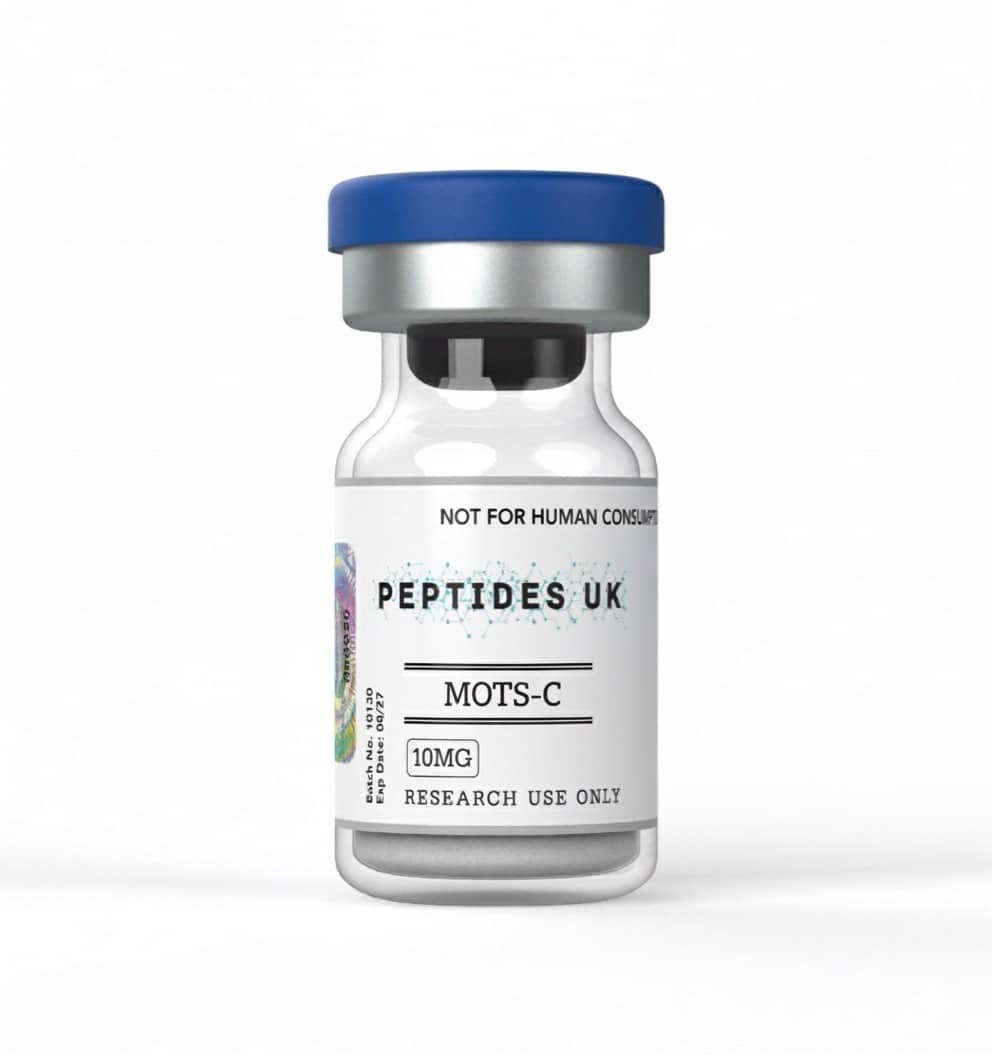
€34.00 – €104.00Price range: €34.00 through €104.00
MOTS-c 10mg EU – Buy Online | In Stock & Ready to Ship
Buy MOTS-c 10mg in Europe with fast shipping and guaranteed ≥99% purity — verified with COA and HPLC documentation. A trusted choice for peptides EU research teams rely on, with no customs delays or lengthy international wait times. Whether you’re searching for MOTS-c 10mg Europe suppliers, looking to buy MOTS-c 10mg in the EU, or sourcing peptides Europe-wide, we have you covered. Research teams across the EU can count on consistent stock, rapid fulfilment and full batch documentation every time.
For research use only. Not intended for human or veterinary use.




MOTS-c is a mitochondria-derived peptide (MDP) encoded within the mitochondrial genome, available to buy in Europe for laboratory research into mitochondrial signalling, metabolic regulation, insulin sensitivity, exercise biology, and the emerging field of mitochondrial peptide pharmacology.
Laboratories and research institutions across the EU can order verified, research-grade MOTS-c with fast international dispatch to Europe, full batch documentation, and ≥99% purity confirmed by HPLC and Mass Spectrometry.
✅ ≥99% Purity — HPLC & Mass Spectrometry Verified
✅ Batch-Specific Certificate of Analysis (CoA)
✅ Sterile Lyophilised Powder | GMP Manufactured
✅ Fast Dispatch to EU & Europe | Tracked Shipping
MOTS-c (Mitochondrial Open Reading Frame of the Twelve S rRNA type-c) is a 16 amino acid peptide encoded within the mitochondrial genome — specifically within the 12S ribosomal RNA gene of mitochondrial DNA — making it a member of the recently characterised class of mitochondria-derived peptides (MDPs) that has fundamentally expanded understanding of how mitochondria communicate with the rest of the cell and the wider organism.
First described in 2015 by Lee and colleagues at the University of Southern California, MOTS-c represented a significant discovery in mitochondrial biology — demonstrating that the mitochondrial genome, long considered to encode only 13 proteins alongside ribosomal and transfer RNAs, also encodes bioactive signalling peptides capable of translocating out of mitochondria, entering the nucleus, and regulating nuclear gene expression in response to metabolic stress. This retrograde mitochondria-to-nucleus signalling function has positioned MOTS-c as a key mediator of mitochondrial-nuclear communication — a research area of growing importance in understanding how cells coordinate metabolic responses across compartments.
Functionally, MOTS-c acts as a metabolic regulator with particular activity in skeletal muscle — where it promotes glucose uptake, enhances insulin sensitivity, and activates AMPK-driven metabolic programmes in response to metabolic stress signals. Its expression and circulating levels respond to exercise, caloric restriction, and metabolic challenge — and decline with ageing — placing it at the intersection of exercise biology, metabolic health, and longevity research. These properties have made MOTS-c one of the most actively researched mitochondrial peptides in European and global pre-clinical research settings, attracting interest as both a research tool for studying mitochondrial signalling biology and as a model compound for understanding the broader MDP class.
In laboratory settings, MOTS-c is studied across a broad range of metabolic, mitochondrial, and exercise biology applications. EU and European researchers working with MOTS-c typically focus on:
All research applications are for in vitro and pre-clinical use only.
MOTS-c has generated a rapidly expanding and high-quality research literature since its discovery in 2015 — with studies spanning metabolic biology, exercise physiology, ageing research, and mitochondrial signalling across multiple pre-clinical and translational research contexts.
Discovery and initial characterisation: The foundational 2015 study by Lee et al. characterising MOTS-c established it as a mitochondrial genome-encoded peptide with metabolic regulatory activity — documenting its effects on insulin sensitivity, glucose uptake, and AMPK activation in skeletal muscle, and demonstrating that systemic MOTS-c administration improved metabolic parameters in dietary obesity mouse models. This landmark study established MOTS-c as a new class of mitochondria-derived metabolic regulator and opened the MDP research field.
Insulin sensitivity and glucose homeostasis: Multiple studies have characterised MOTS-c’s insulin-sensitising effects in skeletal muscle — documenting AMPK-dependent promotion of GLUT4 translocation and glucose uptake, inhibition of the folate cycle leading to AICAR accumulation and secondary AMPK activation, and downstream effects on insulin signalling pathway components. These findings have established MOTS-c as a mechanistically distinct insulin sensitiser relevant to glucose metabolism research.
Exercise biology: Research has documented that acute exercise increases circulating MOTS-c levels in both rodent models and human studies — positioning MOTS-c as an exercise-responsive mitochondrial signal. Studies administering exogenous MOTS-c have documented improvements in endurance performance, oxidative metabolism capacity, and exercise-associated gene expression programmes — establishing it alongside SLU-PP-332 and other compounds as a research tool for studying the molecular basis of exercise adaptation.
Ageing research: Studies have consistently documented declining MOTS-c levels with age in both animal models and human populations — with research characterising the association between reduced MOTS-c signalling and age-related insulin resistance, reduced physical capacity, and metabolic dysfunction. Exogenous MOTS-c administration in aged animal models has been shown to partially restore metabolic function and physical performance parameters — generating significant interest in MOTS-c as a probe for ageing-associated mitochondrial signalling decline.
Nuclear translocation and gene regulation: A significant mechanistic advance in the MOTS-c literature documented its translocation from mitochondria to the nucleus under conditions of metabolic stress — where it interacts with transcription factor binding sites to directly regulate nuclear gene expression. This finding established MOTS-c as a mediator of mitochondrial-nuclear communication and positioned it as a research tool for studying retrograde mitochondrial signalling at the transcriptional level.
Inflammation and immune research: Studies have characterised MOTS-c’s anti-inflammatory properties — including suppression of NF-κB-driven inflammatory gene expression and reduction of pro-inflammatory cytokine production in inflammatory models. These findings have extended MOTS-c’s research profile beyond metabolic biology into immune regulation and inflammatory disease model research.
Human translational research: Notably for a relatively recently discovered peptide, MOTS-c has already been examined in human studies — with research documenting exercise-induced changes in circulating MOTS-c, associations between MOTS-c levels and metabolic health parameters, and genetic variation in the MOTS-c encoding region associated with metabolic and longevity phenotypes in human populations. These translational findings have strengthened research interest in MOTS-c across European research institutions.
| Compound | Type | Primary Mechanism | Key Research Application |
|---|---|---|---|
| MOTS-c | Mitochondria-derived peptide (MDP) | AMPK activation, nuclear gene regulation, insulin sensitisation | Mitochondrial signalling, metabolic biology, exercise, ageing |
| Humanin | Mitochondria-derived peptide | Cytoprotective, IGF-1R/CNTFR signalling | Neuroprotection, cytoprotection, ageing |
| SHLP2 | Mitochondria-derived peptide | Mitochondrial function, cytoprotection | MDP biology, metabolic health |
| SS-31 (Elamipretide) | Mitochondria-targeting peptide | Cardiolipin stabilisation, ROS reduction | Mitochondrial dysfunction, cardiac research |
| SLU-PP-332 | Pan-ERR agonist | ERRα/β/γ nuclear receptor activation | Exercise mimetic, mitochondrial biogenesis |
| AICAR | AMPK activator | Direct AMPK activation | AMPK pathway research — mechanistically related to MOTS-c downstream |
Every order of MOTS-c peptide dispatched to EU and European research institutions includes:
Yes. We supply research-grade MOTS-c with fast tracked international dispatch to all EU member states and wider European destinations. Packaging is designed to maintain peptide integrity throughout transit, and all orders include full batch documentation. MOTS-c is supplied strictly for laboratory research use only.
Mitochondria-derived peptides are a recently characterised class of bioactive signalling peptides encoded within the mitochondrial genome — previously thought to encode only 13 proteins alongside structural RNAs. The discovery that mitochondrial DNA contains additional small open reading frames encoding functional signalling peptides has fundamentally changed understanding of mitochondrial biology — revealing that mitochondria are not passive energy producers but active signalling organelles that communicate their metabolic status to the nucleus, other cellular compartments, and neighbouring cells through peptide signals. MOTS-c is currently the best characterised MDP with metabolic regulatory activity, alongside Humanin and the SHLP peptide family.
Research has characterised MOTS-c’s AMPK activation as proceeding at least in part through inhibition of the folate cycle — the one-carbon metabolic pathway producing tetrahydrofolate derivatives essential for nucleotide biosynthesis. MOTS-c inhibition of this pathway leads to accumulation of AICAR (5-aminoimidazole-4-carboxamide ribonucleotide) — an endogenous AMPK activator — which drives AMPK phosphorylation and downstream metabolic programme activation. This mechanistic connection between mitochondrial peptide signalling, one-carbon metabolism, and AMPK activation represents a novel regulatory axis characterised through MOTS-c research.
Circulating MOTS-c levels increase in response to acute exercise in both rodent models and human studies — positioning it as an exercise-responsive mitochondrial signal linking physical activity to systemic metabolic communication. Exogenous MOTS-c administration produces metabolic adaptations resembling endurance exercise training — including improved glucose metabolism, enhanced oxidative capacity, and better physical performance in pre-clinical models. This bidirectional relationship has established MOTS-c as both a biomarker of exercise response and a pharmacological exercise mimetic research tool — making it relevant to exercise biology research examining the molecular mechanisms underlying training adaptations.
Studies in both animal models and human populations have documented progressive decline in circulating and tissue MOTS-c levels with advancing age — a decline that correlates with age-associated metabolic deterioration including insulin resistance, reduced physical capacity, and impaired mitochondrial function. Research has examined whether this MDP decline contributes causally to metabolic ageing phenotypes — with studies showing that exogenous MOTS-c administration in aged animal models partially restores metabolic parameters and physical performance. This positions MOTS-c as both a probe for studying mitochondrial signalling contributions to ageing biology and a model compound for examining whether MDP restoration strategies can address age-related metabolic decline.
Both MOTS-c and Humanin are mitochondria-derived peptides encoded within the mitochondrial genome, but they have distinct sequences, cellular mechanisms, and primary research applications. Humanin is encoded within the 16S rRNA gene region and acts primarily through cytoprotective mechanisms — including IGF-1 receptor and CNTFR signalling — with a well-characterised neuroprotective profile and research applications in neurodegeneration and cytoprotection biology. MOTS-c is encoded within the 12S rRNA gene and acts primarily as a metabolic regulator through AMPK activation and nuclear gene regulation — with its primary research profile centred on insulin sensitivity, glucose metabolism, and exercise biology. The two MDPs are studied as complementary tools representing different aspects of mitochondrial peptide signalling biology.
Allow the vial to reach room temperature before opening. Add sterile water or an appropriate laboratory buffer slowly down the vial wall and swirl gently — do not shake. Prepare at your protocol’s required concentration, aliquot, and store at -80°C to minimise freeze-thaw degradation. Standard peptide handling protocols apply.
Orders are dispatched promptly via tracked international courier. Delivery to EU and European destinations typically takes 3–7 working days depending on location, with packaging designed to protect peptide stability throughout transit.
| Parameter | Detail |
|---|---|
| Type | Mitochondria-Derived Peptide (MDP) |
| Origin | Mitochondrial genome — 12S rRNA open reading frame |
| Length | 16 amino acids |
| Primary Mechanism | AMPK activation, nuclear gene regulation, folate cycle modulation |
| Primary Research Interest | Metabolic regulation, insulin sensitivity, exercise biology, ageing |
| Purity | ≥99% |
| Verification | HPLC & Mass Spectrometry |
| Form | Sterile Lyophilised Powder |
| Solubility | Sterile water or laboratory buffer |
| Storage | -20°C, protected from light and moisture |
| Intended Use | Research use only |
MOTS-c is supplied exclusively for legitimate scientific research conducted within licensed laboratory environments. This product is not approved for human consumption, self-administration, or any therapeutic, clinical, or veterinary application. It must be handled solely by qualified researchers in compliance with applicable EU regulations, national legislation, and institutional ethics guidelines. By purchasing, you confirm this compound will be used exclusively for approved in vitro or pre-clinical research purposes.


Receive News
