PRODUCTS SOLD ON PEPTIDESLABEU.COM ARE FOR RESEARCH PURPOSES ONLY AND ARE NOT FOR HUMAN OR VETERINARY USE.
€91.50
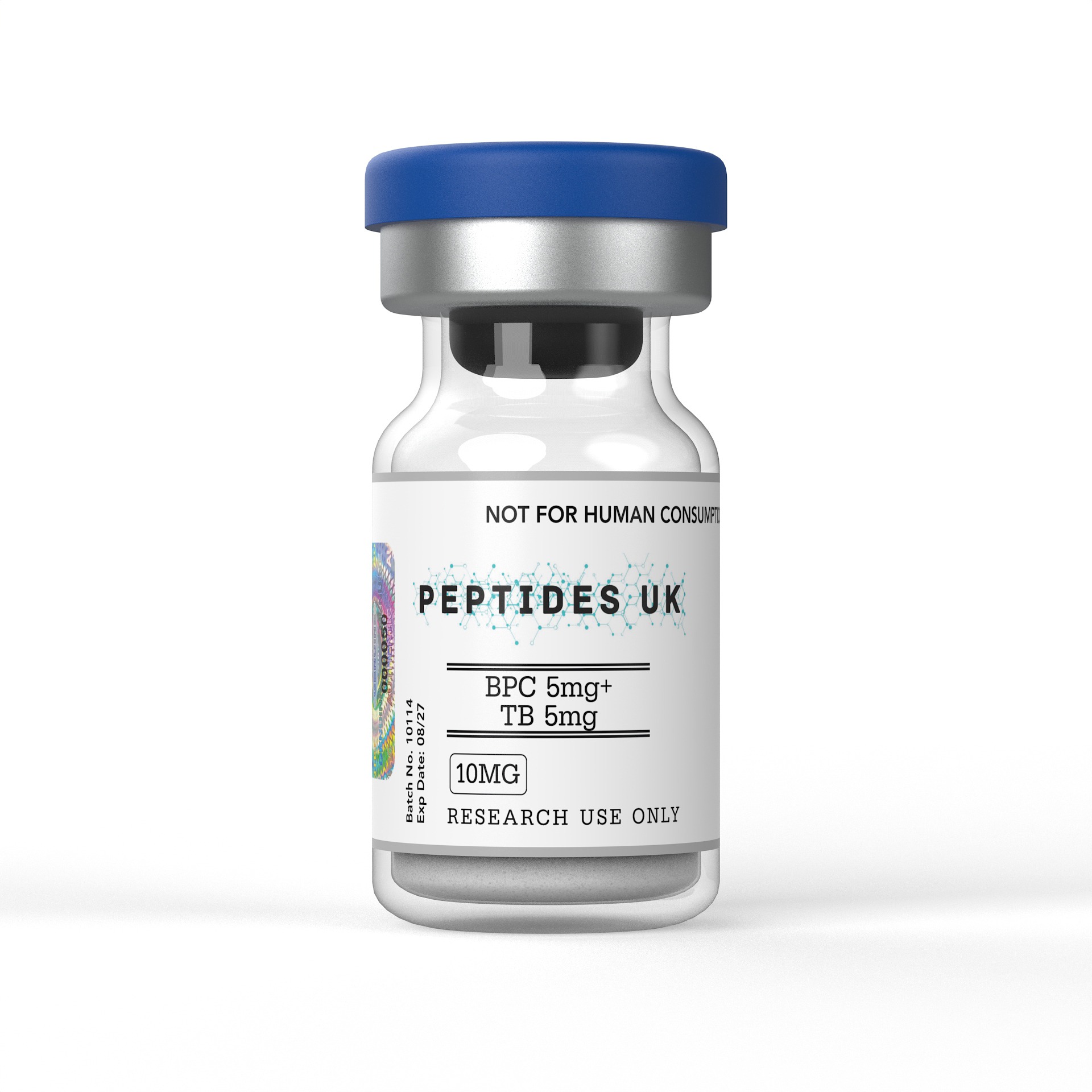
BPC 5mg + TB 5mg EU – Buy Online | In Stock & Ready to Ship
Buy BPC 5mg + TB 5mg in Europe with fast shipping and guaranteed ≥99% purity — verified with COA and HPLC documentation. A trusted choice for peptides EU research teams rely on, with no customs delays or lengthy international wait times. Whether you’re searching for BPC 5mg + TB 5mg Europe suppliers, looking to buy BPC 5mg + TB 5mg in the EU, or sourcing peptides Europe-wide, we have you covered. Research teams across the EU can count on consistent stock, rapid fulfilment and full batch documentation every time.
For research use only. Not intended for human or veterinary use.


The BPC-157 and TB-500 research stack combines two of the most extensively studied tissue repair peptides available to laboratories across Europe — pairing the gastric-derived pentadecapeptide BPC-157 with its multi-pathway nitric oxide, VEGF, and growth factor biology alongside TB-500’s actin-sequestering thymosin beta-4 fragment with its cell migration, angiogenesis, and anti-inflammatory mechanism — into a dual-compound research combination covering complementary and potentially synergistic tissue repair biology across wound healing, musculoskeletal repair, angiogenesis, neuroprotection, and anti-inflammatory research applications. Research institutions and laboratories across the EU can source verified, research-grade BPC-157 and TB-500 together in Europe with fast dispatch and full batch documentation included for both compounds.
✅ ≥99% Purity — HPLC & Mass Spectrometry Verified — Both Compounds
✅ Batch-Specific Certificate of Analysis (CoA) Included — Both Compounds
✅ Sterile Lyophilised Powder | GMP Manufactured
✅ Fast Dispatch Across EU & Europe | EU Peptides Stock
BPC-157 — Body Protection Compound 157, sequence Gly-Glu-Pro-Pro-Pro-Gly-Lys-Pro-Ala-Asp-Asp-Ala-Gly-Leu-Val — is a synthetic 15-amino acid peptide derived from a partial sequence of the human gastric BPC protein naturally found in gastric juice. It is one of the most widely referenced tissue repair peptides in the pre-clinical research literature — studied across gastrointestinal protection, wound healing, tendon and ligament repair, angiogenesis, neuroprotection, and anti-inflammatory biology across a broad range of pre-clinical research models available to EU laboratories.
BPC-157 does not have a single definitively characterised receptor — its biological activity spans multiple candidate mechanisms including nitric oxide system interactions, VEGF upregulation, and growth factor signalling cascades. This incompletely characterised receptor biology is itself an active area of EU research. BPC-157 is notable for its stability in biological environments — demonstrated resistance to degradation in gastric juice and plasma makes it a practically useful research tool across both systemic and local administration routes.
TB-500 — the research designation for the synthetic analogue of the active fragment of Thymosin Beta-4, sequence Ac-Ser-Asp-Lys-Pro-Asp-Met-Ala-Glu-Ile-Glu-Lys-Phe-Asp-Lys-Ser-Lys-Leu-Lys-Lys-Thr-Glu-Thr — is a synthetic 23-amino acid peptide replicating the actin-binding domain of thymosin beta-4, a ubiquitously expressed endogenous G-actin sequestering protein. Thymosin beta-4 is one of the most abundant intracellular peptides in mammalian cells — regulating the dynamic equilibrium between monomeric G-actin and filamentous F-actin that governs cell motility, wound healing migration, and tissue repair responses.
TB-500’s primary mechanism is G-actin sequestration — binding free monomeric actin and maintaining the G-actin pool available for rapid actin polymerisation during cell migration and wound healing responses. By regulating the G-actin to F-actin ratio, TB-500 modulates the actin cytoskeletal dynamics driving fibroblast, keratinocyte, and endothelial cell migration into wound sites — the fundamental cellular biology underlying tissue repair initiation. TB-500 additionally promotes angiogenesis, produces anti-inflammatory effects, and has been characterised in cardiac repair and neuroprotection research contexts across EU research institutions.
In controlled laboratory and pre-clinical settings, BPC-157 is studied across the following research applications relevant to the BPC-157 and TB-500 combined research programme:
Gastrointestinal Protection Research — BPC-157’s gastric origin makes GI biology its most historically characterised application — with extensive pre-clinical documentation of gastroprotective effects against ethanol, NSAID, and stress-induced gastric mucosal damage, intestinal anastomosis healing, and IBD model biology. TB-500 has limited characterised GI biology — making BPC-157 the primary compound for GI protection research in the combined stack.
Tendon, Ligament, and Musculoskeletal Repair Research — BPC-157 is the most extensively characterised synthetic peptide for tendon and ligament repair in the EU pre-clinical research literature — with rodent tendon transection, Achilles tendon, and ligament repair models consistently documenting accelerated healing, improved mechanical properties, and enhanced collagen organisation. TB-500’s actin-mediated cell migration biology contributes a complementary mechanism to musculoskeletal repair — with cell migration into injury sites being an essential early phase of tissue repair that precedes the matrix remodelling biology better characterised for BPC-157.
Wound Healing Biology Research — BPC-157 promotes wound closure through VEGF upregulation, fibroblast migration stimulation, granulation tissue formation, and angiogenesis. TB-500 promotes wound healing through actin-mediated keratinocyte and fibroblast migration, angiogenesis, and anti-inflammatory biology. The two compounds approach wound healing through mechanistically distinct and potentially complementary pathways — BPC-157 through growth factor upregulation and nitric oxide biology, TB-500 through actin cytoskeletal migration dynamics — making wound healing biology the primary complementary research application for the combined stack across EU laboratories.
Angiogenesis Research — Both BPC-157 and TB-500 promote angiogenesis — BPC-157 through VEGF and FGF upregulation, TB-500 through endothelial cell migration driven by actin dynamics. Research uses the combined stack to study whether dual angiogenic mechanism engagement produces additive or synergistic neovascularisation outcomes relative to either compound alone — characterising the relative contributions of growth factor-driven and actin migration-driven angiogenic biology to net vascular repair outcomes.
Anti-Inflammatory Biology Research — BPC-157 suppresses pro-inflammatory cytokines and modulates NF-kB pathway activity. TB-500 produces anti-inflammatory effects through mechanisms including down-regulation of inflammatory mediators and modulation of macrophage biology. Combined anti-inflammatory research examines whether the two compounds’ distinct anti-inflammatory mechanisms produce additive inflammation-resolving biology in combined treatment paradigms.
Neuroprotection Research — BPC-157 has characterised neuroprotective biology through dopaminergic and serotonergic neurotransmitter system interactions and nitric oxide pathway modulation. TB-500 has been examined in cardiac and neural repair contexts through actin biology and anti-inflammatory mechanisms. Combined neuroprotection research examines the complementary neural protective biology of growth factor-driven and actin-mediated repair mechanisms in neural injury paradigms.
In controlled laboratory and pre-clinical settings, TB-500 is studied across the following research applications:
Actin-Mediated Cell Migration and Wound Healing Research — TB-500’s primary mechanism — G-actin sequestration maintaining the actin polymerisation-competent G-actin pool — drives the cell migration biology essential for wound healing initiation. Research has characterised TB-500’s cell migration biology in scratch wound assay models — examining fibroblast and keratinocyte migration rates, actin cytoskeletal dynamics under TB-500 treatment, lamellipodia formation and directed cell movement responses, and the dose-response relationships for TB-500-driven migration biology. These cell migration studies establish the mechanistic basis of TB-500’s wound healing biology and distinguish it from BPC-157’s growth factor-driven wound repair mechanism.
Cardiac Repair and Cardioprotection Research — TB-500’s cardiac biology is one of its most distinctive research applications — with thymosin beta-4 characterised as promoting cardiac progenitor cell migration, cardiomyocyte survival, and cardiac repair following ischaemic injury in pre-clinical cardiac models. Research has examined TB-500’s cardiac biology — characterising cardiac progenitor cell mobilisation and migration to injured myocardium, cardiomyocyte survival signalling under ischaemic challenge, and the actin-mediated mechanisms underlying cardiac repair responses. This cardiac biology is largely absent from BPC-157’s characterised profile — making TB-500 the primary compound for cardiac repair research in the combined stack.
Angiogenesis and Endothelial Biology Research — TB-500 promotes angiogenesis through endothelial cell migration and tube formation — with actin-mediated endothelial migration driving sprouting angiogenesis and new vessel formation. Research has characterised TB-500’s angiogenic biology in endothelial tube formation assays, aortic ring sprouting models, and in vivo wound healing vascularisation paradigms — establishing the actin migration basis of TB-500’s pro-angiogenic activity and distinguishing it from BPC-157’s VEGF-upregulation-driven angiogenic mechanism.
Anti-Inflammatory and Immune Modulation Research — TB-500 produces anti-inflammatory effects — with research documenting inflammatory mediator suppression, macrophage biology modulation, and tissue protective biology in inflammatory paradigms. These anti-inflammatory effects contribute to TB-500’s tissue repair biology by resolving the inflammatory phase of healing and creating the cellular environment permissive to proliferative repair responses.
Hair Follicle and Dermal Biology Research — Thymosin beta-4 and TB-500 have been characterised in hair follicle biology — with actin-mediated dermal papilla cell migration and follicle stem cell activation documented in pre-clinical hair biology models. Research has examined TB-500’s dermal biology alongside its wound healing applications — characterising hair follicle cell migration responses, dermal papilla cell biology, and the actin dynamics governing follicle stem cell activation relevant to skin repair and regeneration research.
BPC-157 Research Findings — Pre-clinical research has consistently documented BPC-157’s gastroprotective biology across multiple GI lesion models, tendon and ligament repair acceleration in rodent musculoskeletal injury paradigms, VEGF-driven angiogenesis across multiple tissue contexts, and neuroprotective biology through nitric oxide system and neurotransmitter modulation. The consistency of tissue repair biology across multiple organ systems has established BPC-157 as one of the most versatile regenerative biology research peptides available to EU laboratories.
TB-500 Research Findings — Research has documented TB-500’s actin-mediated cell migration biology in wound healing models, cardiac progenitor cell mobilisation and cardioprotective biology in ischaemic cardiac paradigms, endothelial tube formation and angiogenic biology, and anti-inflammatory effects across inflammatory tissue repair paradigms. Thymosin beta-4’s ubiquitous intracellular distribution and fundamental role in actin dynamics has generated substantial mechanistic research into the cell biology basis of its tissue repair promoting activity.
Combined BPC-157 and TB-500 Research Context — Pre-clinical research examining the BPC-157 and TB-500 combination has generated interest in the potential complementarity of their mechanistic profiles — growth factor and nitric oxide-driven biology from BPC-157 combined with actin-mediated cell migration biology from TB-500 representing distinct tissue repair pathway engagement. EU research groups have used the combination to study whether mechanistically distinct tissue repair peptides produce additive biology across wound healing, musculoskeletal repair, and angiogenesis research endpoints — with the incompletely characterised receptor biology of both compounds making mechanistic interaction studies an active area of EU investigation.
| Feature | BPC-157 | TB-500 | Combined Research Value |
|---|---|---|---|
| Primary Mechanism | Nitric oxide system + VEGF + growth factor upregulation — receptor incompletely characterised | G-actin sequestration → cell migration + actin cytoskeletal dynamics | Complementary — growth factor driven + actin migration driven |
| Wound Healing | Yes — VEGF + fibroblast migration + granulation | Yes — actin-mediated keratinocyte + fibroblast migration | Dual mechanism — potentially additive |
| Tendon / Ligament Repair | Yes — extensively characterised | Yes — actin cell migration into injury | Complementary repair mechanisms |
| Angiogenesis | Yes — VEGF + FGF upregulation | Yes — endothelial actin migration | Dual angiogenic mechanism |
| GI Protection | Yes — primary application | Limited | BPC-157 primary |
| Cardiac Repair | Limited | Yes — cardiac progenitor migration — primary application | TB-500 primary |
| Anti-Inflammatory | Yes — cytokine suppression + NF-kB | Yes — inflammatory mediator modulation | Complementary anti-inflammatory |
| Neuroprotection | Yes — dopaminergic + serotonergic | Limited direct | BPC-157 primary |
| Receptor Status | Incompletely characterised | Actin-G/F ratio modulation — TB4 receptor emerging | Both active research areas |
| Stability | Stable in gastric juice + plasma | Standard peptide stability | BPC-157 superior biological stability |
| Hair / Dermal Biology | Limited | Yes — thymosin beta-4 follicle biology | TB-500 primary |
| Parameter | Specification |
|---|---|
| Full Name | BPC-157 / Body Protection Compound 157 |
| Sequence | Gly-Glu-Pro-Pro-Pro-Gly-Lys-Pro-Ala-Asp-Asp-Ala-Gly-Leu-Val |
| Type | Synthetic 15-Amino Acid Gastric Protein-Derived Pentadecapeptide — Research Grade |
| Molecular Weight | 1419.5 Da |
| Mechanism | Multi-pathway — NO system + VEGF + growth factor signalling — receptor incompletely characterised |
| Purity | ≥99% HPLC & MS Verified |
| Form | Sterile Lyophilised Powder |
| Solubility | Sterile water or bacteriostatic water |
| Storage (Powder) | -20°C, protect from light and moisture |
| Storage (Reconstituted) | 4°C up to 7 days / -20°C single-use aliquots |
| Bundle Size | 5mg |
| Parameter | Specification |
|---|---|
| Full Name | TB-500 / Thymosin Beta-4 Fragment / Tβ4 Active Domain |
| Also Known As | Thymosin Beta-4 Fragment / Tβ4(17-23) active domain analogue |
| Sequence | Ac-Ser-Asp-Lys-Pro-Asp-Met-Ala-Glu-Ile-Glu-Lys-Phe-Asp-Lys-Ser-Lys-Leu-Lys-Lys-Thr-Glu-Thr |
| Type | Synthetic 23-Amino Acid Thymosin Beta-4 Actin-Binding Domain Analogue — Research Grade |
| Molecular Weight | ~2888 Da |
| N-Terminal Acetylation | Ac — N-terminal acetyl group — stability and receptor interaction |
| Mechanism | G-actin sequestration → G/F-actin equilibrium modulation → cell migration + angiogenesis + anti-inflammatory + cardiac repair |
| Purity | ≥99% HPLC & MS Verified |
| Form | Sterile Lyophilised Powder |
| Solubility | Sterile water or bacteriostatic water |
| Storage (Powder) | -20°C, protect from light and moisture |
| Storage (Reconstituted) | -80°C single-use aliquots — minimise freeze-thaw |
| Bundle Size | 5mg |
BPC-157 reconstitutes readily in sterile water or bacteriostatic water — add solvent slowly to the lyophilised powder and swirl gently until fully dissolved. BPC-157 does not contain disulphide bridges and has no reducing agent compatibility concerns. Good aqueous solubility makes reconstitution straightforward. Store reconstituted solution at 4°C for up to 7 days or at -20°C in single-use aliquots for extended storage.
TB-500 reconstitutes in sterile water or bacteriostatic water — add solvent slowly and swirl gently without vortexing. The N-terminal acetyl group is stable under standard aqueous reconstitution conditions. TB-500 does not contain disulphide bridges — no reducing agent exclusion is required. Met residue in the sequence is susceptible to oxidation under prolonged storage in reconstituted form — protect from strongly oxidising conditions and store reconstituted aliquots at -80°C. Prepare both compounds in separate vials and keep as separate research stocks — do not combine into a single reconstituted solution unless specifically required by the research protocol, as combined solution stability has not been independently validated.
Every BPC-157 and TB-500 stack order dispatched across the EU and Europe includes:
✅ Batch-Specific Certificate of Analysis (CoA) — BPC-157 and TB-500 separately documented
✅ HPLC Chromatogram — both compounds
✅ Mass Spectrometry Confirmation — full sequence verification for both compounds
✅ Sterility & Endotoxin Testing Report — both compounds
✅ Reconstitution Protocol — individual handling guidance for each compound
✅ Technical Research Support
Yes — the BPC-157 and TB-500 research stack is available to researchers and institutions across the EU and Europe with fast dispatch and full batch documentation for both compounds included. Supplied strictly for laboratory research purposes only.
BPC-157 drives tissue repair primarily through nitric oxide system interactions, VEGF upregulation, and growth factor signalling — its receptor biology remains incompletely characterised. TB-500 drives tissue repair through G-actin sequestration and actin cytoskeletal dynamics — maintaining the G-actin pool for rapid cell migration and modulating the actin polymerisation biology fundamental to wound healing cell motility. These are mechanistically distinct tissue repair approaches — growth factor and NO-driven biology from BPC-157, actin migration-driven biology from TB-500 — which is the primary rationale for their combined research interest.
The BPC-157 and TB-500 combination engages tissue repair biology through two distinct mechanistic entry points — BPC-157 through growth factor upregulation, nitric oxide biology, and GI-origin tissue protective mechanisms, TB-500 through actin cytoskeletal dynamics and cell migration. Whether these distinct mechanisms produce additive or synergistic tissue repair biology across wound healing, musculoskeletal repair, and angiogenesis research endpoints is the central research question motivating combined stack investigation across EU regenerative biology laboratories.
Both compounds should be reconstituted separately in individual vials and maintained as separate research stocks. Reconstituting together into a single solution introduces unnecessary stability uncertainty — the compounds’ individual stability profiles and storage requirements are well characterised separately but have not been independently validated in combined solution. Keep as separate stocks and prepare combined treatment solutions immediately before use in specific experimental applications requiring simultaneous delivery.
BPC-157 is the primary compound for gastrointestinal protection, tendon and ligament repair, and neuroprotection through nitric oxide and neurotransmitter system biology. TB-500 is the primary compound for cardiac repair through cardiac progenitor migration, actin-mediated wound healing cell migration, and hair follicle biology. Both compounds contribute to wound healing, angiogenesis, and anti-inflammatory biology through distinct mechanisms — making these shared applications the most directly complementary research areas for combined stack investigation.
Individual BPC-157 and TB-500 single-compound treatment groups at matched concentrations are essential for distinguishing additive from synergistic biology — combined treatment effects cannot be interpreted without the individual compound reference responses. Vehicle controls for each compound separately and combined vehicle controls, NOS inhibitor controls for BPC-157-specific NO pathway biology, and actin polymerisation inhibitor controls for TB-500-specific actin migration biology allow mechanistic attribution of combined treatment effects to individual compound contributions.
≥99% purity by HPLC and full sequence mass spectrometry verification is essential for both compounds — sequence truncation fragments, epimerisation variants, and oxidised Met-containing TB-500 variants would produce confounded dose-response data in combined treatment research protocols. Both compounds in this stack are independently verified to ≥99% purity with full sequence confirmation before dispatch to European research laboratories.
BPC-157 and TB-500 are supplied exclusively for legitimate scientific research purposes conducted within licensed laboratory environments across the EU and Europe. These products are not intended for human consumption, self-administration, or any therapeutic application. They must be handled by qualified researchers in compliance with applicable EU regulations and institutional ethics guidelines. By purchasing, you confirm that these compounds will be used solely for approved in vitro or pre-clinical research purposes.

WhatsApp us
Receive News
