PRODUCTS SOLD ON PEPTIDESLABEU.COM ARE FOR RESEARCH PURPOSES ONLY AND ARE NOT FOR HUMAN OR VETERINARY USE.
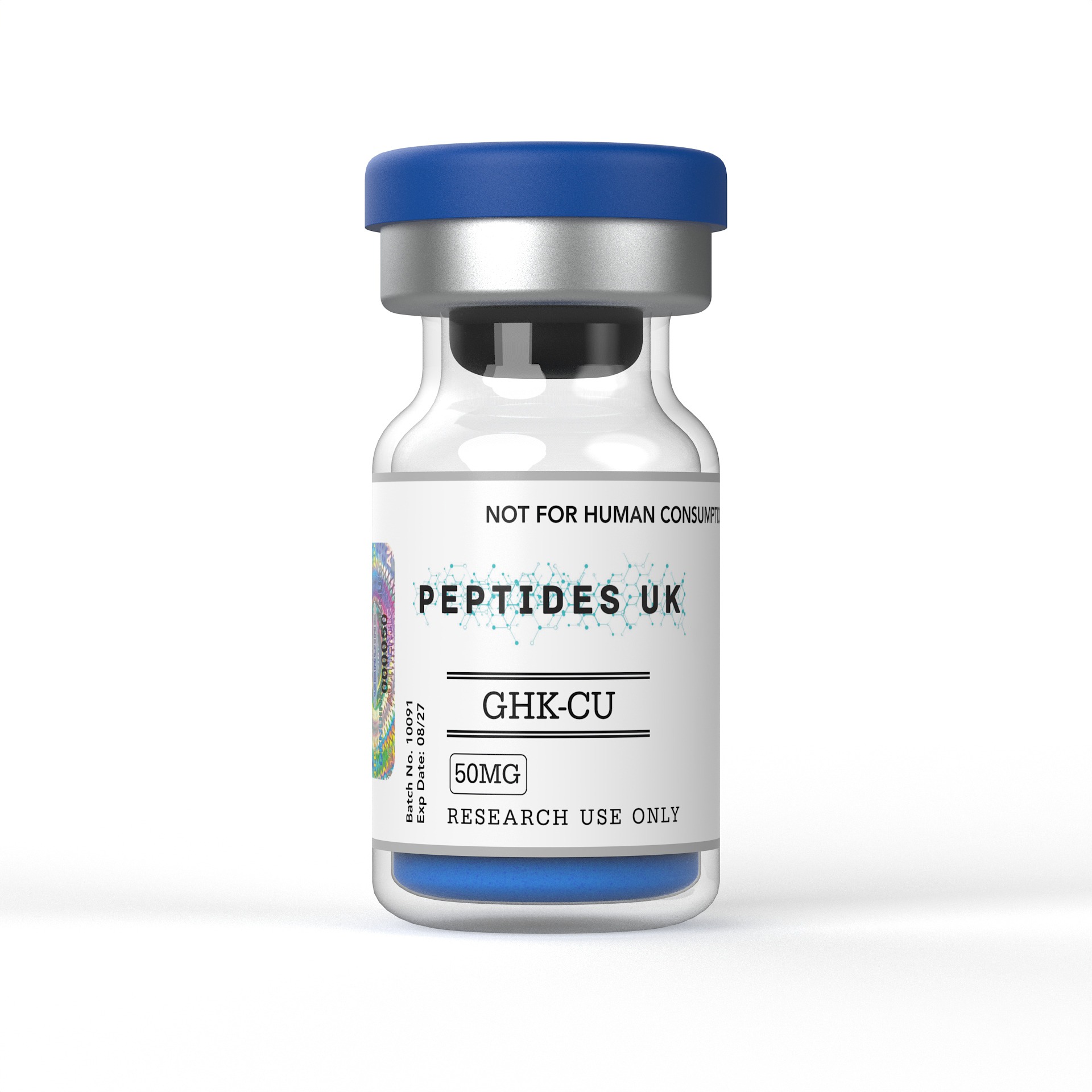
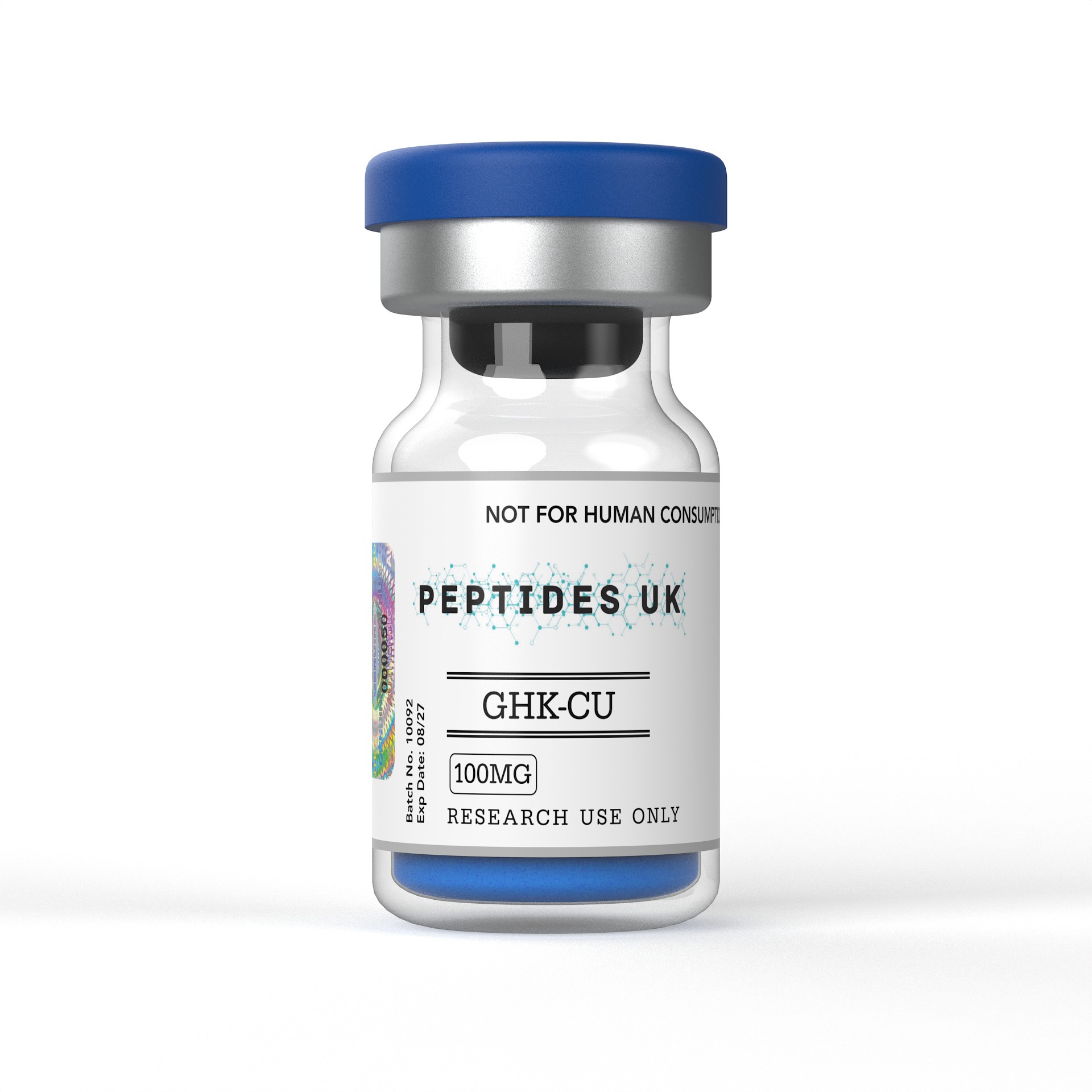
€44.00 – €81.00Price range: €44.00 through €81.00
GHK-Cu EU – Buy Online | In Stock & Ready to Ship
Buy GHK-Cu in Europe with fast shipping and guaranteed ≥99% purity — verified with COA and HPLC documentation. A trusted choice for peptides EU research teams rely on, with no customs delays or lengthy international wait times. Whether you’re searching for GHK-Cu Europe suppliers, looking to buy GHK-Cu in the EU, or sourcing peptides Europe-wide, we have you covered. Research teams across the EU can count on consistent stock, rapid fulfilment and full batch documentation every time.
For research use only. Not intended for human or veterinary use.


GHK-Cu — Copper Peptide GHK-Cu, glycyl-L-histidyl-L-lysine copper(II) complex — is a naturally occurring tripeptide-copper complex and one of the most extensively studied tissue repair, regenerative biology, and wound healing research compounds available to laboratories across Europe — a Gly-His-Lys tripeptide with high-affinity copper(II) chelation that is found endogenously in human plasma, saliva, and urine, and that activates a broad spectrum of regenerative biological responses including collagen and glycosaminoglycan synthesis, angiogenesis, anti-inflammatory signalling, antioxidant defence, stem cell activation, and tissue remodelling through mechanisms spanning multiple receptor interactions and transcriptional regulatory pathways. Research institutions and laboratories across the EU can source verified, research-grade GHK-Cu in Europe with fast dispatch and full batch documentation included.
Available Sizes: 50mg | 100mg | 200mg
✅ ≥99% Purity — HPLC & Mass Spectrometry Verified
✅ Batch-Specific Certificate of Analysis (CoA) Included
✅ Sterile Lyophilised Powder | GMP Manufactured
✅ Fast Dispatch Across EU & Europe | EU Peptides Stock
GHK-Cu — glycyl-L-histidyl-L-lysine copper(II) — is a tripeptide-copper complex first isolated from human plasma albumin by Loren Pickart in 1973, identified as a fragment of the serum albumin sequence that demonstrated tissue repair-promoting activity in liver cell culture models. The native tripeptide GHK — Gly-His-Lys — has exceptionally high affinity for copper(II) ions, forming a stable 1:1 copper-chelate complex that constitutes the biologically active form responsible for the majority of GHK’s regenerative and tissue-repair biology in research models.
Endogenous GHK-Cu is present in human plasma at concentrations of approximately 200 ng/mL in young adults, declining significantly with age — a reduction that has been associated in research with the age-related decline in tissue repair capacity, wound healing efficiency, and skin regenerative biology. This age-associated concentration decline has positioned GHK-Cu as a research tool for studying the biological consequences of endogenous copper peptide depletion and the restoration of tissue repair signalling through exogenous GHK-Cu supplementation in pre-clinical ageing and regenerative biology models.
GHK-Cu’s biological activity is unusually broad for a three-amino acid peptide — research has documented activity spanning wound healing acceleration, collagen and elastin synthesis stimulation, angiogenesis induction, nerve regeneration, anti-inflammatory biology, antioxidant enzyme upregulation, stem cell activation, hair follicle biology, and gene expression regulation affecting over 4,000 human genes. This remarkable breadth of biological activity has made GHK-Cu one of the most studied regenerative biology peptides available to European research laboratories and positioned it as a uniquely informative research tool for studying the intersection of copper biology, tissue repair, and ageing at the molecular level.
In controlled laboratory and pre-clinical settings across EU and European research institutions, GHK-Cu is studied across wound healing biology, collagen and extracellular matrix research, angiogenesis, neuroprotection, antioxidant biology, gene expression regulation, and skin and hair follicle biology:
GHK-Cu is the reference tripeptide-copper complex for wound healing and tissue repair research — used to characterise the cellular and molecular mechanisms through which copper peptide signalling accelerates wound closure, promotes granulation tissue formation, and coordinates the sequential phases of the wound healing response including haemostasis, inflammation resolution, proliferation, and tissue remodelling. Research has examined GHK-Cu’s effects on fibroblast migration, proliferation, and matrix production in wound healing cell models — characterising the chemotactic signals driving fibroblast recruitment to wound sites, the growth factor upregulation including TGF-beta, FGF, and VEGF driving proliferative wound healing responses, and the matrix metalloproteinase regulation balancing tissue remodelling with new matrix deposition. These wound healing biology studies have established GHK-Cu as the primary reference copper peptide for studying endogenous tissue repair signalling in pre-clinical wound models across European research institutions.
GHK-Cu stimulates collagen synthesis in fibroblasts and other matrix-producing cell types — promoting type I and type III collagen production, elastin synthesis, fibronectin deposition, and glycosaminoglycan production through mechanisms involving TGF-beta pathway activation and direct transcriptional regulation of matrix component genes. Research has characterised GHK-Cu’s collagen biology in primary fibroblast cultures and three-dimensional extracellular matrix models — examining collagen gene transcription upregulation, procollagen processing and secretion kinetics, collagen fibril assembly in cell-derived matrix preparations, and the dose-response relationships governing GHK-Cu-driven matrix synthesis. Studies have also examined GHK-Cu’s effects on matrix metalloproteinase and TIMP balance — characterising how the copper peptide coordinates matrix deposition with matrix remodelling to produce net tissue repair outcomes rather than uncontrolled fibrosis. These extracellular matrix studies have established GHK-Cu as the reference compound for studying copper peptide-driven matrix biology in tissue repair and skin research contexts across EU laboratories.
GHK-Cu promotes angiogenesis — the formation of new blood vessels from existing vasculature — through upregulation of vascular endothelial growth factor (VEGF), fibroblast growth factor (FGF-2), and other pro-angiogenic factors in fibroblasts and endothelial cells. Research has characterised GHK-Cu’s angiogenic biology in endothelial cell tube formation assays, aortic ring sprouting models, and in vivo wound healing and tissue repair paradigms — examining VEGF and FGF-2 upregulation kinetics, endothelial cell proliferation and migration responses, tube formation amplitude relative to positive angiogenesis controls, and the contribution of GHK-Cu-driven angiogenesis to the overall tissue repair and wound healing response. These vascular biology studies have established GHK-Cu as a research tool for studying copper peptide-mediated angiogenic signalling in tissue repair contexts and the molecular basis of neovascularisation in regenerative biology research.
GHK-Cu produces anti-inflammatory effects through multiple mechanisms — suppressing pro-inflammatory cytokine production including TNF-alpha, IL-1beta, IL-6, and IL-8, activating anti-inflammatory signalling pathways, and modulating macrophage activation state from pro-inflammatory M1 toward tissue-repair promoting M2 polarisation. Research has examined GHK-Cu’s anti-inflammatory biology in macrophage models and inflammatory cell cultures — characterising NF-kB pathway modulation, pro-inflammatory cytokine suppression dose-response relationships, macrophage polarisation marker changes following GHK-Cu treatment, and the temporal coordination of anti-inflammatory effects with pro-repair matrix synthesis stimulation in wound healing models. Studies have also examined GHK-Cu’s effects in oxidative stress-driven inflammatory biology — characterising how antioxidant enzyme upregulation and copper-mediated free radical scavenging contribute to the anti-inflammatory biological profile. These anti-inflammatory studies have established GHK-Cu as a research tool for studying the coordination of inflammation resolution with tissue repair initiation in the wound healing response.
GHK-Cu upregulates antioxidant defence systems — inducing superoxide dismutase, catalase, and glutathione peroxidase expression while directly scavenging reactive oxygen species through copper-mediated redox chemistry. Research has characterised GHK-Cu’s antioxidant biology in oxidative stress cell models — examining antioxidant enzyme induction kinetics, reactive oxygen species scavenging capacity relative to established antioxidant reference compounds, mitochondrial membrane potential preservation under oxidative challenge, and the cytoprotective consequences of GHK-Cu-driven antioxidant defence in cell viability assays. Studies have examined GHK-Cu’s antioxidant biology in the context of ageing research — characterising how exogenous copper peptide supplementation modifies the oxidative stress parameters associated with cellular ageing and age-related tissue degeneration in pre-clinical models. These antioxidant studies have established GHK-Cu as a research tool for studying copper peptide-mediated oxidative stress protection in tissue repair and ageing biology contexts across European laboratories.
GHK-Cu modulates expression of a remarkably large number of human genes — with bioinformatic analysis of GHK-Cu-treated cell transcriptomes identifying regulation of over 4,000 genes, including upregulation of genes associated with tissue repair, antioxidant defence, nerve regeneration, and anti-inflammatory biology, and downregulation of genes associated with cancer progression, inflammatory signalling, and tissue degradation. Research has characterised GHK-Cu’s gene expression regulatory biology through microarray and RNA sequencing studies — examining the transcriptional programmes activated and suppressed by GHK-Cu treatment in fibroblast, keratinocyte, and neuronal cell models, the upstream transcription factor pathways mediating GHK-Cu-driven gene expression changes, and the functional consequences of identified transcriptional changes for cell biology and tissue repair outcomes. These genomic biology studies have established GHK-Cu as one of the most broadly gene-regulatory tripeptides characterised in the research literature and contributed to understanding of how a small copper-chelating peptide produces pleiotropic biological effects across multiple tissue contexts.
GHK-Cu promotes nerve growth factor (NGF) production, neurite outgrowth, and neuronal survival in neural cell models — establishing a neuroprotective and neuroregenerative biology that extends GHK-Cu’s research significance beyond peripheral tissue repair into central and peripheral nervous system research. Research has characterised GHK-Cu’s neural biology in neuronal cell culture models — examining NGF and BDNF upregulation, neurite extension responses, neuronal survival under oxidative and excitotoxic challenge, and the molecular pathways mediating copper peptide-driven neuroprotection including PI3K-Akt survival signalling and NF-kB anti-apoptotic biology. Studies have also examined GHK-Cu in peripheral nerve regeneration contexts — characterising Schwann cell biology responses, axonal regeneration markers, and the contribution of GHK-Cu-driven angiogenesis to peripheral nerve repair. These neuroprotection studies have positioned GHK-Cu as a research tool for studying copper peptide biology in neural repair and neuroprotection research across EU neuroscience laboratories.
GHK-Cu’s endogenous decline with ageing and its stimulatory effects on collagen synthesis, matrix remodelling, and skin cell biology have established it as a primary research tool for studying the biology of skin ageing and the molecular mechanisms of skin repair and regeneration. Research has examined GHK-Cu’s skin biology in primary keratinocyte and fibroblast models and ex vivo skin preparations — characterising epidermal thickness restoration, keratinocyte differentiation responses, dermal-epidermal junction component synthesis, and the age-related changes in fibroblast GHK-Cu responsiveness. Studies have also examined GHK-Cu’s hair follicle biology — characterising hair follicle cell proliferation stimulation, hair growth cycle regulation effects, and the relationship between copper peptide signalling and dermal papilla cell biology underlying GHK-Cu’s effects on hair follicle activity in pre-clinical models.
Research has documented GHK-Cu-accelerated wound healing across multiple pre-clinical models — characterising faster wound closure rates, increased granulation tissue formation, enhanced angiogenesis, and improved tensile strength of healed tissue in GHK-Cu-treated wounds relative to vehicle controls. These wound healing studies established GHK-Cu as a pharmacologically validated tissue repair-promoting copper peptide and provided the mechanistic foundation for understanding how endogenous copper peptide signalling coordinates the wound healing response.
Research has confirmed GHK-Cu-driven collagen synthesis stimulation in primary fibroblast cultures and three-dimensional matrix models — documenting type I and type III collagen gene transcription upregulation, increased procollagen secretion, and enhanced collagen fibril deposition. These matrix biology studies established GHK-Cu as the reference tripeptide copper complex for studying copper peptide-driven extracellular matrix synthesis and contributed to understanding of the molecular basis of GHK-Cu’s tissue repair biology.
Transcriptomic research has characterised GHK-Cu’s regulation of over 4,000 human genes — establishing it as one of the most broadly gene-regulatory peptides in the research literature. These genomic studies identified coordinated upregulation of tissue repair, antioxidant, and neuroprotective gene programmes alongside suppression of inflammatory and tissue-degrading gene networks — providing the molecular basis for GHK-Cu’s unusually broad spectrum of biological activities.
Research has documented GHK-Cu’s anti-inflammatory effects — characterising TNF-alpha, IL-1beta, and IL-6 suppression in macrophage models, NF-kB pathway attenuation, and macrophage polarisation modulation toward tissue-repair promoting phenotypes. These anti-inflammatory studies established the molecular basis of GHK-Cu’s inflammation-resolving biology and contributed to understanding of how the copper peptide coordinates inflammation resolution with tissue repair initiation in wound healing contexts.
Research has confirmed GHK-Cu-driven antioxidant enzyme upregulation — documenting superoxide dismutase, catalase, and glutathione peroxidase induction alongside reactive oxygen species scavenging activity and cytoprotective effects in oxidative stress cell models. These antioxidant studies established GHK-Cu as a copper peptide with direct cellular protective biology extending beyond tissue repair into oxidative stress protection relevant to ageing biology research.
Research has documented GHK-Cu’s neuroprotective biology — characterising NGF upregulation, neurite outgrowth stimulation, and neuronal survival improvement under oxidative and excitotoxic challenge in neural cell models. These neuroprotection studies established a neural biology dimension to GHK-Cu’s research significance and positioned it as a research tool for studying copper peptide contributions to nerve repair and neuroprotection biology.
| Feature | GHK-Cu | BPC-157 | TB-500 (Thymosin Beta-4) | Epithalon | Matrixyl (Palmitoyl-Lys-Thr-Thr-Lys-Ser) |
|---|---|---|---|---|---|
| Type | Endogenous tripeptide-copper(II) complex | Synthetic pentadecapeptide — gastric peptide derived | Synthetic thymosin beta-4 fragment — actin-binding | Synthetic tetrapeptide — pineal gland derived | Synthetic palmitoylated pentapeptide — collagen stimulating |
| Primary Mechanism | Copper-mediated multi-pathway activation — collagen synthesis + angiogenesis + antioxidant + anti-inflammatory + gene regulation | Angiogenesis + tissue repair + GI protective biology — receptor mechanism incompletely characterised | Actin sequestration → cell migration + angiogenesis + tissue repair | Telomerase activation → anti-ageing + antioxidant + immune modulation | TGF-beta pathway → collagen synthesis — cosmetic matrix biology |
| Collagen Synthesis | Yes — primary research application | Indirect — via tissue repair mechanisms | Limited direct collagen stimulation | Limited | Yes — primary application |
| Angiogenesis | Yes — VEGF + FGF-2 upregulation | Yes — pronounced | Yes — primary mechanism | Limited | Limited |
| Anti-Inflammatory | Yes — cytokine suppression + macrophage modulation | Yes — pronounced GI and systemic | Moderate | Moderate | Limited |
| Antioxidant Biology | Yes — enzyme upregulation + Cu scavenging | Limited direct | Limited | Yes — documented | Limited |
| Neuroprotection | Yes — NGF + neurite outgrowth | Yes — neural repair models | Limited | Limited | No |
| Gene Regulation | Yes — 4,000+ genes characterised | Limited genomic data | Limited | Limited | Limited |
| Endogenous | Yes — human plasma, saliva, urine | Partial — gastric origin | Yes — ubiquitous | Yes — pineal gland | No — synthetic palmitoylated |
| Key Research Distinction | Broadest gene regulatory biology of any research tripeptide — endogenous copper peptide reference — tissue repair, ageing, neural, and antioxidant biology | GI and systemic tissue repair reference — angiogenesis and wound healing without copper mechanism | Actin-mediated tissue repair and angiogenesis reference | Telomerase and anti-ageing biology reference | Cosmetic collagen stimulation reference — limited research depth |
| Parameter | Specification |
|---|---|
| Full Name | GHK-Cu / Copper Peptide GHK |
| Also Known As | Glycyl-L-histidyl-L-lysine copper(II) / Copper Tripeptide-1 / GHK copper complex |
| Sequence | Gly-His-Lys · Cu²⁺ |
| Type | Synthetic Endogenous Tripeptide-Copper(II) Complex — Regenerative Biology Research Compound — Research Grade |
| Molecular Weight | 340.4 Da (tripeptide) / 403.9 Da (copper complex) |
| Copper Coordination | His imidazole nitrogen + Gly amino terminus + deprotonated amide nitrogen — square planar Cu²⁺ coordination |
| Mechanism | Multi-pathway — TGF-beta / VEGF / FGF-2 / NGF upregulation + NF-kB modulation + antioxidant enzyme induction + collagen / elastin / GAG synthesis + macrophage polarisation modulation + broad gene expression regulation |
| Endogenous Status | Yes — present in human plasma (~200 ng/mL young adults), saliva, urine — declines with age |
| Key Research Distinction | Most extensively gene-regulatory endogenous tripeptide-copper complex — reference compound for tissue repair, wound healing, collagen biology, angiogenesis, antioxidant, neuroprotection, and skin ageing research |
| Primary Research Areas | Wound healing / collagen and ECM synthesis / angiogenesis / anti-inflammatory biology / antioxidant and oxidative stress / gene expression regulation / neuroprotection / skin ageing biology / hair follicle biology |
| Purity | ≥99% HPLC & MS Verified |
| Form | Sterile Lyophilised Powder |
| Appearance | Blue-green powder — characteristic Cu²⁺ complex colouration |
| Solubility | Sterile water or PBS pH 7.4 — excellent aqueous solubility |
| Storage (Powder) | -20°C, protect from light and moisture |
| Storage (Reconstituted) | 4°C short-term (up to 7 days) / -20°C single-use aliquots — avoid repeated freeze-thaw |
| Available Sizes | 50mg, 100mg, 200mg |
| Dispatch | Fast EU & Europe dispatch |
| Intended Use | Research use only |
Every order of GHK-Cu dispatched across the EU and Europe includes:
✅ Batch-Specific Certificate of Analysis (CoA)
✅ HPLC Chromatogram
✅ Mass Spectrometry Confirmation — including copper complexation verification
✅ Sterility & Endotoxin Testing Report
✅ Reconstitution Protocol
✅ Technical Research Support
Yes — research-grade GHK-Cu is available to researchers and institutions across the EU and Europe with fast dispatch and full batch documentation included. Supplied strictly for laboratory research purposes only.
GHK-Cu is a naturally occurring tripeptide-copper complex found in human plasma, saliva, and urine — first isolated from human serum albumin in 1973. It consists of the Gly-His-Lys tripeptide chelated to a copper(II) ion, forming the biologically active complex responsible for its tissue repair and regenerative biology. Plasma concentrations decline significantly with age — from approximately 200 ng/mL in young adults — which has generated research interest in GHK-Cu as a tool for studying age-related decline in tissue repair capacity.
GHK-Cu’s most distinctive research characteristic is the extraordinary breadth of its gene regulatory biology — with transcriptomic studies identifying regulation of over 4,000 human genes following GHK-Cu treatment. No other tripeptide in the research literature has been documented to regulate gene expression at this scale. Combined with its endogenous origin, copper-mediated multifunctional biology, and documented activity spanning collagen synthesis, angiogenesis, anti-inflammatory, antioxidant, and neuroprotective pathways, GHK-Cu occupies a unique position in the EU regenerative biology research compound library.
Yes — the copper(II) chelation is essential for the full biological activity of GHK-Cu. The copper-free GHK tripeptide retains some biological activity but shows substantially reduced potency in collagen synthesis, angiogenesis, and antioxidant biology assays relative to the intact copper complex. The Cu²⁺ ion contributes directly to antioxidant biology through copper-mediated redox chemistry and is required for the correct coordination geometry that drives GHK-Cu’s receptor interactions and downstream biological responses.
Vehicle controls in matched buffer, copper sulfate at equivalent copper concentration confirming that observed effects are peptide-specific rather than copper ion-mediated, GHK tripeptide without copper as a chelation-free structural control, and established positive controls for the specific biological endpoint studied — TGF-beta for collagen synthesis, VEGF for angiogenesis, IL-10 for anti-inflammatory biology. For gene expression studies, matched vehicle-treated transcriptome controls are essential for differential expression analysis.
GHK-Cu reconstitutes readily in sterile water or PBS pH 7.4 — the copper complex has excellent aqueous solubility and the characteristic blue-green colouration of the dissolved Cu²⁺ complex confirms successful reconstitution. Add reconstitution solvent slowly to the lyophilised powder and swirl gently until fully dissolved. Avoid strongly alkaline conditions that can disrupt copper coordination, and avoid strongly reducing conditions that could reduce Cu²⁺ to Cu⁺. Store reconstituted aliquots at -20°C and avoid repeated freeze-thaw cycles.
≥99% purity by HPLC and mass spectrometry is essential — free copper impurities, uncomplexed GHK tripeptide, and GHK sequence variants would produce confounded dose-response data and misattributed biological effects. Copper complexation verification by mass spectrometry confirming the intact GHK-Cu²⁺ complex molecular weight is a critical specification beyond standard peptide purity. All GHK-Cu supplied for European research is verified to ≥99% purity with copper complexation confirmed.
GHK-Cu is supplied exclusively for legitimate scientific research purposes conducted within licensed laboratory environments across the EU and Europe. This product is not intended for human consumption, self-administration, or any therapeutic or cosmetic application outside of controlled research settings. It must be handled by qualified researchers in compliance with applicable EU regulations and institutional ethics guidelines. By purchasing, you confirm that this compound will be used solely for approved in vitro or pre-clinical research purposes.
WhatsApp us
Receive News
