PRODUCTS SOLD ON PEPTIDESLABEU.COM ARE FOR RESEARCH PURPOSES ONLY AND ARE NOT FOR HUMAN OR VETERINARY USE.
€68.00
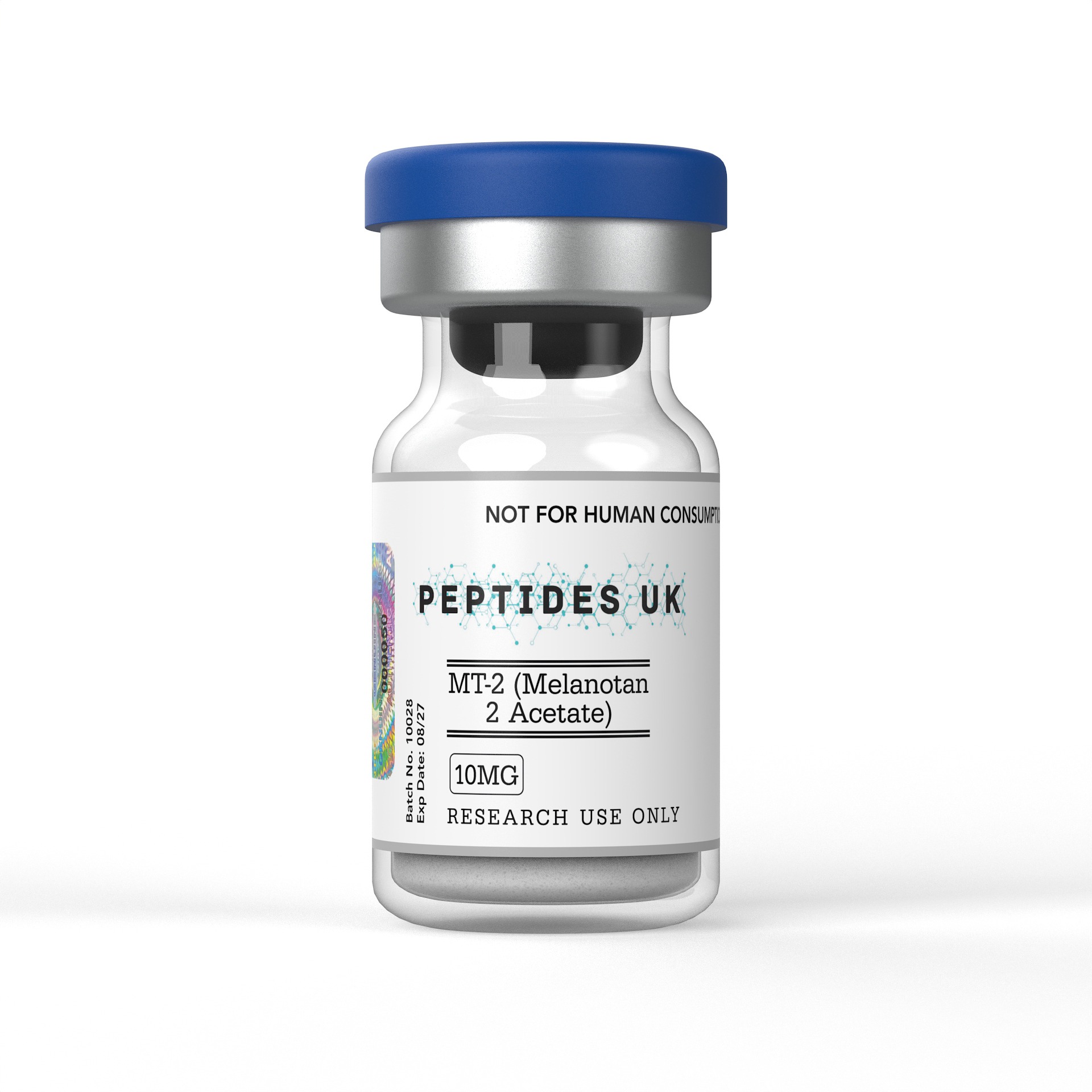
MT-2 (Melanotan 2 Acetate) EU – Buy Online | In Stock & Ready to Ship
Buy MT-2 (Melanotan 2 Acetate) in Europe with fast shipping and guaranteed ≥99% purity — verified with COA and HPLC documentation. A trusted choice for peptides EU research teams rely on, with no customs delays or lengthy international wait times. Whether you’re searching for Melanotan 2 Europe suppliers, looking to buy MT-2 in the EU, or sourcing peptides Europe-wide, we have you covered. Research teams across the EU can count on consistent stock, rapid fulfilment and full batch documentation every time.
For research use only. Not intended for human or veterinary use.


Melanotan 2 Acetate (MT-2) — acetate salt of the synthetic cyclic heptapeptide Ac-Nle-cyclo[Asp-His-D-Phe-Arg-Trp-Lys]-NH₂, a non-selective pan-melanocortin receptor agonist active at MC1R, MC3R, MC4R, and MC5R developed at the University of Arizona through rational truncation and lactam cyclisation of the [Nle⁴, D-Phe⁷]-α-MSH (Melanotan 1) linear scaffold — is simultaneously the most potent characterised inducer of UV-independent melanogenesis, the compound whose unexpected pro-erectile activity in the 1996 Dorr Phase I tanning study serendipitously initiated the entire field of central melanocortin sexual function pharmacology, and the parent compound from which bremelanotide (PT-141) was derived as a selective CNS-focused metabolite and subsequently developed to FDA approval. MT-2’s non-selective pan-MCR coverage — spanning pigmentation biology through MC1R, energy balance and sexual arousal biology through MC3R and MC4R, and exocrine and immune biology through MC5R — makes it the broadest-spectrum melanocortin research tool available to EU laboratories, uniquely suited to studies of integrated melanocortin system pharmacology, receptor-subtype contribution dissection, and multi-system melanocortin biology that no selective monospecific agonist can replicate. Research institutions and laboratories across the EU can source verified, research-grade Melanotan 2 Acetate in Europe with fast dispatch and full batch documentation included.
Contents: Melanotan 2 Acetate 10mg
✅ ≥99% Purity — HPLC & Mass Spectrometry Verified
✅ Lactam Cyclisation & Ac-Nle Modifications Confirmed — Batch-Specific CoA Included
✅ Sterile Lyophilised Powder | GMP Manufactured
✅ Fast Dispatch Across EU & Europe | EU Peptides Stock
Melanotan 2 is a synthetic cyclic heptapeptide — molecular formula C₅₀H₆₉N₁₅O₉, molecular weight approximately 1024 Da as free base — whose sequence Ac-Nle-cyclo[Asp-His-D-Phe-Arg-Trp-Lys]-NH₂ represents the product of deliberate structural engineering to maximise receptor binding potency, metabolic stability, and blood-brain barrier permeability relative to both endogenous α-MSH and its linear Melanotan 1 predecessor.
The structural design of MT-2 emerged from a research programme at the University of Arizona (Hruby, Hadley, and colleagues) seeking to improve upon Melanotan 1’s already superpotent linear tridecapeptide scaffold by introducing cyclisation — a strategy known to constrain peptide conformation, increase receptor binding affinity through entropic pre-organisation, and dramatically reduce proteolytic vulnerability by eliminating flexible N- and C-terminal extensions accessible to exopeptidases. The design was rationalised through NMR spectroscopic analysis and computational modelling of α-MSH bound conformations — a hypothesised salt bridge between Glu⁵ and Lys¹¹ in the α-MSH/Melanotan 1 backbone suggested a bioactive cyclic conformation that could be mimicked by a direct covalent lactam bridge. Structural engineering proceeded by: N- and C-terminal truncation removing six residues from the 13-amino acid MT-1 scaffold; Glu⁵ → Asp⁵ shortening of the lactam bridge carboxylate arm; Gly¹⁰ → Lys¹⁰ introduction of the lactam bridge amine; direct Asp⁵-to-Lys¹⁰ side-chain lactam cyclisation forming the cyclic heptapeptide ring; retention of the Nle⁴ and D-Phe⁷ modifications from MT-1 for DPP-IV resistance and endopeptidase resistance respectively; and N-terminal acetylation and C-terminal amidation for terminal stability. The resulting compound — tested first as a tanning agent — proved in the 1996 Dorr Phase I study to be a superpotent melanotropin with dose-limiting nausea at 0.025 mg/kg, consistent visible tanning, and — entirely unexpectedly — spontaneous penile erections accompanied by yawning and stretching in all three male subjects at doses below the tanning threshold.
This serendipitous erectogenic observation was reported to Victor Hruby and Mac Hadley, who recognised it as evidence of central CNS melanocortin receptor activation rather than peripheral pigmentation biology — initiating a deliberate research programme by Hunter Wessells and colleagues that directly established MT-2 as the founding compound of melanocortin sexual function pharmacology and ultimately motivated the design of the deaminated carboxylate metabolite bremelanotide (PT-141) as a CNS-selective derivative progressed to FDA approval. MT-2 thus occupies a unique historical position as both a primary research tool and the serendipitous progenitor of an entire class of CNS-active pharmacological agents.
MT-2’s receptor coverage profile — MC1R, MC3R, MC4R, and MC5R, with negligible MC2R (ACTH-selective adrenocortical) activity — is the direct consequence of its pan-melanocortin active core sequence. Unlike MT-1’s linear tridecapeptide architecture, which confers relative MC1R selectivity, MT-2’s compact cyclic structure and constrained His-D-Phe-Arg-Trp active tetrapeptide orientation enables productive engagement with the ligand-binding pockets of all four non-adrenal melanocortin receptor subtypes. This breadth of receptor coverage is both MT-2’s defining research advantage — enabling integrated multi-system melanocortin biology investigation — and its primary pharmacological liability relative to selective agents, producing simultaneous pigmentation, CNS arousal/appetite, and exocrine effects that require appropriate receptor-subtype control paradigms for mechanistic attribution.
MC1R Melanogenesis and Eumelanin/Pheomelanin Biology Research — MT-2 drives the complete MC1R → Gs → cAMP → PKA → CREB → MITF → tyrosinase/TYRP1/DCT eumelanogenesis cascade with potency exceeding both α-MSH and MT-1 in in vitro melanogenesis bioassays — attributed to the cyclic constraint pre-organising the His-D-Phe-Arg-Trp active tetrapeptide into the receptor-preferred binding conformation. Research uses MT-2 to characterise the MC1R melanogenesis signalling pathway, to study eumelanin/pheomelanin switching biology through competitive MC1R/ASIP agonism/antagonism paradigms, and to investigate the dose-response relationships for UV-independent pigmentation induction in primary human melanocyte cultures and B16 melanoma cell systems. The Dorr 1996 Phase I study documented visible tanning of forehead, arms, and neck in all three subjects after daily subcutaneous injections of 0.01 mg/kg over two weeks — the first controlled human demonstration of UV-independent pharmacological tanning and the reference clinical tanning dataset for pan-MCR agonist research. EU dermatology research uses MT-2 to study MC1R-driven melanogenesis independently and in comparison with MT-1 — with the MT-2/MT-1 differential receptor selectivity enabling dissection of MC1R-specific from MC4R/MC3R-co-activated pigmentation biology.
MC4R/MC3R Sexual Arousal and Erectile Function Research — MT-2’s most historically significant and mechanistically important research application beyond melanogenesis is central MC4R and MC3R activation producing sexual arousal and erectile responses. The complete central mechanism — documented through FOS immunostaining, intracerebral microinjection, and receptor knockout studies — proceeds through hypothalamic MC4R activation in the medial preoptic area (mPOA) driving dopamine release in nucleus accumbens (with MC4R→dopamine D2 receptor cascades governing motivational sexual desire) and PVN MC4R activation driving oxytocinergic neuron depolarisation and oxytocin secretion into the portal and peripheral circulation (mediating the genital reflexes, social bonding, and arousal components of the sexual response). Spinal melanocortin receptor activation contributes to the efferent pro-erectile autonomic outflow descending to cavernosal tissue. In the foundational Wessells 1998 psychogenic ED crossover study (10 men, randomised double-blind placebo-controlled), 8 of 10 MT-2-treated men achieved erections without sexual stimulation versus 1 of 10 placebo — directly establishing central melanocortin agonism as sufficient for erectile initiation independent of peripheral vascular sensitisation. The 2000 Wessells organic ED study (20 men) documented erections in 17 of 20 MT-2-treated men versus 3 of 20 placebo — extending the erectogenic finding to the broader organic ED population. These studies provided the mechanistic and pharmacodynamic foundation for the PT-141 programme and established MT-2 as the canonical research tool for CNS melanocortin erectile biology. EU sexual neuroscience research uses MT-2 alongside GnRH neuron and HPG axis research to study the integration of melanocortin, dopaminergic, and oxytocinergic systems in the central sexual arousal circuit.
Pan-MCR Coverage and Melanocortin System Integration Research — MT-2’s unique value relative to selective agonists is its ability to simultaneously engage MC1R, MC3R, MC4R, and MC5R — enabling research into the integrated biology of the complete melanocortin system rather than individual receptor subtypes in isolation. The melanocortin system is a highly interconnected regulatory network — MC4R-mediated energy balance signalling through the hypothalamic leptin-POMC-MC4R axis intersects with MC3R autoreceptor biology on POMC neurons (MC3R activation reducing POMC neuron firing — negative feedback on the melanocortin output), MC1R-mediated anti-inflammatory biology in peripheral immune cells, and MC5R-driven exocrine gland regulation. MT-2’s pan-MCR agonism enables research into these system-level interactions — using matched selective agonist and receptor knockout comparators to attribute individual components of MT-2’s integrated response to specific receptor populations. EU neuroendocrinology and systems pharmacology research uses this pan-MCR approach to characterise the melanocortin system as a coordinated regulatory network governing the co-regulation of pigmentation, body weight, sexual motivation, stress responses, and immune function through shared ligand/receptor biology.
MC4R Energy Balance, Appetite Suppression, and Obesity Research — MC4R is the most genetically validated target in human obesity — with loss-of-function MC4R mutations producing the most common monogenic severe early-onset obesity syndrome in humans. MT-2’s potent MC4R agonism produces dose-dependent hypophagia and body weight reduction in rodent models through activation of the hypothalamic arcuate nucleus → MC4R-expressing PVN and lateral hypothalamic neurons governing food intake, energy expenditure, and sympathetic nervous system-mediated thermogenesis. The anorectic effect is additionally contributed to by MC3R agonism modulating POMC neuron autocrine feedback and by the overlap between sexual arousal circuitry and feeding inhibition in the mPOA. EU metabolic research uses MT-2 as a reference pan-MCR anorectic tool — comparing its energy balance effects with those of setmelanotide (an MC4R-selective agonist approved for POMC and LEPR deficiency obesity) to characterise the relative contributions of MC4R versus MC3R versus MC1R to the net anorectic response, and to study the MC4R-leptin-POMC regulatory axis in diet-induced obesity and genetic obesity models.
MC5R Exocrine Biology and Immune Modulation Research — MC5R is expressed at high levels in sebaceous glands, lacrimal glands, Harderian gland, preputial gland, pancreas, and multiple peripheral exocrine and immune tissues. MC5R knockout studies demonstrated widespread exocrine dysfunction — including sebum production reduction and lacrimal gland secretion defects — establishing MC5R as a primary regulator of exocrine secretion. MT-2’s MC5R activity enables research into the melanocortin regulation of exocrine biology unavailable to MC1R/MC3R/MC4R-selective agonists — used to study sebaceous gland biology relevant to acne and seborrhoea research, lacrimal and salivary secretion regulation, and the role of peripheral MC5R in coordinating exocrine responses to neuroendocrine melanocortin signals. Immune cells including lymphocytes express MC5R alongside MC1R and MC3R — with MT-2’s MC5R activity contributing to its anti-inflammatory biology through mechanisms distinct from the MC1R-NF-κB pathway, including regulation of lymphocyte function and cytokine production through MC5R-cAMP signalling.
Anti-Inflammatory and Immune Biology Research — MT-2’s pan-MCR coverage activates the full complement of melanocortin anti-inflammatory pathways simultaneously — MC1R-driven NF-κB suppression and IL-10 upregulation in macrophages and keratinocytes; MC3R-mediated modulation of macrophage polarisation and neutrophil trafficking; MC4R-cAMP-PKA suppression of pro-inflammatory cytokine gene expression in central and peripheral immune cells; and MC5R-mediated lymphocyte and exocrine immune regulation. This broad anti-inflammatory coverage has generated EU research interest in systemic lupus erythematosus, inflammatory bowel disease, and neuroinflammation models — using MT-2 to engage the complete melanocortin anti-inflammatory system and comparing its anti-inflammatory potency with selective receptor agonists to attribute the relative contributions of each receptor subtype to net anti-inflammatory efficacy.
Melanocortin-Addiction, Reward, and Addictive Behaviour Research — MC4R is expressed in mesolimbic dopamine system structures including the nucleus accumbens, ventral tegmental area, and prefrontal cortex — brain regions whose melanocortin tone modulates reward processing and addictive behaviour biology. Research has established that MC4R agonism in the nucleus accumbens reduces alcohol consumption in rodent models — with MT-2 demonstrated to attenuate voluntary alcohol intake and alcohol-seeking behaviour, and morphine shown to downregulate MC4R expression in reward-relevant brain regions suggesting reciprocal opioid-melanocortin system interactions. MT-2-driven nucleus accumbens dopamine release through MC4R (documented by Lindblom et al. using in vivo microdialysis) provides a mechanistic link between melanocortin agonism and the reward circuitry governing both sexual motivation and addictive behaviour. EU addiction neuroscience research uses MT-2 to characterise the melanocortin system’s modulatory role in alcohol use disorder, opioid reward circuitry, and compulsive behaviour paradigms — with the MC4R-dopamine axis serving as the mechanistic bridge between sexual arousal biology and addiction biology research.
Oxytocin Biology and Social Behaviour Research — MT-2 activates oxytocinergic neurons in the PVN through MC4R — driving oxytocin secretion that mediates social bonding, pair preference formation, and affiliative behaviour in rodent models. Studies using Fos immunostaining following MT-2 administration documented activation concentrated in the PVN — directly implicating oxytocinergic PVN neurons as primary mediators of MT-2’s pro-social and pro-sexual biology. Research in prairie voles demonstrated that melanocortin receptor agonism facilitates oxytocin-dependent partner preference formation — establishing a direct link between melanocortin-oxytocin signalling and the neurobiology of social attachment. The MT-2-oxytocin research axis is distinct from PT-141’s more CNS-focused sexual desire biology — MT-2’s MC3R activity in limbic structures provides additional social modulation dimensions through circuits beyond PVN MC4R, making it a broader tool for neuroendocrine social behaviour research.
Autism Spectrum Disorder Pre-Clinical Research — A pre-clinical study (Minakova et al., PLoS ONE, 2019) demonstrated that MT-2 reversed autism-like features in a maternal immune activation (MIA) mouse model of ASD — including improving social interaction deficits and reducing repetitive behaviour — attributed to MC4R-oxytocinergic mechanisms given the established role of oxytocin signalling in social behaviour and the emerging evidence of oxytocin system dysfunction in ASD. This application represents an emerging EU research area investigating the therapeutic potential of MC4R-oxytocinergic pathway activation in neurodevelopmental disorder paradigms — using MT-2 as a research tool to explore whether melanocortin-driven oxytocin release can correct social behaviour deficits in ASD pre-clinical models, and to characterise the MC4R-specific versus MC3R-MC5R contributions to the observed social behaviour restoration.
MT-2 as the Progenitor of Bremelanotide (PT-141) — Historical Research Context — MT-2’s most consequential contribution to pharmacological research is its role as the parent compound of bremelanotide (PT-141) — the FDA-approved (2019) MC3R/MC4R agonist for HSDD in premenopausal women. Following the Wessells 1998/2000 ED studies establishing MT-2’s central erectogenic biology, the primary limitations for clinical development — potent MC1R-driven tanning (unsuitable for a sexual dysfunction drug requiring on-demand dosing), short plasma half-life, and prominent nausea — motivated the identification of PT-141 as the primary active CNS metabolite of MT-2 (the deaminated C-terminal carboxylate form) with reduced MC1R activity and preserved MC4R/MC3R CNS biology. EU research comparing MT-2 and PT-141 in matched receptor pharmacology paradigms continues to characterise the mechanistic basis of their differential receptor coverage, using the MT-2/PT-141 comparison to attribute specific biological effects to individual receptor subtype contributions.
Dorr 1996 Phase I Tanning Study — The foundational MT-2 human study administered daily subcutaneous injections of 0.01 mg/kg MT-2 or placebo to three healthy male volunteers over two weeks — documenting consistent, visible tanning of sun-exposed skin surfaces (forehead, arms, neck) confirmed by reflectance spectrophotometry, establishing MT-2 as the first compound to produce UV-independent pharmacological tanning in human subjects. Unexpectedly, all three male subjects reported spontaneous penile erections accompanied by yawning and stretching beginning 1–5 hours post-injection — a pharmacodynamic observation made at sub-tanning-threshold doses that the authors specifically noted as potentially reflecting CNS melanocortin receptor activation and flagged as warranting systematic evaluation. This incidental observation, reported by Dorr and colleagues to Hruby and Hadley, directly initiated the melanocortin sexual function research programme.
Wessells 1998 Psychogenic ED Crossover Study — A randomised double-blind placebo-controlled crossover study in 10 men with psychogenic erectile dysfunction administered a single subcutaneous dose of MT-2 (0.025 mg/kg) or placebo in a home setting with Rigiscan monitoring and no sexual stimulation — documenting erections in 8 of 10 MT-2-treated men versus 1 of 10 placebo recipients, with MT-2-treated subjects reporting increased sexual desire alongside the objective erectile response. This study directly established central melanocortin agonism as sufficient to initiate the complete erectile response in the absence of any sexual stimulus or peripheral vascular priming — mechanistically distinguishing MC4R-driven pro-erectile biology from PDE5 inhibitor pharmacology for the first time.
Wessells 2000 Organic ED Study — A subsequent randomised double-blind crossover study in 20 men with organic erectile dysfunction administered MT-2 or placebo subcutaneously in a home setting — documenting erections in 17 of 20 MT-2 recipients versus 3 of 20 placebo, with a mean rigidity score of 6.9/10 and mean tip rigidity ≥80% duration of 45 minutes with MT-2 versus 2 minutes with placebo. These results extended the erectogenic efficacy to the broader organic ED population and directly motivated the development of bremelanotide as a refined derivative.
Minakova 2019 ASD Pre-Clinical Study — Administration of MT-2 to a maternal immune activation mouse model of ASD reversed deficits in social interaction and reduced repetitive behaviour measures relative to vehicle controls — with the effect attributed to MC4R-mediated oxytocin release through the PVN oxytocinergic pathway. This pre-clinical finding opened a novel research area for melanocortin agonist biology in neurodevelopmental disorders and established a pre-clinical proof-of-concept for MC4R-oxytocinergic approaches to ASD-associated social behaviour deficits.
| Feature | MT-2 (Melanotan 2 Acetate) | MT-1 (Afamelanotide) | PT-141 (Bremelanotide) |
|---|---|---|---|
| Structure | Cyclic heptapeptide — Asp⁵-Lys¹⁰ lactam bridge | Linear tridecapeptide | Cyclic heptapeptide — lactam bridge (MT-2 metabolite/derivative) |
| MC1R | High — potent melanogenesis | High — primary receptor; MC1R-selective | Low — reduced vs. MT-2 |
| MC3R | High | Low/minimal | High |
| MC4R | High | Low/minimal | High — primary CNS target |
| MC5R | Yes — exocrine biology | Minimal | Minimal |
| Tanning | Potent — superpotent eumelanogenesis | Potent — uniform, gradual | Minimal — reduced MC1R |
| Sexual Arousal | Yes — MC4R/MC3R — serendipitous discovery | Absent/negligible | Yes — primary research/clinical application |
| Appetite Suppression | Yes — MC4R/MC3R | Absent | Yes — MC4R |
| Exocrine Biology | Yes — MC5R — sebaceous, lacrimal | Minimal | Minimal |
| Anti-Inflammatory | Yes — pan-MCR | Yes — MC1R primary | Moderate — MC4R/MC3R |
| Addiction Biology | Yes — MC4R nucleus accumbens dopamine | No | Moderate |
| Oxytocin/Social Biology | Yes — PVN MC4R → oxytocin | No | Yes — PVN MC4R |
| ASD Research | Pre-clinical data (Minakova 2019) | No | Limited |
| DNA Repair (NER/XPC) | Limited — MC1R present but cyclic structure less characterised | Yes — primary mechanism | No |
| Clinical Status | Not approved — research only | EMA + FDA approved (EPP — Scenesse) | FDA approved (HSDD — Vyleesi) |
| Half-Life | ~0.8–1.7 h (β-phase) — short | ~30 min plasma; depot extends | ~2.7 h — longer than MT-2 |
| Research Utility | Pan-MCR integration; melanocortin system research; receptor dissection | MC1R-selective; photoprotection; EPP; vitiligo | MC4R/MC3R CNS; sexual function; HSDD |
| Nevi/Melanocyte Risk | High — documented case reports; nevi darkening, eruptive nevi | Lower — documented but clinical monitoring required | Minimal — low MC1R |
MT-2’s potent MC1R activity drives melanocyte stimulation throughout the body — including within pre-existing pigmented naevi. Multiple clinical case reports have documented darkening of pre-existing naevi, development of eruptive new naevi, atypical naevus morphology changes, and melanoma diagnoses in individuals who have used MT-2. A systematic case review (Brennan et al., 2017) identified four melanoma cases associated with MT-2 use. Whether MT-2 directly causes melanoma or acts as a promoter of pre-existing oncogenic transformation in at-risk melanocytes remains mechanistically uncharacterised — no direct evidence of mutagenic activity has been established, but the potential for melanocyte stimulation to promote growth of atypical or dysplastic naevi in susceptible individuals is a documented concern with clinical relevance.
EU research protocols utilising MT-2 should incorporate baseline and serial dermatological assessment of research subjects where applicable, exclude subjects with personal or family histories of melanoma or multiple dysplastic naevi where research design permits, and document all naevus changes with dermoscopic imaging as part of research safety monitoring. Researchers should be aware that the naevus and melanoma risk associated with MT-2 is substantially greater than with MT-1 (due to MT-1’s more selective MC1R pharmacology producing more gradual, uniform melanisation) and substantially greater than with PT-141 (due to PT-141’s minimal MC1R activity). This risk differential is itself a research area — studies investigating the MC1R dose-response relationship for naevus stimulation, and the role of MC1R variant allele status in determining individual susceptibility to melanocyte-stimulating peptide-associated naevus activation, use the MT-2/MT-1/PT-141 potency series as a comparative tool.
| Parameter | Specification |
|---|---|
| Full Name | Melanotan 2 Acetate / MT-2 Acetate |
| Also Known As | Melanotan II / MT-II / MTII |
| Sequence | Ac-Nle-cyclo[Asp-His-D-Phe-Arg-Trp-Lys]-NH₂ |
| IUPAC-Based Systematic Designation | Ac-Nle⁴-cyclo[Asp⁵-His⁶-D-Phe⁷-Arg⁸-Trp⁹-Lys¹⁰]-NH₂ |
| Cyclisation | Asp⁵ → Lys¹⁰ side-chain lactam bridge |
| Molecular Formula | C₅₀H₆₉N₁₅O₉ (free base) |
| Molecular Weight | ~1024 Da (free base); acetate salt MW per CoA |
| CAS Number | 121062-08-6 (free base) |
| Type | Synthetic Cyclic Heptapeptide Pan-Melanocortin Receptor Agonist — Research Grade |
| Receptor Profile | MC1R, MC3R, MC4R, MC5R — non-selective pan-MCR agonist; negligible MC2R |
| Intracellular Signalling | Gs → adenylyl cyclase → cAMP → PKA — all active receptor subtypes |
| Key Modifications | Nle (norleucine, position 4) — oxidative stability; D-Phe (position 7) — protease resistance + potency; lactam cyclisation — conformational constraint + BBB penetration + protease resistance |
| Purity | ≥99% HPLC & MS Verified |
| Form | Sterile Lyophilised Powder |
| Solubility | Sterile water or bacteriostatic water — good aqueous solubility |
| Storage (Powder) | -20°C; protect from light and moisture |
| Storage (Reconstituted) | 4°C up to 7 days; -20°C single-use aliquots |
| Bundle Size | 10mg |
Melanotan 2 Acetate reconstitutes readily in sterile water or bacteriostatic water — add solvent slowly to the lyophilised powder and swirl gently until fully dissolved. Good aqueous solubility under standard conditions; no acidic reconstitution required. The Asp⁵-Lys¹⁰ lactam bridge is a chemically stable amide bond under standard aqueous storage — it does not involve disulphide bonds and is not reducing agent sensitive. The N-terminal acetyl group and C-terminal amide are confirmed by mass spectrometry on each batch.
MT-2’s cyclic structure confers substantially greater peptidase resistance than linear MT-1 or α-MSH — reconstituted solutions are comparatively stable, though single-use aliquots at -20°C remain best practice. The D-Phe⁷ residue is stereochemically stable under standard aqueous storage. For cell-based MC1R, MC3R, MC4R, and MC5R assay applications, working concentrations in the low nanomolar range are typical; receptor subtype-specific assay systems should be selected to isolate individual receptor contributions. Add 0.1% BSA to dilution buffers at sub-nanomolar concentrations to prevent adsorptive losses. Protect reconstituted solutions from light throughout storage and handling.
Every MT-2 Acetate order dispatched across the EU and Europe includes:
✅ Batch-Specific Certificate of Analysis (CoA)
✅ HPLC Chromatogram
✅ Mass Spectrometry Confirmation — cyclic heptapeptide molecular weight, lactam cyclisation, and Nle/D-Phe modification verification
✅ Sterility & Endotoxin Testing Report
✅ Reconstitution Protocol
✅ Technical Research Support
Yes — research-grade Melanotan 2 Acetate is available to EU and European researchers with fast dispatch and full batch documentation. Supplied strictly for laboratory research purposes only.
MT-1 is a linear tridecapeptide (13 aa); MT-2 is a cyclic heptapeptide (7 aa) formed by N- and C-terminal truncation of the MT-1 scaffold and introduction of an Asp⁵-Lys¹⁰ lactam bridge. Cyclisation produces conformational constraint that simultaneously increases receptor binding affinity, improves protease resistance, and enables blood-brain barrier permeability — the structural basis of MT-2’s CNS activity and broader receptor coverage relative to MT-1’s more MC1R-selective linear scaffold.
PT-141 is the deaminated carboxylate metabolite and derivative of MT-2 — sharing the cyclic heptapeptide core but lacking MT-2’s C-terminal amide (Gly-NH₂ vs. Gly-OH). PT-141 was identified as MT-2’s primary active CNS metabolite following the serendipitous erectogenic discovery in the Dorr 1996 Phase I tanning study, and was subsequently developed as a more MC1R-selective derivative with reduced tanning and lower nausea for clinical progression to FDA approval as Vyleesi for HSDD.
MC1R — melanocytes and keratinocytes: eumelanogenesis, photoprotection, NF-κB anti-inflammatory. MC3R — hypothalamic ARC/VMH autoreceptor on POMC neurons: energy sensing, negative feedback, autonomic regulation; limbic: social behaviour. MC4R — hypothalamic PVN/mPOA: sexual arousal, appetite suppression, energy expenditure, nucleus accumbens dopamine release, oxytocinergic activation. MC5R — sebaceous glands, lacrimal glands, immune cells: exocrine secretion regulation, lymphocyte modulation.
MT-2’s potent MC1R activity stimulates melanocytes systemically — including within pre-existing naevi. Multiple published case reports document naevus darkening, eruptive new naevi, and melanoma diagnoses in association with MT-2 use, though whether direct carcinogenesis or promotion of pre-existing dysplastic change is the mechanism remains unresolved. EU research protocols should incorporate baseline and serial dermatological monitoring as appropriate. This risk is substantially greater than with MT-1 and substantially greater than with PT-141 due to their respective lower MC1R activity profiles.
Vehicle control (matched sterile water/buffer) is essential. For receptor subtype attribution: MC1R antagonist (Agouti signalling protein/ASIP, or MC1R-selective antagonists), MC4R antagonist (SHU9119, HS024), and MC3R-selective antagonists in individual and combination paradigms dissect individual receptor contributions. MT-1 provides the MC1R-dominant comparator; PT-141 provides the MC4R/MC3R CNS comparator. MC4R knockout and MC3R knockout animal models enable definitive receptor contribution attribution for in vivo endpoint dissection.
≥99% HPLC with mass spectrometry confirming the intact cyclic heptapeptide molecular weight, the lactam cyclisation architecture, the Nle⁴ norleucine substitution, and the D-Phe⁷ stereochemistry is essential. Linearised or incompletely cyclised contaminants would have dramatically altered receptor affinity profiles — producing substantially reduced potency at all four MCR subtypes. Epimerisation of D-Phe⁷ back to L-Phe⁷ would reduce protease resistance and receptor binding affinity. Both structural features are confirmed by batch MS data included with every lot.
Melanotan 2 Acetate (MT-2) is supplied exclusively for legitimate scientific research purposes conducted within licensed laboratory environments across the EU and Europe. This product is not intended for human consumption, self-administration, or any therapeutic application. Researchers should note that MT-2 stimulates melanocytes throughout the body including within pre-existing naevi, and that case reports of naevus changes and melanoma have been documented in association with its use. It must be handled by qualified researchers in compliance with applicable EU regulations and institutional ethics and biosafety guidelines. By purchasing, you confirm that this compound will be used solely for approved in vitro or pre-clinical research purposes.

WhatsApp us
Receive News
