PRODUCTS SOLD ON PEPTIDESLABEU.COM ARE FOR RESEARCH PURPOSES ONLY AND ARE NOT FOR HUMAN OR VETERINARY USE.
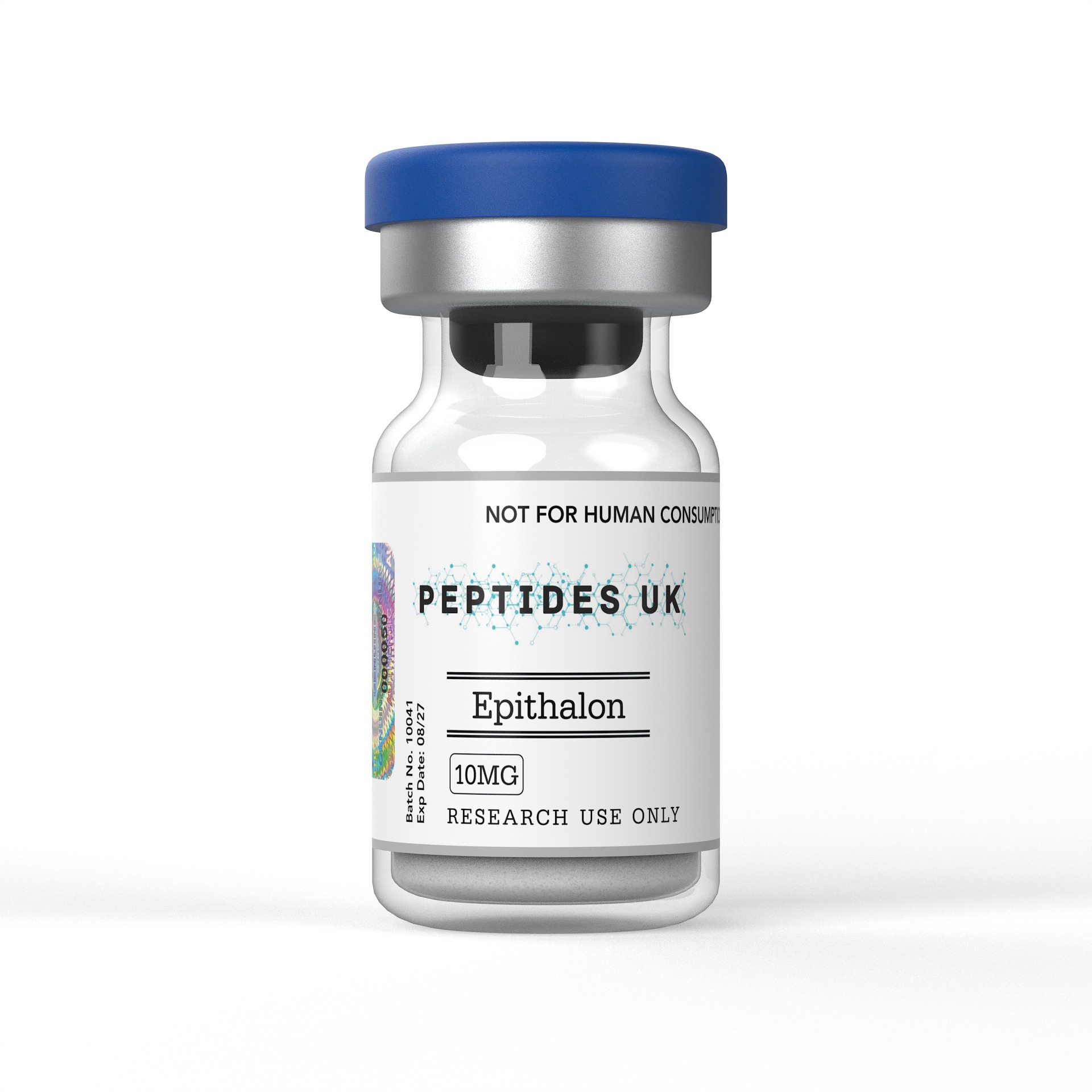
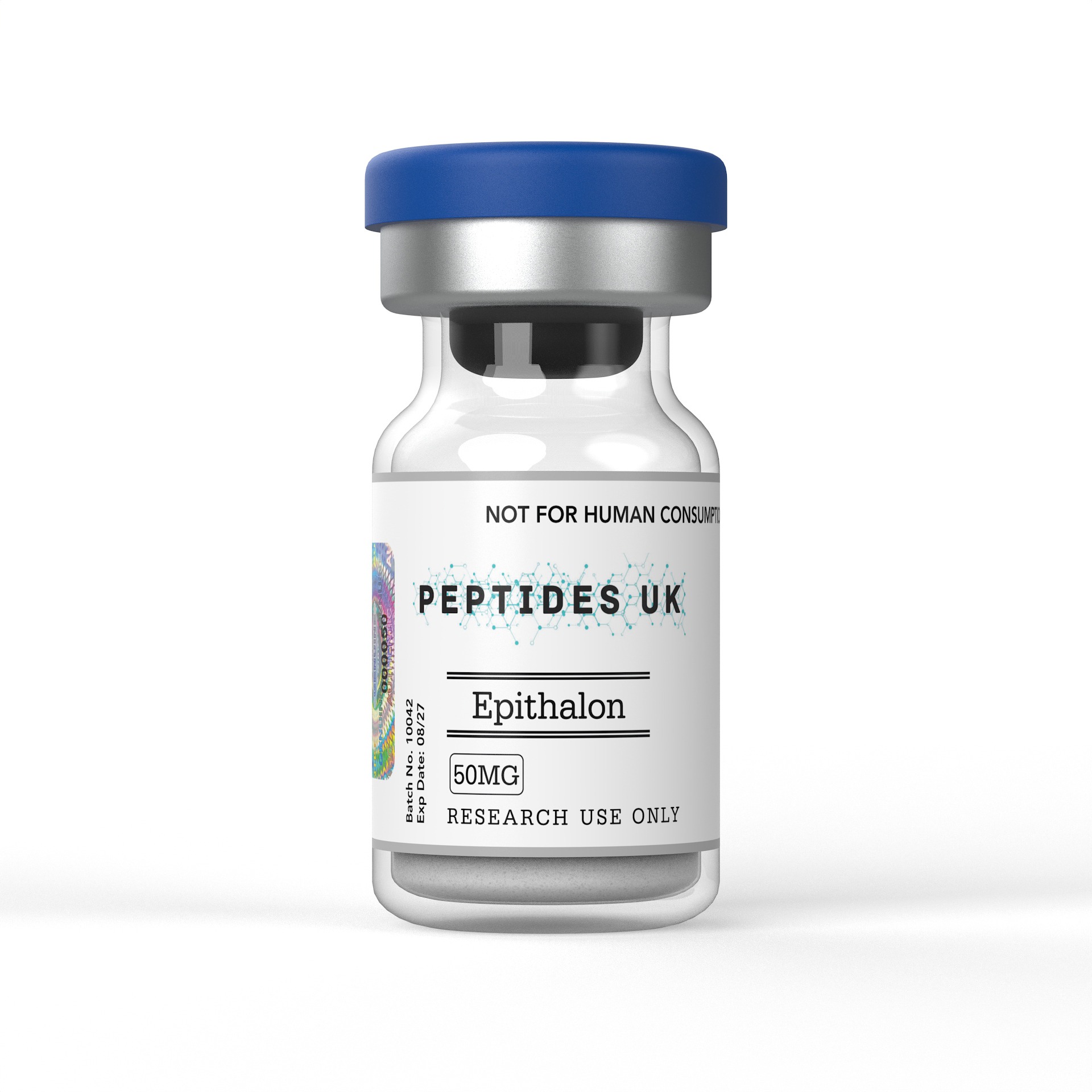
€49.50 – €148.50Price range: €49.50 through €148.50
Epithalon EU – Buy Online | In Stock & Ready to Ship
Buy Epithalon in Europe with fast shipping and guaranteed ≥99% purity — verified with COA and HPLC documentation. A trusted choice for peptides EU research teams rely on, with no customs delays or lengthy international wait times. Whether you’re searching for Epithalon Europe suppliers, looking to buy Epithalon in the EU, or sourcing peptides Europe-wide, we have you covered. Research teams across the EU can count on consistent stock, rapid fulfilment and full batch documentation every time.
For research use only. Not intended for human or veterinary use.


Epithalon (Epitalon) is a synthetic tetrapeptide analogue of Epithalamin — the naturally occurring pineal gland peptide — available to buy in Europe for laboratory research into telomere biology, telomerase activation, pineal gland function, circadian rhythm regulation, and longevity-associated cellular mechanisms.
Laboratories and research institutions across the EU can order verified, research-grade Epithalon with fast international dispatch to Europe, full batch documentation, and ≥99% purity confirmed by HPLC and Mass Spectrometry.
✅ ≥99% Purity — HPLC & Mass Spectrometry Verified
✅ Batch-Specific Certificate of Analysis (CoA)
✅ Sterile Lyophilised Powder | GMP Manufactured
✅ Fast Dispatch to EU & Europe | Tracked Shipping
Epithalon (also written Epitalon) is a synthetic tetrapeptide — sequence Ala-Glu-Asp-Gly — developed by Professor Vladimir Khavinson and colleagues at the St. Petersburg Institute of Bioregulation and Gerontology as a synthetic analogue of Epithalamin, the naturally occurring polypeptide extract of the pineal gland. It is one of the most extensively studied members of the peptide bioregulator class — short peptides derived from or modelled on organ-specific regulatory peptides that Khavinson’s research programme has characterised as playing a role in tissue-specific gene expression regulation and biological ageing.
The pineal gland — a small neuroendocrine structure in the brain best known for melatonin production — has been implicated in ageing biology through research establishing that pineal peptide extracts influence a range of age-associated physiological parameters in pre-clinical models. Epithalon, as the synthetic tetrapeptide analogue of the pineal peptide fraction, was developed to provide a defined, reproducible research tool for studying these pineal peptide biological effects — with a well-characterised sequence and synthesis pathway that the natural polypeptide extract cannot offer.
Epithalon’s most significant and widely cited research finding is its ability to activate telomerase — the enzyme responsible for maintaining telomere length at chromosome ends — in somatic cells that normally lack telomerase expression. Telomere shortening with each cell division is one of the most well-established molecular mechanisms of cellular ageing, and the demonstration that a short synthetic peptide can activate telomerase in somatic cells has made Epithalon a compound of substantial interest in telomere biology, cellular senescence research, and the broader field of longevity science. This profile, combined with its pineal gland origin and wide-ranging effects documented across decades of Russian pre-clinical and clinical research, has established Epithalon as one of the most researched peptides available to European longevity and ageing biology laboratories today.
In laboratory settings, Epithalon is studied across a broad range of telomere biology, pineal function, circadian regulation, and longevity-associated research applications. EU and European researchers working with Epithalon typically focus on:
All research applications are for in vitro and pre-clinical use only.
Epithalon has an unusually extensive research literature for a tetrapeptide — spanning decades of pre-clinical and translational investigation primarily from the St. Petersburg Institute of Bioregulation and Gerontology, with growing international research interest particularly in telomere biology and longevity science.
Telomerase activation: The most widely cited finding in the Epithalon literature is its activation of telomerase in somatic human cells — documented in studies showing increased telomerase activity and telomere elongation in Epithalon-treated cell cultures including human foetal fibroblasts and immune cells. These findings, published in peer-reviewed journals, have established Epithalon as one of very few compounds documented to activate telomerase in normally telomerase-silent somatic cells — a finding of significant mechanistic interest in cellular ageing and telomere biology research.
Lifespan studies: Extended pre-clinical studies examining Epithalon administration in rodent models have documented increases in mean and maximum lifespan parameters compared to controls — with findings published across multiple studies from Khavinson’s research programme characterising both lifespan extension and reductions in age-associated pathology incidence including tumour development and metabolic deterioration.
Circadian and melatonin research: Studies have documented Epithalon effects on melatonin secretion patterns in aged animals — with findings showing restoration of circadian melatonin amplitude toward patterns more typical of younger animals. This circadian restoration effect has been characterised as potentially relevant to the broader range of age-associated physiological changes linked to circadian dysregulation in ageing biology.
Antioxidant biology: Research has characterised Epithalon-associated increases in antioxidant enzyme activity — including superoxide dismutase and catalase — in pre-clinical models, with findings suggesting reduced oxidative stress parameters in treated animals. These antioxidant effects have been proposed as one mechanism contributing to the compound’s broader biological activity profile in ageing research.
Oncology pre-clinical research: A substantial body of pre-clinical literature has examined Epithalon in cancer models — documenting inhibitory effects on tumour development and growth in multiple rodent cancer model systems. Studies have characterised anti-proliferative and pro-apoptotic effects in cancer cell lines alongside the in vivo tumour inhibition findings — contributing to a well-documented oncology research profile alongside the ageing and telomere biology literature.
Retinal research: Studies examining Epithalon in retinal ageing and degeneration models have documented effects on photoreceptor cell survival, retinal function parameters, and age-associated retinal structural changes — establishing a distinct retinal biology research application reflecting the pineal-retinal biological connection.
Neuroendocrine research: Studies have characterised Epithalon effects on hypothalamic-pituitary function in aged animal models — including effects on gonadotropin secretion patterns, adrenal function parameters, and thyroid axis regulation — contributing to understanding of how pineal peptide signalling influences the broader neuroendocrine ageing process.
| Compound | Type | Primary Research Focus | Research Base |
|---|---|---|---|
| Epithalon | Synthetic pineal tetrapeptide | Telomerase activation, telomere biology, longevity, circadian regulation | Extensive |
| Thymalin | Thymus peptide bioregulator | Immune function, thymic biology, ageing | Well-documented |
| Vilon | Thymus dipeptide | Immune regulation, ageing | Well-documented |
| Cortagen | Cortex tetrapeptide | Neural tissue, cognitive ageing | Growing |
| Humanin | Mitochondria-derived peptide | Cytoprotection, neuroprotection, ageing | Growing |
| MOTS-c | Mitochondria-derived peptide | Metabolic regulation, insulin sensitivity, ageing | Growing |
| GHK-Cu | Copper-binding tripeptide | Tissue repair, gene regulation, skin biology | Extensive |
Every order of Epithalon peptide dispatched to EU and European research institutions includes:
Yes. We supply research-grade Epithalon peptide with fast tracked international dispatch to all EU member states and wider European destinations including the UK, Germany, France, Netherlands, Spain, Italy, Poland, and beyond. Packaging is designed to maintain peptide integrity throughout transit and all orders include full batch documentation. Epithalon is supplied strictly for laboratory research use only.
Epithalon and Epitalon are two spellings of the same compound — the synthetic tetrapeptide Ala-Glu-Asp-Gly developed by Professor Khavinson as a synthetic analogue of the pineal peptide extract Epithalamin. Both spellings appear across the research literature and supplier catalogues and refer to the identical peptide sequence and biological research profile. When searching for Epithalon peptide in Europe or sourcing Epitalon in the EU, both terms describe the same research compound.
Epithalamin is a polypeptide extract derived from bovine pineal gland tissue — one of a series of organ-specific peptide extracts developed by Khavinson’s research programme at the St. Petersburg Institute of Bioregulation and Gerontology as putative tissue-specific biological regulators. Epithalon is the synthetic tetrapeptide Ala-Glu-Asp-Gly developed as a defined, reproducible synthetic analogue capturing the proposed active sequence of Epithalamin. The synthetic tetrapeptide provides clear research advantages over the natural extract — including defined composition, reproducible synthesis, and absence of batch variability — while enabling investigation of the biological activities attributed to the natural pineal peptide fraction in a fully characterised form.
Telomerase is a ribonucleoprotein enzyme that extends telomeres — the protective repetitive DNA sequences capping chromosome ends — by adding TTAGGG repeats using its RNA template component. In most somatic cells, telomerase expression is silenced after early development, meaning telomeres shorten progressively with each cell division until critically short telomeres trigger cellular senescence or apoptosis — a process considered one of the primary molecular clocks of cellular ageing. Telomerase remains active in stem cells, germline cells, and most cancer cells — maintaining their replicative capacity. Epithalon’s documented activation of telomerase in somatic cells that normally lack it represents a mechanistically significant finding in telomere biology, raising important research questions about the upstream regulatory pathways controlling telomerase expression and the cellular consequences of its pharmacological activation.
Peptide bioregulators are short peptides — typically two to four amino acids — developed by Khavinson’s research programme as synthetic analogues of organ-specific regulatory peptides extracted from animal tissues. The proposed biological principle underlying this class is that short organ-specific peptides act as tissue-targeted gene expression regulators — binding to promoter regions of genes relevant to their tissue of origin and modulating transcription in a tissue-specific manner. Epithalon, as the synthetic tetrapeptide analogue of the pineal peptide extract, is the most extensively researched member of this class — with a research literature spanning telomere biology, circadian regulation, oncology, and neuroendocrine function that has established it as the reference compound for peptide bioregulator research in Europe and globally.
The pineal gland is the primary source of melatonin — the circadian hormone regulating sleep-wake cycles, seasonal biology, and a range of neuroendocrine functions. Melatonin production declines with age — a change associated with circadian rhythm deterioration, sleep disruption, and a range of age-associated physiological changes. As a synthetic analogue of the pineal peptide extract, Epithalon has been studied for effects on pineal gland function and melatonin secretion — with studies documenting restoration of circadian melatonin amplitude in aged animal models. This pineal-melatonin-ageing research axis positions Epithalon as a tool for studying how pineal peptide signalling contributes to circadian neuroendocrine regulation and its age-related deterioration.
Both Epithalon and GHK-Cu are short synthetic peptides studied in the context of ageing biology and longevity research, but they have distinct origins, mechanisms, and primary research profiles. Epithalon is a pineal-derived tetrapeptide primarily studied for telomerase activation, telomere biology, circadian regulation, and the Khavinson peptide bioregulator biology framework. GHK-Cu is a naturally occurring copper-binding tripeptide found in plasma and tissue — studied primarily for its effects on tissue repair gene regulation, wound healing, collagen synthesis, and a broad programme of gene expression changes documented through microarray studies. The two represent complementary research tools in the wider longevity and cellular biology research landscape.
Allow the vial to reach room temperature before opening. Add sterile water or an appropriate laboratory buffer slowly down the vial wall and swirl gently — do not shake. Prepare at your protocol’s required concentration, aliquot, and store at -80°C to minimise freeze-thaw degradation. Standard peptide handling protocols apply. Epithalon is a small, water-soluble tetrapeptide and reconstitutes readily in aqueous buffers without requirement for organic co-solvents.
Orders are dispatched promptly via tracked international courier. Delivery to EU and European destinations typically takes 3–7 working days depending on location, with packaging designed to protect peptide stability throughout transit.
| Parameter | Detail |
|---|---|
| Sequence | Ala-Glu-Asp-Gly |
| Type | Synthetic Pineal Tetrapeptide — Peptide Bioregulator Class |
| Length | 4 amino acids |
| Molecular Weight | 390.35 g/mol |
| Primary Research Interest | Telomerase activation, telomere biology, circadian regulation, longevity |
| Purity | ≥99% |
| Verification | HPLC & Mass Spectrometry |
| Form | Sterile Lyophilised Powder |
| Solubility | Sterile water or laboratory buffer |
| Storage | -20°C, protected from light and moisture |
| Intended Use | Research use only |
Epithalon is supplied exclusively for legitimate scientific research conducted within licensed laboratory environments. This product is not approved for human consumption, self-administration, or any therapeutic, clinical, or veterinary application. It must be handled solely by qualified researchers in compliance with applicable EU regulations, national legislation, and institutional ethics guidelines. By purchasing, you confirm this compound will be used exclusively for approved in vitro or pre-clinical research purposes.
WhatsApp us
Receive News
