PRODUCTS SOLD ON PEPTIDESLABEU.COM ARE FOR RESEARCH PURPOSES ONLY AND ARE NOT FOR HUMAN OR VETERINARY USE.
€224.50
FOXO4-DRI EU – Buy Online | In Stock & Ready to Ship
Buy FOXO4-DRI in Europe with fast shipping and guaranteed ≥99% purity — verified with COA and HPLC documentation. A trusted choice for peptides EU research teams rely on, with no customs delays or lengthy international wait times. Whether you’re searching for FOXO4-DRI Europe suppliers, looking to buy FOXO4-DRI in the EU, or sourcing peptides Europe-wide, we have you covered. Research teams across the EU can count on consistent stock, rapid fulfilment and full batch documentation every time.
For research use only. Not intended for human or veterinary use.


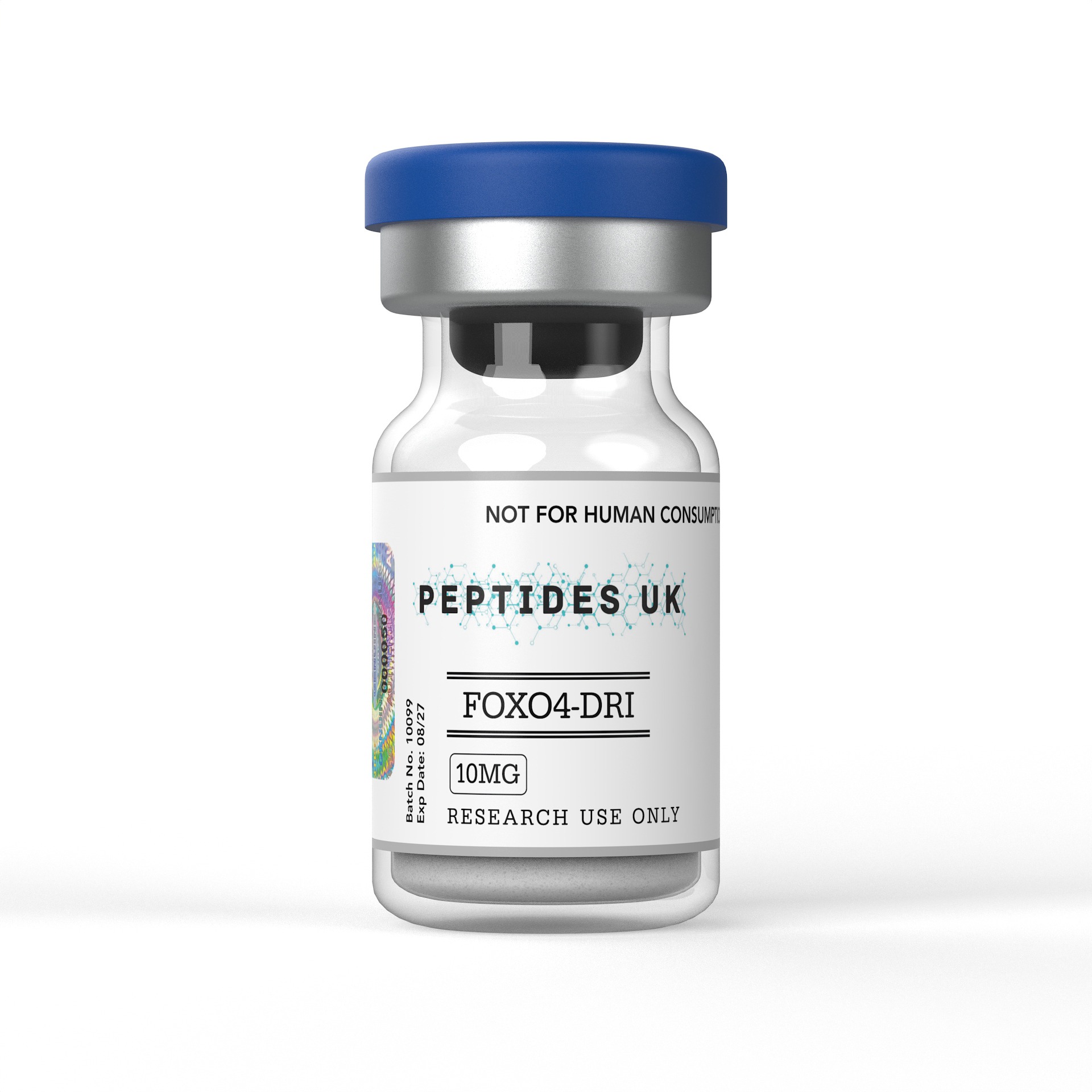
FOXO4-DRI is a D-amino acid retro-inverso peptidomimetic of the FOXO4 transcription factor interaction domain, designed to competitively disrupt the FOXO4–p53 protein–protein interaction in senescent cells, available to buy in Europe for laboratory research into senescent cell biology, p53-dependent apoptosis, cellular senescence mechanisms, senolytics pharmacology, and the comparative study of targeted senescent cell clearance strategies.
Laboratories and research institutions across the EU can order verified, research-grade FOXO4-DRI with fast international dispatch to Europe, full batch documentation, and ≥99% purity confirmed by HPLC and Mass Spectrometry.
✅ ≥99% Purity — HPLC & Mass Spectrometry Verified
✅ Batch-Specific Certificate of Analysis (CoA)
✅ Sterile Lyophilised Powder | GMP Manufactured
✅ Fast Dispatch to EU & Europe | Tracked Shipping
FOXO4-DRI is a 34-amino acid D-amino acid retro-inverso (DRI) peptidomimetic based on the interaction domain of Forkhead box protein O4 (FOXO4) — a member of the FOXO subfamily of forkhead transcription factors. It was developed and characterised by Baar, de Keizer, and colleagues at the Erasmus University Medical Centre and published in Cell in 2017, in a landmark study establishing that the FOXO4–p53 protein–protein interaction is a critical pro-survival mechanism that enables senescent cells to resist p53-dependent apoptosis — and that competitive disruption of this interaction by a cell-penetrating peptidomimetic selectively triggers apoptosis in senescent cells while leaving non-senescent cells unaffected.
The DRI peptidomimetic format — retro-inverso — is a structural strategy that produces a peptide composed entirely of D-amino acids arranged in the reverse sequence of the parent L-amino acid peptide. This retro-inverso architecture presents the same side-chain topology and protein–protein interaction surface as the native L-peptide while conferring complete resistance to protease degradation — as endogenous proteases act stereospecifically on L-amino acid substrates and cannot cleave D-amino acid sequences. The result is a metabolically stable, cell-penetrating peptidomimetic with a substantially extended in vivo half-life compared to the native L-amino acid FOXO4 interaction domain sequence.
The mechanistic rationale for FOXO4-DRI rests on a senescence-specific biology of FOXO4 and p53. In proliferating cells, FOXO4 expression is low and FOXO4–p53 interaction is minimal. In senescent cells — cells that have entered permanent cell cycle arrest following oncogenic stress, replicative exhaustion, DNA damage, or other senescence-inducing stimuli — FOXO4 expression is markedly upregulated, and FOXO4 localises to the nucleus where it physically interacts with p53 through a direct protein–protein interaction. This FOXO4–p53 complex sequesters p53 in a transcriptionally active but pro-survival configuration — specifically preventing p53 from driving the expression of pro-apoptotic target genes (including PUMA, Noxa, and BAX) and from accumulating at mitochondria to trigger the intrinsic apoptosis pathway. The result is that senescent cells, despite elevated p53 levels and ongoing p53 activity, are protected from the p53-dependent apoptosis that would otherwise eliminate them.
FOXO4-DRI competitively disrupts this FOXO4–p53 interaction by occupying the p53-binding surface of FOXO4 — displacing endogenous FOXO4 from p53 and releasing p53 from the pro-survival constraint imposed by the complex. Freed p53 is then available to drive pro-apoptotic transcriptional programmes and to translocate to the mitochondrial outer membrane — activating BAX/BAK-dependent cytochrome c release and caspase cascade initiation, culminating in selective senescent cell apoptosis. Because FOXO4 overexpression and nuclear FOXO4–p53 complex formation are specific features of the senescent cell state not present in normal proliferating or quiescent cells, this mechanism confers the cell-type selectivity that defines FOXO4-DRI as a senolytic — an agent that selectively eliminates senescent cells — rather than a broadly cytotoxic compound.
In laboratory settings, FOXO4-DRI is studied across cellular senescence biology, senolytic pharmacology, p53 pathway research, age-related disease models, and comparative senescent cell clearance research. EU and European researchers working with FOXO4-DRI typically focus on:
Cellular senescence mechanisms and senescent cell biology — FOXO4-DRI is a mechanistic probe for studying the survival biology of senescent cells — specifically the FOXO4-dependent p53 sequestration mechanism that enables senescent cells to resist apoptosis despite elevated p53 levels. Studies use FOXO4-DRI to characterise the role of FOXO4–p53 interaction in senescent cell survival, examining FOXO4 nuclear localisation in senescent versus non-senescent cells, the dynamics of FOXO4–p53 complex formation following senescence induction, and the downstream transcriptional consequences of FOXO4-mediated p53 sequestration on pro-apoptotic gene expression programmes.
Senolytic pharmacology and targeted senescent cell clearance — FOXO4-DRI is one of the most mechanistically precise senolytics characterised — selectively inducing apoptosis in senescent cells through a defined protein–protein interaction disruption mechanism rather than the broad kinase inhibition or Bcl-2 family antagonism that underlies the senolytic activity of other agents (navitoclax, dasatinib/quercetin). Studies use FOXO4-DRI to examine senescent cell elimination kinetics, the completeness of senescent cell clearance across different senescence-inducing conditions, and the specificity of senolytic activity across senescent versus non-senescent cell populations — providing a reference targeted senolytic for comparison with alternative senescent cell clearance strategies.
p53 protein–protein interaction biology — The FOXO4–p53 interaction disrupted by FOXO4-DRI is a direct protein–protein interaction (PPI) — a class of target historically considered undruggable due to the large, flat, featureless nature of PPI interfaces. Studies use FOXO4-DRI as both a mechanistic tool for examining p53 interactome biology in senescent cells and as a validated example of a peptidomimetic PPI disruptor targeting a senescence-relevant nuclear protein complex — contributing to the broader field of PPI-targeted drug discovery with p53 complex disruption as the model system.
Senescence-associated secretory phenotype (SASP) research — Senescent cells secrete a complex mixture of pro-inflammatory cytokines, chemokines, matrix metalloproteinases, and growth factors — collectively termed the SASP — that drives chronic tissue inflammation, disrupts tissue homeostasis, and contributes to age-related pathology in surrounding non-senescent cells. Studies use FOXO4-DRI to examine the consequence of senescent cell elimination on SASP factor production and secretion — characterising how clearance of FOXO4-DRI-sensitive senescent cells reduces local and systemic inflammatory mediator levels and the downstream inflammatory biology of SASP resolution.
Ageing and age-related tissue dysfunction research — Senescent cell accumulation in tissues increases progressively with age and is causally implicated in multiple age-associated functional declines — including reduced tissue regenerative capacity, organ dysfunction, chronic low-grade inflammation (inflammaging), and impaired stem cell niche function. Studies use FOXO4-DRI in aged animal models to examine the consequences of senescent cell clearance on tissue function, physical performance, organ histology, and inflammatory biomarkers — building on the foundational Baar et al. 2017 findings of restored fitness parameters and reduced liver pathology in aged mice following FOXO4-DRI treatment.
Oncogene-induced senescence and chemotherapy-induced senescence research — Senescence can be induced by oncogenic stress (oncogene-induced senescence, OIS) and by genotoxic cancer treatments (therapy-induced senescence, TIS) — producing senescent tumour cells or therapy-damaged normal tissue cells that accumulate and drive SASP-mediated tissue toxicity. Studies use FOXO4-DRI to examine the elimination of OIS and TIS senescent cell populations — characterising the dependence of therapy-induced senescent cells on FOXO4–p53 survival signalling and the consequences of their clearance for tumour biology and normal tissue recovery from genotoxic injury.
Replicative senescence biology — Replicative senescence — the permanent proliferative arrest triggered by telomere shortening following successive cell divisions — is among the most studied senescence programmes. Studies use FOXO4-DRI to probe the FOXO4 dependency of replicatively senescent cell survival — examining whether the FOXO4–p53 pro-survival mechanism is equivalently engaged across senescence induced by replicative exhaustion versus DNA damage, oncogenic signalling, or mitochondrial dysfunction, and characterising the breadth of FOXO4 dependency across the senescence programme spectrum.
Idiopathic pulmonary fibrosis and fibrotic disease models — Senescent cells — particularly senescent fibroblasts expressing high FOXO4 and a pro-fibrotic SASP — are implicated as drivers of fibrotic tissue remodelling in idiopathic pulmonary fibrosis (IPF) and other fibrotic conditions. Studies use FOXO4-DRI in pre-clinical fibrosis models to examine senescent fibroblast elimination, SASP-driven TGF-β and collagen production, and the consequences of targeted senescent cell clearance on fibrotic pathology progression — contributing to the growing evidence base for senolytics as a research strategy in fibrotic disease models.
Atherosclerosis and cardiovascular disease models — Vascular senescent cells — including senescent endothelial cells, smooth muscle cells, and foam cells in atherosclerotic plaques — contribute to plaque instability, vascular inflammation, and cardiovascular disease progression through SASP-mediated mechanisms. Studies use FOXO4-DRI to examine senescent vascular cell biology, the FOXO4 dependency of vascular senescent cell survival, and the consequences of FOXO4-DRI-mediated senescent cell clearance on plaque composition, vascular inflammation, and cardiovascular disease endpoints in pre-clinical atherosclerosis models.
Metabolic disease and adipose tissue senescence research — Senescent cells accumulate in adipose tissue with obesity and ageing — driving adipose tissue dysfunction, insulin resistance, and systemic metabolic dysregulation through pro-inflammatory SASP signalling. Studies use FOXO4-DRI to examine senescent adipose tissue cell populations, FOXO4 expression in obese and aged adipose tissue, and the metabolic consequences of targeted senescent cell clearance — characterising the contribution of adipose senescence to metabolic disease pathology and the reversibility of senescence-associated metabolic dysfunction following senolytic intervention.
Comparative senolytic pharmacology — FOXO4-DRI is systematically studied alongside the dasatinib/quercetin (D+Q) combination, navitoclax (ABT-263), HSP90 inhibitors, and other senolytic agents to characterise differences in mechanism of action, senescent cell subtype selectivity, off-target effects, and senolytic potency across different senescence programmes and tissue contexts. These comparative studies map the landscape of senolytic approaches — establishing which senescent cell populations are FOXO4-dependent versus Bcl-2/Bcl-xL-dependent, and whether senolytic combination strategies provide additive clearance across mechanistically distinct senescent cell subpopulations.
Stem cell niche and tissue regeneration research — Senescent cells in stem cell niches suppress tissue regeneration by impairing stem cell activation through SASP-mediated paracrine signalling. Studies use FOXO4-DRI to examine the consequences of senescent niche cell clearance on stem cell activation, proliferation, and tissue regenerative capacity — characterising how senolytic-mediated restoration of a non-senescent niche environment restores stem cell function in aged or damaged tissues.
All research applications are for in vitro and pre-clinical use only.
FOXO4-DRI has a focused but scientifically landmark research literature, anchored in the 2017 Cell publication by Baar, de Keizer, and colleagues that established the FOXO4–p53 interaction as a senescent cell survival mechanism and validated FOXO4-DRI as its peptidomimetic disruptor — with a growing body of subsequent studies extending these findings across disease models and senescence programmes.
Landmark 2017 characterisation study: The foundational Baar et al. (2017) Cell paper characterised the mechanistic basis of FOXO4-DRI’s senolytic activity and its in vivo consequences across multiple pre-clinical models. Key findings included: FOXO4 nuclear localisation in senescent but not non-senescent cells; FOXO4–p53 direct protein–protein interaction in senescent cells demonstrated by co-immunoprecipitation; FOXO4-DRI-mediated disruption of the complex with selective apoptosis induction in senescent cells through p53 nuclear exclusion and mitochondrial translocation; and in vivo treatment of aged mice with FOXO4-DRI producing restoration of physical fitness parameters (running distance, grip strength, coat quality), reduced liver steatosis, and increased renal function markers alongside selective elimination of senescent cells — without evidence of toxicity to non-senescent tissues. These findings established FOXO4-DRI as the first peptidomimetic senolytic targeting a defined nuclear protein–protein interaction in senescent cells.
p53 pathway mechanistic studies: Subsequent mechanistic studies examining FOXO4-DRI’s effects on p53 localisation and transcriptional activity characterised the downstream consequences of FOXO4–p53 complex disruption in greater detail — documenting p53 nuclear exclusion and cytoplasmic/mitochondrial redistribution, induction of p53 pro-apoptotic target gene expression (PUMA, Noxa), caspase 3/7 activation, and BAX-dependent cytochrome c release as the effector mechanism of FOXO4-DRI-induced senescent cell apoptosis. These mechanistic studies established the complete signalling sequence from FOXO4–p53 disruption to intrinsic apoptosis pathway activation.
Cell-type selectivity characterisation: Studies examining FOXO4-DRI’s specificity across senescent versus non-senescent cell populations documented selective killing of multiple senescent cell types — including senescent IMR90 fibroblasts, oncogene-induced senescent cells, and doxorubicin-induced senescent cells — while non-senescent primary fibroblasts, proliferating cancer cell lines, and stem cells were largely spared. These selectivity studies attributed the differential response to senescence-specific FOXO4 upregulation and nuclear FOXO4–p53 complex formation — providing cell biological validation of the mechanistic model.
Pre-clinical ageing and disease models: Studies extending FOXO4-DRI into pre-clinical disease models examined its senolytic activity in mouse models of chemotherapy-induced alopecia and bone marrow suppression — documenting partial protection from these therapy-induced senescence consequences. Additional pre-clinical studies characterised FOXO4-DRI’s effects in models of non-alcoholic fatty liver disease, physical deconditioning, and age-associated tissue dysfunction — consistently documenting senescent cell clearance alongside improvements in functional endpoints in contexts where senescent cell accumulation was a contributing pathological mechanism.
DRI peptidomimetic format validation: Studies characterising the pharmacological properties of the DRI format confirmed complete protease resistance of the D-amino acid retro-inverso sequence — with FOXO4-DRI exhibiting markedly extended stability in plasma and tissue homogenate compared to the equivalent L-amino acid parent sequence. These stability studies validated the DRI strategy as an effective approach for producing metabolically stable peptidomimetic PPI disruptors and established FOXO4-DRI as a research tool with sufficient in vivo stability for systemic administration in pre-clinical models.
Comparative senolytic studies: Studies comparing FOXO4-DRI to dasatinib/quercetin and navitoclax in the same senescent cell and animal model systems characterised overlapping but non-identical senolytic activities — with findings suggesting that different senescent cell subpopulations exhibit differential dependence on FOXO4-mediated p53 sequestration versus Bcl-2/Bcl-xL-mediated apoptosis resistance. These comparative studies established the concept of senolytic agent selectivity across senescent cell subtype — motivating combination senolytic approaches that target multiple survival mechanisms simultaneously.
| Compound | Class | Mechanism | Senescent Cell Target | Key Research Distinction |
|---|---|---|---|---|
| FOXO4-DRI | D-retro-inverso peptidomimetic | FOXO4–p53 PPI disruption → p53-dependent apoptosis | FOXO4-overexpressing senescent cells | Most mechanistically precise senolytic; defined nuclear PPI target; protease-resistant |
| Dasatinib + Quercetin (D+Q) | Kinase inhibitor + flavonoid | Bcl-2/Bcl-xL/PI3K/tyrosine kinase inhibition | Broad — multiple senescent cell types | First validated senolytic combination; broad mechanism; clinical-stage |
| Navitoclax (ABT-263) | Bcl-2/Bcl-xL/Bcl-w inhibitor | BH3 mimetic — direct Bcl-2 family antagonism | Bcl-2/Bcl-xL-dependent senescent cells | Potent senolytic; thrombocytopenia limits systemic use — platelet Bcl-xL dependency |
| ABT-737 | Bcl-2/Bcl-xL inhibitor (preclinical) | BH3 mimetic | Bcl-2/Bcl-xL-dependent senescent cells | Preclinical Bcl-2 family senolytic reference |
| HSP90 inhibitors (17-DMAG) | Hsp90 chaperone inhibitor | Destabilises pro-survival client proteins in senescent cells | Hsp90-dependent senescent cells | Senescent cell Hsp90 dependency research |
| Rapamycin | mTORC1 inhibitor | SASP suppression; partial senescence modulation | Indirect — SASP suppression not clearance | Senomorphic rather than senolytic; mTOR/SASP biology reference |
| Nutlin-3a | MDM2 antagonist | p53 stabilisation through MDM2 inhibition | Non-specific — activates p53 broadly | p53 activation comparator; not senolytic-selective — used to probe p53 pathway |
Every order of FOXO4-DRI dispatched to EU and European research institutions includes:
Can I Buy FOXO4-DRI in the EU and Europe?
Yes. We supply research-grade FOXO4-DRI with fast tracked dispatch to all EU member states and wider European destinations. All orders include full batch documentation. FOXO4-DRI is supplied strictly for laboratory research use only.
What is a D-Retro-Inverso Peptidomimetic and Why is This Format Used for FOXO4-DRI?
A retro-inverso peptidomimetic is constructed from D-amino acids arranged in the reverse sequence of the parent L-amino acid peptide. This architecture exploits the mirror-symmetry of amino acid stereochemistry: because D-amino acids present the same side-chain groups but in the opposite chirality to L-amino acids, reversing the sequence of a D-amino acid peptide produces a molecule with the same side-chain display and protein-interaction surface topology as the original L-peptide — enabling it to engage the same protein-binding interface — while the all-D backbone is completely invisible to endogenous proteases, which act stereospecifically on L-amino acid substrates. For FOXO4-DRI, this format provides the dual advantages of preserved FOXO4–p53 interaction surface mimicry for p53 competitive displacement and complete metabolic stability for in vivo research applications where protease-labile L-peptides would be rapidly degraded.
Why Do Senescent Cells Depend on FOXO4 for Survival?
In senescent cells, FOXO4 is transcriptionally upregulated and localises to the nucleus — where it forms a direct protein–protein interaction with p53. In normal proliferating cells, p53 is maintained at low levels by MDM2-mediated ubiquitination and degradation; its pro-apoptotic transcriptional activity is suppressed unless activated by DNA damage or other stress signals. In senescent cells, p53 levels are elevated and p53 is constitutively active — but the FOXO4–p53 complex redirects p53 activity away from pro-apoptotic target genes and prevents p53 mitochondrial translocation. This makes the FOXO4–p53 interaction a senescence-specific survival checkpoint: without it, the elevated p53 present in senescent cells would drive their elimination through the intrinsic apoptosis pathway. FOXO4-DRI releases p53 from this constraint, restoring its pro-apoptotic function selectively in cells where the constraint exists — the senescent cell population.
How Does FOXO4-DRI Achieve Selectivity for Senescent Over Non-Senescent Cells?
The selectivity of FOXO4-DRI for senescent cells rests on the senescence-specific nature of both components of the targeted interaction. FOXO4 is expressed at low levels in most non-senescent cell types and does not form appreciable nuclear complexes with p53 under normal conditions. In senescent cells, FOXO4 upregulation and nuclear redistribution — driven by the senescent transcriptional programme — creates the p53-binding interaction that constitutes the survival mechanism. Non-senescent cells therefore lack the FOXO4–p53 complex that FOXO4-DRI disrupts, and their p53 levels and activity do not drive apoptosis in the absence of DNA damage or other activating stimuli. This mechanistic selectivity — dependence on a senescence-specific molecular event rather than a general cellular vulnerability — is what distinguishes FOXO4-DRI from broadly cytotoxic agents and defines its classification as a targeted senolytic.
What is the Senescence-Associated Secretory Phenotype (SASP) and How Does FOXO4-DRI Research Address It?
The SASP is the collection of pro-inflammatory cytokines (IL-6, IL-8, IL-1β), chemokines, matrix metalloproteinases, and growth factors secreted constitutively by senescent cells — driven by NF-κB and C/EBPβ transcriptional activation downstream of persistent DNA damage signalling. The SASP creates a pro-inflammatory tissue microenvironment that impairs stem cell function, drives paracrine senescence in neighbouring cells, contributes to fibrosis, and is implicated in multiple age-related pathologies. FOXO4-DRI research addresses the SASP indirectly — by eliminating the senescent cells that produce it. Studies examining SASP resolution following FOXO4-DRI treatment characterise the downstream inflammatory consequences of senescent cell clearance, measuring reductions in SASP cytokine levels and the functional improvements in tissue homeostasis that follow SASP suppression through source elimination rather than pharmacological SASP inhibition.
How Does FOXO4-DRI Compare to Dasatinib/Quercetin as a Research Tool?
Dasatinib/quercetin (D+Q) and FOXO4-DRI represent the two most widely studied mechanistic classes of senolytic — distinguished primarily by their target mechanisms and therefore their research applications. D+Q achieves senolytic activity through inhibition of multiple pro-survival kinases and Bcl-2 family proteins — a broader, less mechanistically defined intervention that clears a wider range of senescent cell subtypes but with greater potential for off-target effects. FOXO4-DRI targets a single, well-defined protein–protein interaction specific to the senescent cell state — providing a more mechanistically precise senolytic tool that is particularly suited to studies examining FOXO4-dependent senescent cell survival and to experiments requiring senolytic activity without the kinase inhibition and Bcl-2 antagonism off-target biology of D+Q. The two agents are most informatively used in parallel — with overlapping clearance confirming shared senescent cell targets and differential clearance identifying mechanistically distinct senescent cell subpopulations.
How Do I Reconstitute FOXO4-DRI for Laboratory Use?
Reconstitute with sterile water, PBS, or DMSO (for stock solutions requiring high initial concentration) by adding solvent slowly down the vial wall and swirling gently — do not vortex. FOXO4-DRI is a 34-amino acid D-peptide with moderate aqueous solubility; PBS or sterile water is suitable for most working concentrations. For in vitro cell treatment studies, dilute to working concentration in cell culture medium immediately before use. Prepare aliquots from reconstituted stock to avoid repeated freeze-thaw cycles and store at -80°C. FOXO4-DRI’s all-D-amino acid backbone confers exceptional protease resistance, maintaining biological activity under conditions where L-peptides would be rapidly degraded.
How Quickly is FOXO4-DRI Delivered to Europe?
Delivery to EU and European destinations typically takes 3–7 working days via tracked international courier with packaging maintaining peptide stability throughout transit.
| Parameter | Detail |
|---|---|
| Peptide | FOXO4-DRI |
| Format | D-amino acid retro-inverso (DRI) peptidomimetic |
| Based On | FOXO4 transcription factor p53-interaction domain |
| Length | 34 amino acids (all D-configuration) |
| Mechanism | Competitive disruption of FOXO4–p53 protein–protein interaction → p53-dependent senescent cell apoptosis |
| Target Interaction | FOXO4–p53 nuclear protein–protein interaction — senescence-specific |
| Downstream Effect | p53 mitochondrial translocation; PUMA/Noxa/BAX induction; caspase 3/7 activation; intrinsic apoptosis |
| Selectivity | Senescent cells (FOXO4-overexpressing) — spares non-senescent cells |
| Protease Resistance | Complete — all-D-amino acid backbone; protease-stable in vivo and in vitro |
| Primary Research Interest | Senolytic pharmacology, cellular senescence biology, FOXO4–p53 PPI biology, SASP research, ageing models |
| Senolytic Class | Targeted peptidomimetic PPI disruptor |
| Purity | ≥99% |
| Verification | HPLC & Mass Spectrometry |
| Form | Sterile Lyophilised Powder |
| Solubility | Sterile water, PBS, or DMSO |
| Storage | -20°C, protected from light and moisture |
| Intended Use | Research use only |
FOXO4-DRI is supplied exclusively for legitimate scientific research conducted within licensed laboratory environments. This product is not approved for human consumption, self-administration, or any therapeutic, clinical, or veterinary application. It must be handled solely by qualified researchers in compliance with applicable EU regulations, national legislation, and institutional ethics guidelines. By purchasing, you confirm this compound will be used exclusively for approved in vitro or pre-clinical research purposes.
WhatsApp us
Receive News
