PRODUCTS SOLD ON PEPTIDESLABEU.COM ARE FOR RESEARCH PURPOSES ONLY AND ARE NOT FOR HUMAN OR VETERINARY USE.
€196.00
GDF-8 EU – Buy Online | In Stock & Ready to Ship
Buy GDF-8 in Europe with fast shipping and guaranteed ≥99% purity — verified with COA and HPLC documentation. A trusted choice for peptides EU research teams rely on, with no customs delays or lengthy international wait times. Whether you’re searching for GDF-8 Europe suppliers, looking to buy GDF-8 in the EU, or sourcing peptides Europe-wide, we have you covered. Research teams across the EU can count on consistent stock, rapid fulfilment and full batch documentation every time.
For research use only. Not intended for human or veterinary use.


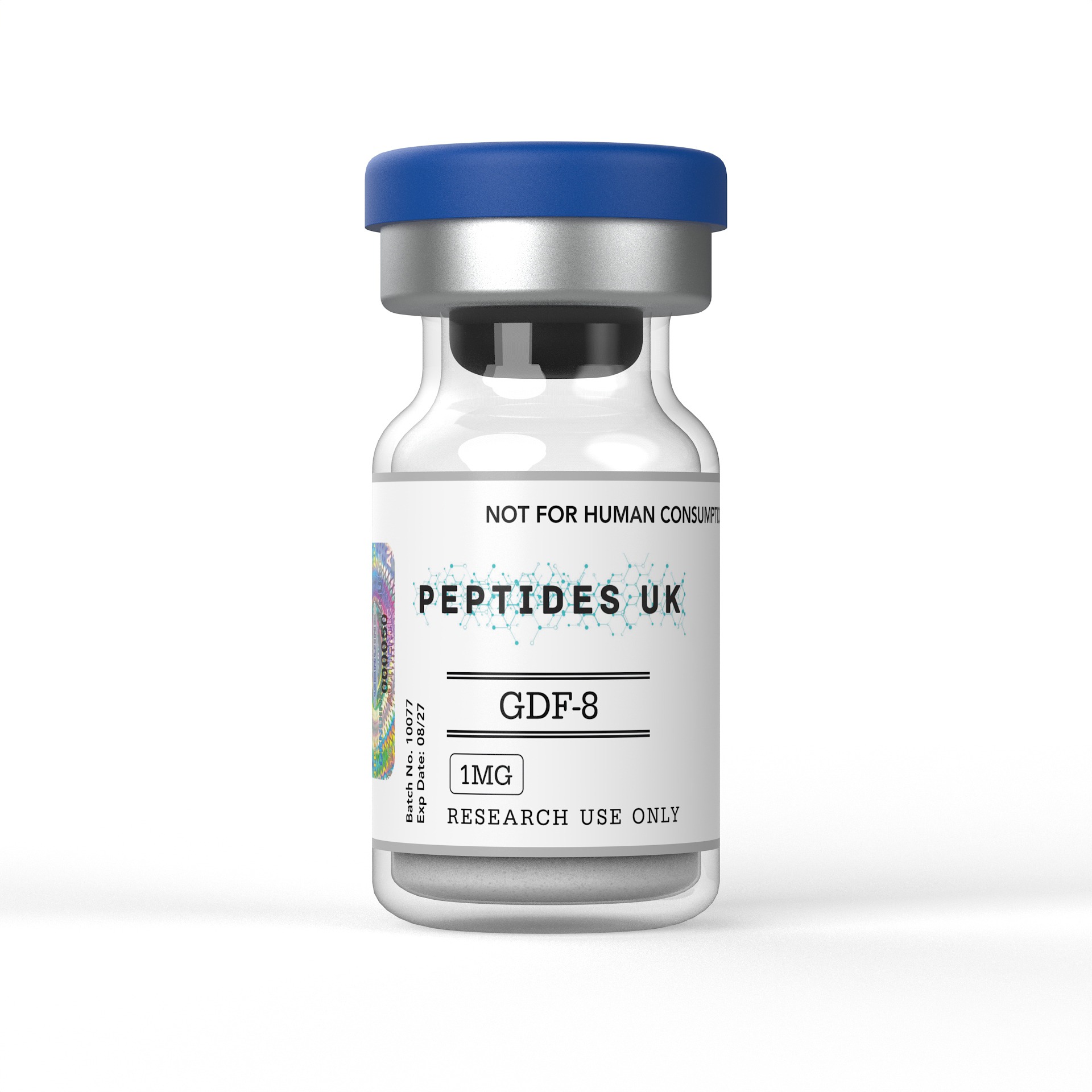
GDF-8 — Growth Differentiation Factor 8, also known as Myostatin — is one of the most extensively characterised negative regulators of skeletal muscle mass in the pre-clinical research literature, a TGF-β superfamily member produced and secreted predominantly by skeletal muscle that acts through Activin receptor type IIB (ActRIIB) and ALK4/ALK5 signalling to suppress satellite cell activation, inhibit myoblast proliferation, and constrain muscle fibre hypertrophy through Smad2/3-dependent transcriptional programmes. Research institutions and laboratories across the EU can source verified, research-grade GDF-8 in Europe with fast dispatch and full batch documentation included.
✅ ≥99% Purity — HPLC & Mass Spectrometry Verified
✅ Batch-Specific Certificate of Analysis (CoA) Included
✅ Sterile Lyophilised Powder | GMP Manufactured
✅ Fast Dispatch Across EU & Europe | EU Peptides Stock
GDF-8 — Growth Differentiation Factor 8, universally known as Myostatin — is an endogenous TGF-β superfamily cytokine encoded by the MSTN gene, produced predominantly in skeletal muscle as a prepropeptide that undergoes proteolytic processing to yield a mature homodimeric active form. It is one of the most potent and best-characterised endogenous inhibitors of skeletal muscle growth in the mammalian research literature — functioning as a negative feedback regulator that constrains muscle fibre hypertrophy, limits satellite cell activation and myoblast proliferation, and suppresses the anabolic transcriptional programmes driving muscle protein synthesis.
GDF-8 signals through a well-characterised receptor complex — binding with high affinity to Activin receptor type IIB (ActRIIB) and subsequently recruiting and transphosphorylating the type I receptor kinases ALK4 or ALK5, which propagate downstream signalling through canonical Smad2/3 phosphorylation and nuclear translocation. Non-canonical signalling through MAPK and PI3K/Akt pathways has also been characterised. The fully elaborated receptor signalling biology distinguishes GDF-8 from many research peptides with incompletely characterised receptor systems — making it an exceptionally well-mechanistically-grounded research tool for muscle biology, TGF-β pathway, and Smad signalling investigations across EU laboratories.
GDF-8 circulates in plasma in a latent complex — non-covalently associated with its own propeptide (the latency-associated peptide, LAP) — and is further regulated by extracellular inhibitors including Follistatin, FSTL3, and GASP-1/2, which sequester the mature dimer and modulate bioavailable GDF-8 levels. This multi-layered extracellular regulation system is itself an active research area in EU muscle biology and fibrosis research.
In controlled laboratory and pre-clinical settings, GDF-8 is studied across the following research applications:
Skeletal Muscle Atrophy and Negative Regulation Research — GDF-8’s foundational research application is as the primary endogenous suppressor of skeletal muscle mass — with loss-of-function studies in cattle, mice, dogs, and humans demonstrating dramatic muscle hypertrophy upon GDF-8 deficiency, and gain-of-function paradigms establishing its sufficiency for muscle atrophy induction. EU research uses recombinant GDF-8 to model muscle wasting biology, induce controlled atrophy in myotube and primary myoblast cultures, characterise the dose-response relationship for Smad2/3-driven atrophic transcription, and establish reference conditions against which myostatin inhibitor compounds are benchmarked.
Satellite Cell and Myoblast Biology Research — GDF-8 suppresses skeletal muscle satellite cell activation and inhibits myoblast proliferation and differentiation — reducing MyoD and myogenin expression, suppressing myotube formation, and constraining the regenerative capacity of muscle tissue following injury. Research uses GDF-8 treatment in primary satellite cell cultures and C2C12 myoblast models to characterise the molecular mechanisms by which myostatin suppresses myogenic regulatory factor activity and the downstream transcriptional programmes governing muscle fibre formation.
TGF-β Superfamily Signalling Research — GDF-8’s fully characterised ActRIIB → ALK4/ALK5 → Smad2/3 signalling pathway makes it a primary research tool for TGF-β superfamily pathway investigations — used to activate canonical Smad2/3 phosphorylation cascades, study Smad-dependent transcriptional programmes in muscle and non-muscle cell types, characterise type I and type II receptor interaction dynamics, and dissect co-Smad (Smad4) dependency in GDF-8-driven transcriptional responses. Its well-characterised signalling distinguishes it from TGF-β superfamily members with less defined receptor specificities.
Muscle Fibrosis Research — GDF-8 promotes fibrotic biology in skeletal muscle — driving TGF-β-related fibroblast activation, extracellular matrix deposition, and pro-fibrotic gene expression programmes through Smad2/3-dependent mechanisms. Research uses GDF-8 to model muscle fibrosis biology relevant to muscular dystrophy, ageing-associated fibrotic remodelling, and injury-repair paradigms where excessive fibrotic deposition impairs functional recovery.
Metabolic Biology Research — GDF-8 influences metabolic biology beyond skeletal muscle — including adipogenesis regulation, glucose metabolism modulation, and interactions with insulin signalling pathways. Research has characterised GDF-8’s effects on adipocyte differentiation, adipose tissue biology, and systemic metabolic parameters — making it relevant to obesity, type 2 diabetes, and metabolic syndrome research programmes beyond its primary musculoskeletal applications.
Myostatin Inhibitor and Antagonist Research — A major research application for recombinant GDF-8 is as a reference agonist for benchmarking myostatin inhibitor compounds — including anti-myostatin antibodies, ActRIIB-Fc decoy receptor constructs, follistatin-based inhibitors, small molecule ActRIIB antagonists, and propeptide-based inhibition approaches. Establishing consistent GDF-8-induced Smad2/3 activation as a reference condition is essential for characterising inhibitor potency, selectivity, and mechanism in EU drug discovery and therapeutic biology research.
Cardiac and Non-Skeletal Muscle Biology Research — GDF-8 is expressed in cardiac muscle and has characterised biology in cardiac hypertrophy modulation, cardiomyocyte survival signalling, and cardiac fibrosis. Research has examined GDF-8’s role in regulating cardiomyocyte size, cardiac remodelling responses to pressure overload, and the interplay between myostatin signalling and cardiac hypertrophic pathways — distinguishing the cardiac biology of GDF-8 from its primary skeletal muscle characterisation.
Bone and Connective Tissue Research — GDF-8 has characterised inhibitory effects on osteoblast differentiation and bone formation — with research examining myostatin’s negative regulation of bone mass through direct effects on osteoblast biology and indirect effects through muscle-bone crosstalk mechanisms. EU research programmes investigating muscle-bone interactions, sarcopenia-osteoporosis co-morbidity, and TGF-β superfamily bone biology use GDF-8 to characterise the musculoskeletal crosstalk mechanisms governing concurrent muscle and bone mass regulation.
Foundational Muscle Biology Findings — Pre-clinical research has consistently documented GDF-8’s role as the primary endogenous muscle mass suppressor across species — with MSTN knockout models producing double-muscled phenotypes in cattle and mice, naturally occurring loss-of-function mutations in whippets and humans confirming translational relevance, and recombinant GDF-8 treatment models producing consistent, dose-dependent Smad2/3-dependent atrophic biology across primary myoblast and C2C12 in vitro systems. The cross-species conservation of GDF-8 biology and its defined receptor pharmacology make it one of the most mechanistically robust research cytokines in the EU muscle biology research toolkit.
Therapeutic Target Research — GDF-8 has been validated as a therapeutic target in muscular dystrophy, sarcopenia, cachexia, and muscle wasting disease research — with multiple inhibitor modalities (antibodies, ActRIIB-Fc, follistatin) demonstrating muscle mass restoration in pre-clinical disease models. EU research programmes use recombinant GDF-8 to characterise inhibitor candidate biology, establish dose-response inhibition benchmarks, and study the selectivity profiles of ActRIIB-targeting compounds against the broader TGF-β superfamily ligand space.
Metabolic and Multi-Tissue Research Context — Research has extended GDF-8’s characterised biology beyond skeletal muscle to adipose tissue, bone, cardiac muscle, and systemic metabolic regulation — establishing it as a pleiotropic endocrine regulator with biology relevant to metabolic disease, musculoskeletal ageing, and cardiovascular biology research programmes in addition to its primary muscle mass regulation applications.
| Feature | GDF-8 (Myostatin) |
|---|---|
| Protein Family | TGF-β Superfamily — GDF Subfamily |
| Gene | MSTN |
| Receptor | ActRIIB (primary) → ALK4 / ALK5 (type I) |
| Downstream Signalling | Canonical Smad2/3 phosphorylation + nuclear translocation; non-canonical MAPK, PI3K/Akt |
| Primary Biology | Skeletal muscle mass negative regulation — atrophy induction, satellite cell suppression |
| Latency Regulation | LAP propeptide complex; extracellular inhibitors: Follistatin, FSTL3, GASP-1/2 |
| Muscle Biology | Inhibits satellite cell activation, myoblast proliferation, myogenin/MyoD expression |
| Fibrosis | Pro-fibrotic — Smad2/3-driven ECM deposition |
| Metabolic Biology | Adipogenesis modulation, glucose metabolism, insulin signalling interactions |
| Cardiac Biology | Cardiomyocyte regulation, cardiac hypertrophy modulation, cardiac fibrosis |
| Bone Biology | Osteoblast inhibition — negative bone mass regulation |
| Research Utility | Agonist reference for myostatin inhibitor benchmarking; TGF-β pathway activation tool |
| Receptor Characterisation | Fully characterised — ActRIIB/ALK4/ALK5/Smad2/3 pathway |
| Species Conservation | High cross-species conservation — rodent, canine, bovine, human loss-of-function phenotypes documented |
| Parameter | Specification |
|---|---|
| Full Name | GDF-8 / Growth Differentiation Factor 8 / Myostatin |
| Also Known As | Myostatin / MSTN / GDF8 |
| Protein Family | TGF-β Superfamily — GDF Subfamily |
| Type | Recombinant Human GDF-8 Mature Homodimer — Research Grade |
| Molecular Weight | ~25 kDa (mature homodimer, non-glycosylated) |
| Expressed Region | Mature domain — C-terminal active dimer |
| Receptor | ActRIIB → ALK4/ALK5 → Smad2/3 |
| Purity | ≥99% HPLC & MS Verified |
| Endotoxin | <1.0 EU/µg |
| Form | Sterile Lyophilised Powder |
| Formulation | Carrier protein-free or BSA-stabilised — see CoA for batch specification |
| Solubility | Sterile PBS or 4mM HCl (acidic reconstitution for carrier-free preparations); dilute to working concentration in appropriate assay buffer |
| Storage (Powder) | -20°C or -80°C (recommended for long-term), protect from moisture and repeated freeze-thaw |
| Storage (Reconstituted) | -80°C single-use aliquots — avoid freeze-thaw cycling |
| Working Concentration | Typically 1–100 ng/mL in cell-based Smad2/3 activation assays — optimise per cell system |
| Vial Size | 10µg |
GDF-8 (Myostatin) mature homodimer requires careful reconstitution to maintain biological activity. For carrier-free preparations, reconstitute by adding sterile 4mM HCl to the lyophilised powder to a stock concentration of 100 µg/mL — acidic reconstitution prevents aggregation of the cystine-knot domain characteristic of TGF-β superfamily dimers. Further dilute to working concentrations in sterile PBS or serum-containing assay buffer immediately before use. For BSA-stabilised preparations, reconstitution in sterile PBS at the concentration specified on the batch CoA is appropriate.
GDF-8 contains the conserved TGF-β superfamily cystine-knot structural motif — disulphide-dependent dimer assembly is essential for receptor-binding activity. Do not use reducing agents (DTT, BME) in reconstitution or storage buffers — reducing conditions will disrupt the cystine-knot and abolish biological activity. Avoid prolonged storage of reconstituted material — prepare single-use working aliquots at -80°C and discard after single use. Repeated freeze-thaw cycles cause progressive aggregation and activity loss. Protein-low-binding tubes and pipette tips are recommended for all handling to minimise adsorptive losses at low working concentrations.
Every GDF-8 order dispatched across the EU and Europe includes:
✅ Batch-Specific Certificate of Analysis (CoA)
✅ HPLC Chromatogram
✅ Mass Spectrometry Confirmation — full sequence and molecular weight verification
✅ Endotoxin Testing Report (<1.0 EU/µg)
✅ Biological Activity Report — ED50 in Smad2/3 phosphorylation or myoblast differentiation inhibition assay
✅ Reconstitution Protocol
✅ Technical Research Support
Yes — research-grade recombinant GDF-8 is available to researchers and institutions across the EU and Europe with fast dispatch and full batch documentation included. Supplied strictly for laboratory research purposes only.
GDF-8 and Myostatin are the same protein — GDF-8 is the systematic nomenclature designation (Growth Differentiation Factor 8) and Myostatin is the functional name coined following the characterisation of the double-muscled phenotype in MSTN knockout mice. Both names refer to the same TGF-β superfamily ligand encoded by the MSTN gene.
GDF-8 binds with high affinity to Activin receptor type IIB (ActRIIB) as its primary type II receptor, which recruits and transphosphorylates the type I receptor kinases ALK4 or ALK5. Activated ALK4/ALK5 phosphorylates the receptor-regulated Smads, Smad2 and Smad3, which form complexes with co-Smad Smad4 and translocate to the nucleus to drive GDF-8’s atrophic transcriptional programme. This fully characterised receptor pharmacology makes GDF-8 one of the most mechanistically well-defined TGF-β superfamily ligands available for EU research.
Carrier-free GDF-8 preparations should be reconstituted in sterile 4mM HCl at a stock concentration of 100 µg/mL — acidic reconstitution is critical to prevent aggregation of the cystine-knot domain. Working concentrations are prepared by diluting the acidic stock into sterile PBS or serum-containing assay buffer immediately before use. Do not use reducing agents at any stage — the disulphide-dependent cystine-knot is essential for receptor binding activity. See the batch-specific CoA and included reconstitution protocol for precise instructions.
Vehicle control (equivalent volume 4mM HCl or PBS diluted to matched concentration) is required to distinguish GDF-8-specific from vehicle-attributable effects. Positive controls for Smad2/3 phosphorylation (e.g., TGF-β1) allow cross-validation of pathway activation. For myostatin inhibitor studies — individual inhibitor-alone controls and GDF-8 alone at the reference concentration are both essential for characterising inhibitor potency and establishing inhibition benchmark conditions.
Typical working concentrations for GDF-8-induced Smad2/3 phosphorylation in cell-based assays range from 1–100 ng/mL — with ED50 values in the 1–10 ng/mL range in responsive cell lines including C2C12 myoblasts and primary human myotubes. Optimal working concentration should be determined empirically for each cell system and endpoint — the batch-specific biological activity report provides the ED50 characterisation for each GDF-8 lot dispatched to EU laboratories.
≥99% purity by HPLC and full sequence mass spectrometry verification is essential — truncation fragments, misfolded monomer contaminants, and aggregated inactive dimer species would produce confounded dose-response data and underestimate true GDF-8 potency in Smad2/3 activation assays. Endotoxin levels below 1.0 EU/µg are required to exclude LPS-attributable NF-κB-driven confounds in cell-based assays — GDF-8 in this product line is independently tested for both purity and endotoxin before dispatch to European research laboratories.
GDF-8 (Myostatin) is supplied exclusively for legitimate scientific research purposes conducted within licensed laboratory environments across the EU and Europe. This product is not intended for human consumption, self-administration, or any therapeutic application. It must be handled by qualified researchers in compliance with applicable EU regulations and institutional biosafety guidelines. By purchasing, you confirm that this compound will be used solely for approved in vitro or pre-clinical research purposes.

WhatsApp us
Receive News
