PRODUCTS SOLD ON PEPTIDESLABEU.COM ARE FOR RESEARCH PURPOSES ONLY AND ARE NOT FOR HUMAN OR VETERINARY USE.
€102.50
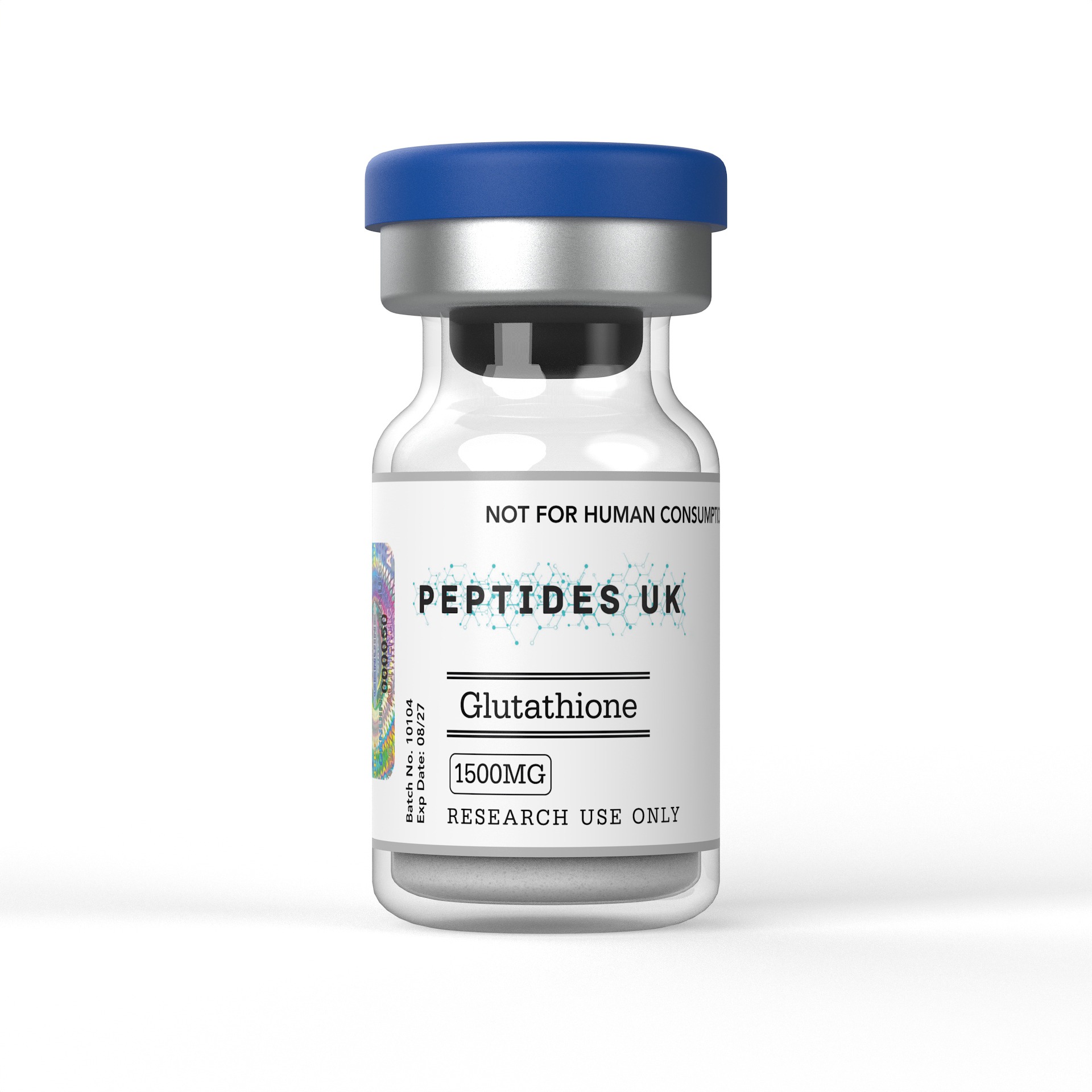
Glutathione EU – Buy Online | In Stock & Ready to Ship
Buy Glutathione in Europe with fast shipping and guaranteed ≥99% purity — verified with COA and HPLC documentation. A trusted choice for research supplies EU teams rely on, with no customs delays or lengthy international wait times. Whether you’re searching for Glutathione Europe suppliers, looking to buy Glutathione in the EU, or sourcing research supplies Europe-wide, we have you covered. Research teams across the EU can count on consistent stock, rapid fulfilment and full batch documentation every time.
For research use only. Not intended for human or veterinary use.

Glutathione (GSH) is the most abundant endogenous antioxidant tripeptide in mammalian cells, available to buy in Europe for laboratory research into oxidative stress biology, redox signalling, cellular detoxification mechanisms, immune function, and the central role of the glutathione system in maintaining cellular homeostasis.
Laboratories and research institutions across the EU can order verified, research-grade Glutathione with fast international dispatch to Europe, full batch documentation, and ≥99% purity confirmed by HPLC and Mass Spectrometry.
✅ ≥99% Purity — HPLC & Mass Spectrometry Verified
✅ Batch-Specific Certificate of Analysis (CoA)
✅ Sterile Lyophilised Powder | GMP Manufactured
✅ Fast Dispatch to EU & Europe | Tracked Shipping
Glutathione (GSH) is a naturally occurring tripeptide — sequence Gamma-Glutamyl-Cysteinyl-Glycine — and the most abundant low molecular weight thiol compound in mammalian cells, present at millimolar concentrations in most cell types. It is synthesised intracellularly through a two-step ATP-dependent enzymatic pathway — first by gamma-glutamylcysteine synthetase combining glutamate and cysteine, then by glutathione synthetase adding glycine — making it the primary endogenous antioxidant and redox buffer that cells produce rather than obtain from external sources.
Glutathione’s central biological importance derives from the reactive thiol group on its cysteine residue — the functional moiety through which it donates electrons to neutralise reactive oxygen species (ROS), reactive nitrogen species (RNS), and electrophilic compounds, converting itself in the process to glutathione disulphide (GSSG). The GSH/GSSG ratio — maintained at high GSH predominance under normal conditions by NADPH-dependent glutathione reductase — serves as one of the primary indicators of cellular redox status and oxidative stress burden in research settings.
Beyond its antioxidant function, glutathione is a research compound of fundamental importance across multiple biological systems — participating in xenobiotic detoxification through glutathione S-transferase conjugation reactions, regulating protein function through reversible S-glutathionylation of cysteine residues, supporting immune cell function and proliferation, maintaining the thiol redox state of proteins critical for enzyme activity and receptor signalling, and acting as a reservoir and transport form for cysteine in inter-organ amino acid metabolism. This extraordinary breadth of biological roles — spanning redox biology, detoxification chemistry, immune regulation, and post-translational protein modification — has made glutathione one of the most extensively studied molecules in cell biology, and research-grade glutathione one of the most widely used biochemical research tools in European laboratories.
In laboratory settings, glutathione is studied across an exceptionally broad range of redox biology, cellular biochemistry, and disease model research applications. EU and European researchers working with glutathione typically focus on:
All research applications are for in vitro and pre-clinical use only.
Glutathione has one of the largest and most established research literatures of any biological molecule — spanning over a century of biochemical investigation and encompassing tens of thousands of peer-reviewed studies across virtually every area of cell biology and disease research.
Oxidative stress and redox biology: The foundational biochemistry of glutathione as the primary intracellular antioxidant buffer is comprehensively established — with studies characterising its reaction kinetics with ROS, the enzymatic systems maintaining GSH/GSSG homeostasis, and the consequences of GSH depletion for cellular oxidative stress across multiple cell types and model systems. The GSH/GSSG ratio is universally used as the reference indicator of cellular redox status in oxidative stress research.
S-glutathionylation and redox signalling: Research has characterised reversible protein S-glutathionylation as a major post-translational regulatory mechanism — with studies identifying hundreds of S-glutathionylation targets including metabolic enzymes, transcription factors, and signalling proteins. S-glutathionylation of specific cysteines has been documented to regulate the activity of key proteins including protein tyrosine phosphatases, NF-κB, Ras, and actin — establishing glutathione as a direct participant in redox signal transduction beyond its antioxidant role.
Ferroptosis research: The identification of GPX4 as the central ferroptosis suppressor — and glutathione as its obligate co-factor — has made glutathione central to the rapidly expanding ferroptosis research field. Studies have established that GSH depletion drives ferroptotic cell death through GPX4 inactivation and phospholipid peroxide accumulation, and glutathione is used as the reference modulator of ferroptotic sensitivity in cancer, neurodegeneration, and ischaemia research.
Immune regulation: Studies have documented that T lymphocyte activation and proliferation require adequate intracellular GSH levels — with GSH depletion impairing IL-2 production, T cell receptor signalling, and cytokine-driven immune responses. Research examining antioxidant requirements for immune function has established glutathione as the primary redox factor influencing lymphocyte biology.
Cancer and chemotherapy resistance: A large body of cancer biology literature has characterised the role of elevated GSH in cancer cell resistance to oxidative stress-inducing treatments — with studies documenting correlations between cancer cell GSH levels and sensitivity to platinum compounds, alkylating agents, and other chemotherapeutics. This literature has established glutathione modulation as a research strategy for studying and potentially overcoming redox-based chemotherapy resistance.
Neurodegeneration research: Studies across multiple neurodegenerative disease models have consistently documented reduced GSH levels in vulnerable neuronal populations — with research in Parkinson’s disease models particularly well-characterised, showing dopaminergic neuron GSH depletion preceding mitochondrial dysfunction and oxidative neuronal injury. Glutathione is used as the primary redox modulator in studies examining the contribution of GSH decline to neurodegenerative vulnerability.
Hepatoprotection research: The extensive hepatology literature on glutathione has characterised the consequences of hepatic GSH depletion — as produced by acetaminophen overdose, alcohol metabolism, and other hepatotoxic challenges — and the protective effects of GSH restoration on liver cell survival and function. This literature has established glutathione as the central molecule in hepatic detoxification and cytoprotection research.
| Compound | Type | Primary Mechanism | Key Research Application |
|---|---|---|---|
| Glutathione (GSH) | Endogenous tripeptide antioxidant | Thiol-mediated ROS scavenging, S-glutathionylation, GPX4 co-factor | Redox biology, oxidative stress, ferroptosis, detoxification |
| N-Acetyl Cysteine (NAC) | GSH precursor | Cysteine supplementation for GSH synthesis | GSH precursor research, oxidative stress models |
| Oxidised Glutathione (GSSG) | Glutathione disulphide | GSH/GSSG ratio modulation | Redox status research, glutathione reductase studies |
| GHK-Cu | Copper-binding tripeptide | Gene regulation, antioxidant enzyme upregulation | Wound healing, skin biology, tissue repair |
| Thioredoxin | Redox protein | Thiol-disulphide exchange, ROS reduction | Complementary redox system, protein thiol regulation |
| Lipoic Acid | Dithiol antioxidant | ROS scavenging, GSH regeneration | Mitochondrial antioxidant research, GSH recycling |
Every order of research-grade Glutathione dispatched to EU and European research institutions includes:
Yes. We supply research-grade Glutathione with fast tracked international dispatch to all EU member states and wider European destinations including Germany, France, Netherlands, Spain, Italy, Poland, and beyond. Packaging is designed to maintain compound integrity throughout transit and all orders include full batch documentation. Glutathione is supplied strictly for laboratory research use only.
Reduced glutathione (GSH) is the biologically active thiol form — containing a free cysteine thiol group that donates electrons to neutralise ROS and electrophilic compounds. Oxidised glutathione (GSSG) is the disulphide-bonded dimer formed when two GSH molecules are oxidised — regenerated back to GSH by NADPH-dependent glutathione reductase. Under normal physiological conditions, the vast majority of intracellular glutathione exists as GSH — with GSH/GSSG ratios typically exceeding 100:1 in healthy cells. The GSH/GSSG ratio is the primary research indicator of cellular redox status — with declining ratios indicating increased oxidative stress burden. Research-grade glutathione is supplied in the reduced GSH form as the biologically active research tool.
Glutathione Peroxidase 4 (GPX4) is the only mammalian enzyme capable of reducing phospholipid hydroperoxides — oxidised lipid species that accumulate in cell membranes and drive ferroptotic cell death when not neutralised. GPX4 uses glutathione as its obligate electron donor in this reduction reaction — consuming two GSH molecules per catalytic cycle. When cellular GSH levels are depleted — either by biosynthesis inhibition or through direct GSH scavenging — GPX4 activity is compromised, phospholipid hydroperoxides accumulate, and ferroptosis is triggered. This makes glutathione a direct gate-keeper of ferroptotic cell death, and its modulation the central experimental strategy in the rapidly growing ferroptosis research field — which has major implications for cancer biology, neurodegeneration, and ischaemia-reperfusion injury research.
Nrf2 (Nuclear factor erythroid 2-related factor 2) is the master transcriptional regulator of cellular antioxidant responses — activated by oxidative stress and electrophilic compounds to drive expression of antioxidant and detoxification genes including those encoding glutathione biosynthesis enzymes (GCLC, GCLM, GSS), glutathione peroxidases, glutathione S-transferases, and thioredoxin system components. Glutathione biosynthesis is therefore directly regulated by Nrf2 — making the GSH system a primary downstream effector of Nrf2-mediated cytoprotection. Research using exogenous glutathione in the context of Nrf2 biology enables dissection of the GSH-dependent versus GSH-independent components of Nrf2-mediated antioxidant protection.
Protein S-glutathionylation is a reversible post-translational modification in which a glutathione molecule forms a mixed disulphide bond with a reactive cysteine residue on a target protein — occurring under conditions of oxidative stress or nitrosative stress. This modification protects cysteine residues from irreversible oxidation and simultaneously alters protein activity — functioning as a redox switch that links oxidative conditions to changes in enzyme function, receptor signalling, and transcription factor activity. Hundreds of S-glutathionylation targets have been identified, and this post-translational modification is now recognised as a major mechanism of redox signal transduction. Glutathione is used in research examining S-glutathionylation patterns, developing tools to detect and quantify this modification, and characterising its functional consequences for specific protein targets.
Intracellular glutathione levels decline with age due to reduced expression of biosynthetic enzymes — particularly the rate-limiting GCLC subunit of gamma-glutamylcysteine synthetase — alongside increased oxidative burden that accelerates GSH consumption. This age-associated GSH decline has been documented in multiple tissues including brain, liver, and immune cells, and is associated with reduced antioxidant capacity, increased oxidative damage accumulation, and impaired cellular function. In disease contexts, conditions including neurodegeneration, chronic inflammation, diabetes, and HIV infection are associated with reduced systemic and tissue glutathione levels — making glutathione a research biomarker of cellular health and a modulation target for studying the consequences of antioxidant capacity decline.
Glutathione is readily soluble in aqueous buffers at neutral to mildly acidic pH. Dissolve in sterile water, PBS, or an appropriate laboratory buffer at your required concentration — working on ice to minimise oxidation of the reactive thiol group. Prepare fresh working solutions where possible, as dissolved GSH is susceptible to air oxidation over time. For experiments where oxidation stability is critical, prepare solutions under inert atmosphere or add a small amount of DTT or other reducing agent to the buffer. Store undissolved powder at -20°C protected from moisture and light, and aliquot reconstituted solutions at -80°C for short-term storage. Standard biochemical handling protocols apply.
Orders are dispatched promptly via tracked international courier. Delivery to EU and European destinations typically takes 3–7 working days depending on location, with packaging designed to protect compound stability throughout transit.
| Parameter | Detail |
|---|---|
| Full Name | Glutathione (Reduced) — GSH |
| Sequence | Gamma-Glutamyl-Cysteinyl-Glycine |
| Type | Endogenous Antioxidant Tripeptide |
| Molecular Weight | 307.32 g/mol |
| Primary Mechanism | Thiol-mediated ROS scavenging, S-glutathionylation, GPX4 co-factor |
| Primary Research Interest | Redox biology, oxidative stress, ferroptosis, detoxification, immune function |
| Purity | ≥99% |
| Verification | HPLC & Mass Spectrometry |
| Form | Sterile Lyophilised Powder |
| Solubility | Sterile water or aqueous buffer — prepare fresh, handle on ice |
| Storage | -20°C, protected from light and moisture |
| Intended Use | Research use only |
Glutathione is supplied exclusively for legitimate scientific research conducted within licensed laboratory environments. This product is not approved for human consumption, self-administration, or any therapeutic, clinical, or veterinary application. It must be handled solely by qualified researchers in compliance with applicable EU regulations, national legislation, and institutional ethics guidelines. By purchasing, you confirm this compound will be used exclusively for approved in vitro or pre-clinical research purposes.

WhatsApp us
Receive News
