PRODUCTS SOLD ON PEPTIDESLABEU.COM ARE FOR RESEARCH PURPOSES ONLY AND ARE NOT FOR HUMAN OR VETERINARY USE.
€49.50
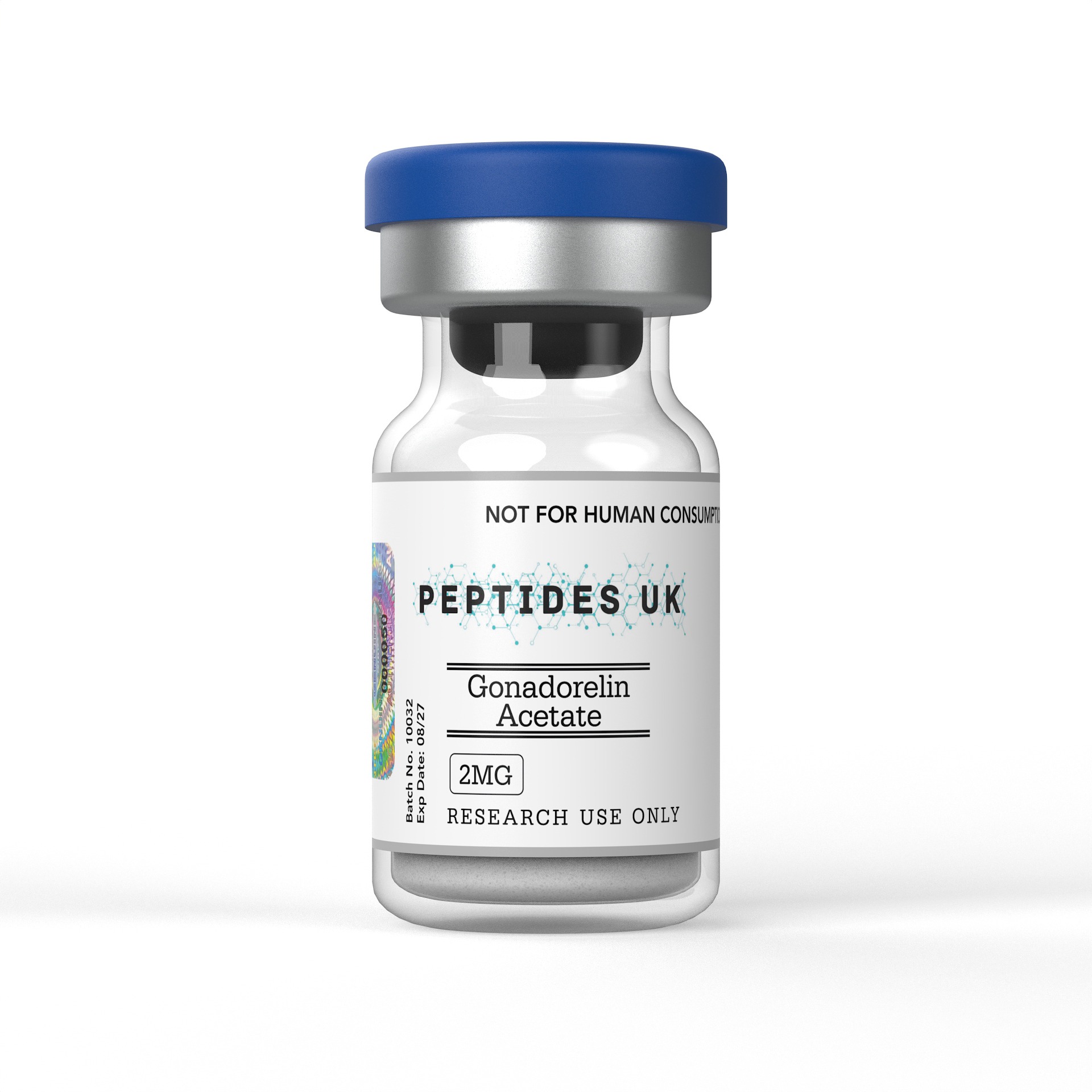
Gonadorelin Acetate EU – Buy Online | In Stock & Ready to Ship
Buy Gonadorelin Acetate in Europe with fast shipping and guaranteed ≥99% purity — verified with COA and HPLC documentation. A trusted choice for peptides EU research teams rely on, with no customs delays or lengthy international wait times. Whether you’re searching for Gonadorelin Acetate Europe suppliers, looking to buy Gonadorelin Acetate in the EU, or sourcing peptides Europe-wide, we have you covered. Research teams across the EU can count on consistent stock, rapid fulfilment and full batch documentation every time.
For research use only. Not intended for human or veterinary use.



Gonadorelin Acetate — the acetate salt of synthetic Gonadotropin-Releasing Hormone (GnRH I; also designated LHRH), sequence pGlu-His-Trp-Ser-Tyr-Gly-Leu-Arg-Pro-Gly-NH₂, a decapeptide structurally identical to the endogenous hypothalamic neurohormone first characterised by Nobel Laureates Andrew V. Schally and Roger Guillemin in 1971 — is the native GnRH reference compound for EU research into hypothalamic-pituitary-gonadal (HPG) axis biology, pituitary gonadotroph pharmacology, GnRH receptor signalling, pulse frequency-dependent differential gonadotropin regulation, and the extrapituitary GnRH receptor biology characterised across reproductive, placental, and tumour tissue systems. Gonadorelin Acetate’s defining pharmacological property — shared with the endogenous hormone — is its absolute dependence on pulsatile rather than continuous administration to maintain gonadotropin secretion, making it the indispensable reference agonist for studying GnRH receptor desensitisation, downregulation, and the signal frequency decoding mechanisms that govern differential LH and FSH synthesis across the full spectrum of GnRH pulse frequency research. Research institutions and laboratories across the EU can source verified, research-grade Gonadorelin Acetate in Europe with fast dispatch and full batch documentation included.
✅ ≥99% Purity — HPLC & Mass Spectrometry Verified
✅ Pyroglutamate N-Terminus & C-Terminal Amide Confirmed — Batch-Specific CoA
✅ Sterile Lyophilised Powder | GMP Manufactured
✅ Fast Dispatch Across EU & Europe | EU Peptides Stock
Gonadorelin Acetate is the acetate salt of synthetic GnRH I — the primary mammalian gonadotropin-releasing hormone encoded by the GNRH1 gene on chromosome 8 — prepared by solid-phase peptide synthesis to produce a sequence identical to the endogenous decapeptide released pulsatilely from hypothalamic GnRH neurons into the hypophyseal portal circulation. Two structural features are essential to biological activity and are confirmed by batch mass spectrometry for every research-grade lot: the N-terminal pyroglutamic acid (pGlu) residue — a cyclised derivative of glutamine formed by post-translational modification that protects against aminopeptidase degradation — and the C-terminal glycinamide (Gly-NH₂) amide that is the primary structural determinant of GnRH receptor binding affinity.
GnRH is synthesised as an 89-amino acid preprohormone in approximately 1,000–1,500 GnRH neurons scattered through the medial preoptic area and arcuate nucleus of the hypothalamus — neurons that are remarkable for originating in the embryonic nasal olfactory placode and migrating into the brain along the olfactory and vomeronasal nerves during fetal development (weeks 9–12 in humans), a unique developmental trajectory that explains the anosmia co-presenting with GnRH deficiency in Kallmann syndrome. These neurons project axons to the median eminence, where GnRH is secreted in discrete pulses into the fenestrated capillaries of the hypophyseal portal circulation — the low-flow portal vascular system transporting hypothalamic releasing hormones directly to the anterior pituitary without systemic dilution.
GnRH signals through GnRHR — a seven-transmembrane Gq/11-coupled GPCR on pituitary gonadotroph cell surfaces — with the structurally distinctive property that the type I mammalian GnRHR uniquely lacks the intracellular C-terminal tail present in virtually all other seven-transmembrane receptors. This structural absence prevents the rapid homologous desensitisation that normally terminates GPCR signalling through phosphorylation, β-arrestin recruitment, and receptor internalisation — giving the GnRH receptor an inherently slow internalisation rate and making GnRHR signalling termination dependent on ligand dissociation and receptor downregulation through a distinct mechanism from most GPCRs. This unique receptor architecture is a direct driver of GnRH’s absolute requirement for pulsatile delivery: continuous receptor occupancy does not trigger rapid desensitisation through the classical arrestin pathway, but instead causes receptor downregulation and uncoupling through sustained Gq/11 activation and subsequent gonadotroph refractoriness.
GnRH I is one of over 20 structurally distinct GnRH variants identified across vertebrate species. In humans, GnRH II (His⁵-Trp⁷-Tyr⁸-GnRH) is expressed in brain, kidney, bone marrow, and reproductive tissues where it acts as a neuromodulator of sexual behaviour and exerts direct effects on endometrium, ovary, and placenta — a functionally distinct paralogue whose tissue distribution and receptor selectivity are active EU research areas.
GnRH Receptor Pharmacology and Signalling Research — Gonadorelin Acetate is the primary reference agonist for GnRHR pharmacology research — used to characterise receptor binding kinetics, agonist potency, signalling pathway activation, and receptor downregulation dynamics in pituitary gonadotroph cell lines (LβT2, αT3-1) and primary gonadotroph cultures. GnRHR activation by gonadorelin triggers Gq/11-mediated phospholipase C-β activation → PIP₂ hydrolysis → IP₃-driven Ca²⁺ release from ER stores + DAG-driven PKC activation → downstream phosphorylation of ERK1/2 and p38 MAPK → transcriptional activation of gonadotropin subunit genes (αGSU, LHβ, FSHβ). Non-canonical signalling through Gs and β-arrestin-independent ERK pathways has been characterised in specific gonadotroph contexts. The absence of the C-terminal tail in mammalian GnRHR I — and the mechanistic consequences for desensitisation kinetics and arrestin biology — is a primary research focus for GnRHR structural pharmacology investigations, with gonadorelin as the reference ligand for comparing signalling profiles across type I and type II GnRH receptors.
Pulse Frequency Decoding and Differential LH/FSH Biology Research — The most mechanistically distinctive and extensively researched dimension of GnRH biology is its pulse frequency-dependent differential regulation of LH and FSH synthesis — a phenomenon in which the same single receptor, activated by the same ligand, produces qualitatively different transcriptional outputs depending on how frequently it is stimulated. High GnRH pulse frequencies (approximately every 30 minutes, maximal Lhb gene stimulation) favour LHβ subunit gene expression, LH synthesis, and LH secretion — with Egr-1 transcription factor dynamics at the LHβ promoter providing a proposed molecular decoding mechanism at high frequency. Low GnRH pulse frequencies (approximately every 120 minutes, maximal Fshb gene stimulation) favour FSHβ subunit gene expression, FSH synthesis, and FSH secretion — with c-Fos/TGIF interplay at the FSHβ promoter as one proposed frequency-decoding mechanism at low frequency. The common αGSU gene is stimulated across all pulse frequencies with less stringent frequency dependence. EU research uses perfused pituitary cell preparations, microfluidic pulse delivery systems, and primary gonadotroph cultures to characterise these pulse frequency decoding mechanisms — using gonadorelin as the controlled-concentration pulsatile stimulus to dissect the ERK1/2 dynamics, gene regulatory factor cascades, and GnRHR expression changes underlying differential gonadotropin subunit gene regulation.
Pituitary Function Testing and Gonadotroph Reserve Research — Gonadorelin Acetate’s established pharmacodynamic profile as the native GnRH sequence makes it the reference compound for characterising pituitary gonadotroph functional reserve — used in research models to assess the LH and FSH secretory response of the gonadotroph population to a defined GnRH stimulus, to characterise gonadotroph sensitivity following manipulation of sex steroid feedback, and to investigate gonadotroph function following pituitary lesion, tumour, or surgical intervention paradigms. The LH response to a single bolus gonadorelin dose provides a readout of immediately releasable LH pool, while primed gonadorelin paradigms characterise the synthesisable gonadotropin reserve beyond the pre-formed pool.
GnRH Receptor Downregulation and Desensitisation Research — The transition from pulsatile gonadorelin-driven gonadotropin stimulation to continuous-exposure-driven gonadotropin suppression — the pharmacological duality exploited clinically by GnRH agonist analogues for medical castration — is mechanistically characterised using gonadorelin as the reference native agonist. Research uses controlled gonadorelin exposure paradigms (switching from pulsatile to continuous delivery in perfused pituitary preparations or in vivo) to study GnRHR downregulation kinetics, gonadotroph uncoupling from GnRH signalling, the time-course of LH and FSH suppression under continuous exposure, and the receptor-level molecular events mediating this switch. The unique absence of the C-terminal tail in mammalian GnRHR I — making it resistant to homologous desensitisation — means that GnRHR downregulation under continuous agonist exposure proceeds through distinct mechanisms from most other GPCRs, an area of active EU GPCR biology research.
Hypogonadotrophic Hypogonadism and HPG Axis Restoration Research — Gonadorelin Acetate is the pharmacological tool for studying HPG axis restoration in hypogonadotrophic hypogonadism (HH) research models — including both congenital HH (Kallmann syndrome, where GnRH neuron migration fails, and normosmic idiopathic HH, where GnRH secretion is absent or severely diminished) and functional HH (hypothalamic suppression in undernutrition, exercise-associated amenorrhoea, and hyperprolactinaemia). In the landmark rhesus monkey hypothalamic radiofrequency lesion model — the foundational experiment establishing the pulsatility requirement — pulsatile gonadorelin administration fully restored gonadotropin secretion while continuous delivery failed, directly establishing that pulsatility is an intrinsic requirement of the GnRH signalling system rather than a feature of hypothalamic neuron biology. EU research uses gonadorelin in analogous paradigms to characterise HPG axis restoration dynamics and gonadotroph recovery kinetics.
PCOS and Pulse Frequency Disorder Research — Polycystic ovary syndrome is characterised in part by abnormally rapid GnRH pulse frequency — producing a persistently elevated LH:FSH ratio, excess LH-driven ovarian androgen production, and the anovulatory dysfunction central to PCOS pathophysiology. Research uses gonadorelin in controlled-frequency pulsatile delivery paradigms to model the PCOS-associated high-frequency pulse state, to study the LH:FSH ratio changes produced by pulse frequency acceleration, and to investigate the neuroendocrine signalling mechanisms — including reduced progesterone negative feedback sensitivity at the hypothalamic level — that sustain the rapid pulse phenotype. Gonadorelin’s identity with the endogenous GnRH sequence makes it the appropriate tool for modelling physiological pulse frequency derangements rather than pharmacological GnRH analogue interventions.
Extrapituitary GnRHR Biology and Cancer Research — GnRH receptors are expressed in multiple extrapituitary tissues including breast, ovary, endometrium, placenta, and prostate — where GnRH signalling through extrapituitary GnRHR produces antiproliferative and antimetastatic effects mechanistically distinct from pituitary gonadotroph biology. In breast cancer and prostate cancer cell lines expressing GnRHR, gonadorelin activates antiproliferative signalling including growth factor receptor transactivation inhibition, MAPK pathway modulation, and apoptosis induction through mechanisms distinct from the Gq/11-PLC pathway predominating in gonadotrophs. Research uses gonadorelin to characterise extrapituitary GnRHR signalling biology, to study GnRHR-targeted anti-tumour biology in cells expressing the receptor, and to investigate the use of GnRH as a targeting vector for receptor-expressing cancer cells — an active EU oncology research area exploiting GnRHR expression as a selective tumour-targeting mechanism for cytotoxin delivery.
GnRH Neuron Developmental Biology and Kallmann Syndrome Research — GnRH neurons originate in the embryonic olfactory placode and migrate into the hypothalamus along olfactory and vomeronasal nerve pathways during fetal development — a unique developmental trajectory involving genes including FGFR1, FGF8, PROKR2, PROK2, SEMA3A, and ANOS1 (KAL1). Disruption of this migration produces Kallmann syndrome — the combination of anosmia and HH — with the anosmia reflecting the shared developmental pathway of GnRH neurons and olfactory axons. Research uses gonadorelin in conjunction with genetic Kallmann syndrome models to characterise GnRH neuron biology, to study the neuroendocrine consequences of incomplete GnRH neuron migration, and to investigate the HPG axis response to exogenous pulsatile GnRH stimulation in migration-deficient models where endogenous GnRH neuron function is absent.
KNDy Neuron and GnRH Pulse Generator Research — Upstream of GnRH neurons, the kisspeptin-neurokinin B-dynorphin (KNDy) neuron network of the arcuate nucleus functions as the GnRH pulse generator — with NKB driving synchronised kisspeptin release that activates GnRH neurons, and dynorphin providing the autocrine off-signal terminating each pulse. GnRH neurons do not express oestrogen receptor-α directly — sex steroid negative feedback is mediated indirectly through KNDy neuron regulation of the pulse generator. Research uses gonadorelin in GnRH neuron stimulation paradigms alongside KNDy pathway manipulation (kisspeptin, NKB, dynorphin receptor agonists and antagonists) to dissect the upstream pulse generator circuitry from the downstream GnRHR gonadotroph response — characterising each node of the HPG axis independently while using gonadorelin as the controlled stimulus at the GnRHR level.
Minipuberty and Developmental Neuroendocrinology Research — GnRH activity follows a characteristic lifecycle: elevated during fetal life, briefly suppressed post-birth by placental hormone withdrawal, reactivated for the first months of life in the minipuberty window (during which gonadotropins and sex steroids contribute to gonadal and reproductive tract development), quiescent throughout childhood, and reactivated at puberty onset. Research uses gonadorelin in developmental models to study the HPG axis responsiveness at different developmental stages, to characterise gonadotroph maturation and GnRHR expression across development, and to investigate the neuroendocrine mechanisms governing the minipuberty window and its relevance to gonadal differentiation.
Foundational Pulsatility Research — The landmark studies in GnRH-lesioned rhesus monkeys — in which continuous intravenous GnRH failed to maintain gonadotropin secretion while pulsatile delivery fully restored normal reproductive function — established the absolute pulsatility requirement as the defining feature of GnRH pharmacology, a principle subsequently confirmed across all vertebrate species examined. These experiments, conducted in the 1970s–80s by Ernst Knobil and colleagues, are among the most consequential experiments in reproductive endocrinology and directly explained why continuous GnRH agonist administration suppresses rather than stimulates the HPG axis — the pharmacological basis of GnRH agonist use in prostate cancer, endometriosis, and central precocious puberty.
Pulse Frequency Encoding Research — Controlled in vivo and in vitro studies systematically characterising LH and FSH secretory responses across a range of GnRH pulse frequencies have established that FSHβ gene expression is maximal at a pulse interval of approximately 120 minutes and that LHβ gene expression is maximal at a pulse interval of approximately 30 minutes — with GnRHR gene expression tracking more closely with the LHβ/αGSU pattern than with FSHβ, suggesting that the number of available receptors per pulse is itself a frequency-dependent variable contributing to differential gonadotropin regulation. The molecular basis of frequency decoding — involving transcription factor dynamics (Egr-1/Nab-2 at LHβ, c-Fos/TGIF at FSHβ), ERK1/2 phosphorylation-dephosphorylation kinetics, and MAPK phosphatase induction — remains an active area of EU gonadotroph biology research with gonadorelin as the primary tool.
Extrapituitary GnRHR and Antiproliferative Biology — Detection of functional GnRHR in breast, ovarian, endometrial, and prostate cancer cell lines has generated a substantial EU research literature characterising gonadorelin’s antiproliferative and antimetastatic effects in these systems — with the signalling pathway in tumour cells found to involve coupling to Gαi (rather than the Gq/11 predominating in gonadotrophs), producing distinct downstream consequences including inhibition of EGF receptor transactivation and growth factor-driven mitogenic signalling. These findings have motivated the investigation of GnRH conjugates as tumour-targeted delivery vehicles for cytotoxins.
| Feature | Gonadorelin Acetate |
|---|---|
| Sequence | pGlu-His-Trp-Ser-Tyr-Gly-Leu-Arg-Pro-Gly-NH₂ |
| N-Terminal | Pyroglutamic acid (pGlu) — aminopeptidase protection |
| C-Terminal | Glycinamide (Gly-NH₂) — essential for GnRHR binding |
| Gene | GNRH1 — chromosome 8p21-p11.2 |
| Also Known As | GnRH / GnRH I / LHRH / Gonadoliberin |
| Receptor | GnRHR (type I) — seven-transmembrane Gq/11 GPCR; lacks C-terminal tail |
| Intracellular Signalling | PLC-β → IP₃ (Ca²⁺) + DAG (PKC) → ERK1/2 + p38 MAPK + CaM kinase → gonadotropin subunit gene transcription |
| Primary Pituitary Biology | Pulsatile LH and FSH secretion from anterior pituitary gonadotrophs |
| Pulse Frequency Encoding | High frequency (every 30 min) → LH/LHβ; Low frequency (every 120 min) → FSH/FSHβ |
| Continuous Exposure Effect | GnRHR downregulation → gonadotropin suppression → sex steroid suppression |
| Primary Research Utility | GnRHR reference agonist; pulse frequency decoding; pituitary function; HPG axis biology |
| Extrapituitary GnRHR | Breast, ovary, endometrium, prostate, placenta — Gαi coupling; antiproliferative signalling |
| Receptor Structural Distinction | Type I mammalian GnRHR lacks C-terminal tail — no homologous desensitisation; no arrestin pathway |
| GnRH II | Distinct paralogue — His⁵-Trp⁷-Tyr⁸ — CNS neuromodulator + reproductive tissue biology |
| Clinical Context | Pulsatile pump delivery for HH; GnRH agonist analogues (leuprorelin, buserelin) derived by structural modification |
| Half-Life | 2–4 minutes (endogenous and synthetic) — plasma peptidase degradation |
| Nobel Prize Connection | Structure identified by Schally (1971) — Nobel Prize in Physiology or Medicine 1977 |
| Parameter | Specification |
|---|---|
| Full Name | Gonadorelin Acetate / GnRH Acetate / LHRH Acetate |
| Also Known As | GnRH / GnRH I / LHRH / Gonadoliberin / Gonadorelin |
| Sequence | pGlu-His-Trp-Ser-Tyr-Gly-Leu-Arg-Pro-Gly-NH₂ |
| Molecular Formula | C₅₅H₇₅N₁₇O₁₃ (free base) |
| Molecular Weight | 1182.3 Da (free base); acetate salt MW accounts for acetate counterion |
| CAS Number | 9034-40-6 (free base); 71447-49-9 (acetate salt) |
| Type | Synthetic Decapeptide — GnRH I Sequence — Research Grade |
| N-Terminal | Pyroglutamic acid (pGlu) — confirmed by MS |
| C-Terminal | Glycinamide (Gly-NH₂) — confirmed by MS |
| Purity | ≥99% HPLC & MS Verified |
| Form | Sterile Lyophilised Powder |
| Solubility | Sterile water or 0.1% BSA-containing buffer; good aqueous solubility |
| Storage (Powder) | -20°C; protect from light and moisture |
| Storage (Reconstituted) | 4°C up to 7 days; -20°C single-use aliquots for extended storage |
| Bundle Size | 5mg |
Gonadorelin Acetate reconstitutes readily in sterile water or bacteriostatic water — add solvent slowly to the lyophilised powder and swirl gently until fully dissolved. Good aqueous solubility; no acidic reconstitution conditions required. No disulphide bonds are present — no reducing agent incompatibilities. The pGlu N-terminus and Gly-NH₂ C-terminus are chemically stable under standard aqueous reconstitution conditions; both are confirmed by batch mass spectrometry and must be intact for GnRHR binding activity.
Gonadorelin’s short half-life in biological environments — 2–4 minutes in plasma, attributable to endopeptidase cleavage at the Tyr⁵-Gly⁶ bond and aminopeptidase/carboxypeptidase activity at modified termini — is the key practical consideration for cell-based and ex vivo assay design. For continuous-exposure paradigms in cell culture, replenishment frequency or carrier protein (0.1% BSA) addition should be considered to maintain working concentrations against peptidase-mediated degradation in serum-containing media. For pulsatile delivery paradigms — the physiologically and pharmacologically most relevant research format — microfluidic or perifusion systems with controlled pulse interval, amplitude, and duration allow precise replication of defined frequency conditions.
For low-concentration assay applications, 0.1% BSA addition to dilution buffers is advisable to prevent adsorptive losses to tube and pipette surfaces. Prepare single-use aliquots at -20°C following reconstitution and avoid repeated freeze-thaw cycles.
Every Gonadorelin Acetate order dispatched across the EU and Europe includes:
✅ Batch-Specific Certificate of Analysis (CoA)
✅ HPLC Chromatogram
✅ Mass Spectrometry Confirmation — sequence, pGlu N-terminus, and C-terminal amide verification
✅ Sterility & Endotoxin Testing Report
✅ Reconstitution Protocol
✅ Technical Research Support
Yes — research-grade Gonadorelin Acetate is available to EU and European researchers with fast dispatch and full batch documentation. Supplied strictly for laboratory research purposes only.
Gonadorelin is the native GnRH I sequence — identical to the endogenous hormone, requiring pulsatile delivery to stimulate gonadotropins and producing suppression under continuous exposure. GnRH agonist analogues (leuprorelin, buserelin, nafarelin) are structurally modified at position 6 and/or the C-terminus to resist peptidase degradation and increase GnRHR binding affinity — their extended half-life means they occupy GnRHR continuously, producing downregulation and sustained gonadotropin suppression from a single depot dose. Gonadorelin is the appropriate reference agonist for physiological GnRH biology; modified analogues are optimised for sustained clinical suppression paradigms.
Continuous GnRHR occupancy causes receptor downregulation and gonadotroph refractoriness — abolishing LH and FSH secretion. Pulsatile delivery allows GnRHR to recover and resensitise between pulses, maintaining gonadotropin synthesis. This is not a receptor desensitisation phenomenon in the classical arrestin sense — the mammalian type I GnRHR uniquely lacks the C-terminal tail required for phosphorylation and β-arrestin recruitment, making it resistant to rapid homologous desensitisation. GnRHR downregulation under continuous exposure proceeds through distinct sustained-activation mechanisms. Pulse frequency itself encodes the LH/FSH ratio: high frequency favours LH, low frequency favours FSH.
The pGlu N-terminus and Gly-NH₂ C-terminal amide are both essential for GnRHR binding — their absence abolishes activity. Both are confirmed by mass spectrometry on each batch. The pGlu protects against aminopeptidase degradation; the C-terminal amide is the primary GnRHR binding determinant shared across all naturally active GnRH variants. Loss of either modification produces a biologically inactive sequence.
Gonadorelin is the downstream effector of kisspeptin signalling — KNDy neurons in the arcuate nucleus release kisspeptin to activate GnRH neurons, which then release GnRH (gonadorelin) into the portal circulation. GnRH neurons do not themselves express oestrogen receptor-α; sex steroid feedback is mediated upstream through KNDy neurons acting as the bridge between peripheral hormonal signals and GnRH pulse generation. In research, gonadorelin is used to stimulate the HPG axis at the GnRHR level independently of upstream kisspeptin circuitry — allowing dissection of gonadotroph responses from upstream pulse generator biology.
Vehicle control (matched sterile water or buffer) is essential. For pulse frequency studies — precise interval, duration, and amplitude matching across experimental groups is required; microfluidic or perifusion delivery systems with defined pulse parameters allow controlled frequency comparisons. GnRHR antagonist controls (cetrorelix, antide) confirm that gonadorelin effects are receptor-mediated. For extrapituitary GnRHR research — GnRHR expression confirmation by qPCR or Western blot in the specific cell line used is essential before attributing antiproliferative responses to GnRHR-specific signalling.
≥99% HPLC with full sequence MS confirmation of intact pGlu N-terminus and Gly-NH₂ C-terminal amide is essential. Deamidated C-terminus (Gly-OH free acid), oxidised Trp³, or des-pGlu variants produce substantially reduced GnRHR binding affinity and would confound dose-response characterisation in gonadotropin secretion assays.
Gonadorelin Acetate is supplied exclusively for legitimate scientific research purposes conducted within licensed laboratory environments across the EU and Europe. This product is not intended for human consumption, self-administration, or any therapeutic application. It must be handled by qualified researchers in compliance with applicable EU regulations and institutional ethics guidelines. By purchasing, you confirm that this compound will be used solely for approved in vitro or pre-clinical research purposes.

WhatsApp us
Receive News
