PRODUCTS SOLD ON PEPTIDESLABEU.COM ARE FOR RESEARCH PURPOSES ONLY AND ARE NOT FOR HUMAN OR VETERINARY USE.
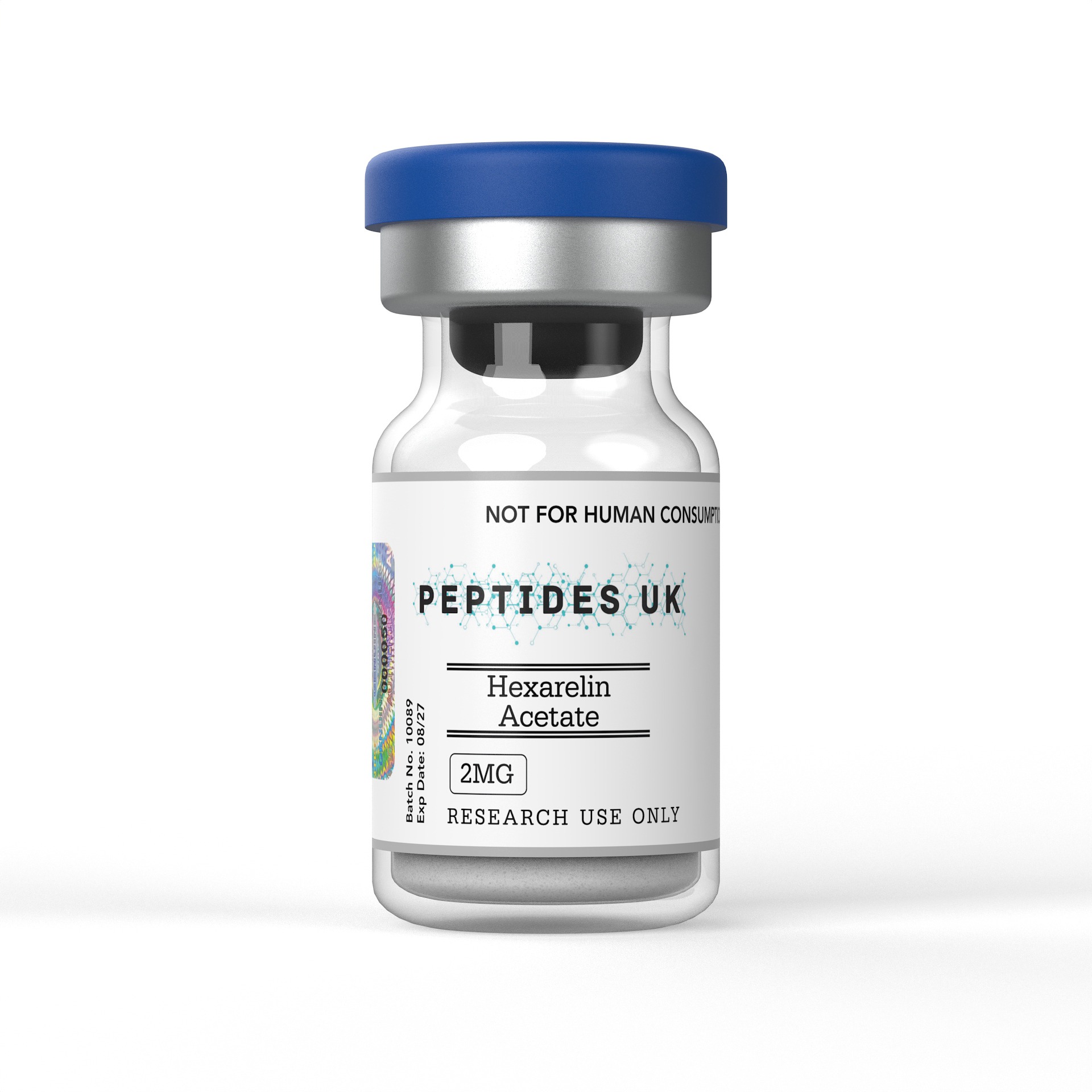
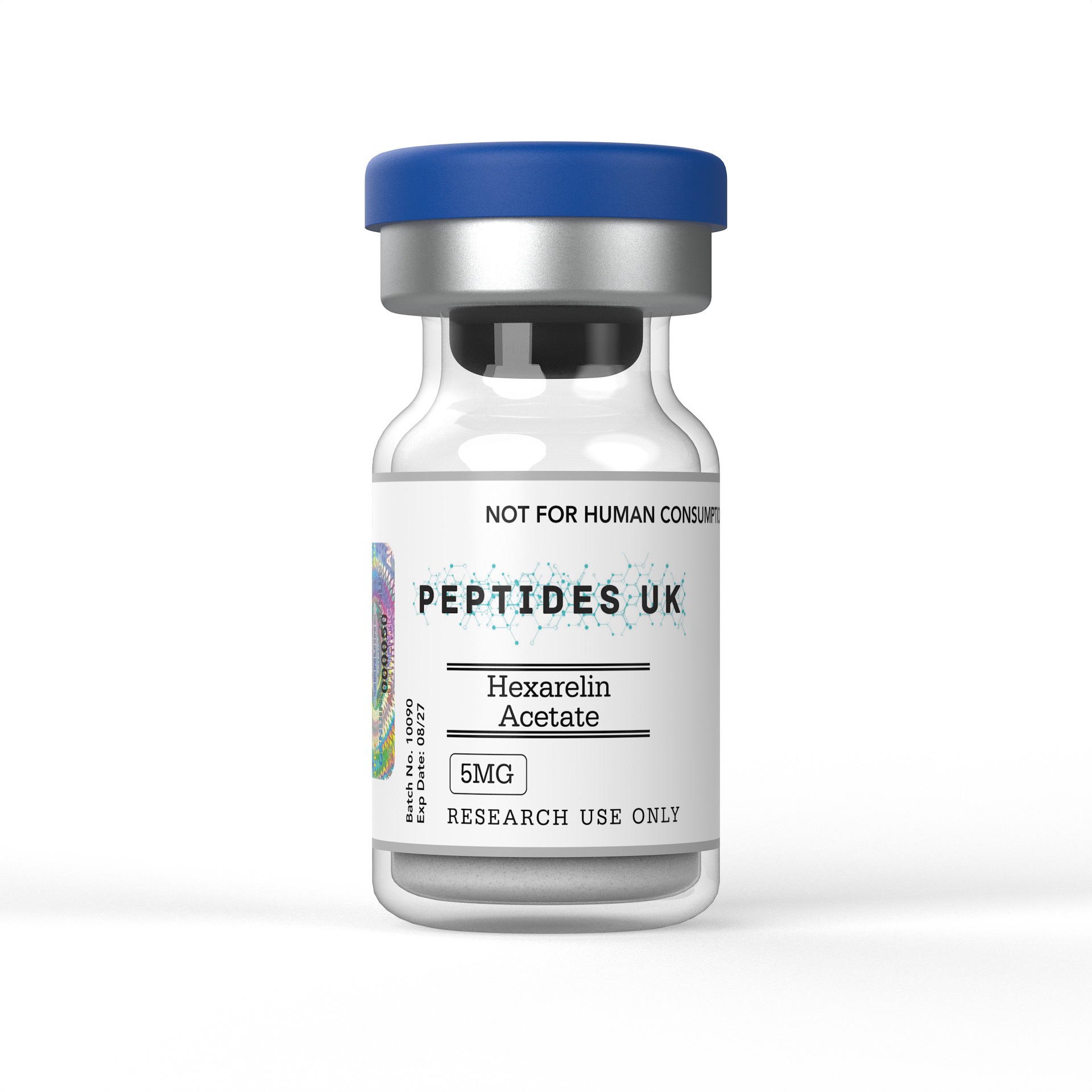
€29.00 – €55.50Price range: €29.00 through €55.50
Hexarelin Acetate EU – Buy Online | In Stock & Ready to Ship
Buy Hexarelin Acetate in Europe with fast shipping and guaranteed ≥99% purity — verified with COA and HPLC documentation. A trusted choice for peptides EU research teams rely on, with no customs delays or lengthy international wait times. Whether you’re searching for Hexarelin Acetate Europe suppliers, looking to buy Hexarelin Acetate in the EU, or sourcing peptides Europe-wide, we have you covered. Research teams across the EU can count on consistent stock, rapid fulfilment and full batch documentation every time.
For research use only. Not intended for human or veterinary use.


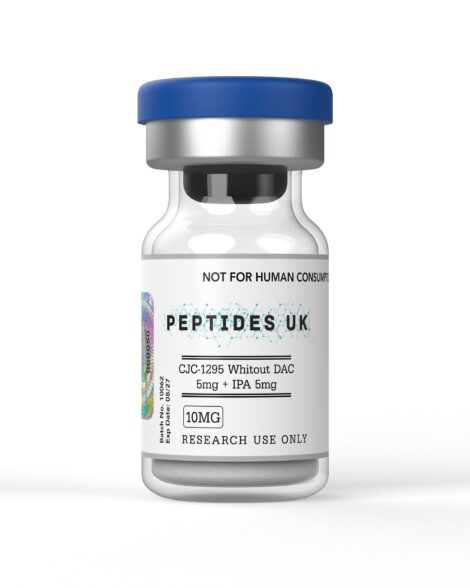

Hexarelin Acetate is a synthetic hexapeptide growth hormone secretagogue and potent GHS-R1a agonist, available to buy in Europe for laboratory research into growth hormone secretagogue receptor pharmacology, GH pulse biology, cardioprotection, ghrelin receptor signalling, and the comparative pharmacology of synthetic peptide GH secretagogues.
Laboratories and research institutions across the EU can order verified, research-grade Hexarelin Acetate with fast international dispatch to Europe, full batch documentation, and ≥99% purity confirmed by HPLC and Mass Spectrometry.
✅ ≥99% Purity — HPLC & Mass Spectrometry Verified
✅ Batch-Specific Certificate of Analysis (CoA)
✅ Sterile Lyophilised Powder | GMP Manufactured
✅ Fast Dispatch to EU & Europe | Tracked Shipping
Hexarelin Acetate is a synthetic hexapeptide — sequence His-D-2-MePhe-Ala-Trp-D-Phe-Lys-NH2 — belonging to the growth hormone-releasing peptide (GHRP) family of synthetic GHS-R1a agonists. Developed at Europeptides and characterised through the collaborative research of Bowers, Deghenghi, and colleagues in the 1990s, Hexarelin was designed as an optimised high-potency GHRP — incorporating the D-2-methylphenylalanine (D-2-MePhe) substitution at position 2 that distinguishes it from other GHRPs and confers its exceptional GHS-R1a binding affinity and GH-releasing potency.
Hexarelin belongs to the same synthetic peptide GH secretagogue family as GHRP-6 and GHRP-2 — sharing the core Met-enkephalin-derived pharmacophore that enables GHS-R1a engagement — but is characterised as the most potent GH-releasing peptide in the GHRP series on a molar basis. Its GHS-R1a agonism drives pulsatile GH release from pituitary somatotrophs through the same ghrelin receptor pathway activated by endogenous ghrelin — making Hexarelin a high-potency research tool for studying GH secretagogue receptor biology, GH pulse physiology, and the downstream consequences of pharmacological GHS-R1a activation.
Beyond its classical GHS-R1a-mediated GH-releasing activity, Hexarelin has been characterised as the first GHRP to demonstrate significant GHS-R1a-independent cardioprotective effects — binding the CD36 scavenger receptor in cardiac tissue and producing direct cardiac protection through GH-independent mechanisms. This cardioprotective profile — documented across ischaemia-reperfusion models, heart failure models, and isolated heart preparations — has established Hexarelin as a uniquely important research tool in the GHRP class, providing both reference GHS-R1a pharmacology and a GH-independent CD36-mediated cardiac biology research application that distinguishes it from all other peptide GH secretagogues. These properties have made Hexarelin one of the most scientifically significant and research-active peptide GH secretagogues available to European laboratories.
In laboratory settings, Hexarelin is studied across GH secretagogue receptor pharmacology, pituitary biology, cardiac research, and comparative GHRP pharmacology. EU and European researchers working with Hexarelin Acetate typically focus on:
All research applications are for in vitro and pre-clinical use only.
Hexarelin has a well-developed and scientifically significant research literature — with studies establishing its position as the highest-potency GHRP, characterising its unique CD36-mediated cardioprotective properties, and documenting its broad GH secretagogue pharmacological profile.
GH-releasing potency characterisation: Foundational studies comparing Hexarelin to GHRP-6 and GHRP-2 consistently documented Hexarelin’s superior GH-releasing potency on a molar basis — establishing it as the most potent synthetic peptide GH secretagogue in the GHRP class. These comparative GH-releasing studies characterised the pharmacodynamic superiority of the D-2-MePhe substitution for GHS-R1a engagement and established Hexarelin as the reference high-potency GHRP for subsequent comparative pharmacology research.
CD36 cardioprotection discovery: The landmark finding that Hexarelin binds CD36 in cardiac tissue — producing cardioprotective effects independent of GH release — was one of the most significant discoveries in peptide GH secretagogue research. Studies by Bodart, Marleau, and colleagues characterised CD36 as a novel cardiac Hexarelin receptor — documenting protection against ischaemia-reperfusion injury, preservation of cardiac function, and anti-fibrotic effects through GH-independent CD36-mediated signalling. This discovery established a new research paradigm for GH-independent GHRP cardioprotection biology.
Heart failure research: Studies examining Hexarelin in pre-clinical heart failure models documented significant improvements in cardiac function parameters — including ejection fraction and fractional shortening — alongside reductions in myocardial fibrosis and cardiomyocyte apoptosis. The combined GH-dependent and CD36-mediated GH-independent contributions to these cardiac functional improvements have been characterised in studies using GH-deficient animals and GH receptor-deficient cell systems to dissect the relative contributions of each pathway.
Ischaemia-reperfusion protection: Pre-clinical studies in cardiac ischaemia-reperfusion models consistently documented Hexarelin-associated reductions in infarct size, preservation of left ventricular function, and reduced cardiomyocyte apoptosis following ischaemic injury — with findings establishing the CD36 pathway as essential for GH-independent cardioprotection and the GHS-R1a/GH pathway contributing additional protective effects through IGF-1-mediated cardiomyocyte survival signalling.
Comparative GHRP pharmacology: Studies systematically comparing Hexarelin to GHRP-2, GHRP-6, and Ipamorelin have characterised Hexarelin’s superior GHS-R1a binding affinity, its greater cortisol and prolactin co-stimulation compared to Ipamorelin, and its unique CD36-mediated cardioprotective profile — establishing Hexarelin’s pharmacological position within the GHRP class and providing the reference data for subsequent comparative GH secretagogue research.
Receptor desensitisation research: Studies examining Hexarelin-induced GHS-R1a desensitisation characterised the kinetics and molecular mechanisms of repeated GHRP stimulation-associated attenuation of GH responses — documenting receptor internalisation, uncoupling from G-protein, and the time course of GHS-R1a resensitisation. These desensitisation findings have contributed to understanding of GPCR regulatory mechanisms in the context of GH secretagogue receptor biology.
Cortisol and prolactin co-stimulation: Comparative studies characterising Hexarelin’s HPA axis and lactotroph co-stimulation documented significant cortisol and prolactin responses alongside GH release — with findings establishing that higher GHS-R1a potency correlates with greater co-secretagogue activity and providing mechanistic context for the cortisol elevation distinguishing high-potency GHRPs from the more GH-selective Ipamorelin.
| Compound | Sequence Features | GHS-R1a Potency | Cortisol/Prolactin | CD36 Activity | Key Research Distinction |
|---|---|---|---|---|---|
| Hexarelin | D-2-MePhe² substitution | Highest in GHRP class | Significant | Yes — unique | Highest potency GHRP, CD36 cardioprotection |
| GHRP-2 | D-β-Nal² substitution | Very high | Significant | Not characterised | High potency — strong HPA co-stimulation |
| GHRP-6 | D-Trp² — parent GHRP | High | Moderate | Not characterised | Reference GHRP, appetite biology |
| Ipamorelin | Aib³ — selectivity-optimised | Moderate-high | Minimal | Not characterised | Most GH-selective GHRP — minimal co-stimulation |
| MK-677 | Non-peptide GHS-R1a agonist | High — oral bioavailable | Moderate | Not characterised | Oral administration research tool |
| CJC-1295 | GHRH analogue — DAC | GHRH pathway | None | Not characterised | GHRH receptor — synergy with GHRPs |
Every order of Hexarelin Acetate dispatched to EU and European research institutions includes:
Yes. We supply research-grade Hexarelin Acetate with fast tracked dispatch to all EU member states and wider European destinations. All orders include full batch documentation. Hexarelin is supplied strictly for laboratory research use only.
The D-2-methylphenylalanine (D-2-MePhe) substitution at position 2 confers Hexarelin’s superior GHS-R1a binding affinity compared to the D-Trp² of GHRP-6 and D-β-Nal² of GHRP-2. This structural modification optimises the peptide backbone conformation for high-affinity GHS-R1a engagement — producing the highest GH-releasing potency in the synthetic peptide GHRP class on a molar basis.
CD36 is a scavenger receptor expressed in cardiac tissue, macrophages, and adipocytes — classically studied for its roles in fatty acid uptake and oxidised LDL recognition. Hexarelin’s discovery as the first peptide ligand for CD36 in cardiac tissue opened a new research dimension — demonstrating that GHRPs can produce cardioprotective effects entirely independent of GH release through CD36-mediated signalling. This GH-independent cardioprotection mechanism distinguishes Hexarelin from all other GHRPs.
Both are GHS-R1a agonists but with contrasting selectivity profiles. Hexarelin is the highest-potency GHRP with significant cortisol, prolactin, and ACTH co-stimulation alongside GH release and unique CD36 cardioprotective activity. Ipamorelin is the most GH-selective GHRP — with minimal cortisol or prolactin co-stimulation. The two represent the extreme ends of the GHRP selectivity spectrum — Hexarelin for high-potency broad GHS-R1a biology, Ipamorelin for selective GH axis research.
Hexarelin’s higher GHS-R1a potency produces stronger hypothalamic activation — including engagement of GHS-R1a expressing CRH neurons — driving greater HPA axis co-activation alongside pituitary GH release. Studies have documented that GHRP-induced cortisol co-stimulation correlates with GHS-R1a engagement potency across the GHRP class — with Hexarelin at the high end and Ipamorelin producing minimal HPA co-activation due to its selectivity-optimised structure.
Both are high-potency GHRPs with significant cortisol and prolactin co-stimulation. Hexarelin has the D-2-MePhe² substitution producing superior GHS-R1a affinity and GH-releasing potency compared to GHRP-2’s D-β-Nal² substitution. Hexarelin additionally has the characterised CD36 cardioprotective activity not documented for GHRP-2 — making Hexarelin the preferred tool when both GHS-R1a and CD36 biology are relevant to the research question.
GHRPs and GHRH act on complementary pituitary pathways — GHRPs through GHS-R1a/Gq/calcium and GHRH through GHRH-R/Gs/cAMP — producing synergistic GH release when combined that significantly exceeds either alone. Hexarelin’s high GHS-R1a potency produces particularly robust synergy with GHRH analogues such as CJC-1295 — making Hexarelin/GHRH combination protocols a research tool for studying maximal pharmacological GH axis stimulation and the mechanistic basis of GHRP/GHRH synergy.
Reconstitute with sterile water or appropriate laboratory buffer by adding solvent slowly down the vial wall and swirling gently. Hexarelin reconstitutes readily in aqueous buffers without organic co-solvents. Prepare at required concentration, aliquot, and store at -80°C to minimise freeze-thaw degradation. Standard peptide handling protocols apply.
Delivery to EU and European destinations typically takes 3–7 working days via tracked international courier with packaging maintaining peptide stability throughout transit.
| Parameter | Detail |
|---|---|
| Sequence | His-D-2-MePhe-Ala-Trp-D-Phe-Lys-NH2 |
| Salt Form | Acetate salt |
| Type | Synthetic Hexapeptide GH Secretagogue — GHRP Class |
| Key Structural Feature | D-2-methylphenylalanine at position 2 |
| Primary Receptor | GHS-R1a (Ghrelin Receptor) — highest potency GHRP |
| Secondary Receptor | CD36 — GH-independent cardioprotection |
| GH Potency | Highest in synthetic peptide GHRP class |
| Cortisol/Prolactin Co-stimulation | Significant |
| Primary Research Interest | GHS-R1a pharmacology, GH pulse biology, cardioprotection, CD36 biology |
| Purity | ≥99% |
| Verification | HPLC & Mass Spectrometry |
| Form | Sterile Lyophilised Powder |
| Solubility | Sterile water or laboratory buffer |
| Storage | -20°C, protected from light and moisture |
| Intended Use | Research use only |
Hexarelin Acetate is supplied exclusively for legitimate scientific research conducted within licensed laboratory environments. This product is not approved for human consumption, self-administration, or any therapeutic, clinical, or veterinary application. It must be handled solely by qualified researchers in compliance with applicable EU regulations, national legislation, and institutional ethics guidelines. By purchasing, you confirm this compound will be used exclusively for approved in vitro or pre-clinical research purposes.
WhatsApp us
Receive News
