PRODUCTS SOLD ON PEPTIDESLABEU.COM ARE FOR RESEARCH PURPOSES ONLY AND ARE NOT FOR HUMAN OR VETERINARY USE.
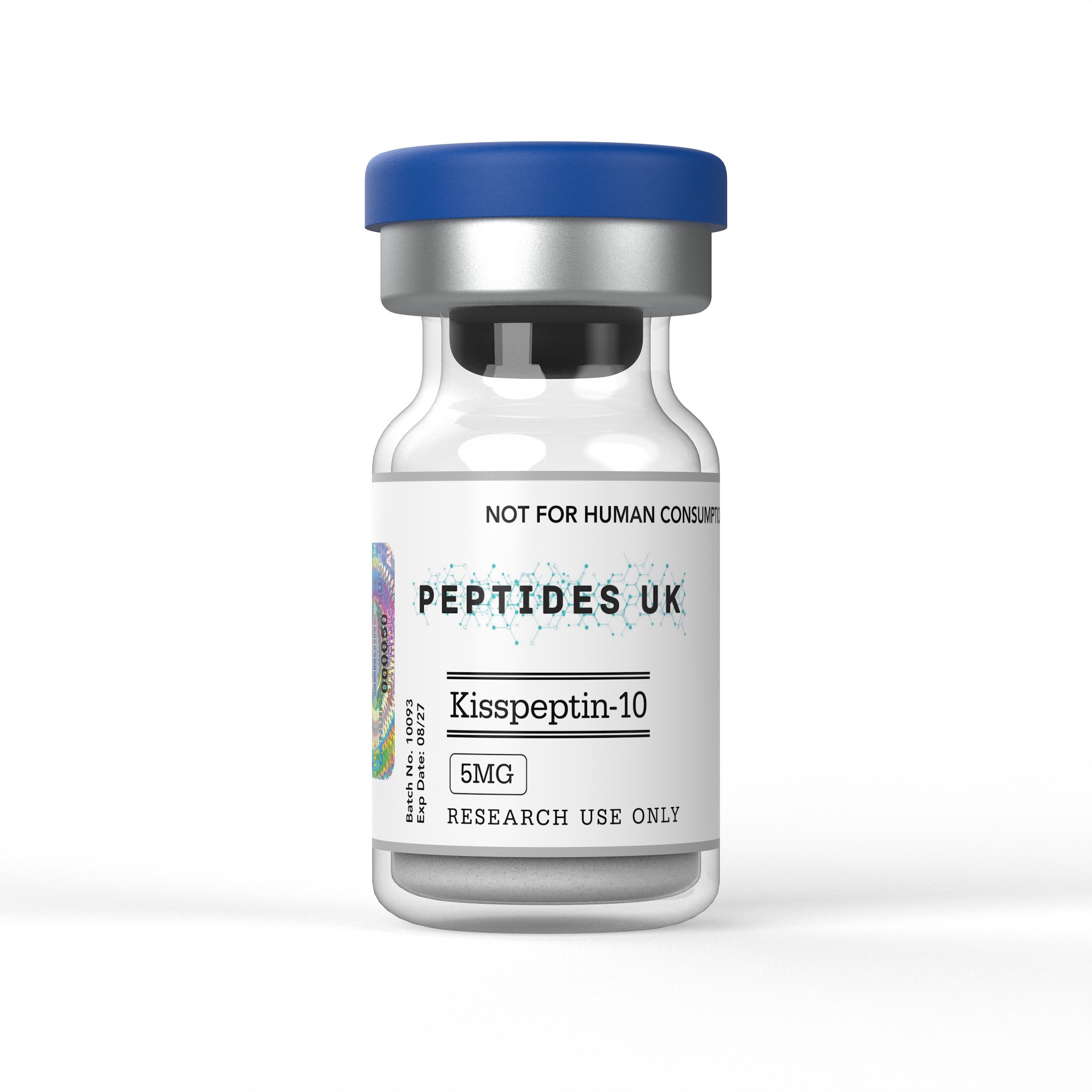
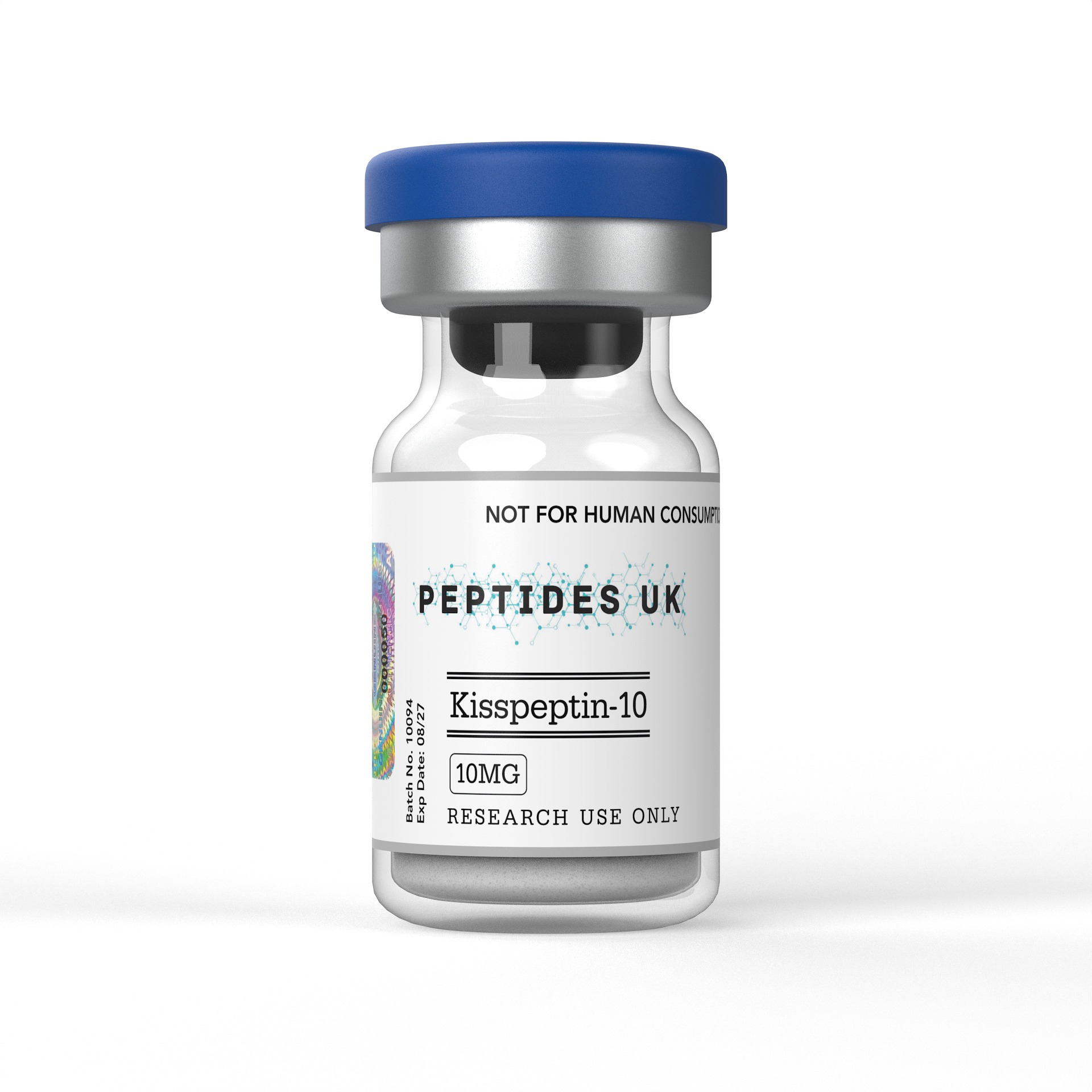
€23.50 – €43.00Price range: €23.50 through €43.00
Kisspeptin-10 EU – Buy Online | In Stock & Ready to Ship
Buy Kisspeptin-10 in Europe with fast shipping and guaranteed ≥99% purity — verified with COA and HPLC documentation. A trusted choice for peptides EU research teams rely on, with no customs delays or lengthy international wait times. Whether you’re searching for Kisspeptin-10 Europe suppliers, looking to buy Kisspeptin-10 in the EU, or sourcing peptides Europe-wide, we have you covered. Research teams across the EU can count on consistent stock, rapid fulfilment and full batch documentation every time.
For research use only. Not intended for human or veterinary use.



Kisspeptin-10 (Kp-10) — the decapeptide corresponding to the C-terminal ten amino acids of the KISS1 gene’s primary 145-amino acid translation product, sequence Tyr-Asn-Trp-Asn-Ser-Phe-Gly-Leu-Arg-Phe-NH₂ (with C-terminal amidation essential for receptor binding) — is the smallest biologically active member of the kisspeptin peptide family and, residue-for-residue, the most potent activator of KISS1R (GPR54) characterised across the kisspeptin isoform series. First identified as the product of a metastasis suppressor gene in melanoma, subsequently revealed as the principal hypothalamic regulator of GnRH pulsatility and the HPG axis, and now established as a research tool spanning reproductive neuroendocrinology, puberty biology, cancer metastasis, anti-angiogenic biology, metabolism, and placental invasion — Kisspeptin-10 occupies a uniquely cross-disciplinary position in the EU peptide research literature. Research institutions and laboratories across the EU can source verified, research-grade Kisspeptin-10 in Europe with fast dispatch and full batch documentation included.
✅ ≥99% Purity — HPLC & Mass Spectrometry Verified
✅ C-Terminal Amide Confirmed — Batch-Specific CoA Included
✅ Sterile Lyophilised Powder | GMP Manufactured
✅ Fast Dispatch Across EU & Europe | EU Peptides Stock
Kisspeptin-10 is a naturally occurring decapeptide produced by proteolytic processing of the KISS1 gene’s 145-amino acid precursor protein — sharing the conserved C-terminal sequence common to all kisspeptin isoforms (Kp-54, Kp-14, Kp-13, and Kp-10) and carrying the C-terminal amidation (Phe-NH₂) that is the structural determinant of high-affinity KISS1R binding across the kisspeptin family. The ten C-terminal residues of the KISS1 precursor represent the minimal sequence sufficient for full GPR54/KISS1R activation — making Kp-10 both the smallest and, weight-for-weight, the most potent naturally occurring KISS1R agonist available as a defined research tool.
KISS1 was identified in 1996 in Danny Welch’s laboratory at Hershey, Pennsylvania — named for the location of discovery, home of Hershey’s Kisses — as a gene whose introduction into metastatic melanoma cells suppressed their metastatic capacity without blocking primary tumour growth, establishing it as a metastasis suppressor gene. The 54-amino acid primary cleavage product was named metastin in recognition of this anti-metastatic biology. A parallel and initially disconnected line of research identified GPR54 as an orphan G-protein-coupled receptor in rat brain in 1999; it was not until 2001 that three independent groups established GPR54 as the cognate receptor for KISS1-derived peptides. The reproductive significance of the kisspeptin-GPR54 axis was revealed in 2003 when simultaneous reports from de Roux and Seminara demonstrated that loss-of-function GPR54 mutations cause normosmic idiopathic hypogonadotrophic hypogonadism in humans — establishing kisspeptin as the critical upstream activator of the GnRH pulse generator and recontextualising a cancer biology gene as one of the most important neuroendocrine regulatory systems governing mammalian reproduction.
Kisspeptin-10 signals through KISS1R — a seven-transmembrane Gq/11-coupled receptor expressed predominantly on GnRH neurons in the hypothalamic arcuate nucleus (ARC) and preoptic area (POA), and peripherally in pancreas, gonads, placenta, pituitary, and other tissues. Receptor engagement activates phospholipase C through Gq/11, generating IP3-driven intracellular Ca²⁺ release from the endoplasmic reticulum and DAG-driven PKC activation — with downstream phosphorylation of ERK1/2 and p38 MAPK, suppression of inwardly rectifying potassium channels (Kir), and activation of non-selective TRPC cation channels producing sustained GnRH neuron depolarisation and increased action potential firing. This well-characterised intracellular signalling cascade distinguishes Kisspeptin-10 from research peptides with incompletely defined receptor pharmacology.
In controlled laboratory and pre-clinical settings, Kisspeptin-10 is studied across the following research applications:
HPG Axis Activation and GnRH Pulse Generator Research — Kisspeptin-10’s most extensively characterised and mechanistically best-understood research application is activation of the hypothalamic-pituitary-gonadal axis through direct stimulation of GnRH neurons. KNDy neurons — arcuate nucleus neurons co-expressing kisspeptin, neurokinin B (NKB), and dynorphin (Dyn) — function as the intrinsic GnRH pulse generator, with kisspeptin as the efferent output signal driving GnRH secretion and NKB/dynorphin governing the autocrine synchronisation of pulsatile kisspeptin release. Kisspeptin-10 is used in EU neuroendocrinology research to characterise GnRH pulse generation mechanisms, to study the kisspeptin-GnRH synaptic connection in hypothalamic explant and slice preparations, and to investigate KISS1R signalling dynamics at the GnRH neuron cell body and nerve terminal — where distinct kisspeptin action has been characterised through somatic versus axon terminal receptor populations.
Puberty Onset and Gonadotrophin Biology Research — GPR54 loss-of-function mutations cause delayed or absent pubertal development and hypogonadotrophic hypogonadism in both mice and humans — directly establishing the kisspeptin-KISS1R axis as the gatekeeper of puberty onset. Research uses Kisspeptin-10 to study the neuroendocrine changes accompanying pubertal transition, to characterise the progressive increase in kisspeptin-driven GnRH pulse amplitude and frequency that initiates puberty, and to investigate the hormonal and metabolic signals that converge on ARC kisspeptin neurons to time pubertal activation. Kisspeptin-10 administration in pre-pubertal and peripubertal research models produces dose-dependent LH and FSH secretion — characterising the sensitivity of the maturing HPG axis to kisspeptin-driven activation across developmental stages.
Sex Steroid Feedback and Reproductive Cycle Research — Kisspeptin neurons in the ARC mediate negative feedback from oestrogens and androgens on GnRH secretion — oestrogen suppresses ARC kisspeptin neuron activity, reducing GnRH pulse frequency. Kisspeptin neurons in the POA (RP3V in rodents) mediate positive feedback — the oestrogen-driven kisspeptin surge that triggers the pre-ovulatory LH surge and ovulation. These opposing feedback mechanisms in two spatially separated kisspeptin neuron populations make the kisspeptin system the molecular interface translating circulating sex steroid levels into the GnRH secretion patterns governing the reproductive cycle. EU research uses Kisspeptin-10 to study positive and negative oestrogen feedback biology, to characterise the differential regulation of ARC versus POA kisspeptin populations, and to model LH surge dynamics in ovulatory cycle research paradigms.
Metastasis Suppression and Cancer Biology Research — KISS1’s original discovery as a metastasis suppressor gene — whose expression is lost during melanoma progression and whose restoration suppresses metastatic spread without affecting primary tumour growth across multiple cancer types including melanoma, bladder cancer, gastric cancer, ovarian cancer, pancreatic cancer, and pheochromocytoma — establishes Kisspeptin-10 as a directly relevant research tool for metastasis biology. Kisspeptin-10 activates KISS1R-driven signalling to inhibit tumour cell migration and invasion — characterised mechanisms include negative regulation of CXCR4-mediated chemotaxis (CXCR4 is the primary receptor driving metastatic cell trafficking; Kp-10 signalling through KISS1R suppresses CXCR4 downstream signalling), inhibition of focal adhesion kinase (FAK) and Rho GTPase activation underlying cell motility, and suppression of matrix metalloprotease activity governing basement membrane invasion. EU cancer biology research uses these findings to characterise the molecular anti-metastatic mechanism of KISS1R activation, to study the loss of KISS1 expression as a metastasis biomarker, and to investigate KISS1R-targeted approaches to metastasis inhibition.
Anti-Angiogenic Biology Research — Kisspeptin-10 inhibits tumour angiogenesis through suppression of Sp1-mediated VEGF expression and inhibition of FAK/Rho GTPase activation in endothelial cells — blocking HUVEC migration, invasion, and tube formation in vitro and inhibiting vascularisation in chorioallantoic membrane and corneal micropocket in vivo models. Research has demonstrated Kp-10’s ability to inhibit tumour growth in SCID mouse xenograft models of human prostate cancer through an anti-angiogenic mechanism without direct effects on tumour cell or endothelial cell proliferation — making the anti-migratory and anti-tubulogenic biology the primary angiogenesis suppression mechanism. EU vascular and tumour biology research uses these findings to characterise KISS1R-mediated anti-angiogenic pharmacology and to study the relationship between kisspeptin’s anti-metastatic and anti-angiogenic activities as a coordinated anti-tumour biology.
Placentation and Trophoblast Invasion Research — Kisspeptin-10 has been characterised as a physiological inhibitor of primary human trophoblast invasion — with high KISS1 expression in placenta and KISS1R expression in placental tissue reflecting a role in regulating trophoblast motility and invasion depth during placentation. Research has characterised Kp-10’s ability to inhibit trophoblast invasion through the same FAK/Rho GTPase anti-migratory mechanisms underlying its anti-metastatic activity — suggesting a conserved anti-invasive biology operating across both physiological (controlled placental implantation) and pathological (metastatic cancer) invasion contexts. EU reproductive biology and placentation research uses these findings to study the molecular regulation of trophoblast invasion, the kisspeptin signalling mechanisms governing implantation depth, and the shared molecular biology of physiological and pathological cell invasion.
Metabolism, Energy Balance, and Reproductive-Metabolic Integration Research — ARC kisspeptin neurons express receptors for leptin, ghrelin, insulin, and other metabolic hormones — positioning the kisspeptin system as a molecular relay integrating nutritional and metabolic status with reproductive HPG axis activity. This metabolic gating of reproduction — in which energy deficit suppresses kisspeptin-driven GnRH pulsatility, creating functional hypothalamic hypogonadism under conditions of undernutrition or excessive exercise — is an active research area of direct relevance to functional hypothalamic amenorrhoea, anorexia-associated infertility, and the mechanistic coupling of body composition to reproductive competence. Research uses Kisspeptin-10 to characterise how metabolic signalling modulates GnRH responsiveness, to study the energy-sensing mechanisms in kisspeptin neurons themselves (including mTOR, AMPK, and SIRT1 as cell energy sensors regulating KISS1 expression), and to investigate the therapeutic potential of kisspeptin pathway modulation in metabolic-reproductive disease paradigms.
Cardiovascular and Vasoactive Biology Research — KISS1R is expressed in vascular tissue — with kisspeptin documented to produce vasoconstriction through direct effects on vascular smooth muscle and endothelial cells in pre-clinical models. The vasoactive biology of kisspeptin, while less extensively characterised than its reproductive and cancer biology, represents an active EU research area investigating KISS1R-mediated vascular signalling, cardiovascular haemodynamic effects of kisspeptin pathway activation, and the cardiovascular biology implications of kisspeptin’s clinical use in reproductive endocrinology paradigms.
Hypogonadotrophic Hypogonadism and IVF Research — The clinical translation of kisspeptin biology has been most advanced in reproductive endocrinology — with Kisspeptin-54 clinically administered to trigger ovulation in IVF protocols as an alternative to hCG, exploiting kisspeptin’s physiological LH surge mechanism to reduce ovarian hyperstimulation syndrome (OHSS) risk. Research comparing the pharmacodynamic HPG axis responses of Kp-10 and Kp-54 has directly characterised their relative LH-stimulating potency and duration — with Kp-10’s shorter half-life producing more transient LH secretion patterns relative to Kp-54’s sustained response. EU clinical and translational research uses these pharmacodynamic distinctions to study kisspeptin isoform pharmacology, to optimise kisspeptin-based gonadotrophin secretion paradigms, and to characterise the HPG axis response dynamics underlying successful ovulatory triggering.
Foundational Reproductive Biology — Pre-clinical and clinical studies have consistently established Kisspeptin-10 as a potent, dose-dependent LH and FSH secretagogue in all mammalian species examined — with central and peripheral administration in rodents, non-human primates, sheep, and humans producing robust, GnRH-dependent gonadotrophin responses. GPR54 knockout studies confirming that kisspeptin responses require intact KISS1R signalling, and GnRH antagonist studies demonstrating that kisspeptin’s gonadotrophin-secretory effect is fully GnRH-dependent, established the kisspeptin → GnRH → LH/FSH signalling hierarchy as the mechanistic basis of all reproductive axis biology. These findings were confirmed in direct human pharmacodynamic comparison studies of intravenous Kp-10, Kp-54, and GnRH — establishing Kp-10 as the reference short-acting kisspeptin agonist with rapid-onset, transient LH stimulation suitable for mechanistic pulse frequency and amplitude studies.
Cancer and Metastasis Suppression — Research across melanoma, bladder, gastric, pancreatic, ovarian, and pheochromocytoma cancer biology has correlated loss of KISS1 expression with increased metastatic potential and poor clinical prognosis in multiple tumour types — establishing KISS1/KISS1R expression status as a candidate metastasis biomarker and Kisspeptin-10 as the pharmacological tool for studying the molecular mechanism of KISS1R-mediated metastasis suppression. The CXCR4 antagonism mechanism — Kp-10 activation of KISS1R negatively regulating CXCR4-driven chemotaxis — provides a molecular explanation for KISS1’s ability to suppress metastatic organ trafficking without affecting primary tumour growth, as CXCR4/SDF-1 signalling is the primary chemokine axis governing metastatic cell homing to distant organs.
Placental Biology and IVF Clinical Research — Clinical administration of kisspeptin for IVF ovulation triggering has produced a characterised human pharmacodynamic dataset documenting kisspeptin’s ability to activate the physiological LH surge mechanism through endogenous GnRH release — with published OHSS risk-reduction outcomes in high-risk IVF cohorts supporting the translational relevance of the pre-clinical kisspeptin-HPG axis biology. Kp-10’s trophoblast invasion inhibition biology has been characterised in primary human trophoblast models, providing mechanistic data on the KISS1R signalling pathways governing placentation.
| Feature | Kisspeptin-10 |
|---|---|
| Sequence | Tyr-Asn-Trp-Asn-Ser-Phe-Gly-Leu-Arg-Phe-NH₂ |
| C-Terminal Modification | Amidation (Phe-NH₂) — essential for KISS1R binding |
| Gene Origin | KISS1 gene — C-terminal 10 residues of 145 aa precursor |
| Isoform Series | Kp-10 / Kp-13 / Kp-14 / Kp-54 (metastin) — all share C-terminal sequence |
| Receptor | KISS1R (GPR54) — Gq/11-coupled GPCR |
| Intracellular Signalling | PLC → IP3 (Ca²⁺ release) + DAG (PKC) → ERK1/2 + p38 MAPK; TRPC activation; Kir suppression |
| Primary Research Biology | GnRH pulse generator activation; HPG axis stimulation |
| Reproductive Biology | Puberty gating; LH/FSH secretion; sex steroid feedback; ovulation triggering |
| Cancer Biology | Metastasis suppression; CXCR4 antagonism; FAK/Rho inhibition |
| Angiogenesis | Anti-angiogenic — VEGF/Sp1 suppression; endothelial migration/tube formation inhibition |
| Placentation | Trophoblast invasion inhibition — physiological anti-invasive biology |
| Metabolic Integration | ARC kisspeptin neurons — leptin/ghrelin/insulin sensing; energy-reproductive axis coupling |
| Cardiovascular | KISS1R in vascular tissue — vasoconstriction research |
| Discovery History | KISS1 identified 1996 (metastasis suppressor); GPR54 identified 1999; reproductive link 2003 |
| Clinical Translation | Kp-54 used in IVF ovulation triggering — characterised human HPG axis pharmacodynamics |
| Potency vs. Isoforms | Shortest naturally occurring isoform; highest weight-for-weight KISS1R potency |
| Half-Life | Short — rapid onset, transient LH response vs. Kp-54’s sustained profile |
| Parameter | Specification |
|---|---|
| Full Name | Kisspeptin-10 / Kp-10 / Metastin (45–54) |
| Also Known As | Kp-10 / KiSS-1 (112–121) / Metastin fragment |
| Sequence | Tyr-Asn-Trp-Asn-Ser-Phe-Gly-Leu-Arg-Phe-NH₂ |
| One-Letter Code | YNWNSFGLRF-NH₂ |
| C-Terminal | Amide (Phe-NH₂) — required for KISS1R binding activity |
| Gene Origin | KISS1 — residues 112–121 of 145 aa precursor (or 45–54 of metastin/Kp-54) |
| Molecular Weight | ~1302 Da |
| Type | Synthetic Decapeptide — Research Grade |
| Purity | ≥99% HPLC & MS Verified |
| Form | Sterile Lyophilised Powder |
| Solubility | Sterile water, bacteriostatic water, or 0.1% BSA-containing buffer for low-concentration assay use |
| Storage (Powder) | -20°C; protect from light and moisture |
| Storage (Reconstituted) | 4°C up to 4–7 days; -20°C single-use aliquots for extended storage |
| Bundle Size | 5mg |
Kisspeptin-10 reconstitutes in sterile water or bacteriostatic water — add solvent slowly to the lyophilised powder and swirl gently until dissolved. Good aqueous solubility under standard conditions. No disulphide bonds are present; no reducing agent compatibility concerns. The C-terminal Phe-NH₂ amide is a chemically stable modification under normal aqueous storage conditions and does not require special buffer conditions to maintain integrity — but should be confirmed present by the batch CoA mass spectrometry data, as loss of the amide group (deamidation to the free acid) abolishes KISS1R binding activity and renders the peptide biologically inactive.
For cell-based assays at low nanomolar working concentrations — the range relevant to GnRH neuron stimulation and metastasis suppression biology — addition of 0.1% BSA or equivalent carrier protein to the dilution buffer is advisable to prevent adsorptive losses to tube and pipette surfaces. Prepare single-use aliquots at -20°C following reconstitution. Repeated freeze-thaw should be avoided. Protect reconstituted solutions from light.
Every Kisspeptin-10 order dispatched across the EU and Europe includes:
✅ Batch-Specific Certificate of Analysis (CoA)
✅ HPLC Chromatogram
✅ Mass Spectrometry Confirmation — sequence and C-terminal amide verification
✅ Sterility & Endotoxin Testing Report
✅ Reconstitution Protocol
✅ Technical Research Support
Yes — research-grade Kisspeptin-10 is available to EU and European researchers with fast dispatch and full batch documentation. Supplied strictly for laboratory research purposes only.
Kp-10 and Kp-54 share the same conserved C-terminal sequence and activate KISS1R via the same mechanism. Kp-10 is the minimal active decapeptide — shorter half-life, rapid-onset and transient LH response. Kp-54 has a substantially longer half-life and produces more sustained HPG axis stimulation. Kp-10 is the preferred research tool for mechanistic pulse-frequency studies; Kp-54 is used clinically for IVF ovulation triggering due to its pharmacokinetic duration.
The Phe-NH₂ C-terminal amide is essential for KISS1R binding — it is the structural determinant of receptor recognition shared across all kisspeptin isoforms. Deamidated Kp-10 (Phe-OH free acid) is biologically inactive. Every batch is confirmed for intact C-terminal amide by mass spectrometry before dispatch.
KISS1R — also known as GPR54 — is a seven-transmembrane Gq/11-coupled GPCR expressed predominantly on hypothalamic GnRH neurons, and peripherally in gonads, placenta, pituitary, and pancreas. Kisspeptin-10 binding activates PLC-IP3-Ca²⁺ signalling, ERK1/2 and p38 MAPK phosphorylation, and sustained GnRH neuron depolarisation through TRPC channel activation and Kir channel suppression.
The primary characterised mechanism is negative regulation of CXCR4 — Kp-10 activation of KISS1R suppresses CXCR4-driven chemotaxis, blocking the primary chemokine axis directing metastatic cell trafficking to distant organs. Secondary mechanisms include FAK/Rho GTPase inhibition reducing cell motility and MMP suppression impairing basement membrane invasion.
Vehicle control (matched buffer) is essential. For HPG axis research — GnRH antagonist controls confirm that Kp-10-driven LH responses are GnRH-dependent. For cancer biology — KISS1R knockdown or KISS1R antagonist (peptide 234) controls confirm that anti-migratory and anti-angiogenic effects are receptor-mediated. For CXCR4 biology — AMD3100 (CXCR4 antagonist) comparator controls allow dissection of the kisspeptin/CXCR4 interaction contribution.
≥99% HPLC and full sequence mass spectrometry verification confirming intact C-terminal amide is essential. Kp-10 without the C-terminal amide is biologically inactive — deamidated contaminants would reduce apparent peptide potency in KISS1R activation assays and confound dose-response characterisation.
Kisspeptin-10 is supplied exclusively for legitimate scientific research purposes conducted within licensed laboratory environments across the EU and Europe. This product is not intended for human consumption, self-administration, or any therapeutic application. It must be handled by qualified researchers in compliance with applicable EU regulations and institutional ethics guidelines. By purchasing, you confirm that this compound will be used solely for approved in vitro or pre-clinical research purposes.
WhatsApp us
Receive News
