PRODUCTS SOLD ON PEPTIDESLABEU.COM ARE FOR RESEARCH PURPOSES ONLY AND ARE NOT FOR HUMAN OR VETERINARY USE.
€80.00
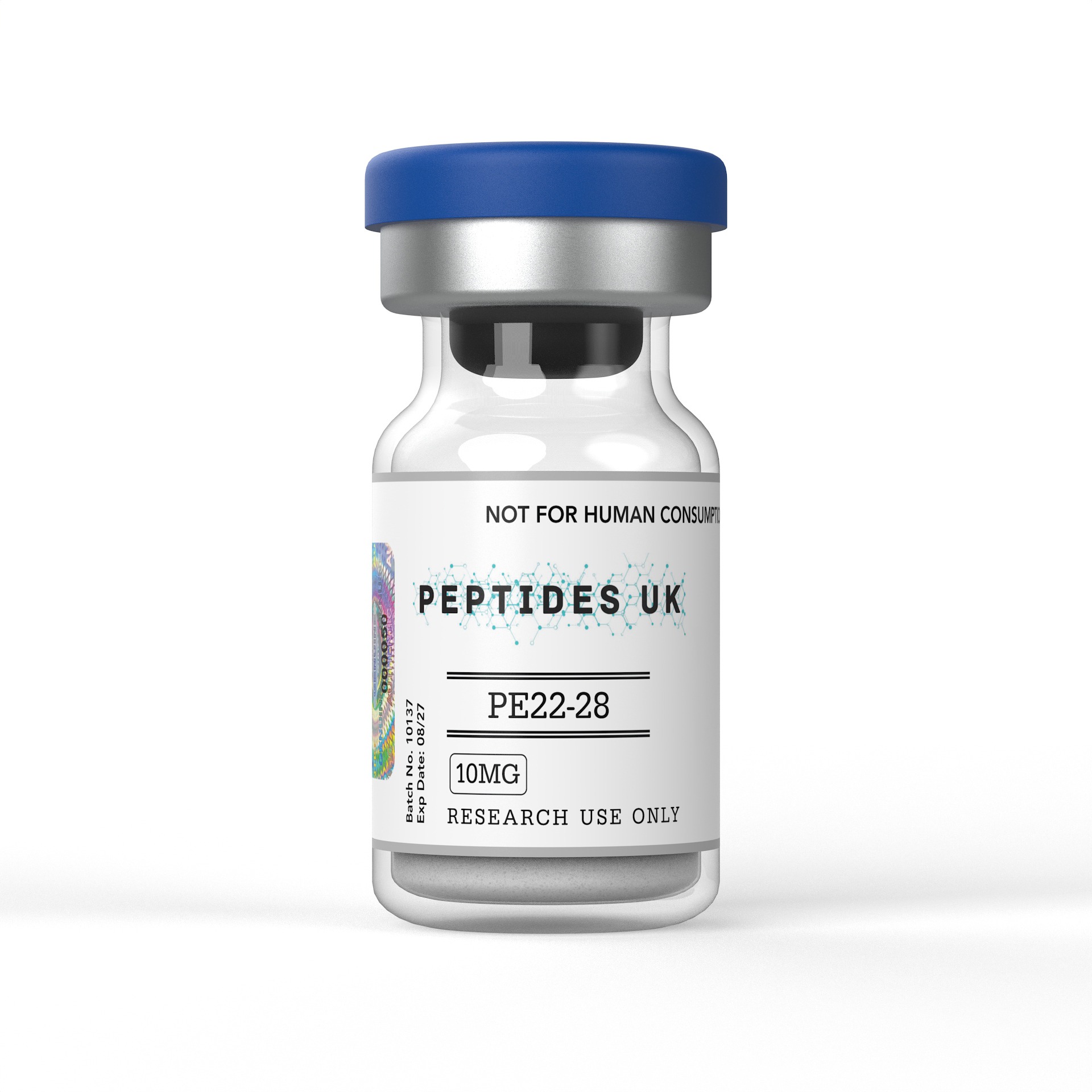
PE22-28 EU – Buy Online | In Stock & Ready to Ship
Buy PE22-28 in Europe with fast shipping and guaranteed ≥99% purity — verified with COA and HPLC documentation. A trusted choice for peptides EU research teams rely on, with no customs delays or lengthy international wait times. Whether you’re searching for PE22-28 Europe suppliers, looking to buy PE22-28 in the EU, or sourcing peptides Europe-wide, we have you covered. Research teams across the EU can count on consistent stock, rapid fulfilment and full batch documentation every time.
For research use only. Not intended for human or veterinary use.


PE22-28 is a synthetic heptapeptide fragment of spadin corresponding to residues 22–28 of the propeptide of the TREK-1 potassium channel sorting receptor, designed as a selective, cell-penetrating TREK-1 antagonist, available to buy in Europe for laboratory research into TREK-1 channel pharmacology, mechanosensitive potassium channel biology, antidepressant signalling mechanisms, hippocampal neuroplasticity, BDNF/TrkB pathway regulation, and the comparative pharmacology of two-pore domain potassium channel modulators.
Laboratories and research institutions across the EU can order verified, research-grade PE22-28 with fast international dispatch to Europe, full batch documentation, and ≥99% purity confirmed by HPLC and Mass Spectrometry.
✅ ≥99% Purity — HPLC & Mass Spectrometry Verified
✅ Batch-Specific Certificate of Analysis (CoA)
✅ Sterile Lyophilised Powder | GMP Manufactured
✅ Fast Dispatch to EU & Europe | Tracked Shipping
PE22-28 is a synthetic heptapeptide — sequence Leu-Thr-Arg-Leu-Thr-Trp-Lys — corresponding to residues 22 through 28 of spadin, the naturally occurring propeptide of the TREK-1 two-pore domain potassium (K2P) channel sorting receptor NTSR3/sortilin. Spadin itself is a 17-amino acid peptide cleaved from the propeptide of NTSR3/sortilin during its biosynthetic processing in the trans-Golgi network — and was identified by Mazella, Rovère, and colleagues at INSERM as the first endogenous peptide antagonist of the TREK-1 channel, demonstrating antidepressant-like activity in rodent models through a mechanism dependent on TREK-1 blockade and downstream hippocampal BDNF/TrkB signalling.
PE22-28 was developed as a truncated, pharmacologically optimised fragment of spadin — retaining the core TREK-1 antagonist pharmacophore of the parent peptide while providing improved stability and antidepressant-like potency in pre-clinical models. The C-terminal Lys residue of PE22-28 is critical for TREK-1 channel interaction and biological activity, and the heptapeptide length represents the minimal sequence retaining full TREK-1 antagonist activity from the spadin parent sequence. Studies characterising PE22-28 documented that it produces antidepressant-like effects in the forced swim test and tail suspension test in rodents at lower effective doses than full-length spadin — with a faster onset of behavioural effect than classical antidepressants — and that these effects are absent in TREK-1 knockout mice, establishing TREK-1 antagonism as the required mechanism.
TREK-1 (KCNK2) is a member of the two-pore domain potassium channel (K2P) superfamily — a family of background leak channels characterised by four transmembrane domains, two pore-forming loops, and constitutive open probability under resting conditions that establishes the resting membrane potential of excitable cells. TREK-1 is widely expressed in the brain — particularly in the prefrontal cortex, hippocampus, amygdala, and raphe nuclei — and is distinguished within the K2P family by its polymodal activation by mechanical stretch, membrane lipids (lysophosphatidylcholine, arachidonic acid), volatile anaesthetics, temperature, and intracellular acidification. TREK-1’s abundant expression in serotonergic raphe neurons and its regulation of serotonin neurotransmission — demonstrated by the hyperserotonergia and antidepressant-like phenotype of TREK-1 knockout mice — established it as a mechanistically novel antidepressant target and motivated the development of peptide antagonists including spadin and PE22-28.
The mechanism by which TREK-1 antagonism produces antidepressant-like biology involves multiple downstream pathways: blockade of constitutively open TREK-1 channels depolarises raphe serotonergic neurons, increasing their firing rate and enhancing serotonin release in hippocampal and cortical projection targets; increased serotonergic drive in the hippocampus activates TrkB receptors through BDNF-dependent and BDNF-independent 5-HT₄ receptor-coupled transactivation mechanisms, driving CREB phosphorylation and BDNF gene expression; and the resulting BDNF/TrkB/CREB signalling cascade drives adult hippocampal neurogenesis and synaptic plasticity — the downstream cellular changes associated with antidepressant efficacy in both rodent models and human treatment response.
In laboratory settings, PE22-28 is studied across TREK-1 channel pharmacology, two-pore domain potassium channel biology, antidepressant mechanism research, hippocampal neuroplasticity, BDNF/TrkB signalling, and serotonergic neurotransmission. EU and European researchers working with PE22-28 typically focus on:
TREK-1 channel pharmacology and K2P channel biology — PE22-28 is the most widely used selective peptide TREK-1 antagonist in research — providing a pharmacological tool for blocking TREK-1 channel activity in native neuronal preparations, heterologous expression systems, and intact brain circuits. Studies use PE22-28 to examine TREK-1 channel gating, the contribution of constitutively active TREK-1 to resting membrane potential in TREK-1-expressing neurons, and the consequences of selective TREK-1 blockade on neuronal excitability — with PE22-28’s peptide-based TREK-1 selectivity enabling experiments in which TREK-1’s contribution to background K⁺ conductance is pharmacologically isolated from other K2P and Kv channel contributions.
Antidepressant mechanism and serotonergic neurotransmission research — PE22-28’s antidepressant-like activity in rodent models is mechanistically dependent on TREK-1 antagonism in serotonergic raphe neurons — making it a tool for examining the relationship between TREK-1 channel activity, raphe neuron excitability, and serotonin release in limbic projection targets. Studies use PE22-28 to characterise the pharmacological consequences of TREK-1 blockade on dorsal raphe neuron firing rate, serotonin efflux in hippocampal and prefrontal cortical terminals, and the downstream 5-HT receptor-mediated signalling that connects TREK-1 antagonism to antidepressant-relevant behavioural and cellular outcomes.
BDNF/TrkB signalling and hippocampal neuroplasticity — PE22-28’s antidepressant-like mechanism converges on BDNF/TrkB pathway activation in the hippocampus — driving TrkB phosphorylation, CREB activation, and BDNF gene expression through serotonin-dependent and serotonin-independent mechanisms. Studies use PE22-28 to examine the TREK-1 antagonism → serotonin release → TrkB transactivation → CREB/BDNF cascade in hippocampal preparations — characterising the signalling intermediaries between TREK-1 channel blockade and the neurotrophin-dependent plasticity mechanisms implicated in antidepressant efficacy. These BDNF/TrkB studies establish PE22-28 as a research tool for the neurotrophic hypothesis of antidepressant action.
Adult hippocampal neurogenesis research — Adult neurogenesis in the dentate gyrus of the hippocampus — the generation of new granule cells from neural stem and progenitor cells — is regulated by antidepressant treatments, BDNF/TrkB signalling, and serotonergic neurotransmission. Studies use PE22-28 to examine whether TREK-1 antagonism-driven BDNF/TrkB pathway activation promotes neural progenitor cell proliferation, neuroblast survival, and new granule cell integration — contributing to understanding of the neurogenic mechanism of antidepressant action and the relationship between hippocampal neurogenesis and antidepressant behavioural effects.
TREK-1 polymodal regulation and mechanosensitivity research — TREK-1 is among the most extensively studied mechanosensitive channels in the mammalian nervous system — activated by membrane stretch, cell swelling, and lipid bilayer perturbations through a direct lipid-sensing mechanism. Studies use PE22-28 to pharmacologically isolate TREK-1’s contribution to mechanosensitive potassium currents in dorsal root ganglion neurons, cardiac cells, and other TREK-1-expressing mechanosensitive cell types — enabling dissection of TREK-1-specific mechanosensory responses from those of other stretch-activated channels.
Rapid-onset antidepressant mechanism research — PE22-28 produces antidepressant-like behavioural effects in rodent models with a rapid onset — measurable within hours of administration in some protocols — in contrast to the 2–4 week delay to antidepressant efficacy associated with classical SSRIs and SNRIs. Studies use PE22-28 to examine the cellular and molecular mechanisms underlying rapid antidepressant onset — characterising fast-acting TrkB transactivation through 5-HT₄ receptor signalling, rapid synaptogenesis in prefrontal cortex, and the distinction between the rapid membrane-level effects of TREK-1 blockade and the delayed gene expression and neurogenic changes that follow sustained antidepressant treatment.
Spadin versus PE22-28 structure-activity relationship research — PE22-28’s development from the full-length 17-amino acid spadin sequence involved systematic truncation and modification studies that defined the minimal pharmacophore for TREK-1 antagonist activity. Comparative studies examining spadin, PE22-28, and intermediate truncation fragments characterise the contribution of individual residues to TREK-1 binding affinity, channel blocking potency, and in vivo antidepressant-like activity — defining the structure-activity relationship of the spadin/PE22-28 peptide series and providing a framework for understanding which TREK-1 interaction determinants are dispensable versus essential for biological activity.
TREK-1 expression in stress, depression, and anxiety models — TREK-1 expression is modulated by chronic stress, corticosteroid exposure, and inflammatory signalling — with evidence that TREK-1 upregulation in limbic brain regions contributes to the reduced serotonergic tone and hippocampal plasticity deficits associated with depression-like states. Studies use PE22-28 in rodent stress and depression models — including chronic unpredictable stress, social defeat stress, and corticosterone-induced depression models — to examine whether TREK-1 antagonism reverses stress-induced neurobiological changes and to characterise the relationship between TREK-1 expression levels and antidepressant treatment response.
5-HT₄ receptor and serotonin receptor signalling research — The serotonin 5-HT₄ receptor is a Gs-coupled GPCR that drives cAMP/PKA signalling and has been identified as a mediator of rapid TrkB transactivation in the antidepressant pathway — with 5-HT₄ receptor activation producing BDNF-independent TrkB phosphorylation through a metalloprotease-dependent EGFR transactivation mechanism. Studies use PE22-28 alongside 5-HT₄ receptor agonists and antagonists to examine the serotonergic intermediary between TREK-1 blockade and TrkB activation — characterising the 5-HT₄ receptor’s role in coupling enhanced serotonin release to the neuroplasticity signalling cascade activated by PE22-28.
Anaesthetic and nociception research — TREK-1 channels are expressed in dorsal root ganglion (DRG) nociceptive neurons and spinal cord dorsal horn, where they contribute to nociceptive threshold regulation and are implicated in the mechanisms of volatile anaesthetic action. Studies examining the role of TREK-1 in pain processing and anaesthesia use PE22-28 to pharmacologically block TREK-1 in DRG neurons and spinal cord preparations — characterising how TREK-1 blockade affects nociceptive threshold, thermal and mechanical pain sensitivity, and the modulation of pain processing by endogenous lipid TREK-1 activators.
Neuroprotection and ischaemia research — TREK-1 activation has been proposed as a neuroprotective mechanism in cerebral ischaemia — with TREK-1’s constitutive K⁺ conductance hyperpolarising neurons and reducing excitotoxic calcium entry during ischaemic depolarisation. Studies use PE22-28 to examine the consequences of TREK-1 antagonism in ischaemia models — characterising the relationship between TREK-1 channel activity and neuronal survival following oxygen-glucose deprivation, and examining whether TREK-1 blockade at different time points relative to ischaemic injury produces neuroprotective or detrimental outcomes — contributing to understanding of the complex role of K2P channels in ischaemic neuronal death.
Comparative K2P channel pharmacology — The K2P family comprises 15 members in humans — grouped into six subfamilies (TREK, TRAAK, TASK, TALK, THIK, TRESK) — with overlapping but distinct expression patterns, gating mechanisms, and physiological roles. Studies use PE22-28’s selective TREK-1 antagonism to dissect TREK-1-specific contributions to potassium conductance in native cell preparations where multiple K2P subtypes co-exist — enabling TREK-1 pharmacology to be studied in the context of the broader K2P channel expression profile and providing reference data for the comparative pharmacology of K2P channel subtype-selective tools.
All research applications are for in vitro and pre-clinical use only.
PE22-28 sits within a research literature anchored in the discovery of TREK-1’s antidepressant-relevant biology, the identification of spadin as its endogenous peptide antagonist, and the subsequent pharmacological optimisation and mechanistic characterisation of the spadin/PE22-28 series.
TREK-1 knockout antidepressant phenotype — foundational characterisation: The landmark studies by Heurteaux, Lazdunski, and colleagues established that TREK-1 knockout mice exhibit a constitutive antidepressant-like and anxiolytic phenotype — performing better than wild-type controls in the forced swim test, tail suspension test, and open field test — alongside hyperserotonergic neurotransmission and enhanced hippocampal serotonin release. These knockout studies established the causal relationship between TREK-1 activity and serotonergic tone, provided the genetic proof-of-concept for TREK-1 as an antidepressant target, and motivated the development of pharmacological TREK-1 antagonists.
Spadin discovery and characterisation: Studies by Mazella, Rovère, and colleagues identified spadin as a naturally occurring 17-amino acid peptide antagonist of TREK-1 — produced by proteolytic processing of the NTSR3/sortilin propeptide in the trans-Golgi network and secreted into the extracellular milieu. These characterisation studies demonstrated that spadin blocks TREK-1 channels, produces antidepressant-like effects in rodent models, and that these effects are abolished in TREK-1 knockout mice — establishing spadin as the first endogenous TREK-1 antagonist peptide and providing the parent structure for PE22-28 development.
PE22-28 optimisation and antidepressant characterisation: Studies characterising PE22-28 as a truncated, optimised spadin fragment established the heptapeptide as the minimal pharmacophore retaining full TREK-1 antagonist activity and antidepressant-like efficacy — with PE22-28 producing antidepressant-like behavioural effects at lower doses than full-length spadin and with a more rapid onset in forced swim test and tail suspension test paradigms. These optimisation studies identified the C-terminal Lys residue as critical for TREK-1 interaction and established PE22-28’s pharmacological profile relative to spadin across TREK-1 blockade, serotonin release, and behavioural endpoints.
BDNF/TrkB mechanistic studies: Studies examining the downstream signalling consequences of PE22-28 administration characterised TREK-1 antagonism-driven TrkB phosphorylation, CREB activation, and BDNF upregulation in hippocampal tissue — establishing the TREK-1 → serotonin release → TrkB/CREB/BDNF cascade as the molecular mechanism connecting PE22-28’s channel-level pharmacology to its antidepressant-like biology. These mechanistic studies identified the 5-HT₄ receptor as a key intermediary in TREK-1 antagonism-driven TrkB transactivation, providing a mechanistic explanation for the rapid onset of PE22-28’s antidepressant-like effects that circumvents the delayed BDNF gene expression changes associated with chronic SSRI treatment.
Rapid antidepressant onset characterisation: Studies examining the time course of PE22-28’s antidepressant-like effects documented effects measurable within hours of administration in some protocols — in contrast to the chronic administration requirements of SSRIs. These rapid onset studies characterised fast-acting TrkB transactivation through 5-HT₄ receptor Gs/cAMP signalling as the mechanism underlying the accelerated antidepressant-like response, positioning PE22-28 as a research tool for studying the rapid antidepressant mechanisms increasingly recognised as a shared feature of treatments including ketamine, psilocybin, and TrkB-activating antidepressants.
Hippocampal neurogenesis studies: Studies examining PE22-28’s effects on adult hippocampal neurogenesis documented enhanced neural progenitor cell proliferation and increased neuroblast numbers in the dentate gyrus subgranular zone — consistent with the BDNF/TrkB-driven neurogenic mechanism proposed for antidepressant action. These neurogenesis findings contextualise PE22-28’s antidepressant-like behaviour within the neurogenic hypothesis of antidepressant action and provide cellular evidence of hippocampal plasticity consequences downstream of TREK-1 antagonism.
Comparative spadin/PE22-28 SAR studies: Structure-activity relationship studies systematically examining truncation variants of the spadin sequence established the PE22-28 heptapeptide as the optimal length — with shorter fragments losing TREK-1 antagonist activity and longer fragments adding no additional potency relative to PE22-28. These SAR studies provided the pharmacological basis for PE22-28’s design and characterised which specific residues within the spadin sequence contribute to TREK-1 binding and channel blocking activity.
| Compound | Class | Mechanism | Target | Selectivity | Key Research Distinction |
|---|---|---|---|---|---|
| PE22-28 | Synthetic spadin heptapeptide fragment | TREK-1 channel antagonism (blockade) | TREK-1 (KCNK2) | TREK-1 selective peptide | Optimised minimal spadin pharmacophore; antidepressant-like; rapid onset; primary TREK-1 peptide research tool |
| Spadin | Endogenous 17-aa NTSR3/sortilin propeptide fragment | TREK-1 channel antagonism | TREK-1 (KCNK2) | TREK-1 selective | Parent endogenous TREK-1 antagonist; longer half-life concern vs PE22-28; reference natural ligand |
| Arachidonic Acid | Endogenous polyunsaturated fatty acid | TREK-1/TREK-2/TRAAK activation | TREK subfamily | TREK/TRAAK activator | Endogenous TREK channel activator; lipid-sensing gating research |
| BL-1249 | Synthetic fenamate analogue | TREK-1/TRAAK/TREK-2 activation | TREK/TRAAK subfamily | TREK subfamily activator | Pharmacological TREK channel activation tool; activation comparator to PE22-28 blockade |
| Fluoxetine (SSRI) | SERT inhibitor + TREK-1 inhibitor | Serotonin reuptake inhibition; secondary TREK-1 block | SERT + TREK-1 | Non-selective | Classical antidepressant comparator; TREK-1 block is secondary off-target mechanism |
| ML67-33 | Small molecule K2P inhibitor | TASK-1/TASK-3 blockade | TASK subfamily | TASK-selective | K2P subfamily selectivity comparator — TASK versus TREK pharmacology |
| Ketamine | NMDA receptor antagonist | NMDAR blockade; rapid TrkB activation | NMDAR + TrkB | Non-selective | Rapid antidepressant comparator; shared TrkB downstream convergence with PE22-28 |
Every order of PE22-28 dispatched to EU and European research institutions includes:
Can I Buy PE22-28 in the EU and Europe?
Yes. We supply research-grade PE22-28 with fast tracked dispatch to all EU member states and wider European destinations. All orders include full batch documentation. PE22-28 is supplied strictly for laboratory research use only.
What is TREK-1 and Why is it Relevant to Antidepressant Research?
TREK-1 (TWIK-related K⁺ channel 1, encoded by KCNK2) is a two-pore domain background potassium leak channel constitutively open at rest in neurons — contributing to the resting membrane potential of excitable cells by providing a standing outward K⁺ conductance that opposes depolarisation. In the brain, TREK-1 is highly expressed in serotonergic dorsal raphe neurons, hippocampal neurons, prefrontal cortical neurons, and amygdala — where its constitutive activity hyperpolarises neurons and reduces their firing rate and neurotransmitter release probability. The antidepressant relevance of TREK-1 was established by the finding that TREK-1 knockout mice exhibit a constitutive antidepressant-like phenotype — increased serotonergic tone, enhanced serotonin release, and improved performance in standard rodent antidepressant behavioural tests — establishing TREK-1 as a tonic brake on serotonergic neurotransmission whose pharmacological removal mimics the antidepressant state.
What is Spadin and How Does PE22-28 Relate to it?
Spadin is a 17-amino acid peptide produced naturally by proteolytic cleavage of the propeptide of NTSR3/sortilin — a multifunctional sorting receptor for neurotrophins and neuropeptides expressed in the brain. Spadin was identified as the first endogenous ligand of TREK-1 with antagonist (blocking) activity — binding directly to TREK-1 and reducing its constitutive K⁺ conductance, thereby depolarising serotonergic raphe neurons and enhancing serotonin release. PE22-28 is a pharmacologically optimised truncation fragment of spadin corresponding to residues 22–28 of the sortilin propeptide — developed by systematic truncation of the spadin sequence to identify the minimal pharmacophore retaining full TREK-1 antagonist activity. PE22-28 produces antidepressant-like effects at lower doses and with a more rapid onset than full-length spadin in pre-clinical models, while retaining the TREK-1 selectivity and BDNF/TrkB mechanistic pathway of the parent compound.
How Does PE22-28 Produce Antidepressant-Like Effects Through TREK-1 Blockade?
PE22-28 blocks the constitutively open TREK-1 channels on serotonergic dorsal raphe neurons — reducing the standing outward K⁺ conductance that maintains these neurons at relatively hyperpolarised resting membrane potentials. TREK-1 blockade depolarises raphe serotonergic neurons, increasing their action potential firing rate and enhancing serotonin release in hippocampal and prefrontal cortical projection targets. Increased serotonergic drive in the hippocampus activates 5-HT₄ receptors, whose Gs/cAMP signalling drives metalloprotease-dependent EGFR and TrkB transactivation — producing rapid BDNF-independent TrkB phosphorylation, Akt and MAPK activation, and downstream CREB phosphorylation. This CREB-dependent transcriptional activation drives BDNF gene expression, adult hippocampal neurogenesis, and synaptic plasticity — the cellular changes associated with sustained antidepressant efficacy. The 5-HT₄-mediated TrkB transactivation step also explains PE22-28’s rapid antidepressant-like onset, as TrkB transactivation can occur within minutes of serotonin receptor activation.
What Makes PE22-28 a More Useful Research Tool Than Full-Length Spadin?
PE22-28 offers several practical and pharmacological advantages over full-length spadin as a research tool. The heptapeptide’s shorter sequence confers greater metabolic stability — reduced susceptibility to exopeptidase cleavage from either terminus — compared to the 17-residue spadin. PE22-28 produces antidepressant-like effects at lower effective doses in rodent models, suggesting enhanced potency relative to spadin. The shorter sequence simplifies synthesis, quality verification, and pharmacological characterisation. Critically, PE22-28 represents the minimal pharmacophore — the smallest sequence retaining full biological activity — which is the most mechanistically informative format for structure-activity relationship studies and for designing further optimised TREK-1 antagonist tools.
How Does PE22-28 Compare to Classical SSRIs as an Antidepressant Research Tool?
PE22-28 and SSRIs both ultimately enhance serotonergic neurotransmission in limbic brain regions, but through mechanistically distinct entry points. SSRIs block the serotonin transporter (SERT), slowing serotonin reuptake from the synapse and increasing synaptic serotonin dwell time — but their onset of antidepressant effect is delayed by 2–4 weeks, attributed to autoreceptor desensitisation and downstream neuroplasticity changes requiring chronic treatment. PE22-28 enhances serotonin release by depolarising raphe serotonergic neurons through TREK-1 blockade — increasing firing rate and serotonin release probability — with downstream TrkB transactivation producing rapid-onset antidepressant-like effects measurable within hours in some protocols. This mechanistic contrast makes PE22-28 a valuable research tool for dissecting which aspects of antidepressant biology require enhanced serotonin release (PE22-28) versus reduced reuptake (SSRIs), and for studying rapid versus delayed antidepressant mechanisms within the same serotonergic system.
How Do I Reconstitute PE22-28 for Laboratory Use?
Reconstitute with sterile water or PBS by adding solvent slowly down the vial wall and swirling gently — do not vortex. PE22-28 is a short, moderately hydrophilic heptapeptide that dissolves readily in aqueous buffers at physiological pH without requiring organic co-solvents. Prepare working stock solutions at the required concentration, aliquot into single-use volumes to avoid repeated freeze-thaw cycles, and store at -80°C. For in vitro electrophysiology experiments, dilute to working concentration in the appropriate extracellular recording solution immediately before use. For in vivo rodent studies, prepare fresh solution in sterile saline or PBS at the required dose concentration on the day of administration.
How Quickly is PE22-28 Delivered to Europe?
Delivery to EU and European destinations typically takes 3–7 working days via tracked international courier with packaging maintaining peptide stability throughout transit.
| Parameter | Detail |
|---|---|
| Peptide | PE22-28 |
| Sequence | Leu-Thr-Arg-Leu-Thr-Trp-Lys |
| Length | 7 amino acids (heptapeptide) |
| Derived From | Spadin residues 22–28 (NTSR3/sortilin propeptide) |
| Mechanism | Selective TREK-1 (KCNK2) channel antagonism — blockade of constitutive K⁺ conductance |
| Primary Target | TREK-1 two-pore domain K⁺ channel (K2P family) |
| Channel Family | K2P (Two-Pore Domain Potassium Channel) — TREK subfamily |
| Downstream Biology | Raphe neuron depolarisation → serotonin release → 5-HT₄R/TrkB transactivation → CREB/BDNF → hippocampal neuroplasticity |
| Antidepressant Onset | Rapid — measurable within hours in pre-clinical models |
| Parent Compound | Spadin (17 aa) — full-length NTSR3/sortilin propeptide fragment |
| Selectivity | TREK-1 selective peptide antagonist |
| Primary Research Interest | TREK-1 pharmacology, antidepressant mechanisms, BDNF/TrkB signalling, hippocampal neurogenesis, K2P channel biology, rapid antidepressant research |
| Purity | ≥99% |
| Verification | HPLC & Mass Spectrometry |
| Form | Sterile Lyophilised Powder |
| Solubility | Sterile water or PBS |
| Storage | -20°C, protected from light and moisture |
| Intended Use | Research use only |
PE22-28 is supplied exclusively for legitimate scientific research conducted within licensed laboratory environments. This product is not approved for human consumption, self-administration, or any therapeutic, clinical, or veterinary application. It must be handled solely by qualified researchers in compliance with applicable EU regulations, national legislation, and institutional ethics guidelines. By purchasing, you confirm this compound will be used exclusively for approved in vitro or pre-clinical research purposes.


WhatsApp us
Receive News
