PRODUCTS SOLD ON PEPTIDESLABEU.COM ARE FOR RESEARCH PURPOSES ONLY AND ARE NOT FOR HUMAN OR VETERINARY USE.
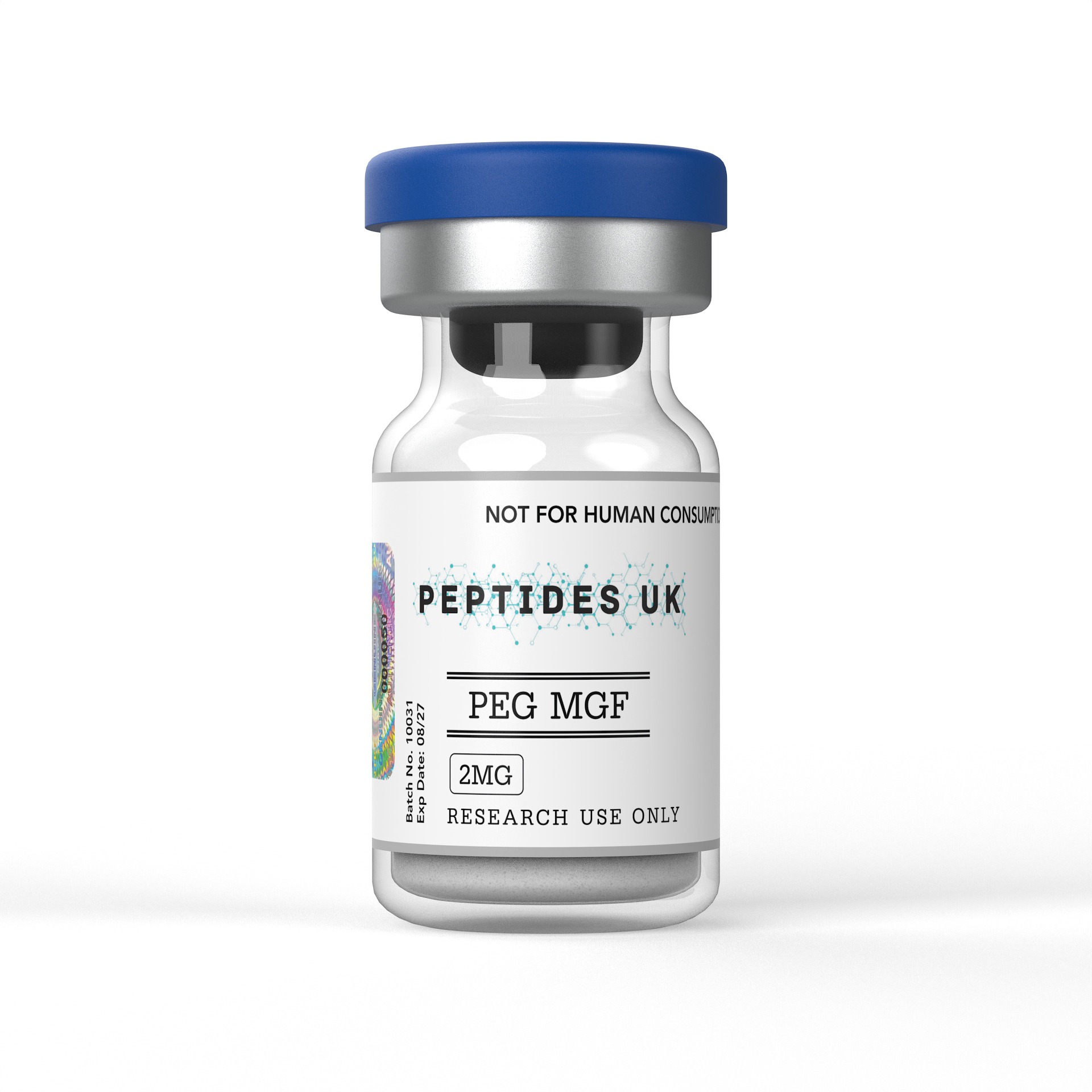
€92.00
PEG MGF EU – Buy Online | In Stock & Ready to Ship
Buy PEG MGF in Europe with fast shipping and guaranteed ≥99% purity — verified with COA and HPLC documentation. A trusted choice for peptides EU research teams rely on, with no customs delays or lengthy international wait times. Whether you’re searching for PEG MGF Europe suppliers, looking to buy PEG MGF in the EU, or sourcing peptides Europe-wide, we have you covered. Research teams across the EU can count on consistent stock, rapid fulfilment and full batch documentation every time.
For research use only. Not intended for human or veterinary use.

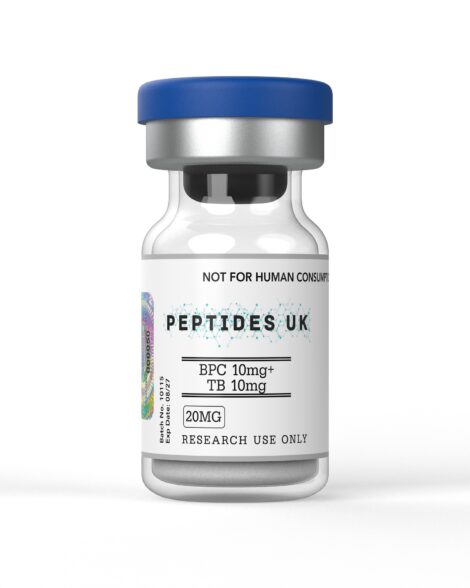

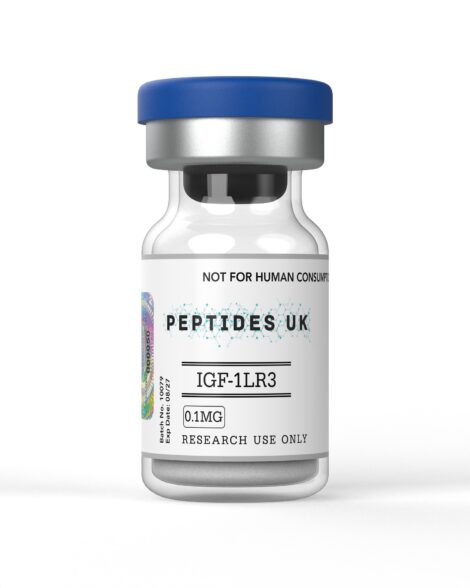
PEG MGF (PEGylated Mechano Growth Factor) is a synthetic, half-life extended variant of Mechano Growth Factor — an IGF-1 splice variant — available to buy in Europe for laboratory research into satellite cell activation, muscle tissue repair biology, localised IGF-1 signalling, and mechanotransduction.
Laboratories and research institutions across the EU can order verified, research-grade PEG MGF with fast international dispatch to Europe, full batch documentation, and ≥99% purity confirmed by HPLC and Mass Spectrometry.
✅ ≥99% Purity — HPLC & Mass Spectrometry Verified
✅ Batch-Specific Certificate of Analysis (CoA)
✅ Sterile Lyophilised Powder | GMP Manufactured
✅ Fast Dispatch to EU & Europe | Tracked Shipping
PEG MGF (PEGylated Mechano Growth Factor) is a synthetic, stabilised form of Mechano Growth Factor (MGF) — a locally expressed splice variant of Insulin-like Growth Factor 1 (IGF-1) produced in response to mechanical loading and tissue damage in muscle, bone, tendon, and cardiac tissue. The PEG designation refers to PEGylation — the attachment of polyethylene glycol (PEG) polymer chains to the MGF peptide — a well-established pharmaceutical strategy that dramatically extends the compound’s half-life and systemic stability compared to native MGF.
Native MGF is a short peptide corresponding to the unique C-terminal E-domain of the MGF IGF-1 splice variant — a sequence that confers biological activity distinct from the shared IGF-1 Ea domain, acting through mechanisms that include but extend beyond the classical IGF-1 receptor pathway. In its native form, MGF is highly susceptible to enzymatic degradation and has a half-life measured in minutes in biological systems — severely limiting its utility in research protocols requiring sustained MGF signalling. PEGylation addresses this by shielding the peptide from proteolytic degradation, reducing renal clearance, and extending systemic circulation time to hours — making PEG MGF a practical research tool for studying MGF biology in intact biological systems where native MGF would be cleared before producing measurable effects.
The biological significance of MGF lies in its role as a local tissue repair and regeneration signal — produced at sites of mechanical stress or injury to activate muscle satellite cells, stimulate proliferation of tissue progenitor cells, and initiate repair cascades independently of the systemic IGF-1 axis. This localised, damage-responsive biology makes PEG MGF a research tool of particular interest for studying the cellular and molecular mechanisms of muscle repair, satellite cell biology, and the mechanotransduction pathways linking physical loading to tissue regeneration responses in pre-clinical European research settings.
In laboratory settings, PEG MGF is studied primarily for its effects on satellite cell activation, muscle tissue repair signalling, and local IGF-1 splice variant biology — with research extending into cardiac, bone, and tendon tissue repair applications. EU and European researchers working with PEG MGF typically focus on:
All research applications are for in vitro and pre-clinical use only.
PEG MGF sits within the well-established IGF-1 splice variant and satellite cell biology literature — with a growing body of pre-clinical research characterising its distinct biological profile and practical advantages over native MGF in research settings.
Satellite cell activation: The foundational MGF biology literature has established its role as the primary local activator of quiescent muscle satellite cells following mechanical loading or injury — with studies documenting MGF E-domain peptide-driven satellite cell proliferation and migration in vitro and in vivo. PEG MGF’s extended half-life makes these findings more reproducible in intact biological systems where native MGF’s rapid degradation limits experimental consistency.
Distinction from mature IGF-1 signalling: Research has characterised the MGF E-domain peptide as producing biological effects distinct from — and in some cases independent of — classical IGF-1 receptor signalling. Studies have documented MGF E-domain activity in cells with blocked IGF-1R signalling, suggesting receptor interactions beyond the classical IGF-1R pathway. This mechanistic distinction has positioned PEG MGF as a tool for dissecting local versus systemic IGF-1 splice variant biology.
PEGylation and pharmacokinetic improvement: Studies comparing native MGF and PEG MGF pharmacokinetics have documented the substantially extended half-life conferred by PEGylation — with research characterising how PEG chain attachment shields the MGF peptide from proteolytic degradation and renal clearance while preserving biological activity. These pharmacokinetic improvements translate directly to more practical and reproducible pre-clinical research protocols.
Cardiac repair research: A distinct body of pre-clinical literature has examined MGF and PEG MGF in cardiac ischaemia models — with studies documenting effects on cardiomyocyte apoptosis, cardiac progenitor cell activation, and functional recovery parameters following myocardial injury. These findings have established PEG MGF as a research tool of interest in cardiac repair biology beyond its skeletal muscle application.
Muscle atrophy models: Studies have examined PEG MGF in disuse atrophy, denervation, and ageing-related muscle wasting models — characterising its effects on satellite cell pool maintenance, muscle fibre cross-sectional area, and atrophy-associated gene expression. These findings have contributed to understanding of how local IGF-1 splice variant signalling maintains muscle mass under atrophic conditions.
Bone and osteoblast biology: Research examining MGF E-domain peptide effects in bone tissue has documented osteoblast proliferation responses and effects on bone formation markers in pre-clinical models — extending the PEG MGF research application into musculoskeletal biology beyond skeletal muscle.
Neural tissue research: Studies have characterised MGF E-domain expression in neural tissue and examined PEG MGF effects on neuronal survival and neurite outgrowth in injury models — a growing research area reflecting the broader tissue distribution of MGF biology beyond muscle.
| Compound | Type | Primary Mechanism | Key Research Application |
|---|---|---|---|
| PEG MGF | PEGylated MGF E-domain peptide | Satellite cell activation, local IGF-1 splice variant signalling | Muscle repair, satellite cell biology, cardiac repair |
| Native MGF | Unmodified MGF E-domain peptide | Satellite cell activation — short half-life | Reference MGF biology, in vitro studies |
| IGF-1 LR3 | Long-acting IGF-1 analogue | IGF-1R agonist — systemic activity | Systemic IGF-1 axis research, anabolic signalling |
| IGF-1 DES(1-3) | N-terminal truncated IGF-1 | IGF-1R agonist — enhanced potency | Local IGF-1 potency research, CNS biology |
| IGF-1 Ea | Systemic IGF-1 splice variant | IGF-1R agonist — liver-derived systemic signal | Comparative IGF-1 splice variant biology |
| BPC-157 | Pentadecapeptide | Pleiotropic repair signalling | Tissue repair, tendon, gut, CNS biology |
Every order of PEG MGF dispatched to EU and European research institutions includes:
Yes. We supply research-grade PEG MGF with fast tracked international dispatch to all EU member states and wider European destinations. Packaging is designed to maintain peptide integrity throughout transit, and all orders include full batch documentation. PEG MGF is supplied strictly for laboratory research use only.
MGF (Mechano Growth Factor) is an IGF-1 splice variant produced locally in response to mechanical loading and tissue damage — generated when the IGF-1 gene is alternatively spliced to produce an mRNA encoding a unique C-terminal E-domain sequence not present in the systemic liver-derived IGF-1 (IGF-1 Ea). While mature IGF-1 acts systemically through the IGF-1 receptor to drive anabolic signalling throughout the body, MGF acts locally at sites of mechanical stress or injury — primarily to activate quiescent satellite cells and initiate tissue repair. The MGF E-domain peptide produces biological effects distinct from and in some cases independent of classical IGF-1R signalling, making it a functionally distinct research target.
PEGylation is the attachment of polyethylene glycol (PEG) polymer chains to a peptide or protein — a well-established pharmaceutical strategy for extending half-life, reducing immunogenicity, and improving systemic stability. Native MGF has a half-life of only minutes in biological systems due to rapid enzymatic degradation — severely limiting its research utility in intact biological models. PEGylation of MGF shields the peptide from proteolytic cleavage and reduces renal filtration, extending its half-life to several hours and making sustained MGF receptor engagement achievable in pre-clinical research protocols. The PEG modification is designed to preserve the biological activity of the MGF E-domain while dramatically improving its practical research utility.
Muscle satellite cells are tissue-resident stem cells that sit in a quiescent state beneath the basal lamina of muscle fibres — activated by mechanical loading, exercise-induced damage, or injury to proliferate, differentiate into myoblasts, and fuse to repair or add to existing muscle fibres. MGF is the primary local signal responsible for activating these quiescent satellite cells following muscle damage — making it the upstream trigger for the skeletal muscle repair cascade. Research into PEG MGF’s satellite cell biology is therefore central to understanding the molecular mechanisms of muscle regeneration, the maintenance of satellite cell pools across the lifespan, and the age-related decline in muscle repair capacity.
IGF-1 LR3 is a long-acting analogue of full-length IGF-1 that acts systemically through the IGF-1 receptor — driving anabolic signalling, protein synthesis, and cell proliferation throughout the body. PEG MGF is the stabilised form of a locally acting IGF-1 splice variant E-domain peptide, whose biological activity is centred on satellite cell activation and local tissue repair signalling rather than systemic IGF-1R-mediated anabolism. The two compounds represent different arms of IGF-1 biology — systemic versus local splice variant signalling — and are studied as complementary tools for dissecting the full spectrum of IGF-1 gene biological output.
Allow the vial to reach room temperature before opening. Add sterile water or an appropriate laboratory buffer slowly down the vial wall and swirl gently — do not shake. Prepare at your protocol’s required concentration, aliquot, and store at -80°C to minimise freeze-thaw degradation. Standard peptide handling protocols apply. The PEG modification provides improved stability compared to native MGF, but peptide integrity should still be preserved through careful handling and avoidance of repeated freeze-thaw cycles.
Orders are dispatched promptly via tracked international courier. Delivery to EU and European destinations typically takes 3–7 working days depending on location, with packaging designed to protect peptide stability throughout transit.
| Parameter | Detail |
|---|---|
| Type | PEGylated Mechano Growth Factor E-Domain Peptide |
| Origin | IGF-1 splice variant — MGF C-terminal E-domain |
| Modification | PEGylation — proteolytic stability and half-life extension |
| Primary Research Interest | Satellite cell activation, muscle repair, local IGF-1 splice variant biology |
| Purity | ≥99% |
| Verification | HPLC & Mass Spectrometry |
| Form | Sterile Lyophilised Powder |
| Solubility | Sterile water or laboratory buffer |
| Storage | -20°C, protected from light and moisture |
| Intended Use | Research use only |
PEG MGF is supplied exclusively for legitimate scientific research conducted within licensed laboratory environments. This product is not approved for human consumption, self-administration, or any therapeutic, clinical, or veterinary application. It must be handled solely by qualified researchers in compliance with applicable EU regulations, national legislation, and institutional ethics guidelines. By purchasing, you confirm this compound will be used exclusively for approved in vitro or pre-clinical research purposes.


WhatsApp us
Receive News
