PRODUCTS SOLD ON PEPTIDESLABEU.COM ARE FOR RESEARCH PURPOSES ONLY AND ARE NOT FOR HUMAN OR VETERINARY USE.

€27.00 – €46.00Price range: €27.00 through €46.00
Selank EU – Buy Online | In Stock & Ready to Ship
Buy Selank in Europe with fast shipping and guaranteed ≥99% purity — verified with COA and HPLC documentation. A trusted choice for peptides EU research teams rely on, with no customs delays or lengthy international wait times. Whether you’re searching for Selank Europe suppliers, looking to buy Selank in the EU, or sourcing peptides Europe-wide, we have you covered. Research teams across the EU can count on consistent stock, rapid fulfilment and full batch documentation every time.
For research use only. Not intended for human or veterinary use.


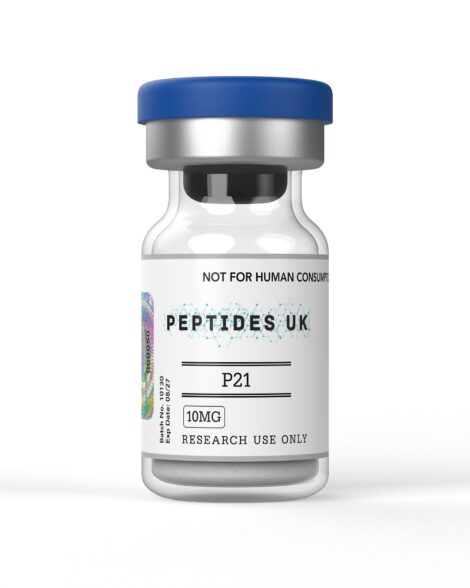
Selank — heptapeptide sequence Thr-Lys-Pro-Arg-Pro-Gly-Pro (TKPRPGP), a synthetic analogue of the endogenous immunomodulatory tetrapeptide tuftsin developed at the Institute of Molecular Genetics of the Russian Academy of Sciences — is one of the most extensively studied neuropeptide research tools in the anxiolytic, nootropic, and neuroimmune biology literature, combining the four-residue tuftsin core sequence derived from the Fc domain of human immunoglobulin G with a C-terminal Pro-Gly-Pro extension that confers metabolic stability and sustained duration of action unavailable to the parent tetrapeptide. Selank’s pre-clinical and clinical research profile spans GABAergic system modulation, BDNF upregulation, enkephalin system interaction, serotonergic and dopaminergic neurotransmitter biology, anxiolytic and antidepressant research, cognitive and nootropic paradigms, and immunomodulatory biology — making it a uniquely multi-pathway neuropeptide research tool for EU neuroscience, psychopharmacology, and neuroimmunology laboratories. Research institutions and laboratories across the EU can source verified, research-grade Selank in Europe with fast dispatch and full batch documentation included.
✅ ≥99% Purity — HPLC & Mass Spectrometry Verified
✅ Batch-Specific Certificate of Analysis (CoA) Included
✅ Sterile Lyophilised Powder | GMP Manufactured
✅ Fast Dispatch Across EU & Europe | EU Peptides Stock
Selank is a synthetic heptapeptide with the sequence Thr-Lys-Pro-Arg-Pro-Gly-Pro — molecular weight approximately 863 Da — developed at the Institute of Molecular Genetics of the Russian Academy of Sciences in collaboration with the V.V. Zakusov Research Institute of Pharmacology. It is a rationally designed analogue of tuftsin, the natural immunomodulatory tetrapeptide Thr-Lys-Pro-Arg that is cleaved from the Fc domain of human immunoglobulin G heavy chain (residues 289–292) and is known to regulate phagocytic activity, cell motility, and immune cell function across mammalian systems.
The structural innovation of Selank relative to its parent tuftsin is the C-terminal extension by three natural L-amino acids — Pro-Gly-Pro — which substantially improves the peptide’s metabolic stability against plasma and tissue peptidases, extends its biological half-life, and enhances CNS penetration relative to the rapidly degraded parent tetrapeptide. This engineering approach — using a short glyproline-type stabilising extension — is the same strategy employed in the design of related neuropeptides including Semax, and reflects a broader design principle for converting labile endogenous regulatory peptides into stable, research-deployable synthetic tools. The Pro-Gly-Pro motif is additionally hypothesised to facilitate interaction with CNS transport systems relevant to blood-brain barrier transit.
Selank’s mechanistic biology is notably multi-pathway: no single receptor or binding partner has been definitively identified as its primary target. Instead, research has characterised converging effects across the GABAergic system, BDNF expression, serotonin and dopamine metabolism, enkephalin protease inhibition, and the tuftsin-inherited immunomodulatory biology — a mechanistic complexity that reflects the pleiotropic nature of regulatory neuropeptide signalling and distinguishes Selank from receptor-monospecific pharmacological tools. This mechanistic breadth is itself an active area of EU neuropeptide research.
Selank has completed Stage III clinical trials in Russia for generalised anxiety disorder and neurasthenia and is approved for therapeutic use in Russia and Ukraine — a clinical research dataset that provides a human pharmacology context largely absent from many other research peptides available to EU laboratories, making Selank’s pre-clinical biology directly interpretable against a characterised human pharmacodynamic profile.
In controlled laboratory and pre-clinical settings, Selank is studied across the following research applications:
GABAergic System Modulation and Anxiolytic Biology Research — Selank’s most extensively characterised and clinically validated mechanism is positive allosteric modulation of GABA-A receptors — enhancing GABA’s affinity for its receptor complex and amplifying inhibitory neurotransmission in the CNS through a mechanism analogous to but structurally distinct from classical benzodiazepines. Radioligand binding studies have established that Selank acts as a positive allosteric modulator at GABA-A receptors, influencing [³H]GABA binding in a concentration-dependent, subtype-selective manner — with the binding site apparently distinct from but potentially partially overlapping with the classical benzodiazepine site. Gene expression profiling in rat frontal cortex following intranasal Selank administration identified significant changes in the expression of 45 neurotransmission-related genes at one hour — including differential regulation of GABA receptor subunit genes (Gabrb3, Gabrg3, Gabre, Gabrq), GABA transporters, and ion channel genes — with expression patterns showing positive correlation to those produced by direct GABA administration, supporting the GABAergic mechanism hypothesis. Research uses Selank to study allosteric modulation of GABA-A receptor subtypes, to characterise anxiolytic biology achievable through positive allosteric modulation in the absence of classical benzodiazepine pharmacophore chemistry, and to investigate GABAergic gene expression dynamics in anxiety and stress paradigms.
Anxiolytic and Anti-Stress Biology Research — Selank produces consistent anxiolytic effects across multiple rodent behavioural paradigms — elevated plus maze, open field, fear conditioning, and chronic mild stress models — with effects characterised as comparable in magnitude to reference benzodiazepine compounds including diazepam and phenazepam in matched experimental conditions. Critically, combined Selank and diazepam administration in unpredictable chronic mild stress paradigms demonstrated amplification of the diazepam anxiolytic response — consistent with converging but mechanistically distinguishable GABAergic allosteric modulation — and suggesting that reduced benzodiazepine doses may achieve equivalent anxiolytic endpoints in the presence of Selank. EU research uses these behavioural pharmacology models to characterise Selank’s anxiolytic profile, to study its effects across genetic models of differential anxiety reactivity, and to investigate anti-stress mechanisms including Selank’s observed maintenance of cortisol levels under experimental stress challenge.
BDNF Upregulation and Neuroplasticity Research — Selank rapidly elevates brain-derived neurotrophic factor (BDNF) mRNA expression in the hippocampus — a finding with direct relevance to neuroplasticity, synaptic remodelling, and the cellular biology of memory and learning. BDNF upregulation in the hippocampus and prefrontal cortex is of particular research interest under conditions where these levels are suppressed — elevated glucocorticoids, chronic stress, and alcohol exposure being the most studied contexts. Research has characterised Selank’s ability to prevent ethanol-induced reductions in hippocampal and frontal cortex BDNF content, with BDNF modulation correlating with preservation of cognitive parameters in alcohol-challenged paradigms. EU neuroscience research uses these findings to study the neurotrophic mechanisms by which neuropeptide-based anxiolytic tools may simultaneously protect neuroplasticity — distinguishing Selank’s profile from classical benzodiazepines, which are associated with BDNF suppression and cognitive impairment rather than enhancement.
Nootropic and Cognitive Biology Research — Selank produces cognitive-stimulating and memory-protective effects across multiple paradigms — including improved memory acquisition, enhanced consolidation, accelerated learning rates, and protection of established memory traces. Research in non-human primates has documented compensatory and antiamnestic effects of Selank in established amnesia models, providing translational context for the rodent cognitive biology. The nootropic profile is mechanistically attributed to the convergence of BDNF upregulation, GABAergic modulation producing anxiolytic-cognitive disinhibition, serotonin metabolism effects, and enkephalin system interactions. EU cognitive neuroscience research uses Selank to study the neuropeptide-cognition interface, to characterise BDNF-dependent memory consolidation mechanisms, and to investigate the cognitive phenotypic differences between GABAergic anxiolytics with and without BDNF-upregulating activity.
Enkephalin System Interaction and Opioid Biology Research — Selank and the related neuropeptide Semax inhibit enkephalin-degrading enzymes — including carboxypeptidase H and related enkephalinase activities — thereby reducing the rate of proteolytic hydrolysis of endogenous enkephalins and extending their half-life and bioavailability in plasma and neural tissue. Clinical research in generalised anxiety disorder patients documented reduced tau(1/2) leu-enkephalin levels in GAD subjects relative to healthy controls — with Selank treatment increasing leu-enkephalin half-life predominantly in the GAD subgroup, suggesting enkephalin system dysregulation as a component of GAD pathophysiology responsive to Selank’s enzyme-inhibiting activity. Research uses Selank to study enkephalin bioavailability regulation through protease inhibition, to characterise the contribution of enkephalin system tone to anxiolytic and analgesic biology, and to investigate interactions between the enkephalin opioid system and the GABAergic and serotonergic systems modulated by Selank.
Serotonergic and Dopaminergic Neurotransmitter Biology Research — Selank influences serotonin metabolism and monoamine neurotransmitter concentrations — with research in serotonin-depleted (PCPA-treated) rodent models demonstrating restoration of brainstem serotonin metabolism parameters under Selank treatment, suggesting an ability to modulate serotonergic function under conditions of compromised synthesis. Dopamine receptor gene expression — including Drd5 encoding the dopamine receptor implicated in long-term potentiation and memory formation — is altered by Selank in frontal cortex gene expression profiling studies. EU research uses these findings to study Selank’s effects on monoamine neurotransmitter system dynamics, to characterise the serotonin-GABA-enkephalin system interactions underlying its multi-pathway anxiolytic biology, and to investigate potential antidepressant mechanisms in anhedonia and depression paradigms where monoamine tone is a primary research variable.
Immunomodulatory Biology Research — Selank’s structural origin from tuftsin — a peptide whose biological role is the activation of phagocytic cells, monocytes, and macrophages — confers an immunomodulatory biology directly inherited from the parent tetrapeptide. Research has documented Selank-driven modulation of IL-6 expression in peripheral blood cells, shifts in T helper cell Th1/Th2 cytokine balance, modulation of chemokine and cytokine gene expression in spleen tissue, and stimulation of interferon production. In anxiety-asthenic disorder patients, Selank immunomodulatory effects were characterised alongside its anxiolytic effects — establishing a neuroimmune research dimension that distinguishes Selank from purely CNS-acting anxiolytics. EU neuroimmunology research uses Selank to study the bidirectional nervous system-immune system interface, to characterise how regulatory neuropeptides with immune system origins modulate both neural and immune biology simultaneously, and to investigate CX3CR1-mediated inflammatory pathway modulation at the transcriptional level.
Antiviral Biology Research — Selank has demonstrated antiviral activity in pre-clinical experimental infection models — including characterised activity against influenza virus replication — attributed to its immunomodulatory biology through interferon induction and immune activation mechanisms inherited from the tuftsin immunostimulatory scaffold. The Gly-Pro fragment within the Pro-Gly-Pro C-terminal extension has been identified as a minimal pharmacophore fragment with antiviral activity — with research characterising significant changes in chemokine, cytokine, and cytokine receptor gene expression in murine spleen 6 and 24 hours following a single administration of both intact Selank and the Gly-Pro fragment alone. EU virology and immunopharmacology research uses Selank’s antiviral biology to study the immune activation mechanisms underlying peptide-based antiviral responses and to characterise the structural determinants of antiviral activity within the heptapeptide sequence.
Antidepressant and Anhedonia Biology Research — Selank produces antidepressant-like effects in rodent models of depression and anhedonia — with converging contributions from BDNF upregulation, serotonin metabolism modulation, enkephalin half-life extension, and GABAergic anti-stress biology all mechanistically relevant to the antidepressant phenotype. Clinical data in generalised anxiety disorder and neurasthenia populations documented antiasthenic and psychostimulant effects alongside anxiolytic effects — a profile not shared by reference benzodiazepine comparators — consistent with the nootropic and monoamine-modulating activity contributing dimensions of efficacy absent from purely GABAergic anxiolytics. EU psychiatry and neuropsychopharmacology research uses these findings to investigate regulatory neuropeptide-based approaches to depression and anhedonia biology.
Clinical Anxiety and Neurasthenia Research — A 62-patient comparative clinical study examined Selank versus medazepam (a reference benzodiazepine anxiolytic) in generalised anxiety disorder and neurasthenia — demonstrating comparable anxiolytic effects on Hamilton, Zung, and CGI psychometric scales between treatments, while Selank additionally produced antiasthenic and psychostimulant effects absent from the benzodiazepine comparator. The same study characterised reduced tau(1/2) leu-enkephalin levels in GAD and neurasthenia patients relative to healthy controls, with Selank treatment increasing leu-enkephalin half-life — establishing a biological correlate of clinical response and a mechanistic marker distinguishing the populations most responsive to Selank’s enkephalin-stabilising activity.
GABAergic Gene Expression Research — Gene expression profiling studies examining 84 neurotransmission-related genes in rat frontal cortex at 1 and 3 hours following Selank or GABA administration (300 µg/kg intranasal) documented significant positive correlation between Selank-driven and GABA-driven gene expression changes — with 45 genes altered at 1 hour and 22 at 3 hours — providing transcriptomic evidence for the GABAergic mechanism hypothesis and characterising the specific GABA receptor subunit gene regulation patterns underlying Selank’s inhibitory neurotransmission modulation. Parallel studies in IMR-32 neuroblastoma cells confirmed GABA receptor subunit gene expression modulation by Selank at the cellular level, establishing in vitro tools for mechanistic GABAergic research.
Radioligand Receptor Pharmacology — Radioligand binding studies using [³H]GABA demonstrated that Selank functions as a positive allosteric modulator at GABA-A receptors — influencing GABA binding in a concentration-dependent, subtype-selective manner — with the Selank binding site characterised as distinct from but potentially partially overlapping with the classical benzodiazepine binding site on the basis of its differential interaction with diazepam and olanzapine’s modulatory activity. This receptor pharmacology characterisation provides the molecular basis for Selank’s ability to amplify rather than compete with benzodiazepine co-administration.
BDNF and Cognitive Protection Research — Pre-clinical studies have documented rapid BDNF mRNA upregulation in rat hippocampus following Selank administration — with the cognitive and memory-protective effects of Selank, including prevention of ethanol-induced amnesia, correlating with BDNF content changes in hippocampus and frontal cortex. Non-human primate studies characterised compensatory and antiamnestic effects of Selank in established amnesia paradigms — establishing translational relevance of the rodent cognitive biology to higher-order research models and providing a non-human primate cognitive dataset for a neuropeptide research tool that has also completed human clinical trials.
| Feature | Selank |
|---|---|
| Sequence | Thr-Lys-Pro-Arg-Pro-Gly-Pro (TKPRPGP) |
| Structural Origin | Synthetic analogue of tuftsin (Thr-Lys-Pro-Arg) — IgG Fc domain fragment — C-terminally extended with Pro-Gly-Pro |
| Molecular Weight | ~863 Da |
| Length | Heptapeptide — 7 amino acids |
| Developed By | Institute of Molecular Genetics, Russian Academy of Sciences |
| Primary Mechanism | Positive allosteric modulation of GABA-A receptors — receptor subtype-selective, concentration-dependent |
| Secondary Mechanisms | BDNF upregulation (hippocampus); enkephalin-degrading enzyme inhibition; serotonin/dopamine metabolism modulation |
| Immunomodulatory Biology | IL-6 modulation; Th1/Th2 balance; interferon induction; macrophage activation — tuftsin-inherited |
| Antiviral Biology | Pre-clinical antiviral activity — influenza models; Gly-Pro fragment pharmacophore |
| Anxiolytic Profile | Comparable to benzodiazepines in clinical trials; no sedation, dependence, or withdrawal documented |
| Nootropic Profile | Memory acquisition, consolidation, cognitive protection — BDNF and serotonin-mediated |
| Clinical Status | Stage III clinical trials completed — approved for GAD and neurasthenia in Russia and Ukraine |
| Metabolic Stability | Enhanced vs. tuftsin — Pro-Gly-Pro extension resists plasma peptidase degradation |
| BBB Transit | Pro-Gly-Pro motif hypothesised to facilitate CNS transport — intranasal delivery well-characterised |
| Receptor Characterisation | Partially characterised — GABA-A positive allosteric modulation primary; additional binding partners under investigation |
| Related Peptide | Semax — parallel neuropeptide developed at same institution; ACTH(4–10) analogue with overlapping enkephalinase-inhibiting biology |
| Parameter | Specification |
|---|---|
| Full Name | Selank / TKPRPGP Heptapeptide |
| Sequence | Thr-Lys-Pro-Arg-Pro-Gly-Pro |
| One-Letter Code | TKPRPGP |
| Structural Origin | Synthetic tuftsin analogue — IgG Fc-domain tetrapeptide + Pro-Gly-Pro C-terminal stability extension |
| Type | Synthetic Heptapeptide — Research Grade |
| Molecular Weight | ~863 Da |
| Purity | ≥99% HPLC & MS Verified |
| Form | Sterile Lyophilised Powder |
| Solubility | Sterile water or bacteriostatic water — good aqueous solubility |
| Storage (Powder) | 4°C for medium-term; -20°C for long-term; protect from light and moisture |
| Storage (Reconstituted) | 4°C up to 4–7 days; -20°C single-use aliquots for extended storage |
| Administration Route (Pre-clinical) | Intranasal (primary characterised route); intraperitoneal and intravenous in rodent models |
| Bundle Size | 5mg |
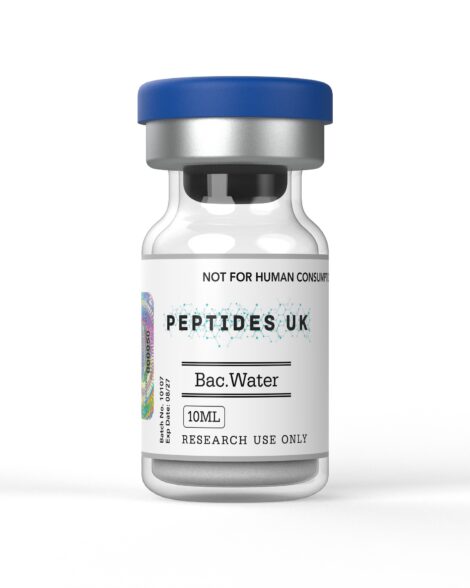
Selank reconstitutes readily in sterile water or bacteriostatic water — add solvent slowly to the lyophilised powder and swirl gently until fully dissolved. Selank does not contain disulphide bridges and has no cystine-knot architecture — standard aqueous reconstitution is appropriate without acidic conditions or reducing agent exclusion concerns. Its relatively low molecular weight (~863 Da) and good intrinsic aqueous solubility make reconstitution straightforward.
Selank is stable in lyophilised form at 4°C for months; reconstituted solutions should be stored at 4°C for up to 4–7 days or prepared as single-use aliquots at -20°C for extended storage. Avoid repeated freeze-thaw cycles. Protect reconstituted solutions from light. For intranasal delivery paradigms — the primary administration route characterised in clinical and most pre-clinical research — appropriate intranasal formulation vehicles and delivery devices should be sourced according to the specific research protocol, as simple aqueous reconstitution in sterile or bacteriostatic water is compatible with intranasal administration in rodent models.
Selank has no disulphide bonds and no reducing agent incompatibilities. Protein-low-binding tubes are not required given the peptide’s molecular weight, though are advisable at sub-µg/mL concentrations in cell-based assay applications.
Every Selank order dispatched across the EU and Europe includes:
✅ Batch-Specific Certificate of Analysis (CoA)
✅ HPLC Chromatogram
✅ Mass Spectrometry Confirmation — full sequence verification
✅ Sterility & Endotoxin Testing Report
✅ Reconstitution Protocol
✅ Technical Research Support
Yes — research-grade Selank is available to researchers and institutions across the EU and Europe with fast dispatch and full batch documentation included. Supplied strictly for laboratory research purposes only.
Tuftsin is the endogenous tetrapeptide Thr-Lys-Pro-Arg — cleaved from the Fc domain of IgG heavy chain (residues 289–292) — with characterised immunomodulatory biology through macrophage and phagocyte activation. Selank extends the tuftsin core with three C-terminal amino acids (Pro-Gly-Pro) that substantially improve metabolic stability against plasma peptidases and extend the biological duration of action unavailable to the rapidly degraded parent tetrapeptide. The Pro-Gly-Pro extension additionally introduces glyproline-type biology and is hypothesised to facilitate CNS access. Selank therefore retains tuftsin’s immunomodulatory biology while adding the CNS-active anxiolytic and nootropic profile absent from the parent molecule — making it a structurally rationalised dual neuroimmune research tool.
Both Selank and classical benzodiazepines produce anxiolytic effects through positive allosteric modulation of GABA-A receptors — but their allosteric binding sites are distinct. Benzodiazepines bind the classical benzodiazepine site between GABA-A α and γ subunits, enhancing chloride channel opening frequency. Selank’s allosteric binding site has been characterised as distinct from but potentially partially overlapping with the benzodiazepine site — enabling additive anxiolytic effects in co-administration paradigms. Beyond GABAergic biology, Selank’s concurrent BDNF upregulation, enkephalin enzyme inhibition, and serotonin metabolism modulation produce a pharmacological profile with nootropic, antiasthenic, and immunomodulatory dimensions entirely absent from classical benzodiazepine pharmacology.
The C-terminal Pro-Gly-Pro tripeptide serves two principal research-relevant functions. First, it substantially improves Selank’s resistance to plasma and tissue peptidases relative to the parent tuftsin tetrapeptide — extending biological half-life and enabling sustained pharmacological activity from a single administration. Second, the Pro-Gly-Pro motif is a glyproline-type structural element hypothesised to facilitate interaction with CNS transport systems and blood-brain barrier transit mechanisms — consistent with Selank’s well-characterised CNS activity following intranasal administration. The Gly-Pro fragment within this extension has additionally been identified as a minimal antiviral pharmacophore with independent immunomodulatory gene expression activity in spleen tissue.
Selank and Semax are parallel synthetic neuropeptide research tools developed at the same institution — the Institute of Molecular Genetics of the Russian Academy of Sciences — from different endogenous peptide scaffolds. Semax is a synthetic analogue of ACTH(4–10), developed for nootropic and neuroprotective applications with characterised BDNF upregulation and enkephalinase-inhibiting biology that partially overlaps with Selank’s profile. Both peptides inhibit enkephalin-degrading enzymes — convergent biology from structurally distinct scaffolds. Selank is primarily characterised for anxiolytic biology and has the stronger GABAergic and immunomodulatory research profile; Semax is primarily characterised for cognitive enhancement and neuroprotection with a more pronounced dopaminergic component. Both are used in EU research paradigms examining neuropeptide-based CNS biology.
Vehicle control (matched sterile or bacteriostatic water at equivalent volume) is essential. Reference anxiolytic controls — diazepam or phenazepam at characterised doses — allow direct benchmarking of Selank’s anxiolytic magnitude in behavioural paradigms. For GABAergic mechanism attribution, GABA-A receptor antagonist controls (bicuculline, flumazenil) are required to distinguish GABAergic-dependent from GABAergic-independent components of Selank’s biological effects. For BDNF-dependent cognitive biology, BDNF neutralising antibody controls or TrkB pathway inhibitor controls allow attribution of cognitive effects to the BDNF-upregulating mechanism. For enkephalin biology, enkephalinase activity assays in parallel to Selank treatment characterise the enzyme inhibition component.
≥99% purity by HPLC and full sequence mass spectrometry verification is essential — truncation fragments (particularly the tuftsin core Thr-Lys-Pro-Arg tetrapeptide alone, which has a different pharmacological profile from the intact heptapeptide) would confound dose-response data and could erroneously attribute tuftsin-specific immunobiology to the intact Selank sequence. Sequence verification confirming the complete Thr-Lys-Pro-Arg-Pro-Gly-Pro heptapeptide and the absence of epimerisation variants ensures biological activity data are attributable to the correctly structured research compound.
Selank is supplied exclusively for legitimate scientific research purposes conducted within licensed laboratory environments across the EU and Europe. This product is not intended for human consumption, self-administration, or any therapeutic application. It must be handled by qualified researchers in compliance with applicable EU regulations and institutional ethics guidelines. By purchasing, you confirm that this compound will be used solely for approved in vitro or pre-clinical research purposes.


WhatsApp us
Receive News
