PRODUCTS SOLD ON PEPTIDESLABEU.COM ARE FOR RESEARCH PURPOSES ONLY AND ARE NOT FOR HUMAN OR VETERINARY USE.

€54.50
Thymalin EU – Buy Online | In Stock & Ready to Ship
Buy Thymalin in Europe with fast shipping and guaranteed ≥99% purity — verified with COA and HPLC documentation. A trusted choice for peptides EU research teams rely on, with no customs delays or lengthy international wait times. Whether you’re searching for Thymalin Europe suppliers, looking to buy Thymalin in the EU, or sourcing peptides Europe-wide, we have you covered. Research teams across the EU can count on consistent stock, rapid fulfilment and full batch documentation every time.
For research use only. Not intended for human or veterinary use.
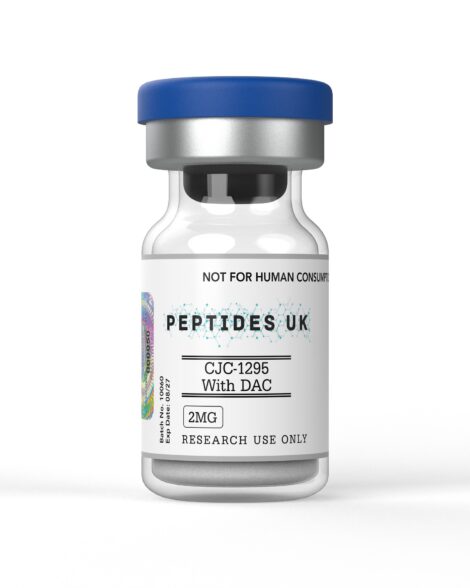


Thymalin is a naturally derived thymic polypeptide extract and founding member of the Khavinson peptide bioregulator class, available to buy in Europe for laboratory research into thymic biology, immune function regulation, T cell maturation, immunosenescence, and the mechanisms of organ-specific peptide bioregulator activity.
Laboratories and research institutions across the EU can order verified, research-grade Thymalin with fast international dispatch to Europe, full batch documentation, and verified purity confirmed by analytical testing.
✅ Verified Purity — Analytically Tested
✅ Batch-Specific Certificate of Analysis (CoA)
✅ Sterile Lyophilised Powder | GMP Manufactured
✅ Fast Dispatch to EU & Europe | Tracked Shipping
Thymalin is a standardised polypeptide extract derived from the thymus glands of young calves — produced through controlled extraction and purification of thymic tissue to yield a preparation enriched in low molecular weight thymic peptides that retain the immunomodulatory biological activities of the intact thymus gland. It was developed by Professor Vladimir Khavinson and colleagues at the St. Petersburg Institute of Bioregulation and Gerontology as the foundational thymic compound in the peptide bioregulator research programme — a systematic effort to identify organ-specific regulatory peptides from major tissues and organs that could serve as research tools for studying tissue-specific biological regulation and ageing biology.
The thymus gland occupies a unique position in immunological biology — serving as the primary organ of T lymphocyte development and maturation, through which bone marrow-derived T cell precursors migrate, undergo positive and negative selection, and emerge as functionally competent naive T cells capable of mounting adaptive immune responses. The thymic microenvironment — composed of thymic epithelial cells, dendritic cells, macrophages, and the peptide hormones they produce — is essential for shaping the T cell repertoire and establishing central immune tolerance. Thymalin, as a polypeptide extract of this microenvironment, provides a multicomponent research tool for studying how the thymic peptide milieu collectively supports T cell biology.
Thymalin’s research significance extends beyond its thymic biology — reflecting the central importance of thymic function to overall immune health throughout life. The thymus undergoes progressive age-related involution beginning in early adulthood — with dramatic reduction in thymic size, cellularity, and T cell output by middle age that contributes substantially to the immunosenescence characterising aged immune systems. Studies have documented that Thymalin administration can partially restore immune function parameters that decline with age — positioning it as a foundational research tool for studying the contribution of thymic peptide signalling to immune ageing and the consequences of thymic peptide restoration in immunosenescence models. This ageing research application, combined with its well-characterised immunomodulatory profile across infectious disease, cancer immunology, and immune reconstitution models, has established Thymalin as one of the most extensively studied peptide bioregulators available to European research institutions.
In laboratory settings, Thymalin is studied as a multicomponent thymic polypeptide preparation with broad immunological research applications. EU and European researchers working with Thymalin typically focus on:
All research applications are for in vitro and pre-clinical use only.
Thymalin has an extensive research literature — primarily developed through Khavinson’s St. Petersburg research programme and collaborating institutions — spanning immunology, ageing biology, cancer research, and infectious disease across decades of pre-clinical and translational investigation.
Foundational immunological characterisation: Early studies characterising Thymalin’s immunological profile documented its ability to restore T cell function in thymus-deficient and immunodepleted animal models — establishing its thymic hormone-like activity and positioning it as a research tool for studying how thymic peptide preparations support immune function. These foundational findings established Thymalin’s immunological research credentials and launched the broader Khavinson peptide bioregulator programme.
T cell biology research: Studies have documented Thymalin effects on T cell maturation parameters — including T cell receptor expression, CD4/CD8 ratio normalisation, T cell proliferative responses to mitogens and antigens, and IL-2 production capacity in stimulated T cell populations. These T cell biology findings have characterised the cellular basis of Thymalin’s immune-enhancing activity and distinguished it from purely innate immune-activating compounds.
Immunosenescence findings: A significant body of research has examined Thymalin in aged animal models — documenting partial restoration of T cell subset frequencies, improved T cell proliferative responses, enhanced NK cell cytotoxicity, and normalisation of cytokine production profiles toward patterns more typical of younger animals. These immunosenescence findings have established Thymalin as a reference thymic peptide tool for studying age-related immune decline.
Longevity research: Extended pre-clinical studies examining Thymalin administration in aged rodent cohorts have documented increased mean and maximum lifespan parameters compared to controls — alongside reductions in age-associated disease incidence including tumour development and cardiovascular pathology. These longevity findings, published in the Khavinson programme literature, have positioned Thymalin alongside Epithalon as the primary longevity research peptide bioregulators.
Cancer model research: Studies examining Thymalin in pre-clinical cancer models have documented effects on tumour development parameters — including reduced tumour incidence in carcinogen-induced models and enhanced anti-tumour immune activity in transplanted tumour models — attributed to Thymalin’s enhancement of cytotoxic T cell and NK cell immune function. These oncology findings have contributed to the broader Thymalin research literature alongside its immunological and ageing profile.
Infectious disease findings: Pre-clinical studies have characterised Thymalin’s effects in models of bacterial and viral infection — documenting improvements in pathogen clearance, immune cell recruitment, and survival parameters consistent with its T cell and NK cell-enhancing immunological profile.
Comparative bioregulator research: Studies comparing Thymalin to Thymosin Alpha-1 and synthetic thymic peptides have characterised the relative advantages of multicomponent thymic extract versus single-peptide approaches to thymic immune biology — contributing to understanding of how the combined activity of multiple thymic peptide components collectively produces the full biological profile of thymic hormone function.
| Compound | Type | Primary Mechanism | Key Research Application |
|---|---|---|---|
| Thymalin | Thymic polypeptide extract — Khavinson bioregulator | Multicomponent thymic peptide activity — T cell maturation, immune modulation | T cell biology, immunosenescence, longevity, cancer immunology |
| Thymosin Alpha-1 | Synthetic 28aa thymic peptide | TLR9 agonism, T cell maturation, dendritic cell activation | Defined single-peptide thymic biology, vaccine adjuvancy |
| Vilon | Synthetic thymic dipeptide (Lys-Glu) | Thymic dipeptide bioregulator | Short-sequence thymic biology, immune regulation |
| Epithalon | Synthetic pineal tetrapeptide | Telomerase activation, circadian regulation | Longevity, telomere biology — complementary Khavinson compound |
| VIP | 28aa neuropeptide | VPAC1/VPAC2 anti-inflammatory | Immune tolerance — contrasting immunosuppressive profile |
| Thymosin Beta-4 (TB-500) | 43aa thymic peptide | Actin sequestration, tissue repair | Tissue repair biology — distinct from immune Thymalin profile |
Every order of Thymalin dispatched to EU and European research institutions includes:
Yes. We supply research-grade Thymalin with fast tracked dispatch to all EU member states and wider European destinations. All orders include full batch documentation. Thymalin is supplied strictly for laboratory research use only.
Thymalin is a multicomponent thymic polypeptide extract whose activity reflects the combined effects of multiple thymic peptides. Thymosin Alpha-1 is a single defined 28 amino acid synthetic peptide with a characterised TLR9/T cell mechanism. Thymalin is used for studying the full thymic peptide milieu; Thymosin Alpha-1 for mechanistic single-compound studies.
Peptide bioregulators are short organ-specific regulatory peptides developed by Khavinson’s programme as tissue-targeted biological regulators. Thymalin is the founding thymic member of this class — the first organ-specific extract from which the synthetic bioregulator programme developed, making it the reference compound against which synthetic thymic bioregulators such as Vilon are benchmarked.
Thymic involution is the progressive age-related atrophy of the thymus — dramatically reducing T cell output from middle age onward and contributing to immunosenescence. Thymalin is used to study whether thymic peptide supplementation can compensate for involution-associated immune decline — making it a central tool in ageing immunology research.
Thymalin is a multicomponent thymic polypeptide extract. Vilon is a synthetic dipeptide (Lys-Glu) developed as a defined minimal-sequence synthetic analogue of the active thymic peptide fraction. Vilon provides a chemically defined single-compound tool; Thymalin provides the full multicomponent thymic peptide research profile.
Extended pre-clinical studies have documented Thymalin administration increasing mean and maximum lifespan in aged rodent models alongside reductions in age-associated disease. These findings position Thymalin alongside Epithalon as the primary longevity-associated compounds in the Khavinson bioregulator research programme.
Studies have documented Thymalin promoting T cell maturation, normalising CD4/CD8 ratios, enhancing T cell proliferative responses, and restoring IL-2 production capacity in immunodepleted and aged models — reflecting its thymic hormone-like activity on T cell development and functional competence.
Reconstitute with sterile water or appropriate laboratory buffer by adding solvent slowly down the vial wall and swirling gently. Prepare at required concentration, aliquot, and store at -80°C. Avoid repeated freeze-thaw cycles. Standard protein handling protocols apply.
Delivery to EU and European destinations typically takes 3–7 working days via tracked international courier with packaging maintaining preparation integrity throughout transit.
| Parameter | Detail |
|---|---|
| Type | Thymic Polypeptide Extract — Khavinson Peptide Bioregulator Class |
| Source | Purified calf thymus gland extract |
| Active Fraction | Low molecular weight thymic peptides |
| Primary Mechanism | Multicomponent thymic peptide activity — T cell maturation, immune modulation |
| Primary Research Interest | T cell biology, immunosenescence, longevity, cancer immunology, immune reconstitution |
| Purity | Verified by analytical testing |
| Form | Sterile Lyophilised Powder |
| Solubility | Sterile water or laboratory buffer |
| Storage | -20°C, protected from light and moisture |
| Intended Use | Research use only |
Thymalin is supplied exclusively for legitimate scientific research conducted within licensed laboratory environments. This product is not approved for human consumption, self-administration, or any therapeutic, clinical, or veterinary application. It must be handled solely by qualified researchers in compliance with applicable EU regulations, national legislation, and institutional ethics guidelines. By purchasing, you confirm this compound will be used exclusively for approved in vitro or pre-clinical research purposes.
WhatsApp us
Receive News
