PRODUCTS SOLD ON PEPTIDESLABEU.COM ARE FOR RESEARCH PURPOSES ONLY AND ARE NOT FOR HUMAN OR VETERINARY USE.
€206.00
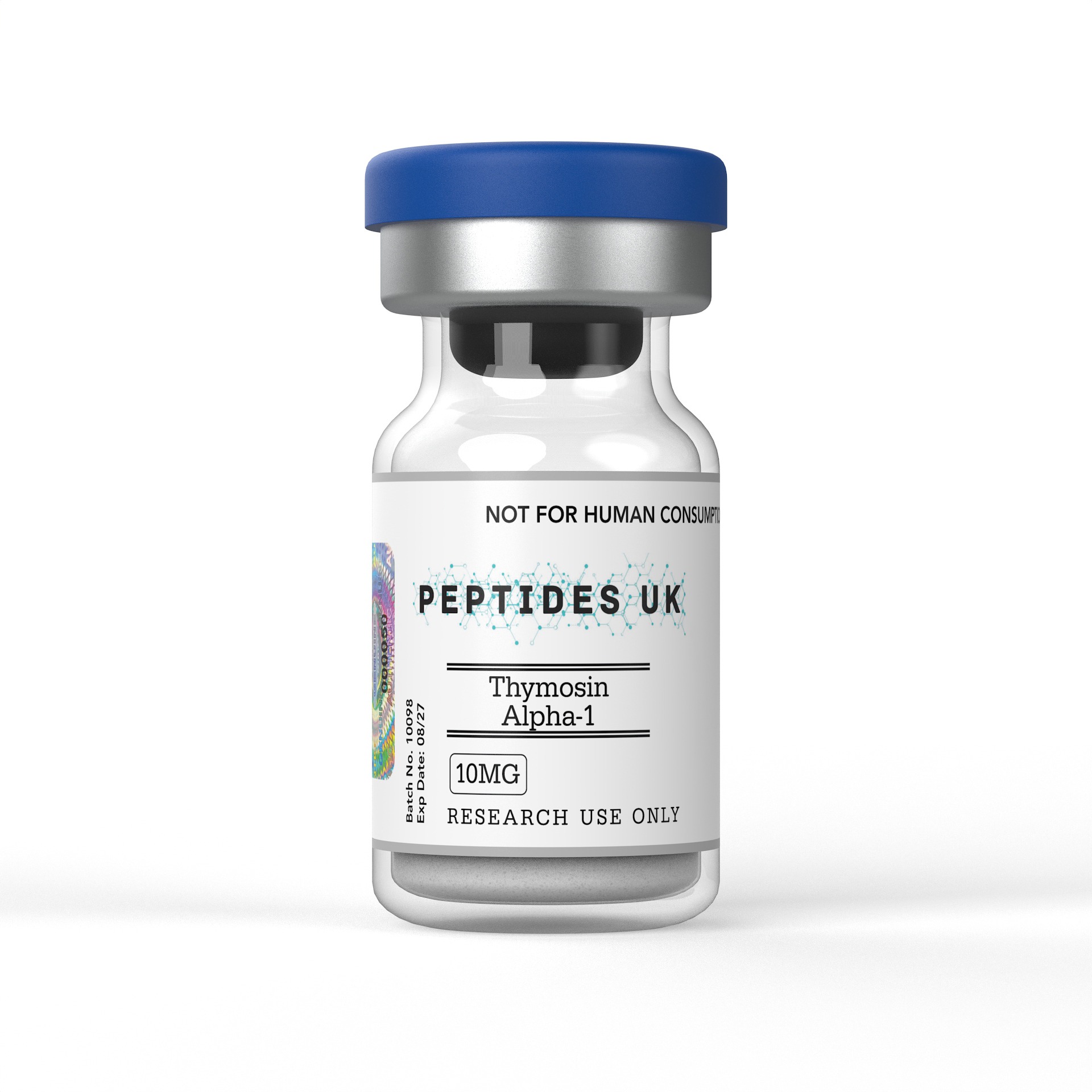
Thymosin Alpha-1 EU – Buy Online | In Stock & Ready to Ship
Buy Thymosin Alpha-1 in Europe with fast shipping and guaranteed ≥99% purity — verified with COA and HPLC documentation. A trusted choice for peptides EU research teams rely on, with no customs delays or lengthy international wait times. Whether you’re searching for Thymosin Alpha-1 Europe suppliers, looking to buy Thymosin Alpha-1 in the EU, or sourcing peptides Europe-wide, we have you covered. Research teams across the EU can count on consistent stock, rapid fulfilment and full batch documentation every time.
For research use only. Not intended for human or veterinary use.



Thymosin Alpha-1 (Tα1) is a naturally occurring 28 amino acid thymic peptide and potent immunomodulatory agent, available to buy in Europe for laboratory research into T cell biology, innate and adaptive immune regulation, toll-like receptor signalling, dendritic cell maturation, and the mechanisms of thymic peptide-mediated immune modulation.
Laboratories and research institutions across the EU can order verified, research-grade Thymosin Alpha-1 with fast international dispatch to Europe, full batch documentation, and ≥99% purity confirmed by HPLC and Mass Spectrometry.
✅ ≥99% Purity — HPLC & Mass Spectrometry Verified
✅ Batch-Specific Certificate of Analysis (CoA)
✅ Sterile Lyophilised Powder | GMP Manufactured
✅ Fast Dispatch to EU & Europe | Tracked Shipping
Thymosin Alpha-1 (Tα1) is a naturally occurring 28 amino acid peptide — sequence Ac-Ser-Asp-Ala-Ala-Val-Asp-Thr-Ser-Ser-Glu-Ile-Thr-Thr-Lys-Asp-Leu-Lys-Glu-Lys-Lys-Glu-Val-Val-Glu-Glu-Ala-Glu-Asn-OH — derived from prothymosin alpha, a highly conserved nuclear protein expressed ubiquitously in mammalian cells. It was first isolated from thymus tissue by Allan Goldstein and colleagues at George Washington University in 1977 as the primary immunologically active component of Thymosin Fraction 5 — the partially purified calf thymus extract that had previously been shown to restore immune function in thymus-deficient animals.
The thymus gland is the primary site of T lymphocyte development and maturation — the organ through which bone marrow-derived T cell precursors migrate, undergo selection, and emerge as functionally competent naive T cells capable of mounting adaptive immune responses. Thymosin Alpha-1 is one of the key thymic peptide hormones that mediates the thymus gland’s immunological functions — promoting T cell differentiation and maturation, enhancing T cell receptor expression, and amplifying the functional competence of both thymic and peripheral T cell populations. Its role as a thymic hormone makes it a research tool of fundamental importance for studying how the thymic microenvironment shapes T cell biology and how thymic peptide signalling maintains immune competence throughout life.
Beyond its classical thymic biology, Thymosin Alpha-1 has been characterised as a broad immunomodulatory agent with activity across both innate and adaptive immune compartments — acting through toll-like receptor 9 (TLR9) signalling to activate dendritic cells and macrophages, enhancing NK cell cytotoxicity, promoting Th1 immune polarisation, augmenting cytotoxic T lymphocyte responses, and modulating regulatory T cell function. This broad immunological activity profile has made Tα1 one of the most extensively studied immunomodulatory peptides available — with decades of pre-clinical and clinical research establishing its profile across infectious disease models, cancer immunology, vaccine adjuvancy, and immunodeficiency research — making it one of the most important immunological research tools available to European laboratories.
In laboratory settings, Thymosin Alpha-1 is studied across an exceptionally broad range of immunological research applications — reflecting its wide activity across both innate and adaptive immune compartments. EU and European researchers working with Thymosin Alpha-1 typically focus on:
All research applications are for in vitro and pre-clinical use only.
Thymosin Alpha-1 has one of the most extensive research literatures of any immunomodulatory peptide — spanning over four decades of pre-clinical and clinical investigation across infectious disease, cancer immunology, vaccine research, and immunodeficiency biology.
T cell biology and thymic function: The foundational Tα1 research literature established its role as the primary immunologically active component of thymic extracts — with studies documenting its ability to restore T cell function in thymus-deficient animals, promote T cell differentiation from bone marrow precursors, enhance T cell receptor expression on immature thymocytes, and amplify the functional responses of peripheral T cell populations. These foundational findings established Tα1 as the reference thymic peptide hormone for T cell biology research.
TLR9 mechanism characterisation: Studies characterising Tα1’s innate immune mechanism identified TLR9 as its primary pattern recognition receptor target — documenting TLR9-mediated activation of dendritic cells and macrophages, downstream MyD88/NF-κB signalling, and type I interferon production in plasmacytoid dendritic cells. This TLR9 mechanism characterisation connected thymic peptide biology to the well-studied innate immune pattern recognition literature and provided a molecular basis for Tα1’s broad immunostimulatory effects.
Infectious disease pre-clinical research: A large body of pre-clinical literature has characterised Tα1’s effects in viral, bacterial, and fungal infection models — with studies documenting enhanced pathogen clearance, improved immune cell recruitment, and survival benefits in multiple infection model systems. Particularly well-characterised findings include effects in models of chronic hepatitis B and C viral infection, invasive fungal disease, and bacterial sepsis.
Cancer immunology research: Studies examining Tα1 in pre-clinical cancer models have documented enhancement of cytotoxic T lymphocyte responses, NK cell cytotoxicity, and dendritic cell-mediated tumour antigen presentation — with findings suggesting augmented anti-tumour immune activity in multiple cancer model systems. These cancer immunology findings have driven research into Tα1 as an immunomodulatory tool for studying peptide enhancement of anti-tumour immunity.
Vaccine adjuvancy research: Studies have characterised Tα1’s ability to enhance adaptive immune responses to vaccine antigens — documenting increased antibody titres, improved T cell response magnitude, and enhanced memory immune response generation when Tα1 is co-administered with vaccine antigens in pre-clinical immunisation models. These adjuvancy findings have positioned Tα1 as a research tool for studying peptide-based approaches to improving vaccine immunogenicity.
Autophagy research: Studies characterising Tα1’s induction of autophagy in immune cells have documented mTOR-dependent autophagy pathway activation — with findings suggesting that autophagy induction contributes to Tα1’s antiviral activity through enhanced intracellular pathogen degradation and improved antigen processing for MHC presentation. These findings have connected thymic peptide biology to the extensively studied autophagy field.
Clinical research base: Thymosin Alpha-1 has been the subject of numerous clinical trials — including studies in hepatitis B, hepatitis C, cancer, sepsis, and vaccine adjuvancy contexts — primarily conducted in European, Asian, and North American research centres. This extensive clinical research base provides translational context for pre-clinical findings and has established Tα1 as one of the most clinically investigated immunomodulatory peptides available as a research tool.
Immunosenescence research: Studies examining Tα1 in aged animal models have characterised its ability to partially restore immune function parameters — including T cell proliferative responses, cytokine production capacity, and NK cell cytotoxicity — that decline with thymic involution and immunosenescence. These ageing research findings have positioned Tα1 as a tool for studying the thymic peptide contributions to age-related immune decline.
| Compound | Type | Primary Mechanism | Key Research Application |
|---|---|---|---|
| Thymosin Alpha-1 | 28aa thymic peptide | TLR9 agonism, T cell maturation, dendritic cell activation | T cell biology, innate/adaptive immunity, cancer immunology, vaccine adjuvancy |
| Thymosin Beta-4 (TB-500) | 43aa thymic peptide | Actin sequestration, tissue repair | Wound healing, cardiac repair — distinct from Tα1 |
| Thymalin | Thymus polypeptide extract | Thymic peptide bioregulator | Immune ageing, thymic biology — Khavinson class |
| VIP | 28aa neuropeptide | VPAC1/VPAC2 — anti-inflammatory | Immune tolerance, gut immunity — contrasting profile |
| KPV | α-MSH tripeptide | NF-κB inhibition | Anti-inflammatory — contrasting immunosuppressive profile |
| LL-37 | Cathelicidin peptide | TLR modulation, antimicrobial | Innate immunity, antimicrobial biology |
Every order of Thymosin Alpha-1 dispatched to EU and European research institutions includes:
Yes. We supply research-grade Thymosin Alpha-1 with fast tracked international dispatch to all EU member states and wider European destinations including Germany, France, Netherlands, Spain, Italy, Poland, and beyond. Packaging is designed to maintain peptide integrity throughout transit and all orders include full batch documentation. Thymosin Alpha-1 is supplied strictly for laboratory research use only.
Despite sharing the thymosin name — reflecting their original isolation from thymus tissue fractions — Thymosin Alpha-1 and Thymosin Beta-4 are structurally unrelated peptides with entirely distinct biological profiles. Thymosin Alpha-1 is a 28 amino acid immunomodulatory peptide acting through TLR9 and T cell biology mechanisms — with its research profile centred on immune activation, T cell maturation, and innate-adaptive immune coordination. Thymosin Beta-4 is a 43 amino acid actin-sequestering peptide with its research profile centred on tissue repair, wound healing, angiogenesis, and cell migration biology. The two peptides are studied in entirely different research contexts and are complementary tools addressing immunological and tissue repair biology respectively.
Toll-like receptor 9 (TLR9) is an endosomal pattern recognition receptor of the innate immune system — detecting unmethylated CpG dinucleotide sequences characteristic of bacterial and viral DNA as a danger signal. TLR9 is expressed on dendritic cells, macrophages, and B cells — and its activation drives MyD88-dependent NF-κB signalling, pro-inflammatory cytokine production, and type I interferon generation through plasmacytoid dendritic cell activation. Tα1’s characterisation as a TLR9 agonist has provided a molecular basis for its broad innate immune-activating effects and connected thymic peptide biology to the extensively studied TLR signalling field. This TLR9 mechanism makes Tα1 relevant to research examining innate immune pattern recognition, type I interferon biology, and the innate immune foundations of adaptive immune response initiation.
Th1 immune polarisation — the differentiation of naive CD4+ T helper cells toward IFN-γ-producing effector cells driving cell-mediated immunity — is promoted by Tα1 through multiple complementary mechanisms. Tα1’s TLR9-mediated activation of dendritic cells drives IL-12 production — the primary Th1-polarising cytokine — which instructs naive T cells to differentiate toward the Th1 phenotype. Additionally, Tα1’s direct effects on T cell biology include enhancement of IFN-γ production capacity and augmentation of T-bet — the Th1 master transcription factor — expression in responding T cells. This coordinated promotion of Th1 polarisation through both dendritic cell-mediated and direct T cell mechanisms makes Tα1 a research tool for studying the cellular and molecular regulation of Th1/Th2 immune balance.
The thymus undergoes progressive age-related involution — shrinking substantially from its peak size in early childhood and producing dramatically reduced T cell output by middle age. This thymic involution contributes to the age-related decline in immune competence — reduced naive T cell diversity, impaired responses to new antigens, and decreased vaccine responsiveness — that characterises immunosenescence. As a thymic peptide hormone, Tα1 is used in ageing research to examine whether thymic peptide supplementation can partially compensate for the functional consequences of thymic involution — making it a research tool for studying the relationship between thymic hormone decline, immunosenescence, and the age-related trajectory of immune function. This ageing research application complements Tα1’s established infectious disease and cancer immunology research profile.
Thymosin Alpha-1 is a fully characterised synthetic 28 amino acid peptide with a defined sequence and well-documented TLR9/T cell mechanism — providing a single-compound research tool for studying specific thymic peptide receptor pharmacology and downstream signalling. Thymalin is a polypeptide extract from bovine thymus tissue belonging to the Khavinson peptide bioregulator class — a multicomponent preparation whose activity reflects the combined effects of multiple thymic peptide components rather than a single defined sequence. The two represent different research tool philosophies — Tα1 for mechanistic studies requiring a defined single-peptide compound, Thymalin for studies examining the broader biological profile of thymic polypeptide extracts. They are studied as complementary rather than equivalent tools in thymic peptide immunology research.
Allow the vial to reach room temperature before opening. Add sterile water or an appropriate laboratory buffer slowly down the vial wall and swirl gently — do not shake. Thymosin Alpha-1 is a water-soluble peptide that reconstitutes readily in aqueous buffers without requirement for organic co-solvents. Prepare at your protocol’s required concentration, aliquot, and store at -80°C to minimise freeze-thaw degradation. Standard peptide handling protocols apply. For immunological research applications in cell culture, prepare working dilutions in sterile endotoxin-free buffer to avoid confounding innate immune stimulation from endotoxin contamination.
Orders are dispatched promptly via tracked international courier. Delivery to EU and European destinations typically takes 3–7 working days depending on location, with packaging designed to protect peptide stability throughout transit.
| Parameter | Detail |
|---|---|
| Sequence | Ac-Ser-Asp-Ala-Ala-Val-Asp-Thr-Ser-Ser-Glu-Ile-Thr-Thr-Lys-Asp-Leu-Lys-Glu-Lys-Lys-Glu-Val-Val-Glu-Glu-Ala-Glu-Asn-OH |
| Type | Naturally Occurring Thymic 28 Amino Acid Peptide |
| Origin | Derived from prothymosin alpha — thymus gland |
| Primary Mechanism | TLR9 agonism, T cell maturation, dendritic cell activation, Th1 polarisation |
| Primary Research Interest | T cell biology, innate/adaptive immunity, cancer immunology, vaccine adjuvancy, immunosenescence |
| Molecular Weight | 3108.4 g/mol |
| Purity | ≥99% |
| Verification | HPLC & Mass Spectrometry |
| Form | Sterile Lyophilised Powder |
| Solubility | Sterile water or laboratory buffer |
| Storage | -20°C, protected from light and moisture |
| Intended Use | Research use only |
Thymosin Alpha-1 is supplied exclusively for legitimate scientific research conducted within licensed laboratory environments. This product is not approved for human consumption, self-administration, or any therapeutic, clinical, or veterinary application. It must be handled solely by qualified researchers in compliance with applicable EU regulations, national legislation, and institutional ethics guidelines. By purchasing, you confirm this compound will be used exclusively for approved in vitro or pre-clinical research purposes.

WhatsApp us
Receive News
