PRODUCTS SOLD ON PEPTIDESLABEU.COM ARE FOR RESEARCH PURPOSES ONLY AND ARE NOT FOR HUMAN OR VETERINARY USE.
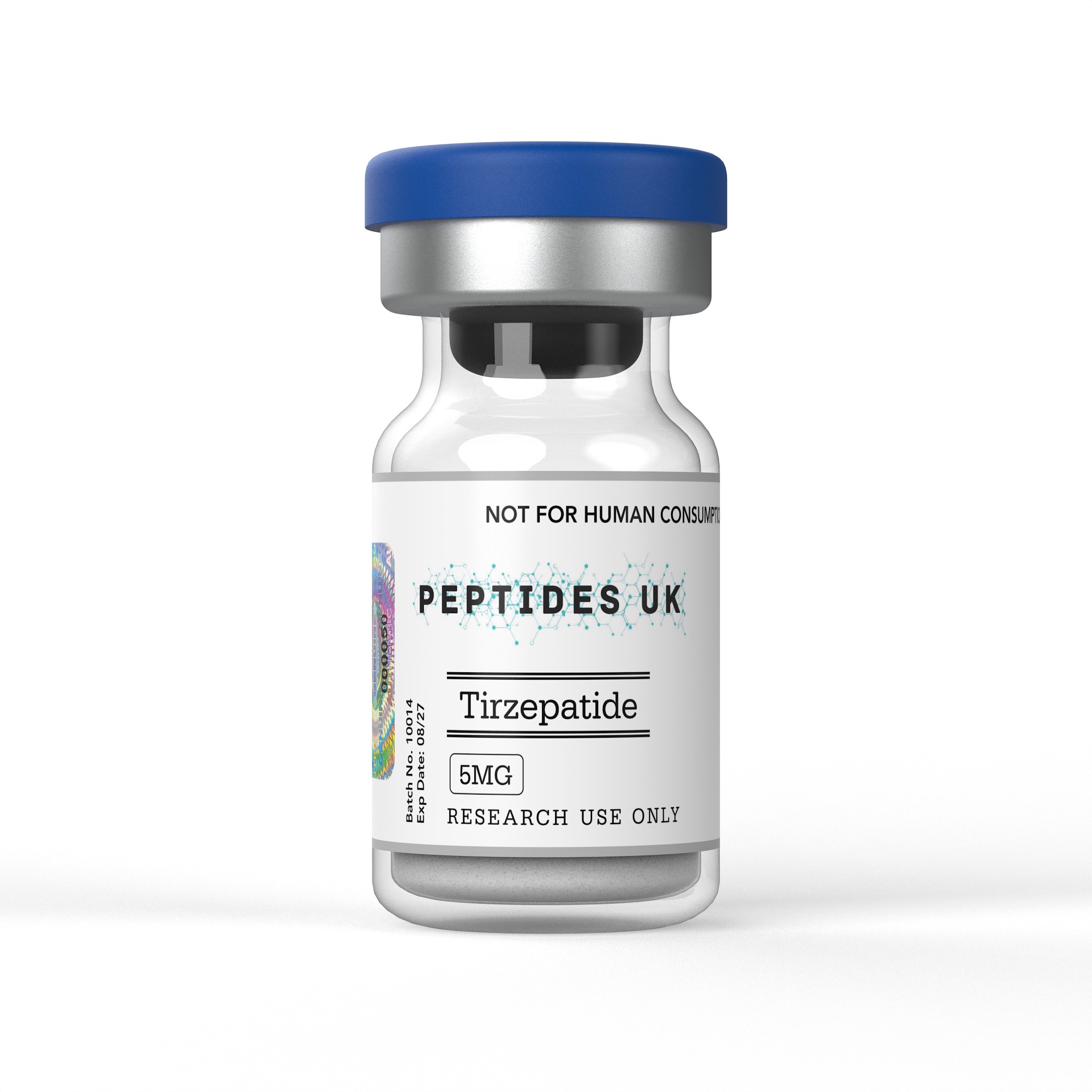
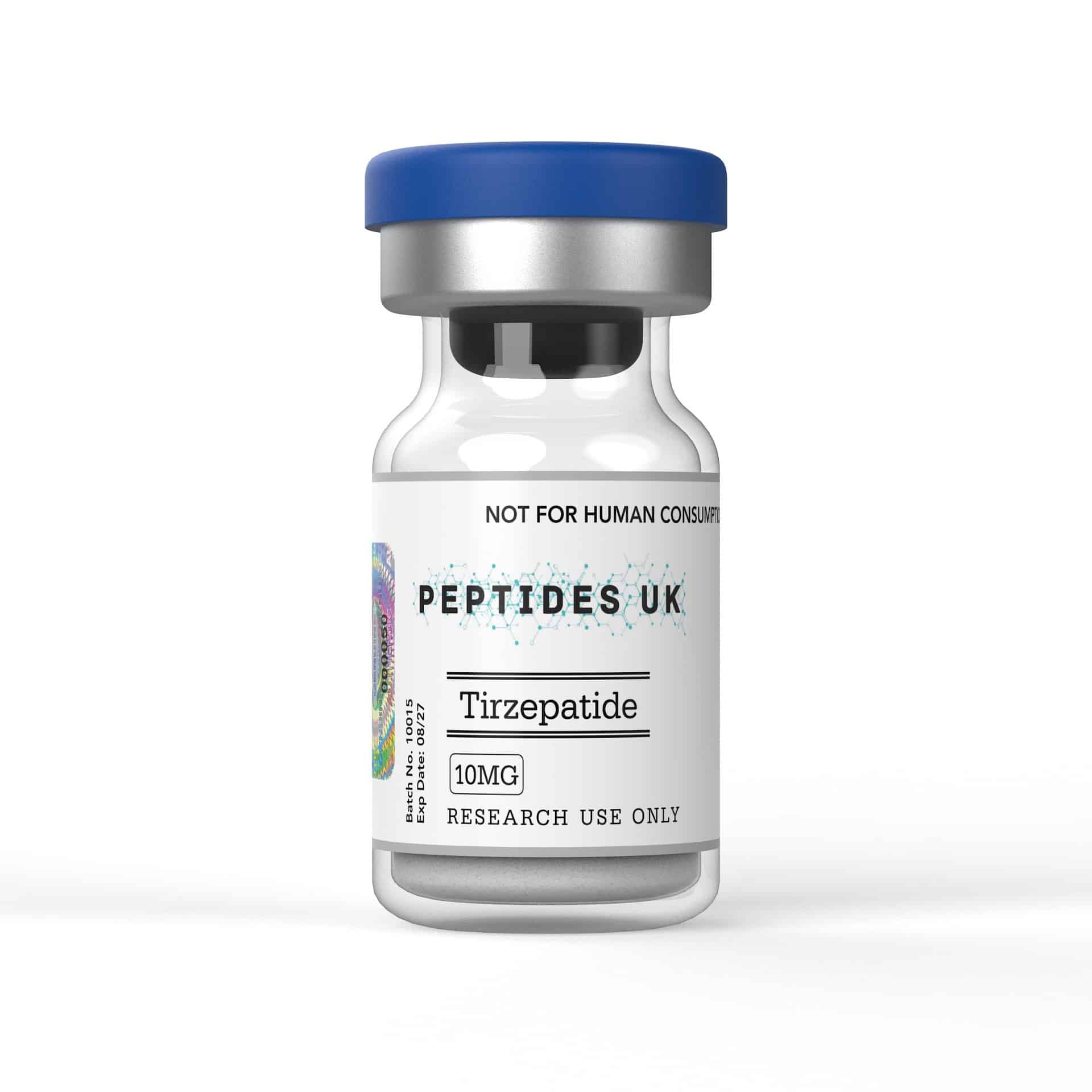
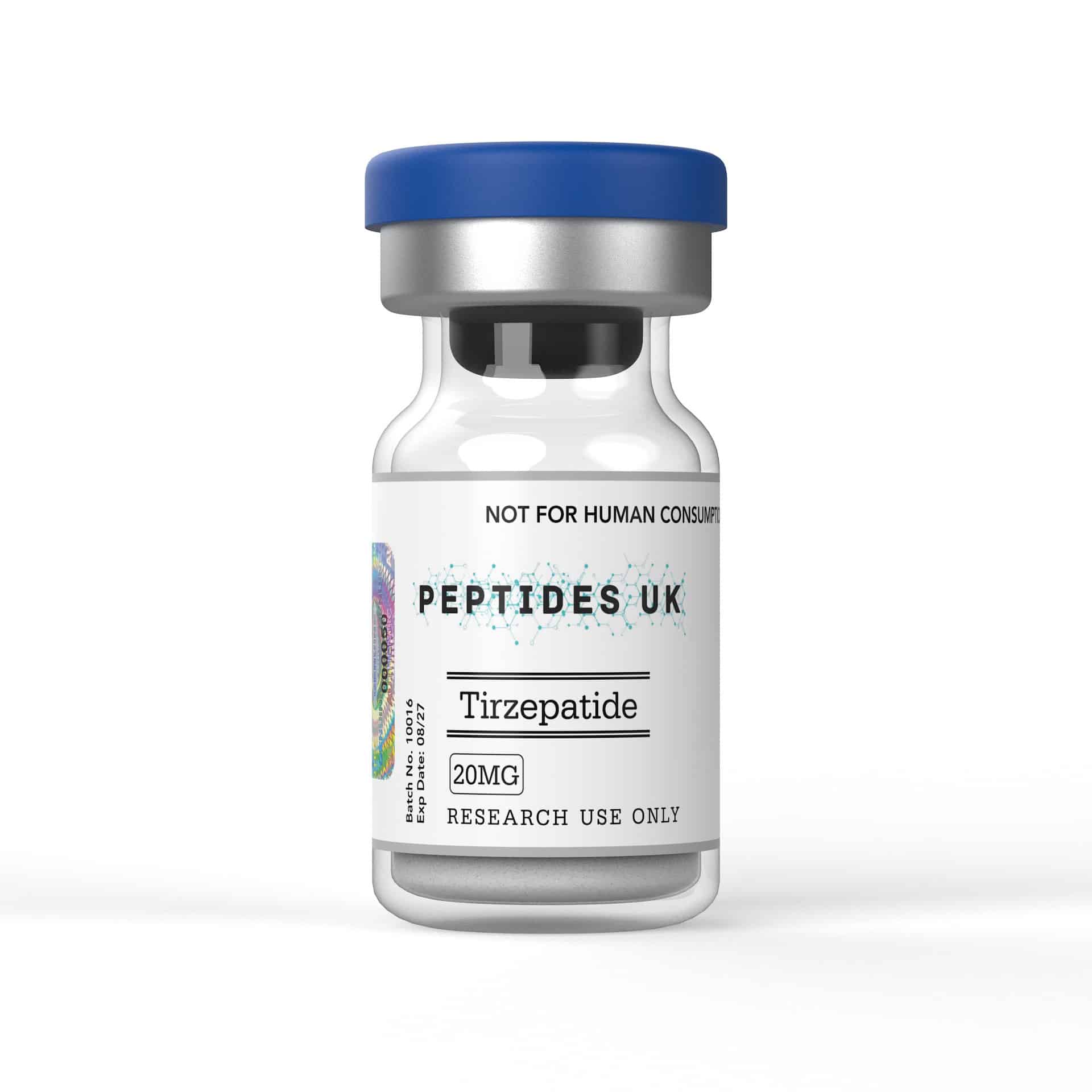
€49.50 – €321.00Price range: €49.50 through €321.00
Tirzepatide EU – Buy Online | In Stock & Ready to Ship
Buy Tirzepatide in Europe with fast shipping and guaranteed ≥99% purity — verified with COA and HPLC documentation. A trusted choice for peptides EU research teams rely on, with no customs delays or lengthy international wait times. Whether you’re searching for Tirzepatide Europe suppliers, looking to buy Tirzepatide in the EU, or sourcing peptides Europe-wide, we have you covered. Research teams across the EU can count on consistent stock, rapid fulfilment and full batch documentation every time.
For research use only. Not intended for human or veterinary use.



Tirzepatide is a synthetic dual GIP and GLP-1 receptor co-agonist peptide and the most clinically advanced dual incretin research compound available to laboratories across Europe — simultaneously activating both the glucose-dependent insulinotropic polypeptide receptor and the glucagon-like peptide-1 receptor in a single molecule to produce incretin biology that has been clinically demonstrated to exceed the metabolic outcomes of selective GLP-1R monoagonism. Research institutions and laboratories across the EU can source verified, research-grade Tirzepatide in Europe with fast dispatch and full batch documentation included.
✅ ≥99% Purity — HPLC & Mass Spectrometry Verified
✅ Batch-Specific Certificate of Analysis (CoA) Included
✅ Sterile Lyophilised Powder | GMP Manufactured
✅ Fast Dispatch Across EU & Europe | EU Peptides Stock
Tirzepatide — LY3298176, developed by Eli Lilly — is a 39-amino acid acylated peptide engineered as a balanced dual agonist of the glucose-dependent insulinotropic polypeptide receptor (GIPR) and the glucagon-like peptide-1 receptor (GLP-1R). It is built on a GIP-homologous peptide backbone with targeted amino acid modifications optimising potency at both receptor targets, combined with a C20 fatty diacid conjugated via a hydrophilic linker at Lys26 providing albumin binding and a circulating half-life of approximately five days — enabling once-weekly dosing and establishing it as the defining reference dual incretin co-agonist for European research laboratories.
What makes Tirzepatide pharmacologically distinctive is the addition of GIPR agonism to GLP-1R activation — engaging a second incretin receptor pathway that native GLP-1 analogues including Semaglutide do not target. GIP is the most abundantly secreted incretin hormone following nutrient intake, released from duodenal and jejunal K-cells in response to fat and carbohydrate ingestion — yet its role in metabolic regulation beyond insulin secretion has historically been undercharacterised relative to GLP-1. Tirzepatide has become the primary research tool for studying what GIPR agonism contributes to metabolic biology when added to GLP-1R activation — establishing the pharmacological basis of dual incretin superiority over GLP-1R monoagonism that has been validated across the SURPASS clinical trial programme.
Tirzepatide received FDA approval in 2022 as Mounjaro for type 2 diabetes and in 2023 as Zepbound for chronic weight management — establishing the most extensive dual incretin clinical dataset available to European research laboratories and positioning it as the reference compound for translational dual incretin research bridging pre-clinical GIPR and GLP-1R biology to clinically validated metabolic outcomes. The SURPASS-2 trial demonstrating Tirzepatide’s superiority over Semaglutide across glycaemic and weight outcomes has made the mechanistic characterisation of Tirzepatide’s dual receptor advantage one of the most actively pursued questions in EU metabolic research.
In controlled laboratory and pre-clinical research settings across EU and European institutions, Tirzepatide is studied across dual incretin receptor pharmacology, GIPR biology, beta cell function, central appetite neurocircuitry, adipose tissue metabolism, cardiovascular biology, and comparative incretin pharmacology:
Dual GIPR and GLP-1R Co-Agonism Pharmacology — Tirzepatide is the reference dual incretin co-agonist for characterising simultaneous GIPR and GLP-1R activation from a single molecule. Research uses Tirzepatide to examine Gs-cAMP-PKA signal transduction at both incretin receptors in parallel — characterising the additive and synergistic cAMP accumulation from dual receptor engagement, receptor cross-talk between GIPR and GLP-1R signalling in co-expressing beta cells, and how balanced dual receptor potency at approximately native GIP and native GLP-1 potency levels produces the superior pharmacodynamic profile documented in comparative clinical trials. These dual receptor pharmacology studies establish the molecular basis of incretin co-agonism and characterise the signalling architecture distinguishing Tirzepatide from selective GLP-1R monoagonists.
GIPR Biology and GIP Receptor Pharmacology Research — Tirzepatide is the primary research tool for studying GIPR biology in the context of metabolic pharmacology — used to characterise GIPR signal transduction in pancreatic beta cells, adipose tissue, bone, and central nervous system, and to establish what GIPR agonism contributes to metabolic biology when layered onto GLP-1R activation. Research has examined GIPR-specific biological contributions using Tirzepatide alongside selective GIPR antagonist controls — characterising GIPR-driven insulin secretory potentiation, GIPR-mediated adipocyte biology including direct fat depot lipid metabolism effects, GIPR expression and signalling in hypothalamic appetite circuits, and the GIPR biology underlying Tirzepatide’s superior weight reduction relative to GLP-1R monoagonism. These GIPR pharmacology studies have repositioned GIP from a historically undercharacterised incretin to an actively researched metabolic receptor target.
Pancreatic Beta Cell Dual Incretin Biology Research — Tirzepatide drives glucose-stimulated insulin secretion through simultaneous GIPR and GLP-1R co-activation in pancreatic beta cells — producing additive cAMP-PKA-EPAC2 pathway stimulation, KATP channel closure potentiation, and calcium-triggered insulin exocytosis enhancement through dual receptor engagement. Research has characterised Tirzepatide’s beta cell incretin biology — examining the additive versus synergistic insulin secretory responses from co-stimulation of GIPR and GLP-1R relative to selective monoagonism at either receptor, the glucose dependency of dual incretin-driven insulin secretion, first and second phase insulin secretory dynamics under dual receptor occupancy, and beta cell trophic biology under sustained Tirzepatide GIPR and GLP-1R co-stimulation. These beta cell biology studies establish the pancreatic pharmacological basis of dual incretin superiority.
Central Appetite Neurocircuitry and Obesity Biology Research — Tirzepatide produces superior appetite suppression and body weight reduction relative to Semaglutide through GIPR and GLP-1R co-activation in hypothalamic and brainstem appetite-regulating circuits. Research has characterised Tirzepatide’s central appetite biology — examining GLP-1R-mediated POMC activation and NPY/AgRP suppression in the arcuate nucleus, GIPR expression and signalling in hypothalamic appetite circuits, the relative contributions of GIPR and GLP-1R to the combined anorexigenic response, and the neurochemical mechanisms underlying Tirzepatide’s superior body weight reduction relative to GLP-1R monoagonism. The SURMOUNT trial programme documenting 20–22% body weight reduction has established Tirzepatide as a primary research tool for studying the neurobiological and metabolic mechanisms of clinically significant pharmacological weight loss through dual incretin receptor engagement.
Adipose Tissue Biology and Fat Metabolism Research — Tirzepatide’s GIPR component adds direct adipose tissue biology to GLP-1R-mediated metabolic effects — GIPR is expressed on adipocytes, and GIPR agonism has been characterised as modifying adipocyte lipid storage, lipid mobilisation, and adipokine secretion in ways that contribute to the net fat mass reduction profile of Tirzepatide. Research has examined Tirzepatide’s adipose biology — characterising GIPR-mediated adipocyte cAMP signalling, lipid metabolism gene expression changes in visceral and subcutaneous fat depots, adiponectin and leptin secretory responses, and the depot-selective fat mobilisation characteristics of dual incretin co-agonism relative to GLP-1R-only adipose biology. These adipose tissue studies have contributed to understanding why dual GIPR and GLP-1R co-agonism produces greater fat mass reduction than GLP-1R monoagonism.
Insulin Resistance and Metabolic Syndrome Research — Tirzepatide improves insulin sensitivity through multiple mechanisms — GLP-1R-mediated improvements in beta cell function and reduced glucotoxicity, GIPR-mediated direct adipose insulin sensitisation, and indirect improvements in hepatic and peripheral insulin sensitivity from fat mass reduction and reduced adipose-derived inflammatory mediator secretion. Research has characterised Tirzepatide’s insulin sensitivity biology — examining HOMA-IR improvement kinetics, hepatic insulin sensitivity restoration in insulin-resistant pre-clinical models, skeletal muscle glucose transporter expression changes, and the relative contributions of direct receptor-mediated insulin sensitisation versus indirect metabolic improvements from weight loss. These metabolic syndrome studies have established Tirzepatide as the reference dual incretin compound for studying the combined insulin-sensitising biology of GIPR and GLP-1R co-agonism.
Cardiovascular Biology Research — Tirzepatide produces cardiovascular biology through GLP-1R-mediated direct cardiomyocyte and endothelial signalling alongside indirect cardiovascular benefits from weight loss, improved glycaemia, and reduced systemic inflammation. Research has characterised Tirzepatide’s cardiac biology — examining GLP-1R-mediated cardiomyocyte PI3K-Akt pro-survival signalling in ischaemia-reperfusion models, endothelial GLP-1R anti-inflammatory and anti-atherosclerotic biology, GIPR-mediated vascular biology, and the cardiovascular consequences of Tirzepatide’s superior metabolic efficacy relative to GLP-1R monoagonism. Phase III cardiovascular outcome trial data is being generated and will establish the translational cardiovascular biology of dual incretin co-agonism.
Comparative Dual Versus Single Incretin Pharmacology Research — Tirzepatide is the essential dual incretin reference in comparative studies establishing the pharmacological basis of GIPR plus GLP-1R co-agonism superiority over GLP-1R monoagonism. Research employs Tirzepatide alongside Semaglutide in parallel metabolic biology studies — using selective GIPR antagonist controls to isolate the incremental GIPR contribution to Tirzepatide’s superior efficacy profile and establishing which biological outcomes represent genuine GIPR additive biology versus enhanced GLP-1R engagement. These comparative studies have been among the most actively pursued research questions in EU incretin pharmacology since Tirzepatide’s clinical validation of dual incretin superiority.
Research and clinical investigation have produced one of the most extensively characterised profiles of any dual incretin research compound available in Europe:
The SURPASS-2 trial documented Tirzepatide’s superiority over Semaglutide 1mg across HbA1c reduction and body weight loss — providing the first head-to-head clinical validation that dual GIPR and GLP-1R co-agonism produces superior metabolic outcomes to the best-in-class selective GLP-1R monoagonist, establishing Tirzepatide as the new efficacy benchmark in incretin pharmacology and generating significant research interest across EU institutions in the mechanistic basis of dual incretin superiority.
The SURMOUNT trial programme documented 20–22% body weight reduction with high-dose Tirzepatide in the obesity indication — exceeding Semaglutide’s 15–17% Wegovy outcomes and establishing Tirzepatide as the highest-efficacy approved pharmacological weight loss treatment, with body weight reductions approaching those historically achievable only through bariatric surgery and generating major EU research activity in the neurobiological mechanisms of dual incretin-driven weight loss.
GIPR biology characterisation research has repositioned GIP receptor pharmacology — with pre-clinical and mechanistic studies using Tirzepatide establishing that GIPR agonism, contrary to earlier research suggesting GIP resistance in obesity, contributes meaningful and additive metabolic biology when engaged alongside GLP-1R activation. These GIPR repositioning studies have fundamentally changed understanding of GIP receptor pharmacology and opened new research directions across European metabolic biology institutions.
Beta cell trophic biology research has documented Tirzepatide’s dual incretin-driven beta cell preservation effects — characterising additive GIPR and GLP-1R-driven anti-apoptotic and proliferative trophic signalling in beta cell models and establishing the pancreatic biology basis for the superior beta cell function improvements documented in clinical Tirzepatide studies relative to GLP-1R monoagonism.
Adipose tissue biology research has documented GIPR-mediated direct adipocyte biology contributions to Tirzepatide’s fat mass reduction profile — establishing that the GIPR component of Tirzepatide produces adipocyte-level biological effects beyond insulin secretory potentiation and contributing to understanding of how dual incretin co-agonism achieves greater fat mass reduction than GLP-1R monoagonism through direct adipose receptor engagement.
| Feature | Tirzepatide | Semaglutide | Retatrutide | Native GLP-1 | Native GIP | Exenatide |
|---|---|---|---|---|---|---|
| Receptor Targets | GLP-1R + GIPR — balanced dual | GLP-1R — selective mono | GLP-1R + GIPR + GCGR — triple | GLP-1R — selective | GIPR — selective | GLP-1R — selective |
| Half-Life | ~5 days — C20 fatty diacid albumin binding | ~1 week — C18 fatty diacid | ~1 week — C18 fatty diacid | ~1–2 minutes | ~5–7 minutes | ~2.4 hours SC |
| Insulin Secretion | Yes — additive GIPR + GLP-1R | Yes — GLP-1R | Yes — GLP-1R + GIPR + indirect GCGR | Yes | Yes | Yes |
| Glucagon Suppression | Yes — GLP-1R driven primarily | Yes | Partial — offset by GCGR | Yes | Context-dependent | Yes |
| GIPR Biology | Yes — defining GIPR + GLP-1R reference | No | Yes — part of triple profile | No | Yes — reference GIPR agonist | No |
| Thermogenic Expenditure | Limited | Limited | Yes — GCGR-driven | Limited | Limited | Limited |
| Body Weight Reduction | 20–22% — SURMOUNT | 15–17% — STEP | Up to 24% — Phase II | Transient | Minimal | Moderate |
| Clinical Approval | Yes — Mounjaro (T2D) + Zepbound (obesity) | Yes — Ozempic + Wegovy | Phase III ongoing | No | No | Yes — Byetta + Bydureon |
| Key Research Distinction | Defining dual GIP + GLP-1R co-agonist — GIPR biology reference — twincretin superiority over monoagonism — most advanced approved dual incretin | Reference long-acting GLP-1R monoagonist — GLP-1R-only incretin benchmark | Only triple receptor agonist — highest efficacy metabolic peptide | Reference endogenous GLP-1R agonist | Reference GIPR agonist | First approved GLP-1R agonist — exendin scaffold |
| Parameter | Specification |
|---|---|
| Full Name | Tirzepatide |
| Also Known As | LY3298176 / Mounjaro (T2D) / Zepbound (obesity) / GIP/GLP-1 dual agonist / Twincretin |
| Type | Synthetic 39-Amino Acid Acylated Dual GIP/GLP-1 Receptor Co-Agonist — Research Grade |
| Molecular Weight | ~4813.5 Da |
| Fatty Acid Conjugation | C20 fatty diacid via hydrophilic linker at Lys26 — albumin binding — ~5 day half-life |
| Mechanism | Simultaneous GIPR + GLP-1R Gs-cAMP-PKA/EPAC2 co-activation → additive incretin insulin secretion + glucagon suppression + central appetite suppression + adipose tissue biology + beta cell trophic effects |
| Receptor Targets | GIPR + GLP-1R — balanced dual co-agonism at approximately native GIP and native GLP-1 potency |
| Half-Life | ~5 days — C20 fatty diacid albumin binding |
| Clinical Approval | FDA approved — Mounjaro (type 2 diabetes) + Zepbound (obesity) |
| Key Research Distinction | Defining reference dual GIP/GLP-1R co-agonist — twincretin pharmacology — GIPR biology reference — benchmark for dual incretin superiority over GLP-1R monoagonism |
| Primary Research Areas | Dual incretin pharmacology / GIPR biology / beta cell function / central appetite neurocircuitry / adipose tissue biology / insulin resistance / cardiovascular biology / comparative incretin pharmacology |
| Purity | ≥99% HPLC & MS Verified |
| Form | Sterile Lyophilised Powder |
| Solubility | Sterile PBS pH 7.4 with 0.1% BSA — fatty acid conjugation requires albumin carrier at low concentrations |
| Storage (Powder) | -20°C, protect from light and moisture |
| Storage (Reconstituted) | -80°C single-use aliquots — BSA carrier essential — minimise freeze-thaw cycles |
| Available Sizes | 2mg, 5mg, 10mg |
| Dispatch | Fast EU & Europe dispatch |
| Intended Use | Research use only |
Every order of Tirzepatide dispatched across the EU and Europe includes:
✅ Batch-Specific Certificate of Analysis (CoA)
✅ HPLC Chromatogram
✅ Mass Spectrometry Confirmation — including C20 fatty diacid conjugation integrity verification
✅ Sterility & Endotoxin Testing Report
✅ Reconstitution Protocol — including BSA carrier requirement and comparative study design guidance
✅ Technical Research Support
Yes — research-grade Tirzepatide is available to researchers and institutions across the EU and Europe with fast dispatch and full batch documentation included. Supplied strictly for laboratory research purposes only.
Tirzepatide is a dual GIP and GLP-1 receptor co-agonist — it simultaneously activates both the GIPR and GLP-1R, whereas Semaglutide is a selective GLP-1R monoagonist targeting only the GLP-1 receptor. The addition of GIPR co-agonism is what produces Tirzepatide’s superior metabolic outcomes — with the SURPASS-2 trial demonstrating superiority over Semaglutide across both HbA1c reduction and body weight loss, making Tirzepatide the essential research compound for studying what GIPR activation adds to GLP-1R biology.
GIP is the most abundantly secreted incretin hormone after eating, yet its metabolic pharmacology was historically undercharacterised relative to GLP-1. Tirzepatide has become the primary research tool for studying GIPR biology in the metabolic context — establishing that GIPR agonism contributes meaningful additive metabolic effects including direct adipocyte biology, enhanced insulin secretory potentiation, and central appetite effects that together account for Tirzepatide’s superiority over GLP-1R monoagonism. This GIPR repositioning is one of the most significant developments in EU incretin pharmacology research in recent years.
Tirzepatide is a dual GLP-1R and GIPR co-agonist — the defining reference for dual incretin pharmacology. Retatrutide adds glucagon receptor activation to this dual incretin profile, producing a triple receptor biology that additionally drives thermogenic energy expenditure through brown adipose tissue and hepatic lipid oxidation. For EU research isolating dual incretin biology without GCGR confounding, Tirzepatide is the appropriate compound. For studying the incremental metabolic benefits of adding glucagon receptor engagement to dual incretin co-agonism, Tirzepatide and Retatrutide are used in parallel.
Vehicle controls in matched PBS-BSA buffer, selective GLP-1R antagonist exendin(9-39) confirming GLP-1R-specific contributions, selective GIPR antagonist confirming GIPR-specific contributions, Semaglutide at equivalent molar concentration as the GLP-1R monoagonism reference, native GLP-1 with DPP-IV inhibitor as the endogenous GLP-1R reference, and native GIP as the endogenous GIPR reference. These controls allow the independent GIPR and GLP-1R biological contributions to Tirzepatide’s dual receptor pharmacodynamic profile to be dissected in comparative studies.
Reconstitute in sterile PBS pH 7.4 supplemented with 0.1% BSA — the C20 fatty diacid conjugation drives surface adsorption at working concentrations without albumin binding sites provided by BSA carrier protein. Add PBS-BSA solution slowly to the lyophilised powder and swirl gently until dissolved. Do not vortex. Prepare working dilutions in assay medium supplemented with 0.1% BSA and store aliquots at -80°C to minimise freeze-thaw degradation of the fatty acid conjugate.
Tirzepatide is the active molecule in both Mounjaro and Zepbound — the same peptide compound. Mounjaro and Zepbound are pharmaceutical prescription medications manufactured to clinical standards with specific excipients, stabilisers, and pre-filled injection delivery systems for medical use under physician supervision. Research-grade Tirzepatide is supplied as a lyophilised powder for controlled laboratory investigation only — it is not a pharmaceutical product and cannot substitute for prescription medications.
≥99% purity by HPLC and mass spectrometry is essential — C20 fatty acid hydrolysis products, GIPR or GLP-1R potency-altering sequence variants, and aggregated conjugate species would confound dual receptor dose-response characterisation and comparative pharmacology studies. C20 fatty diacid conjugation integrity verification is a critical specification alongside standard peptide sequence purity. All Tirzepatide supplied for European research is verified to ≥99% purity with conjugation integrity confirmed.
Tirzepatide is supplied exclusively for legitimate scientific research purposes conducted within licensed laboratory environments across the EU and Europe. This product is not intended for human consumption, self-administration, or any therapeutic application. It must be handled by qualified researchers in compliance with applicable EU regulations and institutional ethics guidelines. By purchasing, you confirm that this compound will be used solely for approved in vitro or pre-clinical research purposes.

WhatsApp us
Receive News
